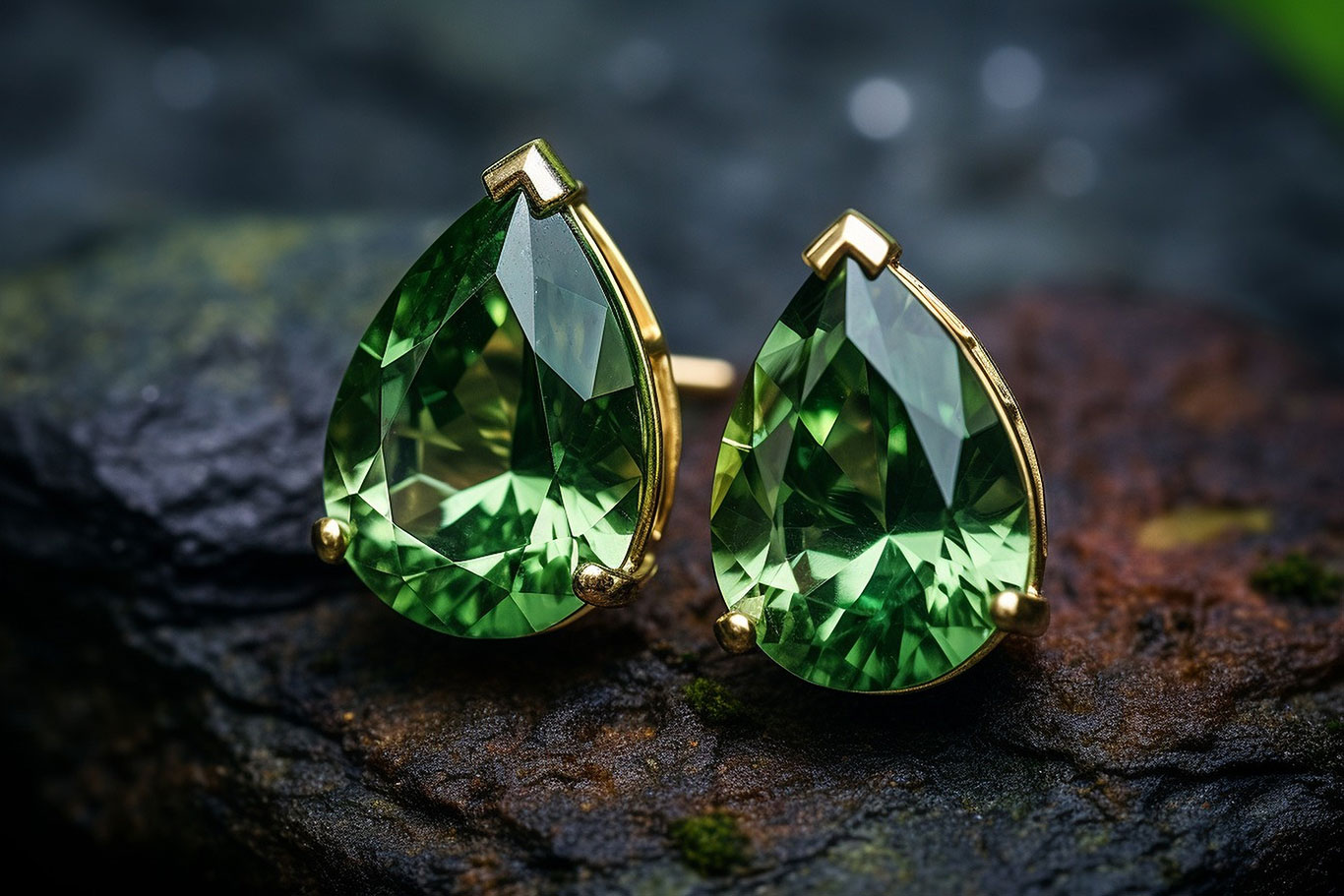
Emerald
| Property | Details |
|---|
| Mineral | Beryl |
| Mohs Hardness | 7.5 – 8 |
| Refractive Index | 1.577 – 1.583 |
| Birthstone | May |
| Anniversary | 20th & 35th |
| Major Sources | Colombia, Zambia, Brazil, Afghanistan |
| Treatments | Oil or resin filling (standard, widely accepted) |
Overview
Emerald is the green variety of the mineral beryl and one of the most historically revered gemstones. The finest emeralds display a vivid, slightly bluish green color that no other gemstone can replicate. Colombia has been the world's premier source of fine emeralds for over 500 years, though Zambia, Brazil, and Afghanistan also produce excellent material.
History & Lore
Emeralds were mined in Egypt as early as 330 B.C. Cleopatra was famously passionate about emeralds, using them in her royal adornments. The ancient Egyptians associated emeralds with fertility and rebirth. When Spanish explorers arrived in South America in the 16th century, they discovered that the Incas and Aztecs had been using emeralds in their jewelry and religious ceremonies for centuries. The Mughal emperors of India, including Shah Jahan who built the Taj Mahal, inscribed sacred texts onto large emerald tablets.
Color & Varieties
The most desirable emerald color is a vivid, slightly bluish green with medium to medium-dark tone and strong saturation. Colombian emeralds are renowned for their warm, pure green hue with a slight bluish tint. Zambian emeralds often display a cooler, slightly bluish-green color with excellent clarity. Brazilian emeralds tend toward a slightly yellowish-green. The difference is subtle but significant to connoisseurs—and to price.
Quality & Value Factors
Color is paramount for emeralds. After color, clarity plays a unique role: emeralds almost always contain natural inclusions known as jardin (French for garden), which are accepted as part of the stone's character. An emerald with excellent color and moderate inclusions is far more valuable than a clean stone with weak color. However, inclusions that significantly affect transparency will reduce value. Cut is important because it must maximize the face-up color while retaining weight. The classic emerald cut (rectangular step cut) was developed specifically for this gemstone.
Treatments
Most emeralds are treated with oil (traditionally cedar oil) or resin to fill surface-reaching fractures and improve apparent clarity. This is standard practice and has been done for centuries. The degree of treatment (minor, moderate, significant) affects value, with untreated or minimally oiled emeralds commanding the highest premiums.
Care & Cleaning
Emerald ranks 7.5 to 8 on the Mohs hardness scale but requires more careful handling than its hardness suggests due to natural inclusions. Clean emeralds only with warm soapy water and a soft cloth. Never use ultrasonic or steam cleaners, as they can damage the stone or remove the oils used to enhance clarity. Remove emerald rings before heavy physical work.
Shop Emerald Jewelry
Browse our collection of emerald jewelry including rings, earrings, pendants, and bracelets featuring natural emeralds set in gold and platinum.