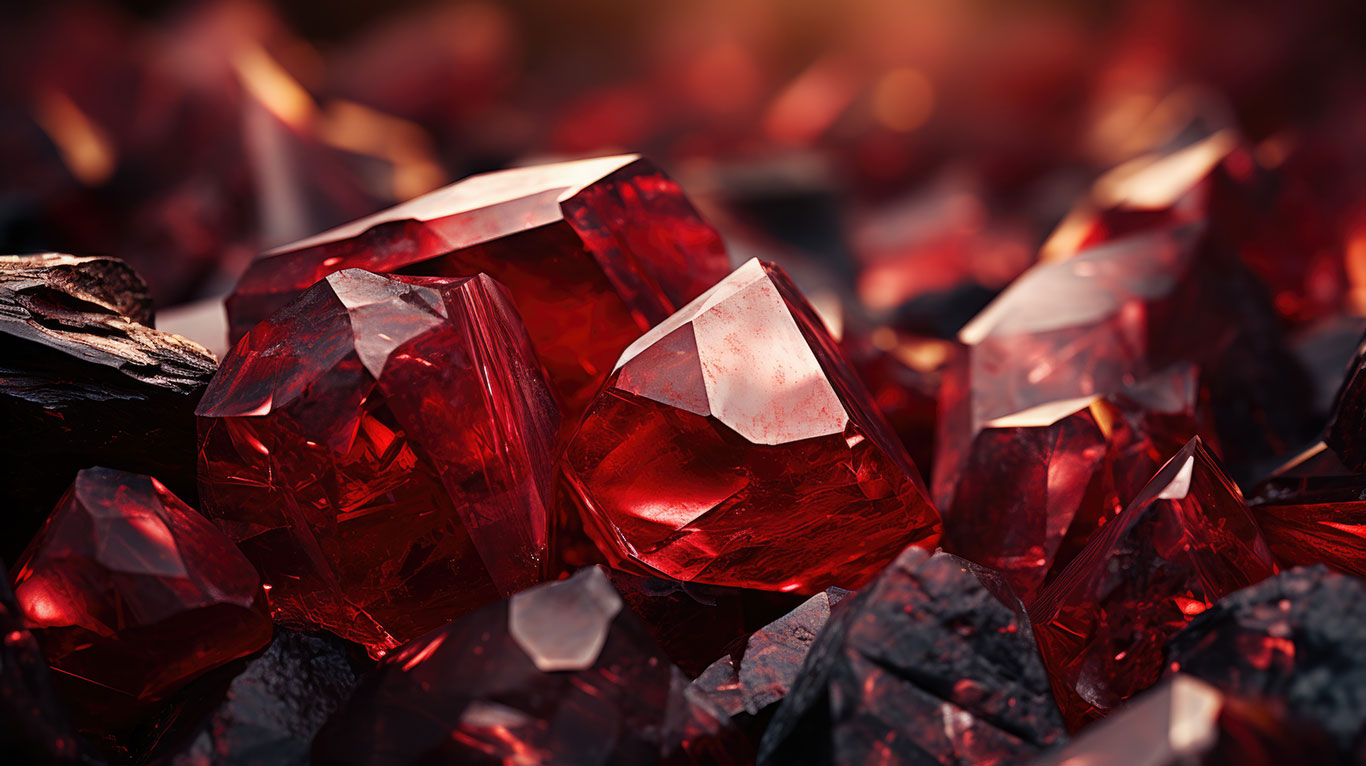
Garnet
| Property | Details |
|---|
| Mineral | Garnet Group (multiple species) |
| Mohs Hardness | 6.5 – 7.5 |
| Refractive Index | 1.714 – 1.888 (varies by species) |
| Birthstone | January |
| Anniversary | 2nd |
| Major Sources | Africa (multiple countries), Sri Lanka, India, Brazil |
| Treatments | Rarely treated |
Overview
Garnet is not a single gemstone but a group of related minerals that come in virtually every color. The most familiar variety is pyrope garnet, which displays the classic deep red hue most people associate with the name. The garnet family offers incredible diversity and value, with varieties ranging from affordable to extremely rare and collectible.
Varieties
Pyrope: Classic dark red. Almandine: Reddish-brown to purplish-red, the most common garnet. Rhodolite: Beautiful raspberry-pink to purplish-red, extremely popular in jewelry. Tsavorite: Vivid green that rivals emerald, discovered in East Africa in the 1960s. Demantoid: Brilliant green with exceptional fire that can exceed diamond, the rarest garnet variety. Spessartine: Vivid orange, sometimes called mandarin garnet. Malaia: Pinkish-orange, found in East Africa. Color-change garnet: Shifts color between daylight and incandescent light, similar to alexandrite.
Quality & Value Factors
Value varies enormously by species. Demantoid and tsavorite garnets are rare and expensive, while pyrope and almandine are widely available and affordable. For all garnets, color saturation, clarity, and cut quality determine value within each variety. One of garnet's advantages is that fine specimens are rarely treated—the color you see is natural.
Care & Cleaning
Garnet ranges from 6.5 to 7.5 on the Mohs scale, making it durable enough for all types of jewelry. It can be cleaned with warm soapy water and a soft brush. Ultrasonic cleaners are usually safe for garnets that have not been fracture-filled.