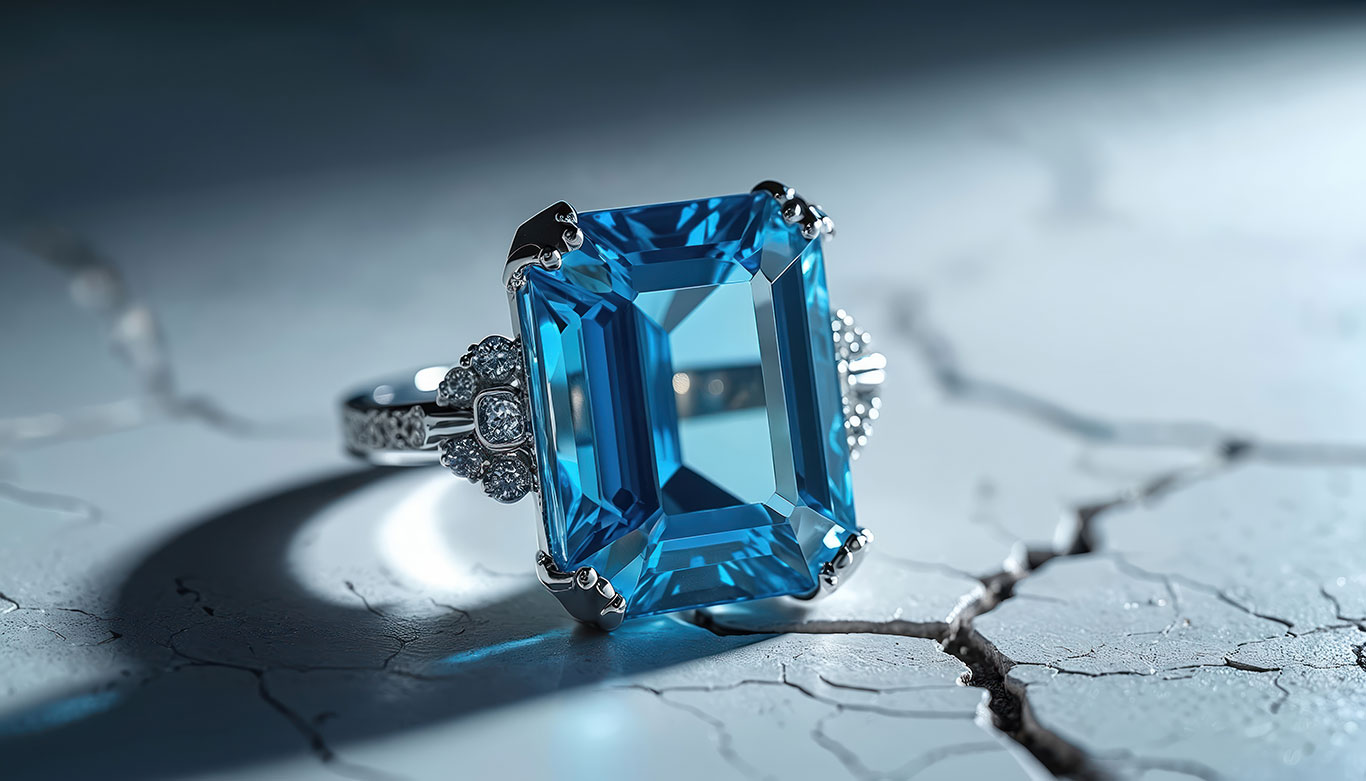
Topaz
| Property | Details |
|---|
| Mineral | Topaz |
| Mohs Hardness | 8 |
| Refractive Index | 1.619 – 1.627 |
| Birthstone | December |
| Anniversary | 4th (Blue) & 23rd (Imperial) |
| Major Sources | Brazil, Nigeria, Sri Lanka, Pakistan, USA |
| Treatments | Irradiation + heat for blue (standard, permanent) |
Overview
Topaz is a versatile gemstone available in a wide range of colors, including blue, yellow, orange, pink, and colorless. Imperial topaz, a rare orange-pink to reddish-orange variety from Brazil, is the most valuable form. Blue topaz is the most popular commercial variety.
Blue Topaz Varieties
Blue topaz is available in three recognized shades: Sky Blue (light, delicate pastel blue), Swiss Blue (vivid, saturated medium blue), and London Blue (deep, inky grayish-blue). Most blue topaz is produced by treating colorless topaz with irradiation and heat, a permanent and standard process. Swiss Blue is the most popular of the three.
Imperial Topaz
Imperial topaz is named after the Russian Czars of the 1800s and features a magnificent reddish-orange to orange-pink body color. Mined primarily in Ouro Preto, Brazil, fine Imperial topaz is rare and valuable. It is one of the most prized colored gemstones and is typically untreated.
Quality & Value Factors
For blue topaz, color saturation and evenness are the key factors. For Imperial topaz, color rarity drives value—reddish-pink shades command the highest prices. Clarity should be eye-clean for all varieties. Cut quality affects brilliance and color presentation.
Care & Cleaning
Topaz ranks 8 on the Mohs scale, making it durable. However, topaz has a cleavage plane that can cause it to split if struck sharply at the right angle. Set topaz in protective mountings for rings and handle with reasonable care. Clean with warm soapy water. Ultrasonic cleaners are generally safe, but avoid steam cleaning.