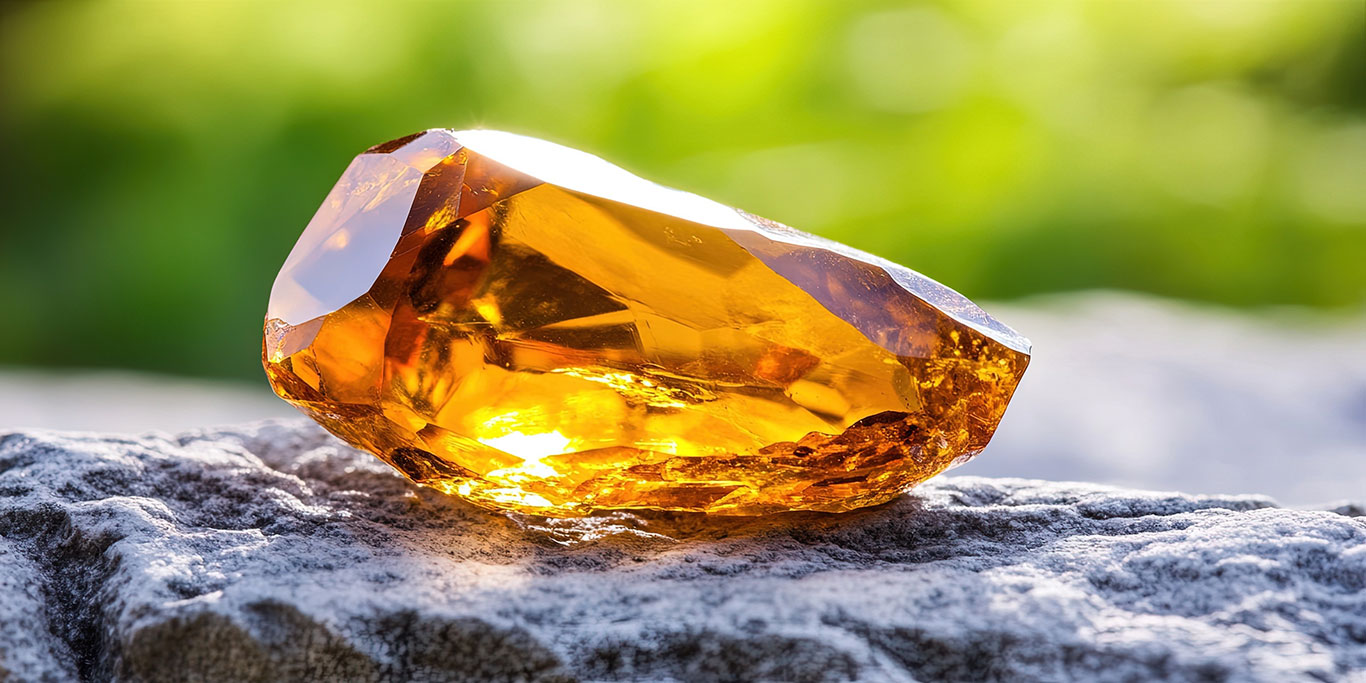
Citrine
| Property | Details |
|---|
| Mineral | Quartz |
| Mohs Hardness | 7 |
| Refractive Index | 1.544 – 1.553 |
| Birthstone | November |
| Anniversary | 13th |
| Major Sources | Brazil, Bolivia, Spain, Madagascar |
| Treatments | Heat-treated amethyst (standard, permanent) |
Overview
Citrine is the golden to orange variety of quartz, known as the merchant's stone for its historical association with prosperity and success. Colors range from pale lemon yellow to a deep, reddish-orange called Madeira citrine. Natural citrine is quite rare; most commercial citrine is produced by heat-treating amethyst, which permanently transforms the purple color into warm golden tones.
History & Lore
Ancient Greek merchants carried citrine as a talisman believed to attract wealth. Scottish warriors and Celtic peoples used citrine to adorn the handles of daggers and swords. The gemstone was most popular during the Art Deco era of the 1920s and 1930s, when Hollywood stars wore elaborate citrine jewelry.
Quality & Value Factors
A vivid, saturated yellow or a rich reddish-orange (Madeira) is most valued. Clarity should be eye-clean, which is standard for quartz. Natural citrine commands a slight premium over heat-treated material, but both are equally durable and beautiful. Its warm color complements both yellow and rose gold settings beautifully.
Care & Cleaning
Citrine ranks 7 on the Mohs scale, making it durable for everyday jewelry. It can be cleaned with warm soapy water or an ultrasonic cleaner. Avoid prolonged exposure to intense heat or direct sunlight, as it can alter the stone's color.