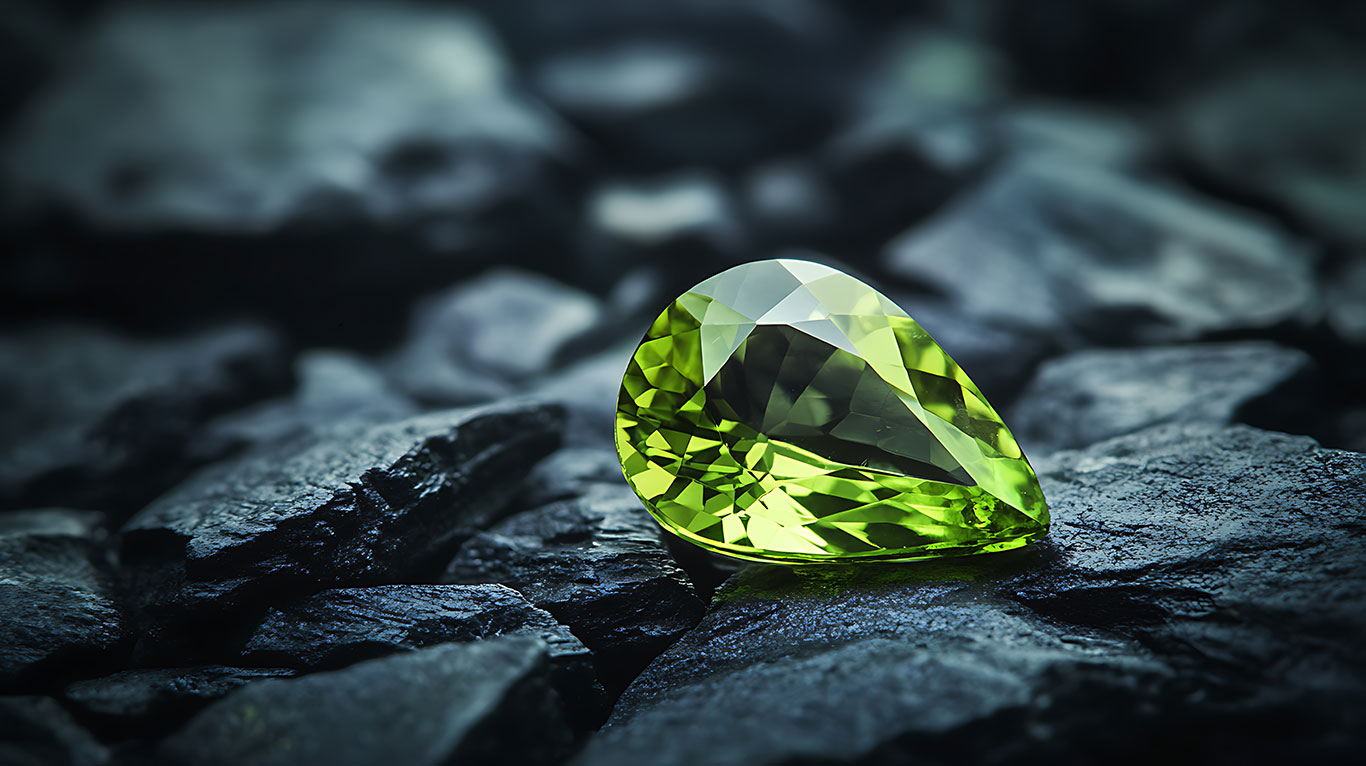
Peridot
| Property | Details |
|---|
| Mineral | Olivine |
| Mohs Hardness | 6.5 – 7 |
| Refractive Index | 1.654 – 1.690 |
| Birthstone | August |
| Anniversary | 16th |
| Major Sources | Arizona (USA), Pakistan, Myanmar, China |
| Treatments | Rarely treated |
Overview
Peridot is the gem variety of the mineral olivine, displaying a distinctive olive to lime green color that is one of the few gemstone colors caused by the stone's basic chemical composition rather than trace impurities. This means peridot only comes in green—the shade varies from yellowish-green to a rich, pure green depending on iron content.
History & Lore
Peridot is one of only two gemstones (along with diamond) found in meteorites, and it forms deep in the earth's mantle, brought to the surface by volcanic activity. Ancient Egyptians called it the gem of the sun. Cleopatra's famous emerald collection is now believed to have actually been peridot. The volcanic island of Zabargad in the Red Sea was the primary source for thousands of years. Today, the San Carlos Apache Reservation in Arizona is a major source.
Quality & Value Factors
The most desirable color is a rich, lime green without brown or yellow overtones. Larger stones display more vivid green. Clarity should be eye-clean. Peridot is one of the few gemstones that is rarely treated—the color is entirely natural. Pakistani peridot from the Kashmir region produces some of the finest, most saturated stones available today.
Care & Cleaning
Peridot ranks 6.5 to 7 on the Mohs scale. While suitable for most jewelry, it should be worn with care in rings. Peridot is sensitive to acids and should never be cleaned with acidic solutions. Warm soapy water and a soft brush are the safest cleaning method. Avoid ultrasonic and steam cleaners.