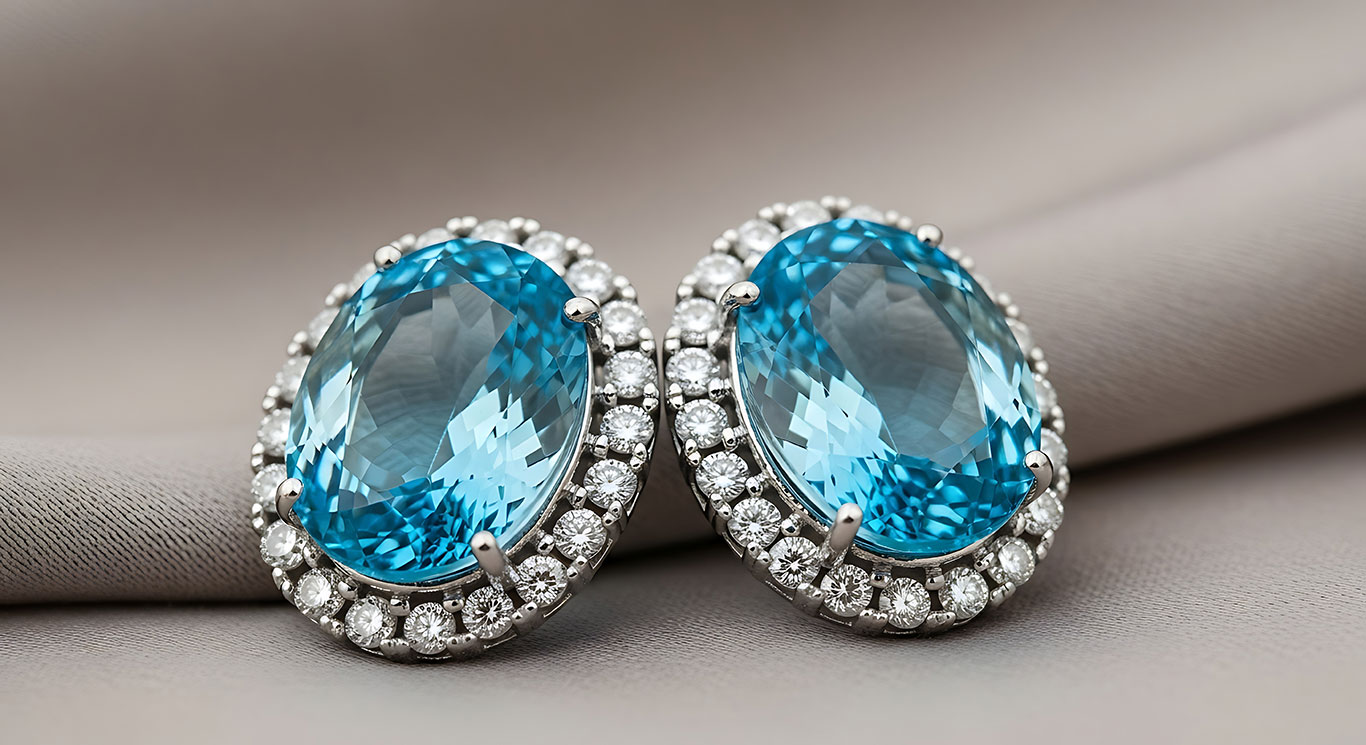
Aquamarine
| Property | Details |
|---|
| Mineral | Beryl |
| Mohs Hardness | 7.5 – 8 |
| Refractive Index | 1.577 – 1.583 |
| Birthstone | March |
| Anniversary | 19th |
| Major Sources | Brazil, Pakistan, Nigeria, Madagascar, Mozambique |
| Treatments | Heat treatment to remove green tints (standard) |
Overview
Aquamarine is the blue to blue-green variety of the mineral beryl (a cousin of emerald). Its name comes from the Latin for water of the sea, perfectly describing its cool, tranquil color. The most valued shade is a medium-dark blue without green undertones, sometimes called Santa Maria aquamarine after the famous Brazilian mines. Unlike emerald, aquamarine is typically very clean and free of visible inclusions.
History & Lore
Ancient mariners treasured aquamarine as a talisman of good luck and protection at sea. Roman fishermen called it the treasure of mermaids. The largest gem-quality aquamarine ever found was discovered in Marambaia, Brazil, in 1910, weighing 243 pounds. In medieval times, aquamarine was thought to reawaken the love of married couples.
Quality & Value Factors
Color is the primary value driver. Deep, saturated blue without green tints is most prized. Clarity is expected to be excellent—aquamarine should be eye-clean. Because color is more intense in larger stones, aquamarine is an excellent choice for statement jewelry pieces where the larger size truly showcases the gem's beauty. Heat treatment to remove greenish tints is common and permanent.
Care & Cleaning
Ranking 7.5 to 8 on the Mohs scale, aquamarine is an excellent gemstone for everyday wear. It is tough and resistant to scratching. It can be safely cleaned with warm soapy water or in an ultrasonic cleaner.
Shop Aquamarine Jewelry
Browse our collection of aquamarine jewelry including rings, earrings, and pendants set in white gold and platinum.