60–70% Lead Metal Rule: Wear Mixed Metal Jewelry with Intent
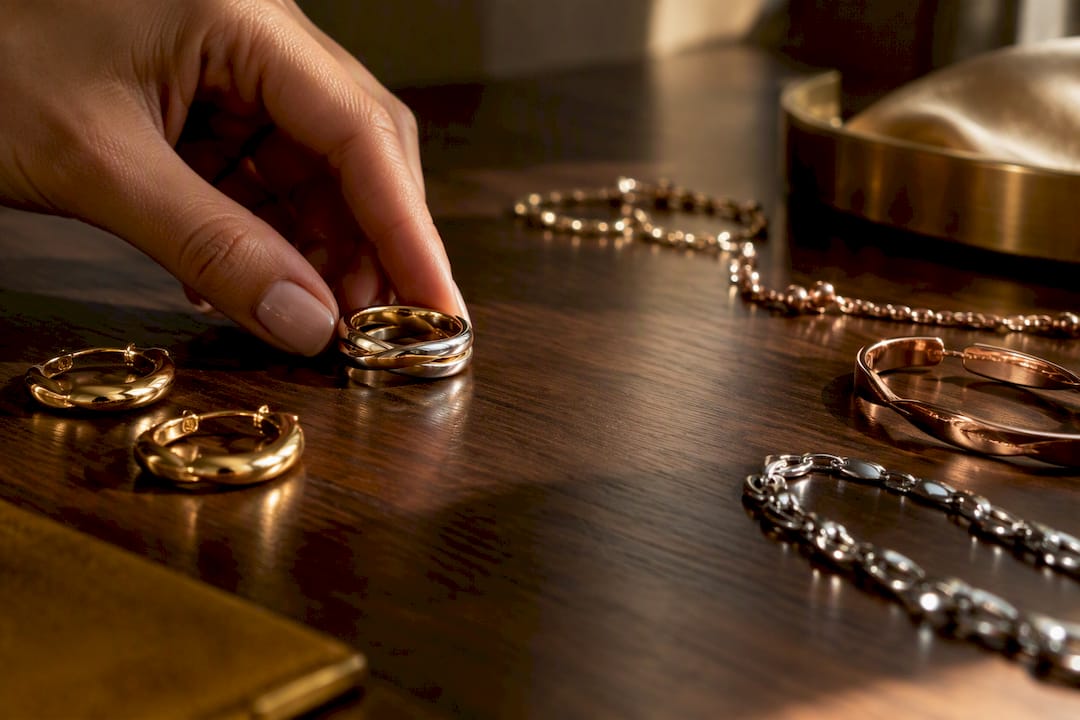
Yes, you can mix metals, and done right, it looks intentional rather than accidental. The main rule we live by is balance: pick a lead metal to carry the majority of the visual weight, then let the others play a supporting role. Keep in mind that plating and finish will change how your pieces age, so factor care into your choices from the start.
TL;DR:
- Mixing metals works best when one metal dominates about 60 to 70 percent of the look, with others serving as accents or supporting pieces.
- Layer odd numbers of jewelry items, such as three or five, to create a more deliberate and polished appearance rather than even stacks.
- Clear contrast between metals, such as yellow gold next to platinum or rose gold, prevents a mismatched appearance, especially when the shades are close.
- Platinum offers superior durability and hypoallergenic qualities, making it a reliable anchor piece despite its higher initial cost.
- When styling, spread mixed metals across different body areas and keep finishes consistent for a cohesive design.
Table of Contents
- Quick Rules and Ratios for Mixing Metals
- Mixing Metals by Jewelry Type: Rings, Necklaces, Bracelets, and Earrings
- Metal Pairing, Durability, and Care
- Step-by-Step Styling Method to Build a Mixed-Metal Look
- Buying Note: What to Check for Accurate Mixed-Metal Labeling
- Where Mixed Metals Come From: A Look Back
- Common Mistakes to Avoid When Mixing Metals
- Choosing Metal Tones for Your Skin Tone
- Mixing Metals with Leather, Fabric, and Other Materials
- Taking Mixed Metals from Casual to Formal
- Pairing Metals with Watch Accessories
- A Designer’s Approach to Mixed Metals
- Bring Your Mixed-Metal Vision to Life
- Sources
- FAQ
Quick Rules and Ratios for Mixing Metals
There is no rulebook that bans mixing gold, silver, and platinum, but there are guidelines that keep the look polished instead of mismatched. Jewelers Mutual recommends starting with just two metals and letting one lead with the majority of what you’re wearing, with the second metal used as an accent.
For stacks and layers, odd numbers tend to look more deliberate than even ones. Three, five, or seven pieces read as a curated set, while two or four can look like an unfinished thought.
- Let one metal dominate (about 60 to 70%) and treat the rest as accents.
- Group stacked rings or bangles in odd numbers, such as three or five.
- Apply a 40/60 split when pairing a statement piece with a few dainty ones.
- Match finishes (all polished or all matte) when you want a quieter look, and contrast them when you want the mix to stand out.
The biggest styling trap is choosing metals that are almost the same shade. A pale yellow gold next to a slightly warmer rose gold can look like a mistake instead of a mix, so Jewelers Mutual advises picking clear contrasts or a shared texture that visibly links the pieces together.
Pro Tip: If you’re unsure where to start, buy one mixed-metal piece, like a two-tone ring or pendant, and build the rest of your look around its two colors.
Mixing Metals by Jewelry Type: Rings, Necklaces, Bracelets, and Earrings
Every category of jewelry has its own quirks when it comes to combining metals, mostly tied to how the pieces physically interact with each other.
- Rings. Pick one finger as your focal point and stack no more than three to five rings there, since more than that tends to overwhelm the hand. Watch the karat: higher-karat gold tends to be softer than lower-karat, so a hard platinum band worn next to a softer gold metal can wear a groove into the softer metal over time.
- Necklaces. Anchor the look with one dominant chain or a single mixed-metal focal pendant, then vary the lengths of any additional necklaces so the eye has room to separate them. Layering three chains at the same length just creates a tangle.
- Bracelets. Start with one strong piece, a cuff or a tennis bracelet, and layer thinner chains or bangles around it. Keep total weight and movement in mind. A wrist stack that clinks and catches on sleeves gets abandoned fast, no matter how good it looks in the mirror.
- Earrings. If you have multiple piercings, the cascading rule works well: put the largest piece at the lobe and let the studs or hoops get smaller as they move up the ear. Asymmetrical pairs, one drop and one stud, only work when the two pieces share a metal tone or a common detail.
- Engagement and wedding sets. Metal color changes how a diamond reads to the eye. GIA notes that white metals like platinum or white gold make a diamond look whiter, while yellow or rose gold can warm up the stone’s appearance. For a mixed-metal band, white metal prongs around the center stone are the safer choice if you want the diamond itself to look as colorless as possible.
Metal Pairing, Durability, and Care
Mixing metals is as much about maintenance as it is about looks, since gold, silver, and platinum age at different speeds. White gold is usually rhodium plated, and that plating is what gives it a bright white shine. Over time it can wear thin, and GIA notes that the piece will eventually need replating to keep its original brightness. Sterling silver is softer still and tarnishes with air and skin contact, so it needs more frequent polishing than gold or platinum.
A quick fact worth knowing: platinum is generally more durable and hypoallergenic compared with other ring metals, which makes it a dependable anchor piece in a mixed-metal collection, even if it costs more upfront.
- White gold: bright and durable, but expect occasional replating as the rhodium wears.
- Sterling silver: affordable and versatile, but it tarnishes and needs regular cleaning.
- Platinum: dense, long-lasting, and a solid choice for sensitive skin.
- Titanium and tungsten: tough, but limited in resizing and prone to cracking under stress.
Store mixed-metal pieces separately so harder metals don’t scratch softer ones, and clean each piece according to its own metal rather than treating your whole collection the same way. For practical advice on securing valuable jewelry at home, including mixed-metal pieces, see our guide on jewelry safes that fit real security needs.
Step-by-Step Styling Method to Build a Mixed-Metal Look
Building a mixed-metal outfit is easier when you treat it like a short checklist instead of guesswork.
- Choose your focal piece. This becomes your lead metal and sets the tone, whether you want a subtle contrast or a bold one.
- Add one or two accent metals. Pick pieces whose finish or texture visually echoes the focal piece, a matte accent next to a matte lead, for example, so the eye reads them as a set.
- Spread the metals across your body. Rather than clustering everything on one hand, place mixed metals across your neck, wrists, hands, and ears so no single area looks crowded.
A daytime look might pair a dainty gold pendant with a slim silver bracelet and small gold studs, keeping the mix quiet. An evening look can afford more contrast: a bold platinum cuff, a rose gold ring, and drop earrings that combine both tones in one piece.
Pro Tip: When in doubt, let your most expensive or most meaningful piece, like an heirloom ring, set the lead metal for everything else you wear that day.
Buying Note: What to Check for Accurate Mixed-Metal Labeling
Shopping for mixed-metal pieces online means trusting a label you can’t touch, so it helps to know what the rules actually require. The FTC requires sellers to accurately mark karat gold and platinum purity and to clearly disclose when a piece is plated rather than solid.
- Look for a karat stamp (10k, 14k, 18k) rather than a vague “gold tone” label.
- Confirm platinum purity claims, since genuine platinum jewelry typically runs at 950 parts per thousand.
- Check that “vermeil” pieces meet the standard: sterling silver plated with at least 10k gold at a minimum thickness, as defined in FTC guidance.
- Read the fine print for “plated” versus “rolled plate,” since they describe different thicknesses of gold coating.
Where Mixed Metals Come From: A Look Back
Mixing metals is not a new trend, it is closer to a return to form. Ancient Egyptian jewelers combined gold with silver alloys, and Etruscan goldsmiths layered gold with other metals centuries before “mixed metal” became a marketing phrase. For much of the 20th century, though, matching metals became the expected rule, largely driven by boxed jewelry sets sold as coordinated pairs, a necklace, ring, and earrings all in the same gold tone.
That expectation started loosening in the 1990s and 2000s as designers reintroduced two-tone pieces, rings and bracelets that combined white and yellow gold in a single design rather than asking the wearer to choose one or the other. Today, mixing metals is closer to how people actually build a jewelry collection over time: a family ring in yellow gold, a modern platinum band, a silver piece from a trip abroad. Rather than replacing pieces to keep everything matching, more people are choosing to style what they already own together.
This shift also reflects how jewelry is sourced now. Family collections built up over decades naturally include several metals, and treating that variety as a feature rather than a flaw is part of what makes mixed-metal style feel personal instead of arbitrary.
Common Mistakes to Avoid When Mixing Metals
A few missteps show up again and again when people try mixing metals for the first time. The most common is picking metals that are close in tone but not identical, a slightly warm white gold next to a cooler platinum piece, which reads as a mismatch rather than an intentional pairing. Clear contrast avoids that trap.
Overcrowding is another frequent issue. Stacking six rings across two fingers or layering five necklaces at once tends to look cluttered no matter how nice each individual piece is. Fewer, well-chosen pieces almost always outperform a pile of them.
Ignoring durability is a quieter mistake that shows up later. Wearing a hard platinum band pressed against a softer 18k gold ring every day can scratch or wear down the softer metal over months of contact. Mixed stacks need occasional rotation or spacer pieces to avoid this kind of wear.
Finally, some people mix metals but forget to link them with any shared element, texture, finish, or a single mixed-metal piece that bridges the two tones. Without that connector, the eye reads two separate jewelry collections instead of one coordinated look.
Choosing Metal Tones for Your Skin Tone
Skin tone plays a real role in which metal looks brightest against your hand, wrist, or ear. People with cooler undertones, hints of pink or blue visible at the wrist, often find that silver, white gold, or platinum look crisp and clean against their skin. Warmer undertones, with more yellow or golden hints, tend to glow next to yellow gold or rose gold.
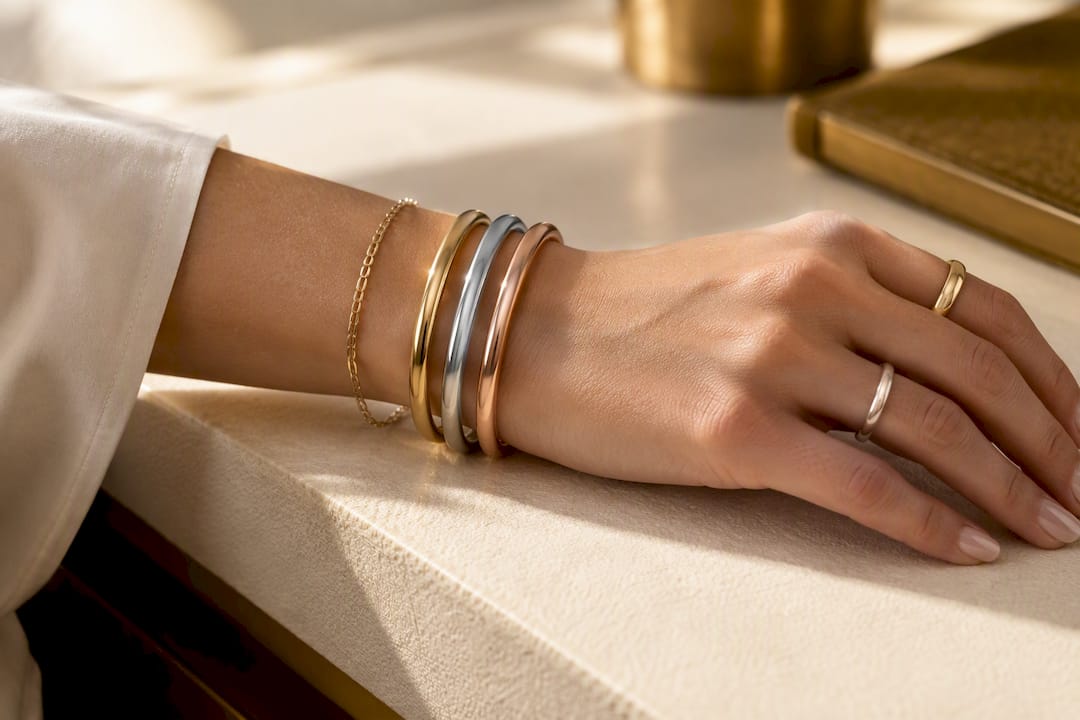
This is exactly why mixing metals works so well as a personal style choice rather than a strict rule. If you have a neutral undertone, both warm and cool metals tend to look good on you, which makes mixing especially easy since neither tone will fight your complexion. If you lean strongly warm or cool, you can still mix metals, just let your most flattering tone lead at that 60 to 70% ratio and use the other as the accent.
Mixing Metals with Leather, Fabric, and Other Materials
Metal doesn’t have to mix only with metal. Leather bracelets, fabric cords, and beaded strands are common ways to bridge two metal tones without adding a third precious metal to the mix. A leather cuff with small gold and silver hardware, for instance, gives both tones a neutral background to sit against rather than competing directly with each other.
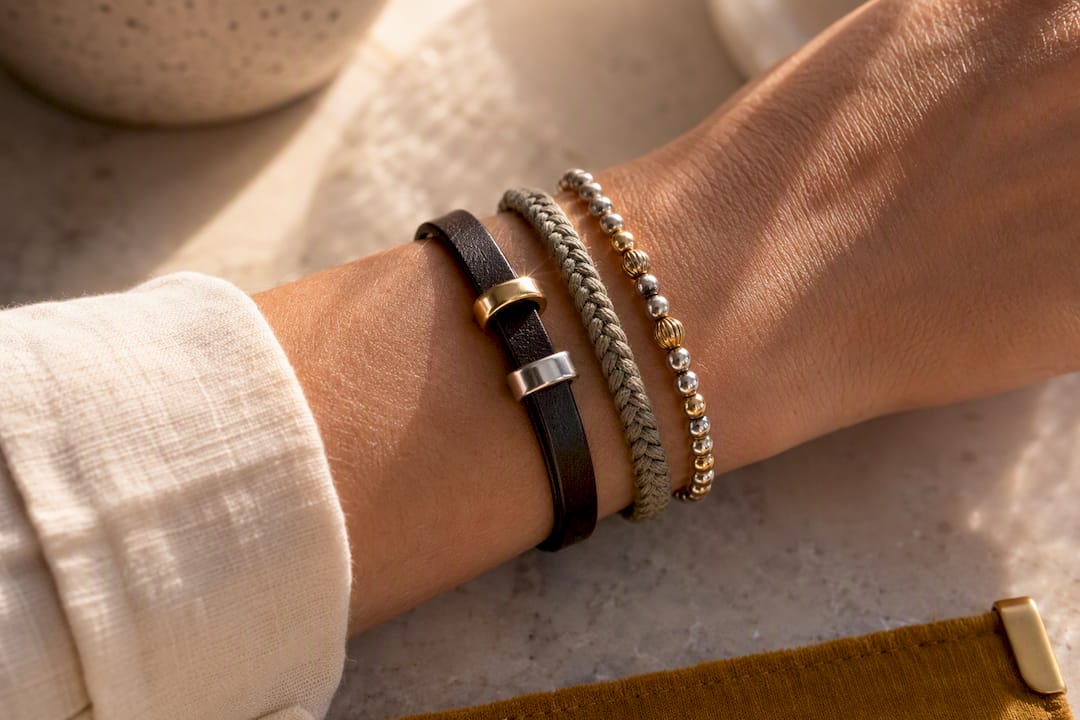
Fabric and cord pieces work well in layered necklace stacks, too, adding texture and a lower price point next to a more substantial metal chain. The same balance rule applies here: let one material or metal lead visually, and treat the rest as texture and accent rather than trying to give every piece equal weight.
Taking Mixed Metals from Casual to Formal
A mixed-metal look that works for a weekday errand can carry through to a formal event with a few adjustments rather than a full wardrobe change. For daytime, keep the mix subtle, small studs, one thin bracelet, a simple pendant, so the metals blend into the outfit rather than announcing themselves.
For evening or formal occasions, scale up the contrast and the size of the pieces. Swap dainty studs for statement earrings that combine two metals in one design, and let a single cuff or cocktail ring carry more visual weight than your daytime pieces would. The core rule doesn’t change, one metal still leads, but the ratio of bold to subtle pieces shifts toward drama for a formal setting.
Pairing Metals with Watch Accessories
A watch is often the largest metal accessory on your body, so it deserves a place in your mixed-metal planning rather than being treated as separate from your jewelry. If your watch case and band are steel or white gold, that becomes a natural cue to lean toward silver or platinum jewelry on that wrist, keeping the metals in the same cool family.
Gold watches work the same way in reverse: they pair naturally with yellow or rose gold rings and bracelets nearby. If you want to mix intentionally, a two-tone watch face, one with both gold and silver detailing, gives you the most flexibility, since it visually justifies wearing either metal elsewhere on your body that day.
A Designer’s Approach to Mixed Metals
We tell customers to start with two metals and build from there, using texture and finish, not just color, to make the pairing look intentional. Because we manufacture in-house, two-tone rings and pendants come off our bench as one cohesive piece rather than two mismatched parts soldered together.
— Joseph
Bring Your Mixed-Metal Vision to Life
If you’ve been eyeing a two-tone ring or a piece that blends gold and platinum, our Design Your Own tools let you choose the exact metal combination you have in mind, down to the karat and finish. Because the manufacturer produces jewelry in-house, custom two-tone pieces avoid additional markups, offering better pricing compared to traditional retail options.

Browse our gold jewelry collection or platinum jewelry for ready-made pieces, or start a custom design if you have a specific mixed-metal combination in mind. Every piece ships free and insured, and comes backed by a 30-day money-back guarantee if it’s not quite right.
Sources
- Buying platinum, gold, and silver jewelry — FTC
- Buying guide: white, yellow and rose gold engagement rings — GIA 4Cs
- White gold vs. silver: What you need to know — Jewelers Mutual
FAQ
Is It Okay to Wear Mixed Metal Jewelry?
Yes, wearing mixed metal jewelry is widely accepted and often looks more personal than an all-matching set. The key is intention: let one metal lead and use the others as accents, rather than mixing randomly.
What Is the 2:1:1 Rule for Jewelry?
There’s no single official “2:1:1 rule” recognized across the jewelry industry, so definitions vary depending on the source. A more common guideline is the 60/40 or 40/60 approach, where one metal or piece size dominates and the rest fill a supporting role, along with odd-number groupings for stacks.
What Two Metals Can You Not Put Together?
There’s no metal combination that’s technically forbidden, but pairing metals that are nearly identical in tone, like a slightly warm white gold next to platinum, tends to look like a mismatch rather than an intentional mix. Choosing clearly contrasting tones or a shared texture avoids that problem.
What Metals Cannot Be Mixed Together?
Any precious metals can be worn together stylistically, though some combinations need more care due to hardness differences. For example, a hard platinum band worn daily against a softer 18k gold ring can wear a groove into the gold over time, so rotating pieces or using a spacer band helps protect softer metals.
How Do You Keep Mixed Metal Jewelry Looking Its Best?
White gold may eventually need replating, sterling silver needs regular polishing to manage tarnish, and storing pieces separately prevents harder metals from scratching softer ones.
Recommended
- How to Mix Gold and Silver Jewelry: A Complete Styling Guide
- Precious Metals Guide: Gold & Platinum
- Men’s Jewelry Guide: Chains, Rings, Bracelets & More
- Engagement Ring Metal Types: Your 2026 Buying Guide

Deep Mehta is the Co-Owner of USA Jewels, a family-owned jewelry business she has led since 2013 in Deerfield Beach, Florida. With over 13 years of hands-on experience in fine jewelry retail, manufacturing, and diamond importing, Deep specializes in engagement rings, wedding bands, and custom jewelry design. She also co-manages Kaash Group Talent Acquisition. Deep is a University of Florida graduate and oversees every aspect of USA Jewels’ operations, from product development to marketing.
Fine Jewelry Collection

You May Also Like

Design a Custom Wedding Ring Set That’s Truly Yours

Top 5 bayamjewelry.com Engagement Ring Alternatives 2026