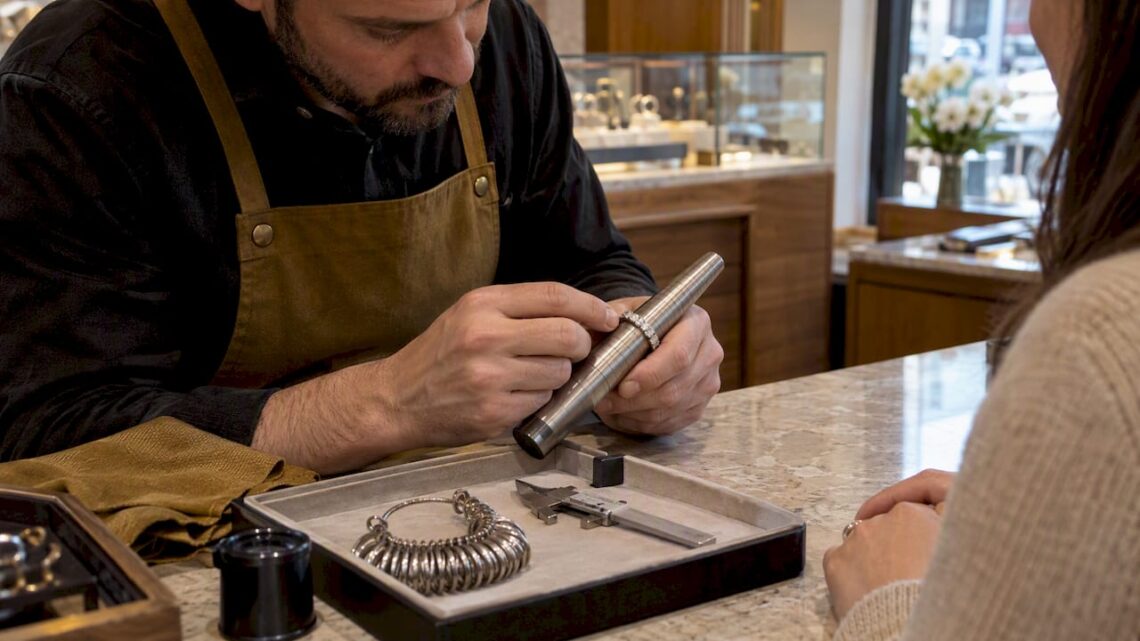
Bar Setting Rings: How to Balance Sparkle and Resizing With USA Jewels
A bar setting secures stones between slim vertical metal bars, leaving more of the stone exposed to light than a channel setting does. It suits stackable anniversary bands, half eternity designs, and three-stone rings when you want symmetry and extra sparkle, though you take on slightly more stone exposure and a bit more upkeep. For everyday wear or a full eternity band, think through resizing before you buy.
TL;DR:
- Bar settings increase light exposure and brilliance but require more frequent cleaning and careful resizing, especially on full eternity designs.
- They are best suited for round brilliants and baguettes, fitting well into modern, stackable, and graduated designs, with shorter bars offering more comfort.
- Platinum offers better durability for daily wear, while gold variants are more affordable but may need replating, and plating metals should generally be avoided for longevity.
- Resizing bar-set rings is more challenging than prong settings, especially for full eternity bands, and it depends heavily on the particular design and craftsmanship.
- Proper maintenance includes annual inspections, gentle cleaning, and asking your jeweler about sustainability and resizing limits before purchase.
Table of Contents
- What a bar setting is and how it holds stones
- Advantages and disadvantages of bar-set rings
- How bar settings compare with channel, prong, bezel, and pave
- Best stone shapes and ring styles for bar settings
- Metals, finishes, and design variations that matter
- Care, maintenance, inspections, and resizing notes
- Buying considerations: budget, questions, and a quick checklist
- How USA Jewels approaches bar-set ring design
- What actually matters when choosing a bar setting
- Order or customize a bar-setting ring with USA Jewels
- FAQ
- Sources
What a bar setting is and how it holds stones
In a bar setting, thin metal bars run between each stone, holding them upright with shared supports on either side. The sides of each stone stay open to light, which bar settings secure diamonds between vertical bars and increase light and brilliance compared with channel settings, according to The Diamond Pro’s buying guide. Jewelers solder or fuse the bars directly to the band, which keeps the profile relatively low and lets stones sit close together in a clean row.
You’ll see this construction most often in:
- Half and full eternity bands, where stones circle part or all of the ring
- Three-stone rings, where bars frame a center stone with two side stones
- Anniversary bands meant to stack with an existing wedding set
The result is a ring with a straight, architectural line and noticeably more sparkle per stone than a channel-set equivalent, since light reaches the stone from more angles.
Advantages and disadvantages of bar-set rings
The main appeal is light. Open sides mean each stone catches more of it, and the vertical bars create a crisp, symmetrical look that reads as modern rather than ornate. Bar settings also stack well, which makes them a popular pick for anniversary bands worn alongside an engagement ring.
The trade-off is exposure. With more of each stone open to the air, bar-set rings carry a higher chipping risk at the edges than channel settings, and the small, detailed metalwork needs more frequent cleaning to stay bright. Resizing is also more involved, particularly on full eternity designs where stones wrap the entire band.
- Pros: strong light return, symmetrical profile, good for stacking, solid vertical support for each stone
- Cons: more exposed edges than channel settings, trickier resizing on eternity styles, more frequent cleaning around the bars
Pro Tip: If you wear your ring daily and work with your hands, ask your jeweler about a half eternity layout instead of full eternity, since it balances sparkle with easier future resizing.
How bar settings compare with channel, prong, bezel, and pave
Every setting type balances protection, appearance, and resizing flexibility differently, and none of them wins on every axis. Bezel settings wrap a rim of metal around the stone’s edge and generally offer more protection, while channel, bar, and pave designs are generally harder to resize and collect dirt more easily, according to RingReel’s comparison of engagement ring settings.
- Bezel: strong edge protection, limited light exposure, simpler to maintain
- Channel: stones sit flush between two metal walls, moderate protection, harder to resize
- Prong: maximum light exposure, easiest to resize, least physical protection
- Bar: more light than channel, more exposure than bezel, resizing complexity similar to channel
- Pave: dense sparkle from many small stones, intricate cleaning needs, resizing limitations similar to bar and channel
GIA’s setting guidance notes that channel and bar settings can be more difficult to resize than prong settings, and that durability depends on the specific design and the jeweler’s skill rather than any fixed ranking by setting type. If daily protection matters more to you than maximum sparkle, bezel or channel may suit you better. If you want a clean, light-filled look and are comfortable with a bit more care, bar is a strong choice.
Best stone shapes and ring styles for bar settings
Bar settings were practically made for baguettes and round brilliants, since both shapes align cleanly between straight vertical supports. Tapered baguettes work especially well in designs that narrow toward the band, giving the ring a graduated look rather than a uniform row.
- Round brilliants pair naturally with bar settings and maximize light return along the row
- Straight baguettes suit full eternity bands and modern three-stone designs
- Tapered baguettes fit designs that narrow toward the shank, common in anniversary bands
- Mixed round and baguette layouts create contrast in three-stone rings
Bar height and stone depth affect both comfort and how well a ring stacks. A shorter bar profile sits more flush against the finger and stacks more comfortably against a wedding band, while taller settings add presence but can catch on fabric or gloves.
Metals, finishes, and design variations that matter
Metal choice shapes both the look and the long-term cost of a bar-set ring. Platinum holds its shape under daily wear and suits people with metal sensitivities, though it costs more upfront. Fourteen-karat and eighteen-karat gold cost less and come in yellow, white, or rose tones, with white gold requiring occasional rhodium replating to keep its bright finish.
- High polish finishes maximize the light-catching effect that makes bar settings appealing
- Matte or brushed finishes soften the look and hide small surface scratches better over time
- Inside-out bar settings place stones on the inner band, visible only to the wearer
- Half eternity designs leave room for future resizing; full eternity designs do not
Plated metals should generally be avoided for everyday rings, since plating wears thin with regular contact and exposes the base metal underneath.
Care, maintenance, inspections, and resizing notes
Bar-set rings reward routine attention more than most styles, simply because the open sides leave stones a bit more exposed to everyday knocks. Customer-education pages typically recommend yearly inspections and note that settings with many small details collect dirt more easily and need more frequent cleaning, a pattern that applies directly to bar settings.
- Have a jeweler check bar integrity and stone security at least once a year
- Clean gently with a soft brush and warm, mild soapy water, avoiding abrasive cloths on the bars
- Skip ultrasonic cleaners if any stone shows looseness, since vibration can worsen a weak setting
- Ask your jeweler to confirm resizing limits before buying a full eternity design
Pro Tip: Keep your ring’s inspection on the same schedule as a dental checkup, once a year, so small issues get caught before a stone works loose.
Half eternity bands generally resize more easily than full eternity bands, since the plain metal at the back gives a jeweler room to work. Full eternity rings with stones all the way around often require removing and resetting stones to resize, which adds cost and time.
Buying considerations: budget, questions, and a quick checklist
Price on a bar-set ring moves with three things: metal type, the number and size of the stones, and diamond quality. Platinum and larger stones push the price up, while gold and smaller accent stones keep it more accessible. Online retailers commonly price bar-set bands and engagement rings across a wide range depending on diamonds and metal, a useful starting point for budgeting before you start customizing.
Before you commit, ask the jeweler these questions and request documentation to back up the answers:
- What is the bar thickness, and does it meet a minimum standard for durability at this ring size?
- Are the bars reinforced at stress points, particularly near the base of the shank?
- What are the sizing limits for this specific layout, and is it half or full eternity?
- Does the ring come with a diamond grading certificate for the center stone?
- What is the warranty or inspection policy, and is routine cleaning included?
- Is ring insurance available or recommended given the setting style?
A reputable jeweler should answer all of these without hesitation, and a written warranty or inspection policy is worth more than a verbal promise. If you’re sourcing loose stones separately, USA Jewels’ certified loose diamonds page lists grading details for each stone before you commit to a setting.
How USA Jewels approaches bar-set ring design
USA Jewels builds its jewelry in-house as a family-owned manufacturer, which lets us offer custom pieces at direct pricing without a middleman markup. For a bar-set ring, that means you choose your diamond quality and metal type yourself, rather than picking from a limited shelf of finished designs. Our team can adjust bar thickness, stone shape, and setting style to match the durability and look you want for daily wear or special occasions.
We also source our diamonds ethically and back every ring with lifetime diamond upgrades, so your bar-set ring can grow with you if you later want a larger center stone or an updated band. These commitments come from the same in-house process we use for every custom order, not a one-off promise for a single ring style.
What actually matters when choosing a bar setting
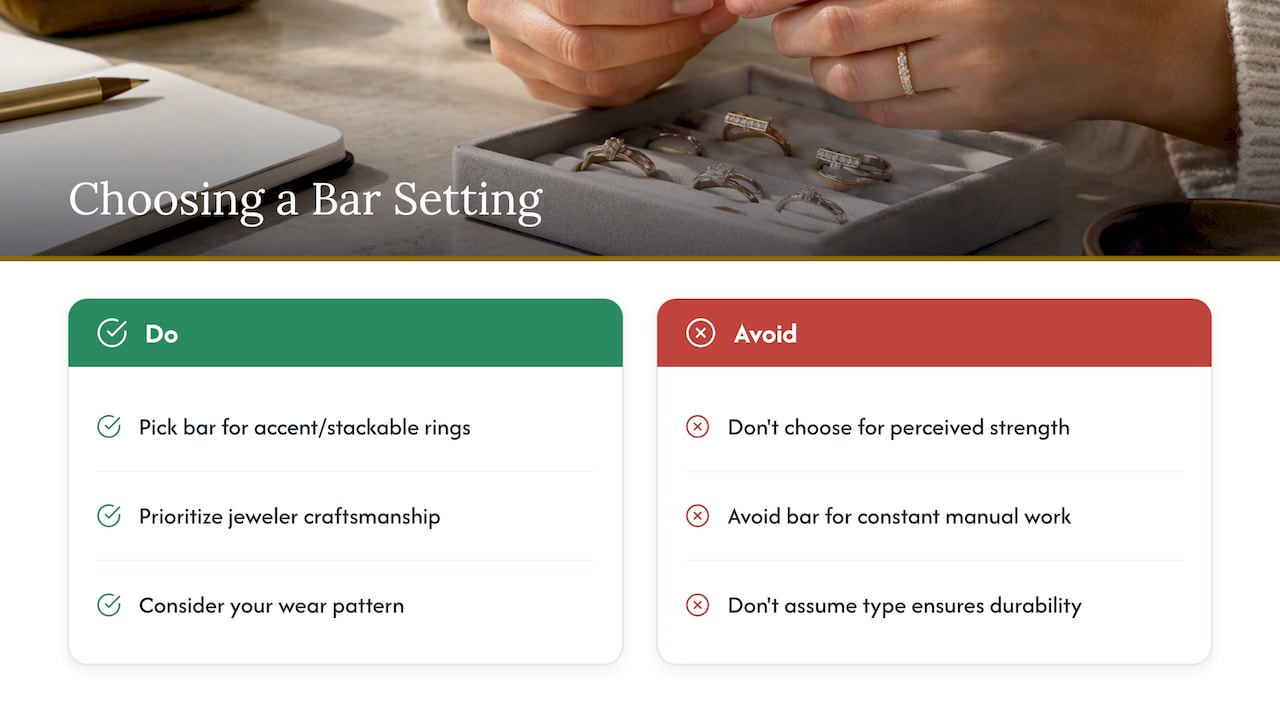
Most buying guides treat setting choice as a durability contest, ranking bezel above prong above bar as though the setting type alone decides how long a ring lasts. That framing overstates the case. GIA’s own guidance stops short of ranking settings by durability, and for good reason: a well-built bar setting from a careful jeweler can outlast a poorly built bezel. The setting type tells you about exposure and light, not about how long the ring will hold up.
What the research actually supports is narrower and more useful: bar settings trade some edge protection for noticeably more sparkle and a cleaner, more symmetrical look, and that trade is worth making for stackable bands and accent rings, less so for a ring worn constantly during manual work. The question worth asking isn’t “which setting is strongest,” it’s “who is building this one, and how will I actually wear it.” Prioritize the jeweler’s craftsmanship and your own wear pattern before you worry about setting type at all.
— Joseph
Order or customize a bar-setting ring with USA Jewels
If you’ve decided a bar setting fits your style, you don’t have to choose between the look you want and a price that makes sense. Our design-your-own process lets you pick the diamond shape, quality, and metal type yourself, then our in-house team builds the ring from there, which keeps costs direct instead of padded by a retail markup.

Start by browsing engagement rings to see finished examples, or explore certified loose diamonds if you want to choose your stone first. Our step-by-step design guide walks through the full customization process, including bar thickness and stone layout options. Every order ships insured, has a return policy, and may include diamond upgrade options. If you’re also planning the proposal itself, our wedding industry partner at Glenwood Wedding covers photography and videography packages worth looking at while you plan. Reach out to our team to start designing your bar-set ring today.
FAQ
What is a bar setting on a ring?
A bar setting holds stones between thin vertical metal bars, leaving the sides of each stone open to light. It’s common in eternity bands, anniversary bands, and three-stone rings where symmetry and sparkle matter.
What is a poor man’s diamond called?
People often use the term informally for cubic zirconia or moissanite, lab-made stones that resemble diamonds at a lower cost. Neither is a diamond, though moissanite has its own distinct brilliance and durability profile.
What kind of rings are resizable?
Rings with plain metal at the back of the band, including most prong and half eternity bar settings, resize most easily. Channel and bar settings can be more difficult to resize than prong settings, and full eternity designs with stones all the way around are the hardest of all.
What is the strongest setting for a ring?
There’s no official ranking of setting strength, since durability depends on the specific design and the jeweler’s craftsmanship as much as the setting type itself. Bezel settings generally offer more physical protection for the stone’s edges, while prong and bar settings trade some of that protection for more light and sparkle.
Sources
- GIA — Diamond cut and settings guidance
- Bar Settings: What to Know Before You Purchase — The Diamond Pro
- Engagement ring settings: types, styles and daily wear — RingReel
Recommended
- Pick Ring Setting Style Guide for Every Buyer
- Design a Custom Wedding Ring Set That’s Truly Yours
- Ring Guide: Engagement Settings & Styles
- Cathedral Ring Setting: What It Is and How to Choose One

Deep Mehta is the Co-Owner of USA Jewels, a family-owned jewelry business she has led since 2013 in Deerfield Beach, Florida. With over 13 years of hands-on experience in fine jewelry retail, manufacturing, and diamond importing, Deep specializes in engagement rings, wedding bands, and custom jewelry design. She also co-manages Kaash Group Talent Acquisition. Deep is a University of Florida graduate and oversees every aspect of USA Jewels’ operations, from product development to marketing.
Fine Jewelry Collection

You May Also Like
What Graduation Jewelry Symbolizes: A Gift-Giver’s Guide
Why Jeweler Reputation Matters When Buying Fine Jewelry