How to Spot Quality Jewelry Craftsmanship Like a Pro
Quality jewelry craftsmanship is defined by precise construction, authentic materials verified by official hallmarks, and flawless finishing that guarantees both longevity and beauty. Knowing how to spot quality jewelry craftsmanship separates a lasting treasure from a piece that tarnishes or breaks within months. The markers are concrete and learnable: hallmark stamps, gemstone certifications from bodies like the GIA and IGI, weight feel, prong security, and surface polish. You do not need to be a gemologist to read these signs. This guide gives you the practical tools to evaluate any piece with confidence before you buy.
Which hallmarks and certifications verify jewelry quality?
Hallmarks are the fastest authenticity check available to any buyer. These small stamps, pressed into the metal by regulatory authorities, confirm the precious metal content of a piece. Common hallmark numbers such as 375, 585, 750, and 925 correspond directly to gold and silver purity levels. That single stamp tells you more about a piece’s real value than any sales description.
Here is what each number means in plain terms:
- 375 = 9 karat gold (37.5% pure gold)
- 585 = 14 karat gold (58.5% pure gold)
- 750 = 18 karat gold (75% pure gold)
- 925 = sterling silver (92.5% pure silver)
A maker’s mark often appears alongside the purity stamp. This identifies the manufacturer and adds a layer of accountability. If a piece carries no hallmark at all, treat that as a red flag. Reputable sellers always provide documentation, and understanding silver hallmark meanings can sharpen your eye considerably when shopping for silver pieces.
Gemstone certifications add a second layer of protection. Certifications from GIA, IGI, and AGL verify whether a stone is natural or synthetic, confirm its color and clarity grade, and protect your investment from misrepresentation. Always ask for the certificate when buying a diamond or colored gemstone. A seller who cannot produce one is selling you a story, not a verified stone.
Pro Tip: Bring a small loupe or use your phone’s camera zoom to read hallmarks clearly in a store. Faint or smudged stamps can indicate a plated piece where the base metal is showing through.
How does craftsmanship show up in design and finishing?
The physical details of a piece reveal the skill of the maker more honestly than any price tag. Quality craftsmanship features evenly polished surfaces, symmetrical settings, and secure prongs with no visible glue or rough soldering. Run your fingertip along the inside of a ring band. A well-made piece feels smooth and uniform. A poorly made one feels gritty or uneven.
Watch for these specific signs of fine finishing:
- Uniform polish: The surface should reflect light evenly, with no dull patches or scratches from the manufacturing process.
- Symmetrical settings: Prongs holding a stone should be evenly spaced and the same height. Crooked or mismatched prongs indicate rushed work.
- Secure clasps: On bracelets and necklaces, the clasp should click shut firmly with no wobble.
- Balanced weight: The piece should feel solid in your hand, not hollow or flimsy.
- Clean solder joints: Where metal pieces join, the seam should be invisible. Visible glue or uneven soldering are immediate red flags that compromise both durability and appearance.
Poor craftsmanship signs are just as telling. Jagged edges on the inside of a band, stones that rock slightly when touched, and clasps that feel loose all point to shortcuts in production. These flaws are not cosmetic. They predict how quickly a piece will fail with regular wear. Reviewing common engagement ring design mistakes can train your eye to spot these problems before they cost you.
Pro Tip: Hold the piece under a bright light and tilt it slowly. Uneven surfaces catch light differently and become obvious. This trick works on rings, pendants, and earring backs.
What simple tests help you evaluate jewelry at home?
You do not need a laboratory to perform a reliable first assessment. Simple home tests plus hallmarks resolve 80–90% of jewelry authenticity cases without professional tools. That is a meaningful number. It means most buyers can protect themselves with knowledge alone.
- The magnet test. Hold a strong magnet near the piece. Real gold and silver are not magnetic. If the piece pulls toward the magnet, it contains base metals like iron or nickel beneath a thin plating.
- The ice test. Place the piece on an ice cube. Real silver conducts heat so efficiently that the ice melts noticeably faster than it would under a piece of glass or plastic. This works because silver has one of the highest thermal conductivity ratings of any metal.
- The weight test. Hold the piece and compare it to a known solid piece of similar size. Solid gold and silver pieces feel heavier than plated or hollow items. A ring that feels surprisingly light is likely hollow or filled with a base metal core.
- The visual hallmark check. Use your phone camera to zoom in on the inner band or clasp. The stamp should be crisp and clear. Blurry or incomplete stamps suggest the piece was not made to standard.
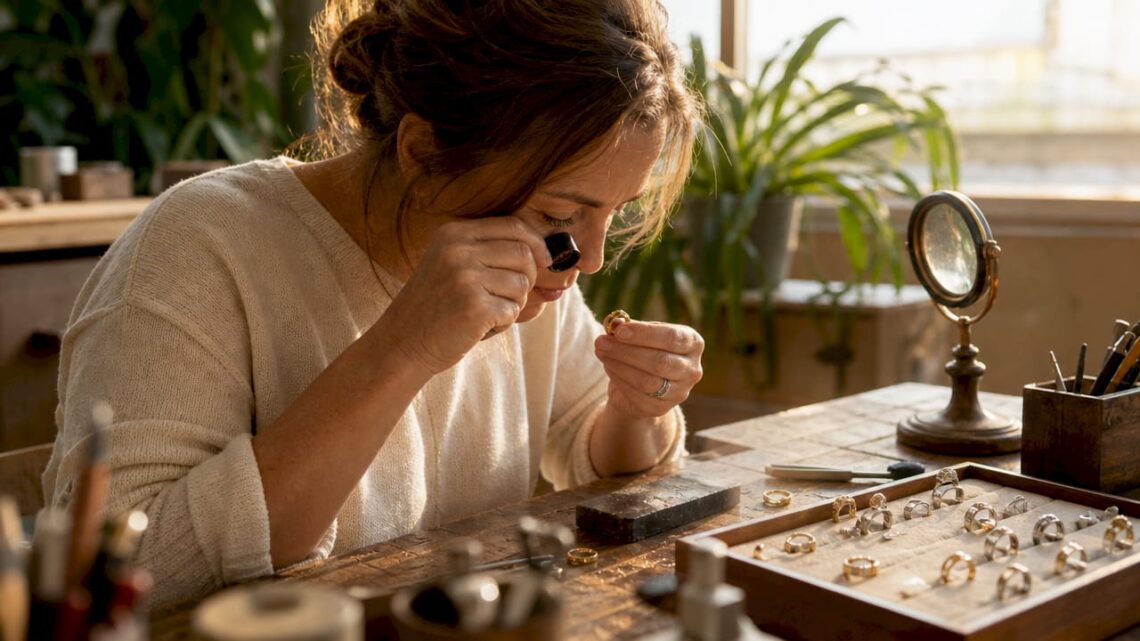
- The loupe inspection. A 10x jeweler’s loupe reveals surface scratches, uneven prongs, and solder seams invisible to the naked eye. Many jewelers will let you use one in store.
When these tests raise doubts, take the piece to a certified appraiser. Professional inspection costs a small fee and can save you from a significant mistake on a high-value purchase.
How do you identify quality gemstone settings and certifications?
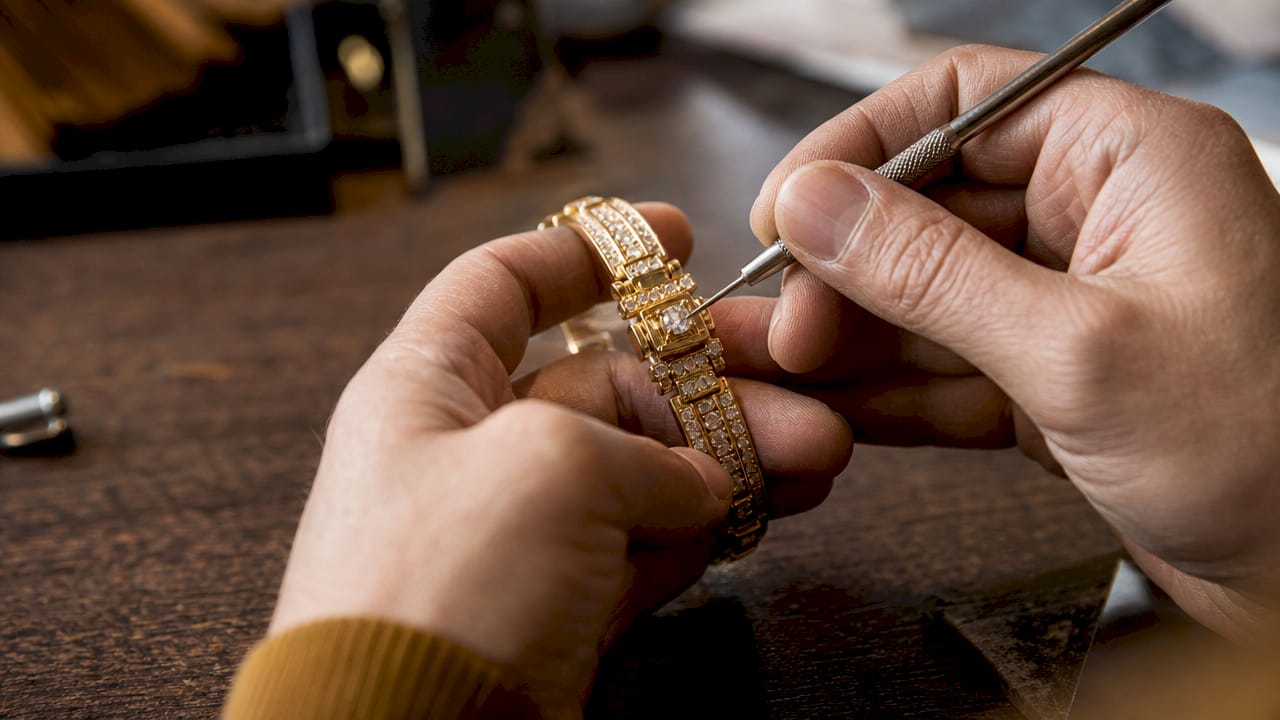
A gemstone is only as secure as its setting. Hand-setting of stones and smooth solders without seams are hallmarks of fine craftsmanship that ensure a piece lasts decades. Mass-produced jewelry often uses machine-set stones, which are faster to produce but less precise. The difference shows up under magnification.
Look for these qualities in any gemstone setting:
- Tight prong work: Each prong should grip the stone firmly with no gap between metal and gem.
- Symmetrical placement: The stone should sit centered in its setting, not tilted or off-axis.
- Smooth bezel edges: In bezel settings, the metal rim surrounding the stone should be even and flush.
- No movement: Gently press the stone with a fingertip. Any rocking or clicking indicates a loose setting that will eventually lose the stone.
Certification protects your investment beyond the physical inspection. The diamond 4 C’s framework (cut, color, clarity, and carat weight) gives you a standardized way to compare stones across sellers. A GIA or IGI certificate documents these grades independently, so you are not relying on a seller’s word.
| Certification body | What it verifies | Best used for |
|---|---|---|
| GIA | Cut, color, clarity, carat | Diamonds |
| IGI | Natural and lab-grown diamonds | Diamonds, colored stones |
| AGL | Origin and treatment history | Colored gemstones |
Buyers who skip certification often discover later that their “natural” stone was treated or synthetic. The certificate is not paperwork. It is proof.
How do materials and construction affect durability and value?
The metal you choose determines how a piece ages. 14K gold contains 58.3% pure gold, while 18K contains 75%, and that difference shapes both durability and color. 14K gold is harder and more resistant to scratching, which makes it better for rings worn daily. 18K gold is softer but richer in color, making it a popular choice for earrings and pendants that see less friction. Understanding why 14K gold is popular for high-wear pieces helps you match the metal to the occasion.
The distinction between solid metal and plated metal is the single most important construction factor for long-term value. Fine jewelry uses solid gold or sterling silver throughout. Demi-fine jewelry uses gold vermeil, which is a thick gold layer over sterling silver. Fashion jewelry uses thin gold plating over base metals. Distinguishing fine from demi-fine jewelry hinges on whether metals are solid or plated, and that distinction directly affects repair options and how long the piece lasts.
| Construction type | Metal composition | Longevity |
|---|---|---|
| Fine jewelry | Solid 14K or 18K gold | Decades with proper care |
| Demi-fine jewelry | Gold vermeil over sterling silver | Several years |
| Fashion jewelry | Thin plating over base metal | Months to one year |
Construction also affects repairability. A solid gold ring can be resized, re-tipped, and re-polished by any skilled jeweler. A plated piece cannot be repaired the same way. Once the plating wears through, the base metal shows and the piece cannot be restored to its original appearance. Buying solid metal is not just an aesthetic choice. It is a practical one.
Key takeaways
Identifying quality jewelry craftsmanship requires checking hallmarks, verifying gemstone certifications, inspecting physical finishing, and understanding the difference between solid and plated metal construction.
| Point | Details |
|---|---|
| Read hallmarks first | Stamps like 585 and 925 confirm metal purity and are the fastest authenticity check. |
| Demand gemstone certificates | GIA and IGI certificates verify stone grades independently and protect your investment. |
| Inspect finishing details | Smooth polish, symmetrical prongs, and invisible solder joints separate fine work from poor work. |
| Test weight and magnetism | Solid pieces feel heavier and do not react to magnets, unlike plated or base-metal items. |
| Choose solid over plated | Solid gold and silver last decades and can be repaired; plated pieces cannot. |
What I’ve learned from years of watching buyers miss the obvious
Most buyers walk into a jewelry purchase focused entirely on how a piece looks in the display case. That is understandable. Jewelry is visual. But the most common regrets I hear come from buyers who loved the look and ignored the construction. A stone that falls out six months later, a clasp that breaks on the first anniversary, a ring that turns a finger green. These are not bad luck. They are the predictable result of skipping the inspection.
The misconception I see most often is that price equals quality. A high price tag does not guarantee a hallmark. I have seen unmarked pieces sold at premium prices and beautifully crafted certified pieces sold at fair, direct prices. The difference is the seller’s transparency. A trustworthy retailer welcomes your questions about hallmarks, certifications, and construction. One who deflects those questions is telling you something important.
My honest advice is this: combine the physical inspection with the paperwork. Neither alone is enough. A beautiful piece with no certificate could be hiding a treated stone. A certified stone in a poorly made setting will not last. You need both. And when you find a seller who offers certified stones, solid metals, and honest documentation, that is where you spend your money. Quality jewelry is not just an aesthetic choice. It is a decision that carries emotional weight for years. Make it with your eyes open.
— Joseph
Fine jewelry you can trust, at prices that make sense
Knowing what to look for is the first step. Finding a jeweler who actually meets those standards is the second.

Usajewels has operated as a family-owned, in-house manufacturer since 1999, which means no middlemen and no markup on quality. Every piece in the fine diamond jewelry collection is crafted from solid gold and features certified stones, with hallmarks and documentation included as standard. You can choose your diamond quality, metal type, and design, and the team walks you through every decision. With over 222 verified Google reviews and a lifetime diamond upgrade policy, Usajewels gives you the craftsmanship markers this article describes, built into every piece they make.
FAQ
What do hallmark numbers like 585 and 925 mean?
These numbers indicate metal purity: 585 means 14K gold (58.5% pure gold), and 925 means sterling silver (92.5% pure silver). They are stamped by regulatory authorities and serve as the primary authenticity marker on any fine jewelry piece.
How can I tell if a gemstone is real without a lab?
Ask for a GIA, IGI, or AGL certificate, which independently verifies the stone’s origin, grade, and treatment history. A certified stone comes with documented proof that no seller’s description can replace.
Is 14K or 18K gold better for everyday wear?
14K gold is harder and more scratch-resistant, making it the better choice for rings and bracelets worn daily. 18K gold is softer with a richer color, which suits earrings and pendants that experience less friction.
What are the clearest signs of poor jewelry craftsmanship?
Visible glue, uneven soldering, crooked prongs, and stones that rock when touched are the clearest red flags. These defects predict early failure and indicate the piece was not made to fine jewelry standards.
Do I need a professional to evaluate jewelry quality?
Simple home tests and hallmark checks resolve the majority of authenticity questions without professional tools. For high-value purchases, a certified appraiser provides a definitive assessment worth the small fee.
Recommended
- Jewelry Education: Diamond & Gemstone Guides | USA Jewels
- Why Custom Jewelry Beats Store-Bought: Quality and Value
- Gemstone Grading Guide: How Colored Gems Are Evaluated | USA Jewels
- Fine Diamond Jewelry: Rings & Earrings | USA Jewels

Deep Mehta is the Co-Owner of USA Jewels, a family-owned jewelry business she has led since 2013 in Deerfield Beach, Florida. With over 13 years of hands-on experience in fine jewelry retail, manufacturing, and diamond importing, Deep specializes in engagement rings, wedding bands, and custom jewelry design. She also co-manages Kaash Group Talent Acquisition. Deep is a University of Florida graduate and oversees every aspect of USA Jewels’ operations, from product development to marketing.
Frequently Asked Questions
What does the hallmark stamp '585' actually mean, and why should I care?
How can I tell if a diamond or gemstone is authentic without a certificate?
What's the difference between a well-made prong setting and a poorly made one?
Why is the inside of a ring band just as important as the outside when judging quality?
What should I look for in surface polish to ensure a piece will maintain its beauty?
Fine Jewelry Collection


You May Also Like

The Best Push Present Jewelry Ideas for New Moms

Fair Trade Gemstone Examples: What to Ask and Buy