How to Design a Ring: A Step-by-Step Guide
Designing a ring comes down to six decisions, made in the right order: your budget, the center stone, the setting, the metal, the finishing details, and a final check before you approve. Do them in that order and a custom ring is far less intimidating than it looks. At USA Jewels, our Design Your Own Diamond Ring tool starts at $399 and walks you through the same choices, and because we manufacture in-house and sell direct, you are not paying a middleman’s markup on the result.
TL;DR
- Set the budget first, then decide which of the 4Cs (cut, color, clarity, carat weight) matters most to you. That one choice controls the price more than any other.
- Choose the diamond before the setting. The stone’s shape and size decide which settings will work.
- Pick the metal for how it will be worn: daily wear, skin tone, and how it pairs with a future wedding band.
- Ask for an independent grading report with every diamond, and look at the real stone or detailed images of it.
- Before you approve, check the size, the prong or setting style, the band width and the return terms.
Table of Contents
- Step 1: Start with a budget and a picture of the ring
- Step 2: Choose the diamond
- Step 3: Choose the setting
- Step 4: Choose the metal
- Step 5: Add the personal details
- Step 6: Check everything before you approve
- Designing a ring as a gift
- How to compare ways to design a ring
- Our view: why design it with us
- Start your design
- FAQ
- Sources
Step 1: Start with a budget and a picture of the ring
Before you open any design tool, write down two things: the number you are comfortable spending, and three or four rings you love. Photos from friends, saved images, and your partner’s current jewelry all count. You are looking for patterns: yellow or white metal, a single stone or a cluster, a plain band or one with small diamonds.
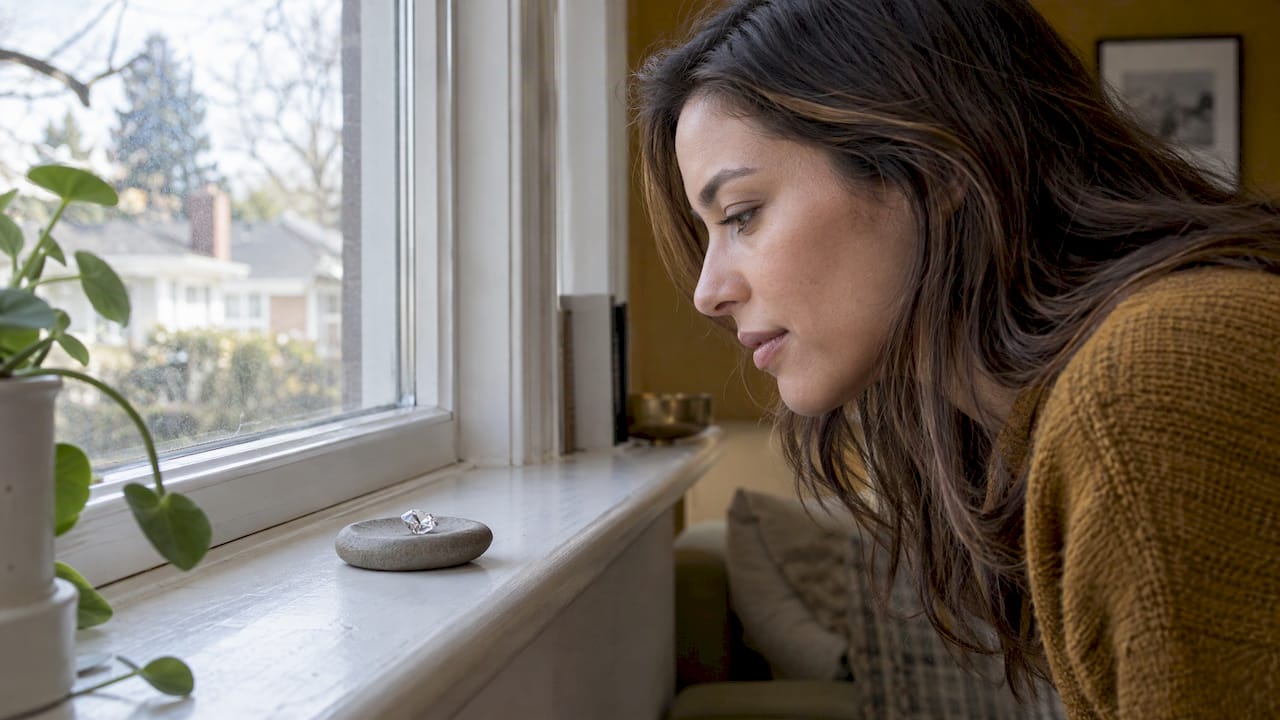
Photography is a surprisingly good teacher here. Rings look different under a window, a restaurant light and a jeweler’s spotlight, and jewelry still life photography ideas show how light and styling change the way metal and stones read. Keep that in mind when you judge a rendering on a screen.
On budget, the most useful advice comes from the Gemological Institute of America (GIA), a nonprofit gem laboratory and school. Its engagement ring buying guide suggests deciding which of the 4Cs matters most to you, because that narrows your search and shows where you can compromise. You do not need the top grade in every category. You need the right grade in the one or two that you will actually notice.
A rough way to split a budget is to give the center stone the largest share, then the setting and metal, then a small reserve for sizing, an appraisal or insurance. Our own starting prices give you a sense of the range: custom diamond rings start at $399, and ready-to-ship engagement rings start at $346.
Step 2: Choose the diamond
The stone is the heart of the ring, so it comes first. Everything else is built around it.
Pick a shape
Shape is personal. Round is the classic and the most brilliant. Oval, pear and marquise make fingers look longer. Cushion and emerald cuts feel vintage and architectural. Princess and radiant cuts suit a modern, geometric look. If you are unsure, our ranking of the best diamond shapes for engagement rings compares them side by side.
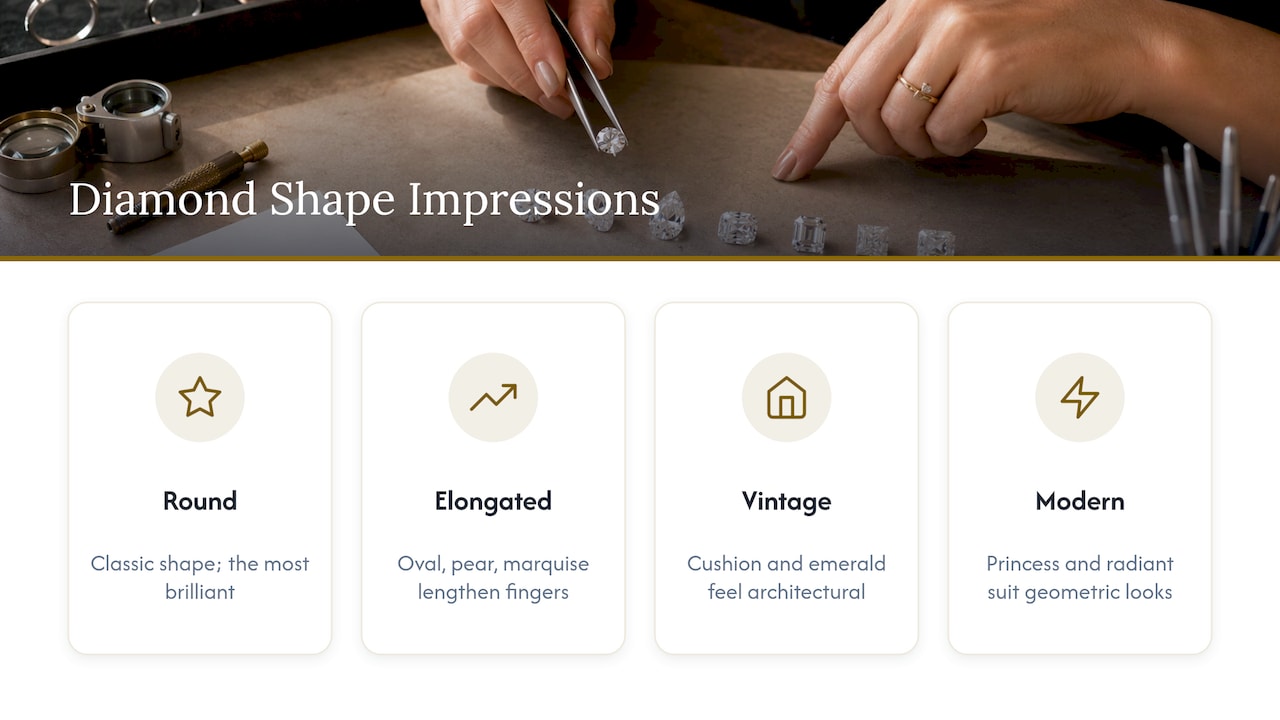
Shape also affects the setting you can use. A pointed stone such as a pear or marquise needs protected tips, and a rectangular emerald cut shows flaws more easily than a brilliant cut. Choosing the shape first prevents rework later.
Understand the 4Cs in plain terms
The 4Cs are the standard way to describe a diamond:
- Cut: how well the stone is proportioned and polished, which controls how it handles light.
- Color: how colorless the diamond is. Less color generally means a higher grade.
- Clarity: how many tiny natural marks (inclusions) the stone has.
- Carat weight: how much the stone weighs, which is roughly its size.
GIA’s guide to selecting a round diamond names cut as the quality factor not to compromise on if sparkle is your priority, because cut determines how the diamond interacts with light. That makes a good rule: protect the cut, then trade off color, clarity and carat weight to fit your budget. Our 4Cs breakdown goes grade by grade if you want to see what each step looks like.
Natural or lab-grown
Both are real diamonds in chemical and physical terms, and both can be graded. Lab-grown stones are made in a controlled setting rather than mined. The U.S. Federal Trade Commission’s jewelry guidelines advise sellers of man-made diamonds to use a clear word such as “laboratory-grown” when describing them, so you should always see the origin stated plainly. We offer certified natural and lab-grown loose diamonds, all ethically sourced and conflict-free, with prices on our certified loose diamonds page starting at $142.
Insist on certification
A grading report is an independent lab’s record of the diamond’s identity and quality. GIA recommends one for any diamond you buy, since it documents whether the stone is natural and whether it has received treatments. Our guide to GIA certification explains what the report tells you, and our certification comparison covers how the main labs differ.
Then look at the stone itself. The International Gem Society’s diamond buying guide advises judging the actual diamond, including in different lighting, instead of relying on the report alone. Two stones with the same grades can look different, so use the images and details to choose the one you love.
Step 3: Choose the setting
The setting is the structure that holds the stone. It decides how the ring sits on the hand, how much light reaches the diamond, and how well it handles daily wear. GIA’s guide to ring settings describes the main types:
| Setting | What it looks like | Good to know |
|---|---|---|
| Prong | Narrow metal claws hold the stone | Most round diamond rings use four or six prongs; fewer prongs show more of the stone, more prongs add security |
| Bezel | A thin metal rim surrounds the stone’s edge | Smooth, protective border |
| Flush | The stone sits level with the surface of the band | Low-profile finish |
| Cathedral | Arches of metal rise from the band to carry the stone | Lifts the stone and gives a structured look |
Other popular styles you can add on top include a halo (a ring of small diamonds around the center), a three-stone design, and a pavé band (a band studded with tiny diamonds). If you are leaning toward prongs, our prong style guide shows how each version changes the look and the security of the stone.
A practical test: think about the wearer’s day. Someone who works with their hands, plays sports or cares for children may prefer a lower setting that will not catch on clothing. Someone who wants maximum sparkle may prefer a raised, open setting.
Step 4: Choose the metal
Metal affects color, weight, and how the ring wears over years.
- Yellow gold: warm and traditional. Available in 14K and 18K, where the number is the share of pure gold in the alloy.
- White gold: a bright silver look at a gold price point.
- Rose gold: a pinkish tone that flatters warm skin and looks softer next to colored stones.
- Platinum: naturally white and dense, a favorite for the lasting, premium option.
We make our pieces solid, not hollow or plated, so what you choose is what you wear. You can browse our platinum jewelry, starting at $327, and our gold jewelry collection to see each metal in finished pieces before you commit.
If you plan to add a wedding band later, choose a metal that will match. Our guide to designing a custom wedding ring set shows how to coordinate the two.
Step 5: Add the personal details
This is where a ring turns from a good ring into theirs. Options that people often choose:
- A hidden halo or a small accent stone under the center diamond.
- A band width that suits the hand: slim and delicate, or wider and bolder.
- Side stones in diamonds, or a birthstone or colored gemstone for color.
- An engraving inside the band, such as a date or initials.
- A finish: polished and bright, or a softer brushed texture.
Keep the design simple enough to be worn every day. A rule that helps: pick one feature to be the star, and let the rest support it.
Step 6: Check everything before you approve
This last step protects the whole project. Before approving a design, go through this list:
- Ring size. Confirm it exactly. If it is a surprise, borrow a ring the person already wears on that finger and measure the inside diameter, or ask a family member.
- The diamond’s report. Make sure the report number and grades match the stone in your order.
- Origin. Confirm whether the diamond is natural or lab-grown, and what the sourcing is.
- Metal and karat. Confirm the exact metal, such as 14K white gold or platinum.
- Setting details. Check the prong count or setting type, the band width, and any side stones.
- Policies. Read the return window, shipping insurance and what happens if you want to upgrade later.
On that last point, we offer a 30-day money-back guarantee, free insured shipping and a lifetime diamond upgrade program, so a purchase does not have to be your final word on the stone. Our step-by-step design guide lets you follow the whole process with each check in place.
Designing a ring as a gift
If you are designing a ring for someone else, a few extra points matter.
For a partner: note their current jewelry. Is it yellow or white? Delicate or bold? Do they wear a watch or other rings on the same hand? Their existing pieces are the best clue to what they will wear every day.
For a child or teen: choose something simple and sturdy that can be worn for years. A birthstone or small diamond in a plain band, sterling silver or gold, is a thoughtful first piece. Sterling silver jewelry starts at $46 in our sterling silver collection, and a child’s ring can be sized up or replaced as they grow.
For an anniversary or milestone: stones that carry meaning, such as a birthstone or a stone matching the year, make the gift personal without raising the budget. Our loose gemstones give you many colors to choose from.
If you are designing for a proposal, our custom engagement ring design process guide for couples covers how to involve your partner without spoiling the surprise.
How to compare ways to design a ring
There are three common routes: an online ring builder, a local custom jeweler, or a ready-made ring that you adjust. Compare them on the same criteria:
| What to compare | Why it matters |
|---|---|
| Stone selection | A wider range of certified diamonds means a better match for your budget |
| Who makes the ring | A maker that manufactures in-house controls quality and cost |
| Price transparency | You should see what the stone, metal and labor each add |
| Construction | Solid metal lasts longer than hollow or plated pieces |
| Policies | Look for a clear return window, insured shipping and an upgrade path |
| Aftercare | Sizing, cleaning and repair support after the sale |
Online builders suit most first-time buyers because you can see prices as you choose. The advantage of buying direct from a maker is that the markup between the workshop and your hand is gone. That is the model we use: we are a family-owned business that has manufactured in-house since 1999, with more than 222 Google reviews from customers.
Our view: why design it with us
We started USA Jewels because we saw how hard it was for families to find a beautiful, well-made ring without paying for a long chain of middlemen. So we made our own jewelry, in-house, and sold it direct.
Our belief is simple. A custom ring should feel personal, and it should be fairly priced. When you choose your own diamond shape, quality and metal, you decide where your money goes. A stone you love can go in a setting you love, with the rest of the budget going where you will see it.
We also believe a diamond should be a promise you can keep. That is why every diamond we sell is certified and ethically sourced, why our pieces are solid rather than hollow or plated, and why our lifetime diamond upgrade program lets a ring grow with a couple’s story.
Joseph
Start your design
If you are ready to build, our Design Your Own Diamond Ring tool lets you choose the diamond shape, quality and metal, starting at $399. If you want to see finished designs first, browse our engagement rings, which start at $346. Every order includes free insured shipping and our 30-day money-back guarantee.
You can also begin with the stone: our certified loose diamonds start at $142, and you can pair one with the setting of your choice.
FAQ
How do I design my own engagement ring?
Set a budget, choose the diamond shape and quality, pick a setting and metal, add any personal details, and then check the size, report and policies before you approve. Choosing the diamond first keeps the rest of the design on track.
Which of the 4Cs should I prioritize?
GIA’s guidance is to decide which of the 4Cs matters most to you and let the rest flex to fit your budget. If sparkle is the goal, cut is the one to protect.
Is a lab-grown diamond a real diamond?
Yes, it has the same chemical and physical makeup as a natural diamond and can be graded the same way. Sellers are advised to label it clearly as laboratory-grown, and we offer certified natural and lab-grown diamonds so you can choose what fits your values and budget.
Can I design a ring as a gift for a child?
Yes. A simple band in sterling silver or gold with a birthstone or small stone is a durable, affordable choice, and sterling silver pieces at USA Jewels start at $46.
Sources
- GIA: 10 Tips for Buying an Engagement Ring
- GIA: How to Select a Round Diamond Engagement Ring
- GIA: Guide to Engagement Ring Settings
- International Gem Society: Ultimate Diamond Buying Guide
- FTC: Statement of Basis and Purpose for the Revised Jewelry Guides
- Jewelry Still Life Photography: Ideas, Light and Styling
Recommended
- Design Your Own Engagement Ring: Step-by-Step Guide
- Design a Custom Wedding Ring Set That’s Truly Yours
- Custom Engagement Ring Design Process: A Couples’ Guide
- Design Your Own Diamond Ring

Deep Mehta is the Co-Owner of USA Jewels, a family-owned jewelry business she has led since 2013 in Deerfield Beach, Florida. With over 13 years of hands-on experience in fine jewelry retail, manufacturing, and diamond importing, Deep specializes in engagement rings, wedding bands, and custom jewelry design. She also co-manages Kaash Group Talent Acquisition. Deep is a University of Florida graduate and oversees every aspect of USA Jewels’ operations, from product development to marketing.
Fine Jewelry Collection

You May Also Like
Engagement Ring Metal Types: Your 2026 Buying Guide
Why Rose Gold Engagement Rings Trend in 2026