40–42 kHz Ultrasonic Jewelry Cleaners Jewelry Owners Can Trust
Yes, an ultrasonic cleaner is safe for most durable jewelry, but it’s the wrong tool for pearls, opals, and treated gemstones. For everyday pieces, the Magnasonic MGUC500 is our top overall pick, LifeBasis wins on value, and InvisiClean suits mixed collections that need gentler, more even cleaning. If you can’t confirm what a stone is or how it’s treated, skip the ultrasonic cleaner and have a jeweler look at it first.
TL;DR:
- Ultrasonic cleaners are safe for most durable metals and untreated hard gemstones but can damage organic, porous, or treated stones like pearls, opals, or amber.
- A stainless steel tank between 300 and 700 mL, operating at 40-42 kHz, with digital presets and a built-in heater, offers the best balance of safety and cleaning effectiveness.
- Always verify the stone’s identity and treatment history before cleaning; when unsure, consult a jeweler to avoid damaging fragile or special-issue jewelry.
- Maintain your ultrasonic cleaner by emptying, drying, and replacing the solution regularly, and troubleshoot early signs of failure to prolong its lifespan.
- Use distilled water with a mild detergent and preheat to 86-104°F for safe, effective cleaning, and avoid running jewelry with loose stones or those with unknown treatments.
Table of Contents
- Which Ultrasonic Cleaner for Jewelry Should You Buy?
- How Do You Choose the Right Ultrasonic Cleaner?
- How Do You Run a Safe Ultrasonic Cleaning Cycle?
- What Jewelry Should Never Go in an Ultrasonic Cleaner?
- How Do You Maintain and Troubleshoot an Ultrasonic Cleaner?
- When Should You Trust a Jeweler Over a Home Machine?
- What’s the Real Rule of Thumb for Ultrasonic Cleaning?
- Want a Second Opinion Before You Clean Anything Valuable?
- Sources
- FAQ
Which Ultrasonic Cleaner for Jewelry Should You Buy?
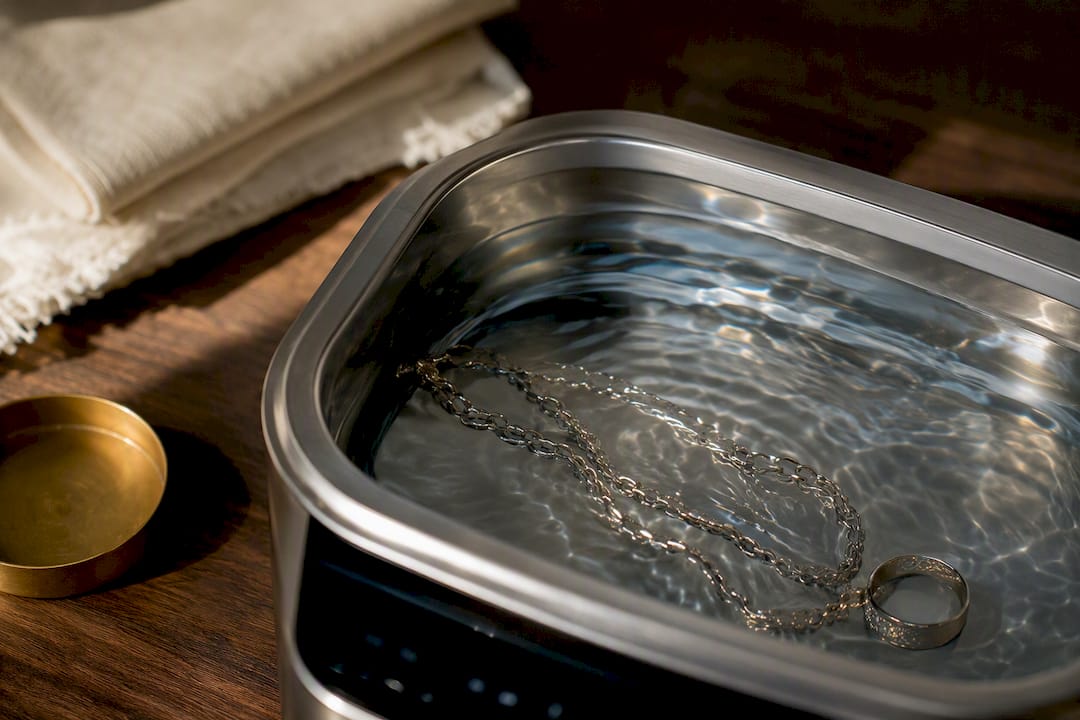
We treat this the way a family jeweler would: recommend the machine that fits how you actually wear and clean your pieces, not the one with the flashiest marketing. Every model below runs in the jewelry-friendly range near 40 to 42 kHz, the frequency band that loosens oils and grime without being aggressive enough to stress most metal settings.
Magnasonic MGUC500 is the model we point most households toward. It runs at roughly 42 kHz with a 600 mL stainless tank, which is large enough for a few rings, a chain, and a pair of earrings in one cycle. Digital presets mean you’re not guessing at timing, and the stainless construction resists the pitting cheaper plastic tanks develop after a few months of hard water.
LifeBasis ultrasonic jewelry cleaner earns its spot as the budget pick. It’s marketed for jewelry, eyeglasses, and retainers alike, and the tank shape handles longer items like bracelets and glasses arms better than boxier competitors. Build quality won’t match the Magnasonic, but for occasional cleaning of everyday studs and bands, it does the job.
InvisiClean ultrasonic cleaner stands out for its dual transducers, which spread ultrasonic waves more evenly across the tank instead of concentrating cavitation in one hot spot. That matters if you’re cleaning several pieces at once and want consistent results rather than one ring coming out spotless while another barely changes.
Three more names come up constantly in jewelry-cleaner searches, and each has a specific niche:
- Vevor ultrasonic cleaner leans commercial, with a deep tank and strong output built for heavy grime on tools or non-delicate items. It’s overkill and slightly riskier for anything set with soft or fracture-filled stones.
- iSonic covers the true entry-level tier. Budget iSonic models clean basic costume jewelry and hard-stone pieces fine, but independent testing roundups note that cheaper units vary more in tank quality and rarely include real warranty support.
- Ukoke and Kunphy are similar mid-tier options, generally reliable for chains and durable stones, though neither differentiates itself with the presets or dual-transducer design InvisiClean offers.
For readers comparing spec sheets, Sparklean is worth mentioning even though it’s positioned toward jewelers rather than home use. Its published buying guide is one of the clearest breakdowns of why 40 to 42 kHz, tank size between 300 and 700 mL, and verified warranty support separate a dependable machine from a risky generic. Two more names, Visiclean and Life Basis (a close cousin of LifeBasis), round out the crowded budget field with comparable specs and unremarkable but functional performance.
If you’re buying for an engagement or wedding ring specifically, spend the extra money on a brand with a real warranty. A $25 no-name unit with unverified frequency claims is not where you want to find out the calibration was off.
How Do You Choose the Right Ultrasonic Cleaner?
The spec sheet tells you almost everything you need to know before you buy.
- Frequency (kHz): Look for 40 to 42 kHz. Lower frequencies hit harder and can loosen delicate settings; frequencies marketed well above that range are typically built for industrial parts, not gemstones.
- Tank capacity and material: A 300 to 700 mL stainless-steel tank fits most personal collections. Stainless resists corrosion far better than plastic-lined tanks, which cloud and crack over time.
- Timer presets and heating: Digital presets remove the guesswork of manual timing, and a built-in heater that reaches 86 to 104°F improves cavitation without needing scalding water.
- Warranty and support: A real warranty is a proxy for a manufacturer standing behind its frequency claims, not just printing a number on the box.
Pro Tip: If a listing doesn’t specify an exact kHz number, or lists a frequency far outside 40 to 42 kHz, treat it as a red flag rather than a value pick.
How Do You Run a Safe Ultrasonic Cleaning Cycle?
Follow the same order jewelers use, and you’ll avoid nearly every common mistake.
- Inspect the piece first. Check prongs for looseness, look for glued components, and confirm you know what treatments, if any, the stone has had.
- Preheat to roughly 86 to 104°F if your unit supports it. A slightly warm bath improves cleaning without adding meaningful risk.
- Remove, rinse under lukewarm water, and dry with a lint-free cloth. Avoid running the same piece through back-to-back cycles; give the machine and the jewelry a break instead.
For step-by-step help on specific metals, our jewelry cleaning guide for every metal walks through what changes for gold, platinum, and silver.
What Jewelry Should Never Go in an Ultrasonic Cleaner?
Some materials simply cannot handle the vibration and heat, no matter how careful you are with the cycle.
- Pearls, opals, coral, amber, turquoise, and ivory. These are organic or porous, and GIA explicitly warns against ultrasonic cleaning for all of them because the material can crack, dry out, or absorb the cleaning solution.
- Oil-treated emeralds and fracture-filled or resin-impregnated stones. Cavitation can pull the oil or filler right back out, which is often the only thing making the stone’s clarity look good in the first place.
- Glued costume jewelry, old repairs, and plated finishes. Heat and vibration loosen adhesive and can strip thin plating faster than normal wear ever would.
If you can’t positively identify a stone or its treatment history, don’t risk it. GIA’s gemstone-care guidance is a good starting point, and a jeweler’s loupe check settles the question in minutes.
How Do You Maintain and Troubleshoot an Ultrasonic Cleaner?
- Empty and dry the tank after every use. Standing water left in the tank speeds up mineral buildup and shortens the life of the transducer.
- Wipe the tank with a soft cloth, and never scrub it with abrasive pads that can scratch stainless steel.
- Replace the solution once it looks cloudy or after roughly a week of regular use. Used solution loses its cleaning strength well before it looks visibly dirty.
- Watch for weak cavitation, unusual rattling, or inconsistent results. These are early signs the transducer is failing, not a solution or timing problem.
- Retire the unit if the tank rusts, the basket warps, or the timer runs erratically. At that point, repairs typically cost more than a new mid-range machine.
When Should You Trust a Jeweler Over a Home Machine?
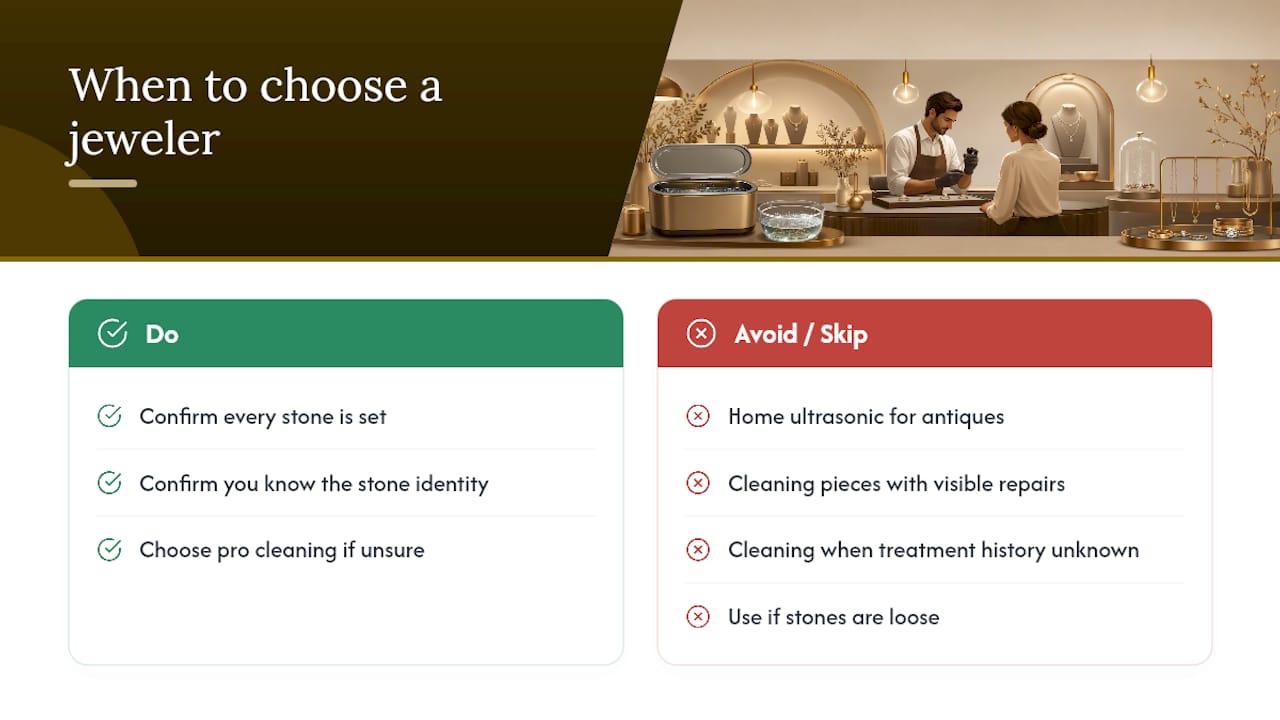
As a family-owned jewelry manufacturer, we’ve spent decades fielding the “can I just clean this myself” question, and our answer is almost always conditional. If a piece is antique, has visible repairs, or you’re not certain about a stone’s treatment history, skip the home ultrasonic cleaner entirely. Two quick checks first: confirm every stone is set (not loose) and confirm you actually know what the stone is. When either answer is uncertain, professional cleaning is the safer call.
What’s the Real Rule of Thumb for Ultrasonic Cleaning?
Treat ultrasonic cleaning as routine maintenance for daily-wear pieces, not as a universal solution for every item in your jewelry box. A durable gold band or diamond stud earring can handle a monthly cycle without issue, but heirloom pieces with unknown repair history deserve a jeweler’s eyes before they ever touch a tank. Our rule of thumb: if you can’t positively identify the stone and its treatments, don’t run it. Ultrasonic cleaning also isn’t a substitute for polishing. It clears oils and grime but won’t touch tarnish on silver, so pair it with a proper polish when the shine has genuinely faded rather than just dulled.
— Joseph
Want a Second Opinion Before You Clean Anything Valuable?
An ultrasonic cleaner handles routine upkeep well, but it can’t tell you whether a stone was fracture-filled or whether that antique clasp is original or a later repair. That’s where having a jeweler in your corner beats owning even the best machine. An established family-owned jewelry manufacturer built an educational library so customers can check a piece’s care needs before using an ultrasonic cleaner at home.

If you’re not sure whether a piece is ultrasonic-safe, our gemstone care guide walks through cleaning and storage by stone type, and our full jewelry care guide covers maintenance for every metal we work with. And if you’re shopping for a new piece built to handle everyday wear and cleaning without the guesswork, browse our diamond jewelry collection or explore our fine jewelry built in-house with lifetime diamond upgrades included. Reach out through any product page for a quick read on your piece’s care needs before you run a single cycle.
Sources
- Ultrasonic Cleaners for Gems: What You Need to Know | GIA 4Cs
- Best Ultrasonic Cleaner for Jewelry (2026) | Jeweler’s Buying Guide – Sparklean
- MGUC500 Digital Ultrasonic Jewelry Cleaner | Magnasonic
FAQ
Do ultrasonic cleaners actually work for jewelry?
Yes, for durable metals and hard, untreated gemstones like diamonds and sapphires, ultrasonic cleaners effectively loosen everyday oils and grime that brushing alone misses. They don’t remove tarnish, so silver pieces may still need a separate polish afterward.
What liquid do you put in an ultrasonic cleaner for jewelry?
Use distilled water with a manufacturer-approved jewelry concentrate, or distilled water with a single drop of mild, non-foaming detergent. Avoid tap water, which leaves mineral deposits, and avoid harsh household chemicals.
Can I use an ultrasonic cleaner to clean jewelry?
You can, as long as the piece is made of durable metal and set with hard, untreated stones like diamonds, sapphires, or rubies. Skip it for anything organic, porous, or treated, and skip it if you’re unsure of the stone’s identity.
What jewelry cannot be cleaned in an ultrasonic cleaner?
Pearls, opals, coral, amber, turquoise, ivory, and oil-treated or fracture-filled gems like many emeralds should never go in an ultrasonic cleaner, per GIA’s guidance. Glued costume jewelry and antique pieces with old repairs carry similar risk from vibration and heat.
Recommended
- How to Clean Jewelry at Home: Safe Methods for Every Metal
- Jewelry Care Guide: Cleaning, Storage & Maintenance | USA Jewels

Deep Mehta is the Co-Owner of USA Jewels, a family-owned jewelry business she has led since 2013 in Deerfield Beach, Florida. With over 13 years of hands-on experience in fine jewelry retail, manufacturing, and diamond importing, Deep specializes in engagement rings, wedding bands, and custom jewelry design. She also co-manages Kaash Group Talent Acquisition. Deep is a University of Florida graduate and oversees every aspect of USA Jewels’ operations, from product development to marketing.
Fine Jewelry Collection

You May Also Like
Round vs Oval Diamond: Which Shape Is Right for You?

Custom Jewelry Gift Surprise Planning: Your 2026 Guide