Rhodium Plating Explained: What It Is and How Often to Redo It
Rhodium plating is an ultra-thin layer of rhodium, a silvery-white metal from the platinum family, applied to the surface of a finished piece of jewelry. It is used most often on white gold, because white gold is not naturally bright white. The plating gives it that crisp, mirror-like color. It also wears away slowly, which is why a white gold ring can start to look warmer or yellowish after months or years of wear. A jeweler can renew it, and it is a routine, inexpensive part of owning white gold.
Below, we explain how the plating works, why white gold changes color, how replating is done, what affects the price and how to make a finish last longer.
TL;DR
- White gold is a yellow-toned gold alloy, not a naturally white metal. Rhodium plating is what gives most new white gold its bright white look.
- The layer is microscopically thin. It wears down with daily contact, and the warmer color underneath shows through. That is normal, not a defect.
- Replating is a quick shop service. How often you need it depends on how you wear the piece: rings that take daily knocks and soap usually need it sooner than earrings or pendants.
- Cost depends on the piece, the stones and the shop, so ask for a quote. Gentle care and avoiding chemicals stretch the time between visits.
- If you would rather skip replating, platinum and palladium are naturally white, and we explain how they compare below.
Table of Contents
- What rhodium plating actually is
- Why white gold needs it
- Why white gold turns yellow
- How rhodium plating is done
- How often you will need to replate
- What rhodium plating costs
- Care tips that stretch the time between platings
- Our perspective
- Options if you want to skip replating
- Design a ring that suits how you live
- FAQ
- Sources
What rhodium plating actually is
Rhodium is a rare, silver-white metal in the platinum group. In jewelry it is used as a coating rather than as a metal to make a whole ring from. Rhodium plating is an electrochemical process that deposits a very thin layer of rhodium onto the surface of finished jewelry.
Think of it as a bright, hard, reflective skin. It sits on top of the metal underneath and does not change what the piece is made of. A 14K white gold ring with rhodium plating is still a 14K white gold ring. The plating only changes the color and shine of the surface.
The finish has a few practical benefits:
- A brighter white. It gives white gold the cool, reflective look most people expect from a white metal.
- Resistance to oxidizing. Jewelers of America notes that rhodium does not oxidize readily, so the surface stays clean and bright.
- A more flattering setting for diamonds. A cool white mount keeps the stone looking colorless, while a warm metal can cast a faint tint.
Rhodium is also used on sterling silver, which is similar in color, to help it resist tarnish. We cover that difference in our comparison of sterling silver vs white gold.
Why white gold needs it
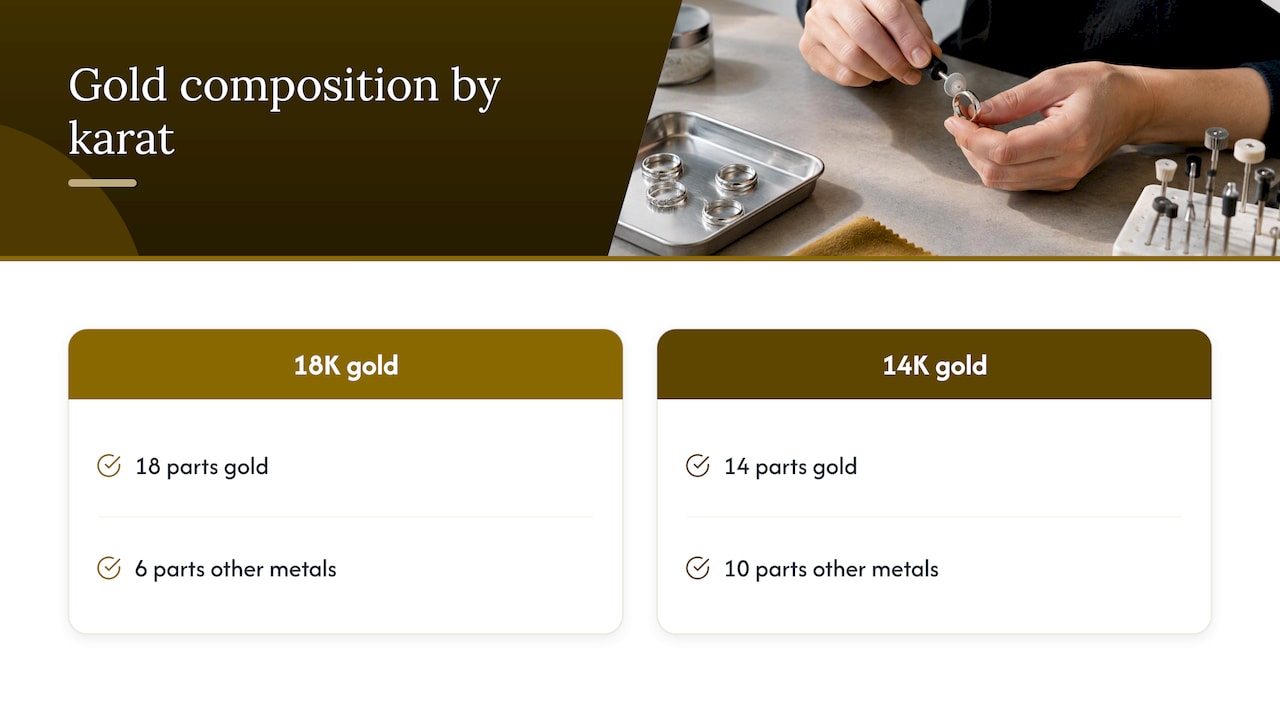
Pure 24-karat gold is soft and deep yellow, so jewelry gold is mixed with other metals. The FTC explains that 18K gold is 18 parts gold and six parts another metal, while 14K is 14 parts gold and 10 parts another metal.
White gold is made by mixing gold with white metals. In the United States, those are typically nickel or palladium, zinc and copper. Even so, the alloy does not turn out pure white. It lands somewhere between pale gray and champagne, depending on the recipe. Rhodium plating is applied to give it a more brilliant, reflective white.
That is why a brand-new white gold ring often looks whiter than the bare metal ever could. Plating is standard practice, and it is usually part of finishing a piece before you ever wear it.
If you have sensitive skin, the alloy matters as much as the plating. Our guide to nickel free white gold walks through the options.
Why white gold turns yellow
The short answer: the plating wears off, and the true color of the alloy shows through. White gold can appear yellow as the thin rhodium coating wears away and exposes the warmer metal beneath. Jewelers of America describes this as normal and says the coating may need to be renewed over time.
Nothing is wrong with your ring when this happens. The gold has not tarnished or degraded. You are just seeing the metal under the finish.
Signs the plating is wearing thin
The change is gradual, so you may not notice it day to day. Look for these clues:
- Warmth on the high points. The underside of the band and the prongs are often the first spots to look creamy or faintly yellow.
- A patchy look. The finish can wear unevenly where the ring touches your other rings, your keyboard or your steering wheel.
- A dull, slightly gray cast. The shine looks flatter than it did when the ring was new.
- Contrast with a newer piece. Hold your ring beside white gold that was plated recently. The difference is usually obvious.
A helpful trick: compare the inside of the band, which rubs less, with the outside. If the inside is whiter, the plating on the outside is thinning.
What speeds up wear
Plating wears faster where friction and chemistry hit it hardest.
- Everyday contact on the palm side of rings, from gripping, lifting and typing.
- Chlorine from pools and hot tubs, and household cleaners.
- Lotions, perfumes and hand sanitizers, which leave residue and can dull the finish.
- Abrasive cleaning, including rough cloths, toothpaste and polishing powders.
- Body chemistry, which varies from person to person. Two people can wear the same ring and see different results.
How rhodium plating is done
Replating is a short, controlled shop process. The steps below follow the general method described by a bench jeweler resource: thorough polishing and cleaning, including electrocleaning and an acid dip, so that the metal surface is ready to bond.
- Inspection. The jeweler checks the ring for loose stones, worn prongs and damage. This is the ideal moment to fix anything before it gets sealed under a fresh finish.
- Polishing. Scratches and old finish are buffed so the surface is smooth. Plating copies the surface beneath it, so a scratched ring will look scratched even when it is white again.
- Cleaning. The ring goes through steam or ultrasonic cleaning, then electrocleaning and an acid dip to remove oils and oxides. Skipping this step is a common reason plating fails to stick.
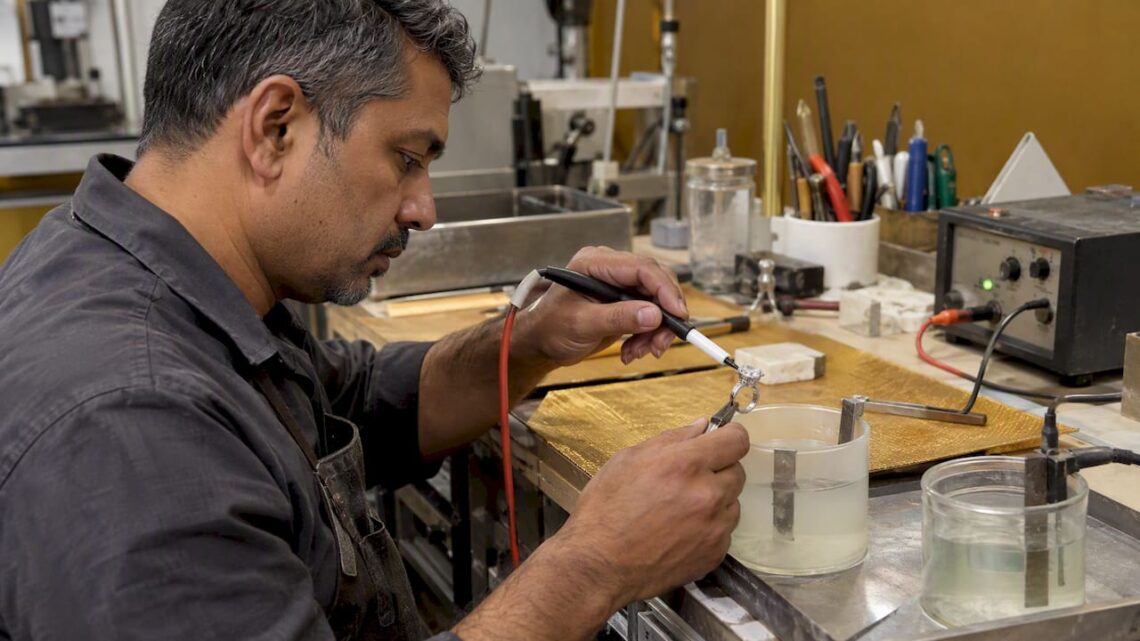
- Plating. The ring is submerged in a rhodium bath and connected to an electric current, which deposits the metal layer.
- Rinse and final polish. The ring is rinsed, dried and checked under light for even coverage.
It is typically a short job. Many jewelers can handle it in a few days or less, but turnaround varies by shop, so ask when you drop the ring off.
Can you do it at home?
We do not recommend it. Home plating pens and kits exist, but professional results depend on proper surface preparation, the right bath chemistry and controlled current. Rhodium solutions are also hazardous chemicals. A jeweler can renew the layer after cleaning and re-activating the surface, and that is the safer route for a ring you care about, especially if it holds diamonds.
How often you will need to replate
There is no universal schedule. The plating is so thin that wear depends heavily on how and how often you wear the piece.
| Piece | Typical wear | What to expect |
|---|---|---|
| Engagement ring or wedding band worn daily | High: hands touch everything | Usually the first piece to show warmth, often on the underside of the band |
| Bracelet | Moderate to high: rubs on desks and sleeves | Wears evenly along the outside |
| Pendant or necklace | Low to moderate | Often keeps its finish the longest, though clasps and chains can wear |
| Earrings | Low | Lasts a long time, since little touches them |
A common approach is to replate when you see the warmth you do not like, not on a fixed date. Some people replate yearly to keep a ring looking brand-new. Others wait several years, or choose to let the soft, warm tone show. Both are fine. It is a cosmetic choice, not a structural need.
A good moment to replate is when your ring is already at the jeweler for a prong check or resizing, since the plating will be removed on the worked areas anyway.
What rhodium plating costs
Rhodium is a precious metal and its market price moves, but a ring uses only a tiny amount. Most of what you pay is labor, setup and the shop’s overhead. Prices in the United States vary by region and by shop, so use these factors to compare quotes rather than a single number:
- Size and design of the piece. A thin solitaire band is quicker than a wide, detailed or multi-stone piece.
- Stones. Most diamonds stay in place and are protected during plating. Delicate stones like pearls need special handling.
- Polishing and repairs. Heavy scratching or prong work adds time.
- Rush service. Same-day turnaround usually costs more.
- Whether it is bundled. Some jewelers include cleaning and inspection, or offer plating alongside other services.
Ask for a written quote that lists polishing, plating and any repair separately. If a price seems far below the rest, ask how the surface will be prepared.
Care tips that stretch the time between platings
You cannot stop plating from wearing, but you can slow it. Small habits make a visible difference.
- Take the ring off for chores. Dishes, cleaning, gardening, gym sessions and lifting all add friction and chemicals.
- Keep it out of pools and hot tubs. Chlorine and bromine are tough on finishes.
- Put it on last. Apply lotion, perfume and hairspray before you put your jewelry on.
- Clean gently. Use warm water, a drop of mild dish soap and a very soft brush, then pat dry with a soft cloth. Skip abrasive polishes and harsh chemical dips. Our guide on how to clean jewelry at home covers safe methods for each metal.
- Store pieces separately. A soft pouch or lined box prevents scratches from other jewelry.
- Get regular checkups. Have a jeweler look at prongs and settings from time to time. Our jewelry care guide has a simple routine.
Insurance is also worth a thought for a ring you wear daily. Jewelers Mutual explains plating as part of its overview of jewelry care, and it is a good reminder to keep appraisals and policies current.
Our perspective
We have been a family-owned jeweler since 1999, and we make our jewelry in-house. That means we see white gold up close, from the casting bench to the finishing table, and we have talked with thousands of customers who were surprised when their first ring started to warm up.
Here is what we tell all of them. Rhodium plating is not a flaw to be embarrassed about. It is how white gold has been finished for a long time, and replating is a normal bit of maintenance, like resoling a good pair of shoes. What matters is that the metal underneath is solid, well made and honestly karat-marked, because that is what you are really buying. Plating can freshen the surface, but it cannot fix a hollow, thin or poorly built piece.
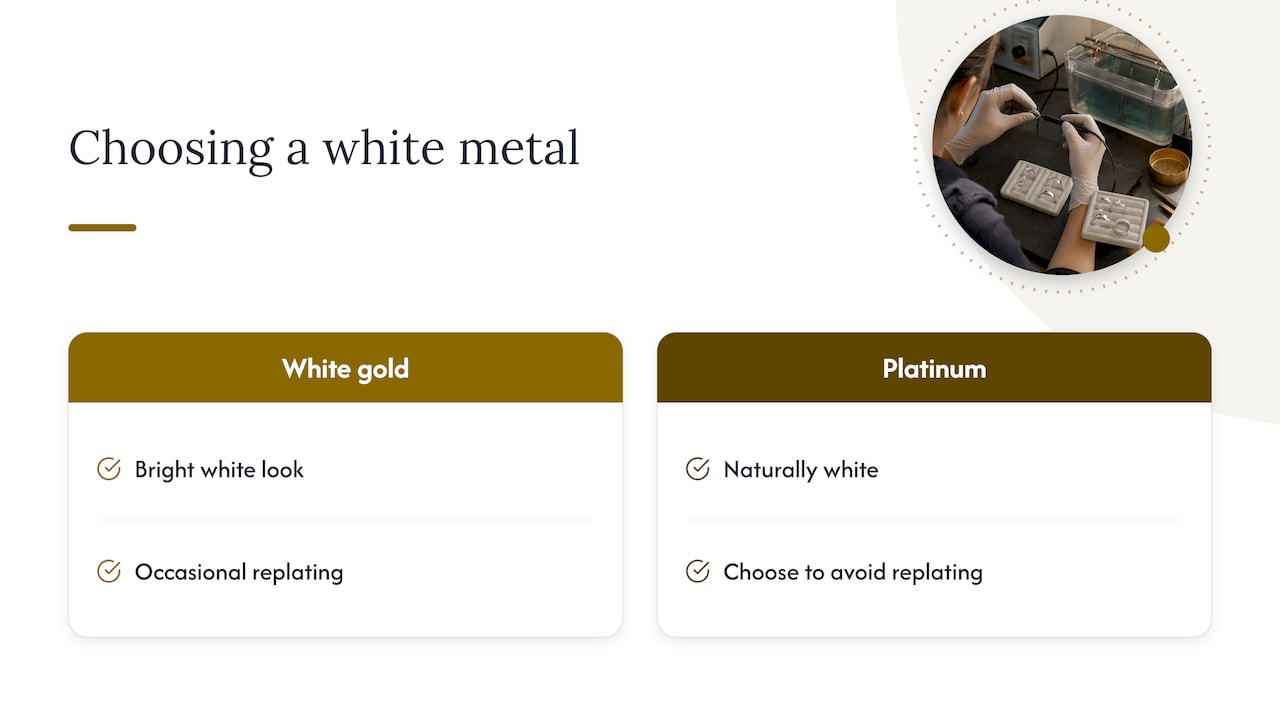
We also think you should choose with your eyes open. If you love the look of bright white metal and do not mind an occasional replating, white gold is a lovely choice, and we can help you pick a karat and style. If you would rather never think about plating, platinum is naturally white. Read our comparison of platinum vs gold engagement rings to weigh the tradeoffs. Palladium is another white option, and our palladium guide explains how it behaves.
A ring should tell your story, not become a chore. Pick the metal that fits how you live.
— Joseph
Options if you want to skip replating
You have a few routes, depending on the look and budget you have in mind.
Choose a naturally white metal
Platinum is white all the way through, so it does not need rhodium to look white. Over time it develops a soft, satiny patina rather than turning yellow. Our platinum jewelry guide covers benefits and care, and you can compare it with silver in our piece on sterling silver vs platinum.
Stay with white gold and accept the warmth
Some people like the slightly soft, warm look that white gold takes on after the plating thins. Others find it blends well with a vintage style. If that is you, you can skip plating entirely and simply have the ring cleaned and polished from time to time.
Pick yellow or rose gold
If the thing you want to avoid is color change, yellow and rose gold hold their color without any plating at all. You can browse our gold jewelry collection to compare tones side by side.
Design a ring that suits how you live
If you are planning a ring, the metal decision is part of the design. When you design your own diamond ring with us, you choose the diamond shape, the quality and the metal, including white gold and platinum. Our design tool starts from 399 USD, and our platinum jewelry starts from 327 USD. Everything we make is solid, not hollow or plated through, and we back it with free insured shipping, a 30-day money-back guarantee and lifetime diamond upgrades.

If you want a head start on style, you can also look through our engagement rings, from 346 USD, or choose from our certified loose diamonds, from 142 USD. Questions about which metal to pick? Tell us how you plan to wear the ring and we will help you decide.
FAQ
What is rhodium plating?
It is a very thin layer of rhodium, a platinum-group metal, deposited onto finished jewelry by electroplating. It is used mostly on white gold to give it a bright, reflective white finish. It does not change the metal underneath.
Does rhodium plating wear off?
Yes. The layer is thin and gradually wears with friction and exposure to chemicals. When it does, the warmer color of the white gold alloy shows through. Jewelers of America calls this normal and says the coating may need to be renewed over time.
How often should white gold be replated?
There is no fixed interval. A daily-wear ring may need it sooner than earrings or a pendant, and chlorine, cleaners and rough cleaning speed up wear. Replate when you notice the warmth and want it gone, and ask your jeweler to check the ring when you do.
Can rhodium plating be done at home?
We recommend a jeweler. Good results depend on careful polishing and cleaning, a controlled bath and current, and handling hazardous chemicals safely. A jeweler can also check prongs and settings before sealing in a new finish.
Is rhodium plating the same as gold plating?
No. Gold plating adds a thin layer of gold, which is yellow, while rhodium adds a white layer. They are different metals with different looks, and rhodium is the standard finish for white gold.
Sources
- Gold Jewelry, Jewelers of America
- Buying Platinum, Gold, and Silver Jewelry, FTC Consumer Advice
- Questions About Rhodium Plating, Bench Jeweler
- What is Rhodium Plating, Jewelers Mutual
- Rhodium Plating, Precious Metals Glossary
Recommended
- Palladium Guide: The Platinum Alternative
- Platinum Rings — Engagement & Wedding Bands
- Platinum Jewelry Guide: Benefits & Care
- Nickel Free White Gold: Your Guide for Sensitive Skin

Deep Mehta is the Co-Owner of USA Jewels, a family-owned jewelry business she has led since 2013 in Deerfield Beach, Florida. With over 13 years of hands-on experience in fine jewelry retail, manufacturing, and diamond importing, Deep specializes in engagement rings, wedding bands, and custom jewelry design. She also co-manages Kaash Group Talent Acquisition. Deep is a University of Florida graduate and oversees every aspect of USA Jewels’ operations, from product development to marketing.
Fine Jewelry Collection

You May Also Like

How to Measure Ring Size Accurately at Home

Top 4 Affordable Custom Jewelry gld.com Alternatives 2026