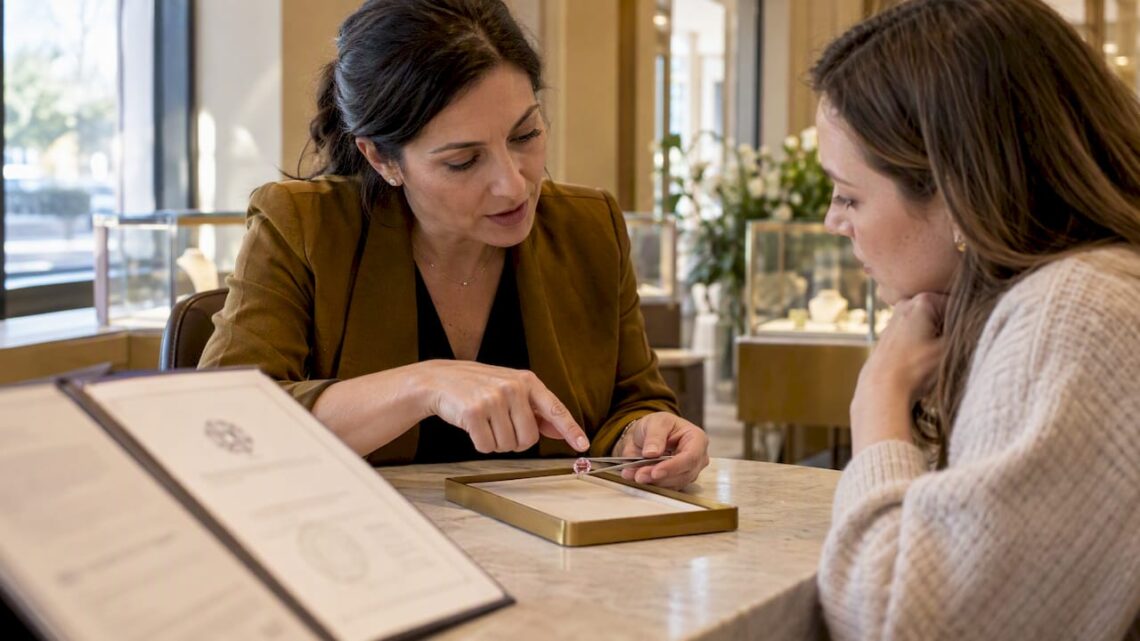
Insist on a GIA Report: Color Treated Diamonds for U.S. Buyers
A color-treated diamond is a natural or lab-grown stone whose color was altered after it formed, through heat, radiation, coating, or another process. That treatment must be disclosed, and it changes what you should pay, what you can resell it for, and how you should care for it. Before buying one, we always recommend asking for a GIA report or equivalent lab documentation that names the treatment plainly.
TL;DR:
- Treated diamonds usually sell for significantly less than natural-colored diamonds, with prices varying depending on the treatment method and color intensity.
- High-pressure, high-temperature treatment is considered stable by labs like GIA, while coatings and fracture fillings can be temporary and more prone to damage.
- Always request a detailed lab report explicitly stating “treated” or “color enhanced,” and verify it directly with the lab before purchasing.
- Visual inspection alone cannot reliably determine treatment; spectroscopy or lab testing is necessary for accurate identification.
- Insist on written disclosure and proper documentation to protect value and resale potential, as untreated natural stones command higher prices.
Table of Contents
- Natural, lab-grown, simulated, or treated: what’s the difference?
- Common treatment methods and how permanent they really are
- How labs detect treatment and what their reports actually say
- What treatment does to value, resale, and disclosure
- Caring for a treated diamond without damaging it
- A buying checklist for color treated diamonds
- How we help buyers verify and choose colored diamonds confidently
- Our take: treat the lab report as the real purchase, not the stone
- Ready to browse certified and colored diamonds?
- FAQ
- Sources
Natural, lab-grown, simulated, or treated: what’s the difference?
These four terms get mixed up often, and the confusion costs buyers money. A natural-color diamond formed its hue in the earth over millions of years with no human intervention. A lab-grown diamond is a real diamond grown in a controlled setting, and its color can occur naturally during growth or be enhanced afterward, just like a mined stone. A simulated diamond, such as cubic zirconia, is not diamond at all. A treated diamond is either natural or lab-grown, but its color has been changed or intensified after the stone already existed.
Sellers treat diamonds for two main reasons: to create or strengthen a fancy color that sells at a premium, or to rescue a stone with an unappealing tint or heavy inclusions that would otherwise be hard to move. The practice isn’t new, but the range of outcomes has grown.
Buyers most often encounter these treated colors:
- Yellow and green, usually from irradiation
- Blue, sometimes layered on top of irradiation treatment
- Pink, often achieved through high-pressure, high-temperature processing
- Black, typically the result of heavy irradiation or heat treatment that creates graphite inclusions
Knowing which color you’re looking at helps you ask the right follow-up questions about method and stability.
Common treatment methods and how permanent they really are
Not every treatment behaves the same way once it leaves the lab, and that difference matters more than the color itself.
- HPHT (high pressure, high temperature): This process subjects a diamond to extreme conditions, sometimes up to 3,700°F, to remove brown tones or shift color. GIA considers it stable enough to grade and report.
- Irradiation and annealing: Irradiation changes the diamond’s internal structure to produce color, and a follow-up annealing step at specific temperatures locks in the final hue. Research on thermal treatment and irradiation shows the sequence and temperature used determine the result.
- Coatings and fracture filling: These are surface or internal fixes rather than structural changes, and they can fade, chip, or react badly to heat or chemicals.
- Laser drilling: This technique targets clarity by removing or lightening inclusions, but it can also affect how a stone’s color appears under light.
How labs detect treatment and what their reports actually say
A recognized lab report is your clearest line of defense, but only if you know how to read it. GIA will grade and report stable treatments like HPHT annealing and irradiation followed by annealing, and it laser-inscribes the girdle of any diamond identified as color-treated so the history travels with the stone. Coatings and fracture filling, by contrast, are treatments GIA will not grade at all, which should raise a flag if a seller offers one without clear paperwork.
Look for:
- A report that states “treated” or “color enhanced” rather than “natural color”
- A girdle inscription matching the report number
- Willingness from the seller to let you verify the report directly with the lab
Some treatments are layered and harder to spot visually. A Gems & Gemology case study on a multi-step treated green diamond found that spectroscopy was needed to unambiguously identify the specific defect centers involved, a reminder that eyeballing a stone is never enough.
One diamond in that study required multi-step detection methods to confirm its treatment history, which shows why a casual glance or a basic loupe check can miss what a proper lab test catches.
What treatment does to value, resale, and disclosure
Treated stones generally sell for a fraction of what comparable natural-color diamonds command, and industry pricing guides note that the gap varies by method and color rather than following one fixed formula. That gap is exactly why documentation matters so much before you buy.
- The FTC’s Jewelry Guides require sellers to disclose treatments in writing and to warn you when a treatment isn’t permanent.
- Ask your appraiser to note the treatment status explicitly, since an appraisal that omits it can misrepresent the stone’s worth.
- Tell your insurer about any treatment up front so your policy reflects the stone’s actual replacement value, not an assumption of natural color.
Caring for a treated diamond without damaging it
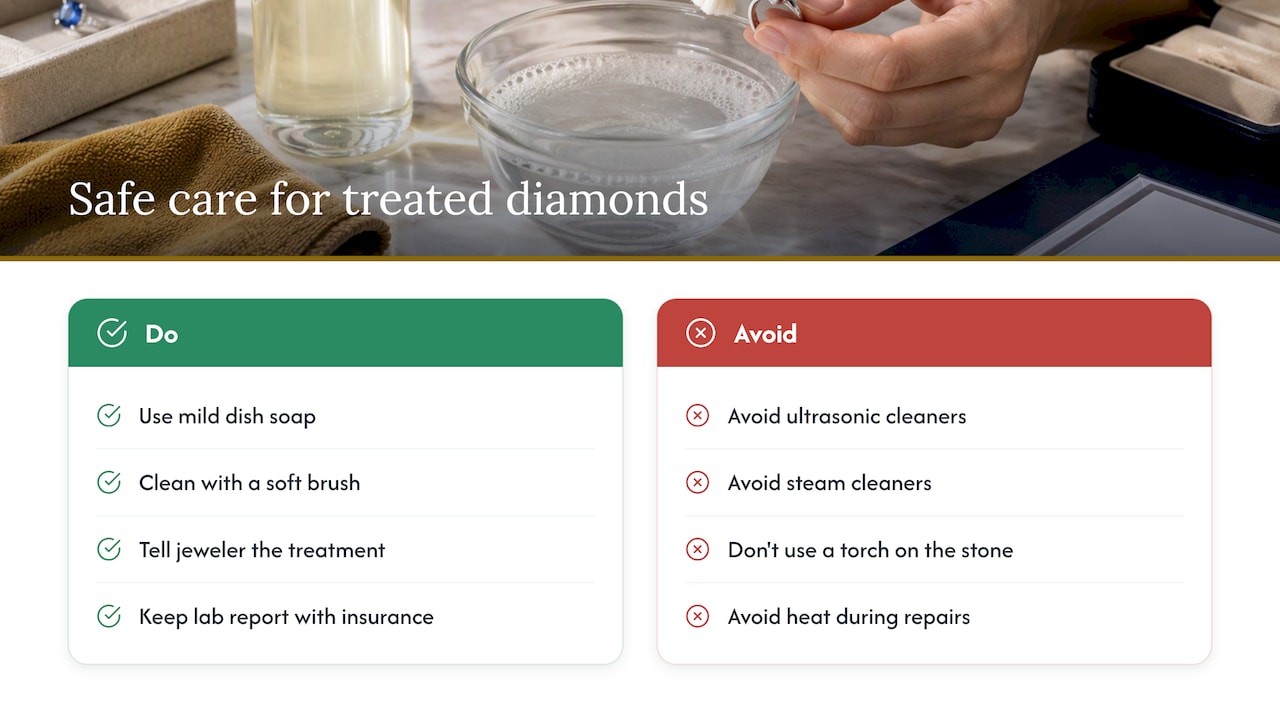
Treated stones can be more sensitive to heat and chemicals than their untouched counterparts, and the wrong repair step can undo the color or crack a filled fracture. Coatings in particular are vulnerable: a jeweler’s torch during resizing, an ultrasonic cleaner, or a steam cleaner can all cause visible damage that no amount of polishing fixes.
Stick to mild dish soap and a soft brush for routine cleaning, and skip ultrasonic or steam cleaning unless your jeweler confirms the treatment can handle it. Before any resizing, prong repair, or re-setting work, tell your jeweler exactly what treatment the stone has had so they can choose a safe method.
Pro Tip: Keep a copy of your lab report with your jewelry insurance file so any jeweler or appraiser you work with in the future knows the treatment history immediately.
A buying checklist for color treated diamonds
A few minutes of checking at the counter can save you from a costly surprise later.
- Ask for a GIA report or equivalent that states “treated” or “natural color” explicitly, with treatment details spelled out.
- Request to see the girdle inscription or a scanned copy of the report, and have the seller write the treatment language on your receipt.
- Weigh color intensity against price rather than chasing a rare natural hue if resale value matters to you.
- Confirm the seller’s return policy, any upgrade program, and whether they’ll guide you through repairs down the road.
| What to check | Why it matters |
|---|---|
| Lab report language | Confirms treated vs. natural color |
| Girdle inscription | Ties the stone to its report permanently |
| Receipt disclosure | Protects you if a dispute arises later |
| Return and upgrade policy | Gives you flexibility if your needs change |
How we help buyers verify and choose colored diamonds confidently
As a business manufacturing jewelry in-house, we built our pricing around cutting out middlemen, and that same direct approach extends to how we help you understand what you’re buying. Our Colored Diamond Guide walks through natural, lab-grown, and treated stones side by side, and our Diamond Certification Guide breaks down what GIA, AGS, and IGI reports actually say.
We back every purchase with:
- Certified loose diamonds you can review before committing to a setting
- A lifetime diamond upgrade program that makes it easier to move up later without starting over
- In-house service for resizing and repairs, so you’re never guessing whether your jeweler understands a treated stone’s needs
If you have questions about a report you’re holding or a stone you’re considering, we’re glad to walk through it with you.
Our take: treat the lab report as the real purchase, not the stone
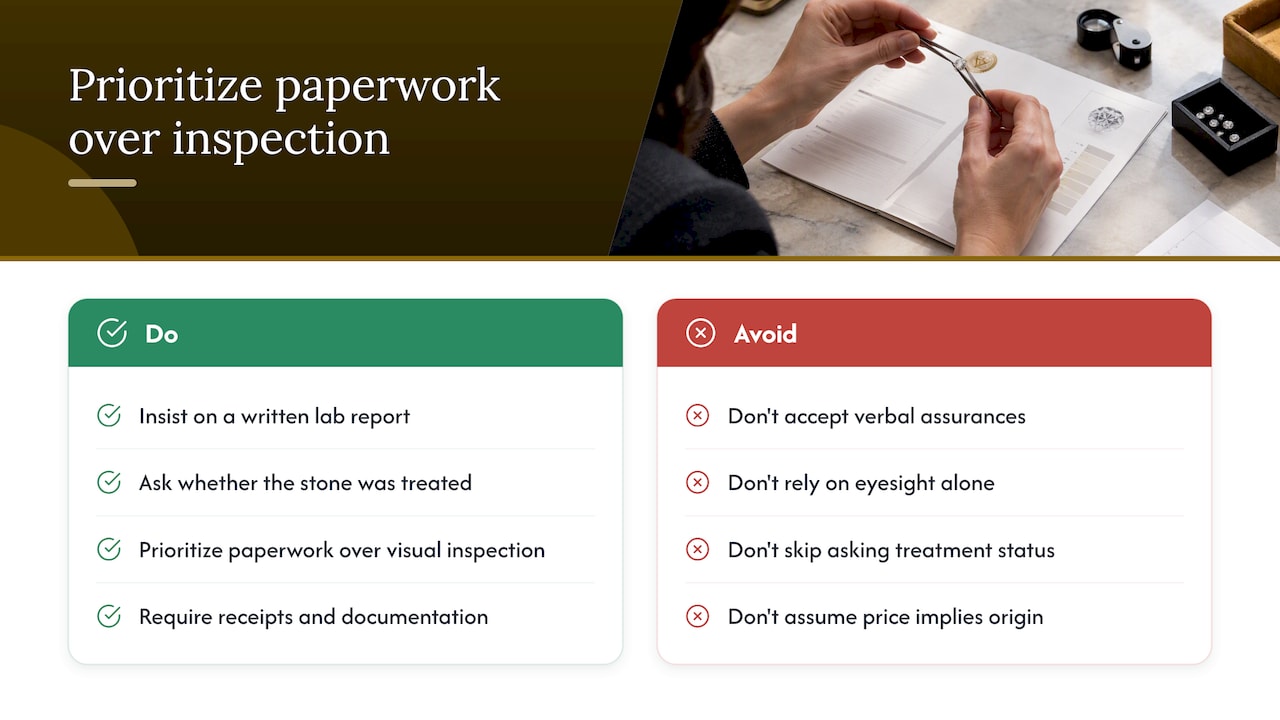
The conventional advice on colored diamonds spends too much time on how to spot treatment with your eyes and not enough on the paperwork that actually protects you. Visual inspection has real limits. Even trained gemologists needed spectroscopy to confirm the treatment history of a documented green diamond, so no buyer should expect to make that call from across a counter.
What we’d prioritize differently: stop trying to become an amateur gemologist and start becoming a careful reader of lab reports and receipts. A treated diamond isn’t a bad purchase, it’s simply a different purchase than a natural-color stone, and the price should reflect that honestly. The buyers who get burned aren’t the ones who chose a treated stone. They’re the ones who never asked whether it was treated at all, or accepted a verbal assurance instead of a written one. Insist on the paper trail first, then fall in love with the stone.
— Joseph
Ready to browse certified and colored diamonds?
We know choosing between a natural fancy color and a treated alternative comes down to budget and priorities, and we built our shopping experience to make that comparison straightforward rather than confusing.

Our Certified Loose Diamonds page lets you compare stones with their lab reports attached, so you can see treatment status before you ever pick a setting. If you’d rather start with a finished piece, our Design Your Own Diamond Ring feature lets you choose your center stone, including colored options, alongside your metal and style preferences. We also carry a dedicated Gemstone Jewelry Collection for buyers drawn to color beyond traditional diamonds.
- Browse certified loose diamonds with full report access
- Design a custom ring, pendant, or earrings around a colored center stone
- Reach out for a report review before you commit to a purchase
Whatever stage you’re at, we’re happy to look over a report with you before you decide.
FAQ
What does a color treated diamond mean?
A color-treated diamond is a natural or lab-grown stone that had its color changed or intensified after it was already formed, through methods like HPHT, irradiation, or coating. The treatment must be disclosed to you in writing under FTC guidance, and it typically affects price and resale value.
Are colored diamonds worth anything?
Yes, both natural and treated colored diamonds carry real value, but the amount differs sharply based on origin. Natural-color fancy diamonds command premium prices, while treated versions typically sell for a fraction of that price depending on the method used.
Are irradiated diamonds worth anything?
Irradiated diamonds do hold value, particularly when the irradiation and annealing process is stable and documented by a lab like GIA. Their worth sits well below a comparable natural-color stone, so a lab report confirming the treatment is essential for fair pricing.
What does it mean for a diamond to be treated?
Treating a diamond means applying a process, such as heat, radiation, coating, or fracture filling, to change its color or clarity after it formed naturally or in a lab. Some treatments are considered stable and gradeable, while others, like coatings, are not graded by major labs and require extra caution before purchase.
Sources
- Understanding diamond treatments. | GIA 4Cs
- Hydrogen-rich green diamond color-treated by multi-step processing | Gems & Gemology
- The effects of thermal treatment and irradiation on the chemical properties of natural diamonds
- Fancy colored diamond guide: grading, pricing & investment value | CutGrade
Recommended
- Colored Diamond Guide
- Jewelry Certification Types Guide: What U.S. Buyers Need
- Diamond Certification Guide: GIA vs AGS vs IGI Compared
- GIA Certification Diamonds: What Buyers Need to Know

Deep Mehta is the Co-Owner of USA Jewels, a family-owned jewelry business she has led since 2013 in Deerfield Beach, Florida. With over 13 years of hands-on experience in fine jewelry retail, manufacturing, and diamond importing, Deep specializes in engagement rings, wedding bands, and custom jewelry design. She also co-manages Kaash Group Talent Acquisition. Deep is a University of Florida graduate and oversees every aspect of USA Jewels’ operations, from product development to marketing.
Fine Jewelry Collection

You May Also Like

GIA Certification Diamonds: What Buyers Need to Know
Jewelry Certification Types Guide: What U.S. Buyers Need