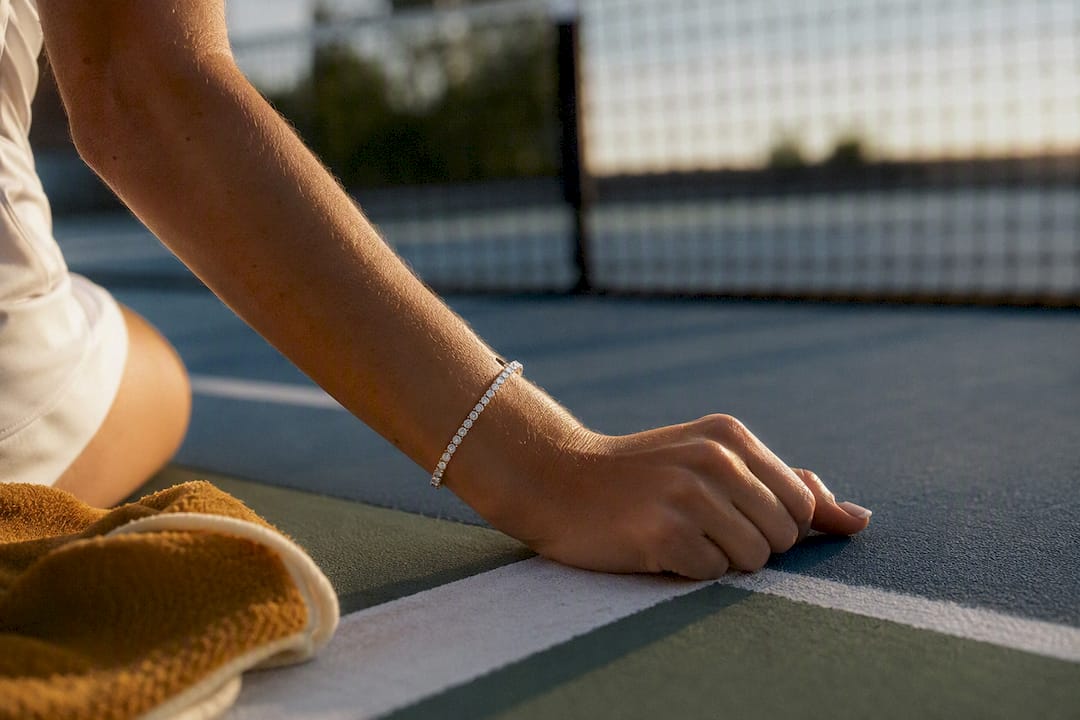
Fact Checked Tennis Bracelet Meaning: Chris Evert Origin and Care
A tennis bracelet is a flexible piece of jewelry made from a single, unbroken line of diamonds or gemstones set in gold or platinum, built to sit close to the wrist for daily wear. The name traces back to tennis legend Chris Evert, who famously lost hers mid match. What started as a courtside accident turned a classic “line bracelet” into one of the most requested pieces in fine jewelry.
TL;DR:
- A true tennis bracelet features prong-set stones, hinged links, and a box clasp with safety catch, ensuring flexibility, durability, and security for daily wear.
- The name originated after Chris Evert’s loose diamond bracelet incident during a 1978 U.S. Open match, but the design predates the term by several decades.
- It symbolizes continuity and lasting connection, making it a popular gift for anniversaries, milestones, or personal self-reward, often personalized with different gemstones and metals.
Table of Contents
- Tennis Bracelet Meaning: Definition and Design
- Why Is It Called a Tennis Bracelet? The Origin Story
- What a Tennis Bracelet Symbolizes
- Materials, Stones, and Style Variations
- How to Wear, Size, and Care for a Tennis Bracelet
- A Buying Checklist for a Quality Tennis Bracelet
- Why We Take Tennis Bracelet Meaning Seriously at USA Jewels
- Design Your Own Tennis Bracelet With USA Jewels
- Sources
- FAQ
Tennis Bracelet Meaning: Definition and Design
The phrase “tennis bracelet” describes a specific construction, not a specific gemstone or price point. It is a continuous, symmetrical row of stones, usually diamonds, set edge to edge so the piece reads as one unbroken line of sparkle around the wrist. Jewelry historians and style writers describe it as a flexible band engineered specifically for comfort and everyday movement, which is exactly why it survived four decades of changing trends while chunkier styles came and went, according to Vogue’s history of the piece.
Three design elements separate a true tennis bracelet from a look-alike:
- Setting style. Prong settings lift each stone slightly and let light hit it from more angles, which is why most tennis bracelets use them despite the small added snag risk. Bezel settings wrap metal around the stone’s edge, trading a bit of sparkle for extra protection, a common choice for people who work with their hands.
- Link construction. Each stone sits in its own small segment, hinged to the next, so the bracelet drapes rather than sits rigid on the wrist. This is what makes it a “line” bracelet in trade terminology, versus a stiff bangle or cuff.
- Clasp type. Box clasps with a fold over safety catch are the industry standard for tennis bracelets because they resist the sideways pull of daily wear. Lobster clasps and tongue and groove closures show up too, but on a piece meant to be worn constantly, a secured box clasp is the detail worth checking before anything else.
Why Is It Called a Tennis Bracelet? The Origin Story
The naming story is one of the more entertaining accidents in jewelry history. During a U.S. Open match, Chris Evert’s diamond line bracelet came loose from her wrist. Play reportedly paused while she asked for time to find it on the court, and the moment stuck. From then on, jewelers and shoppers alike started asking for “the bracelet Chris Evert wears,” and the name eventually shortened to simply the tennis bracelet.
Here is where responsible reporting gets interesting: sources do not agree on the exact year. Some place the incident around 1978, while other write-ups tie it to Evert’s continued high visibility into the 1980s, when the term entered mainstream retail language. The British Academy of Jewellery notes this date discrepancy directly, and Mental Floss has documented the same inconsistency across decades of magazine retellings. Nobody disputes that the incident happened. What varies is when exactly it entered public memory versus when it became a marketing term jewelers used on showroom floors.
What is often left out of the story: the design itself is much older than the name.
- Line bracelets and eternity bracelets, built with the same continuous stone setting, date back to the 1920s Art Deco period.
- Evert did not invent the style. She made it famous.
- Celebrity association through the 1980s, amplified by fashion press, is what turned a decades old design into a household name, a pattern documented in coverage of the naming shift.
Pro Tip: If a jeweler tells you the “tennis bracelet” name dates to a specific decade with total certainty, treat that as marketing shorthand rather than settled history. Even historians hedge on the exact year.
What a Tennis Bracelet Symbolizes
The unbroken line of stones is where the symbolism comes from. A continuous row with no visible beginning or end has long been read as a symbol of continuity, permanence, and lasting connection, the same visual logic behind eternity rings. That is part of why tennis bracelets show up so often as anniversary gifts and milestone presents rather than everyday impulse buys.
The occasions people reach for one tend to fall into a few categories:
- Anniversaries and milestones. A gift that marks years together, a birth, a graduation, or a career achievement.
- Everyday luxury. Because the design sits flat and low profile against the wrist, plenty of people wear one daily as a quiet, permanent accessory rather than saving it for special occasions.
- Self purchase. More buyers are choosing tennis bracelets for themselves, treating the piece as a personal milestone marker rather than something they wait to receive.
Personalization changes what the gift communicates. A bracelet in a birthstone color carries a more individual, specific meaning than an all diamond version, and pairing gemstones with birthstone symbolism is common in modern gifting, an approach explored in birthstone gifting guides. Metal choice matters too. Rose gold reads warmer and more romantic, platinum reads more formal and enduring, and the choice often says as much as the stones themselves.
Materials, Stones, and Style Variations
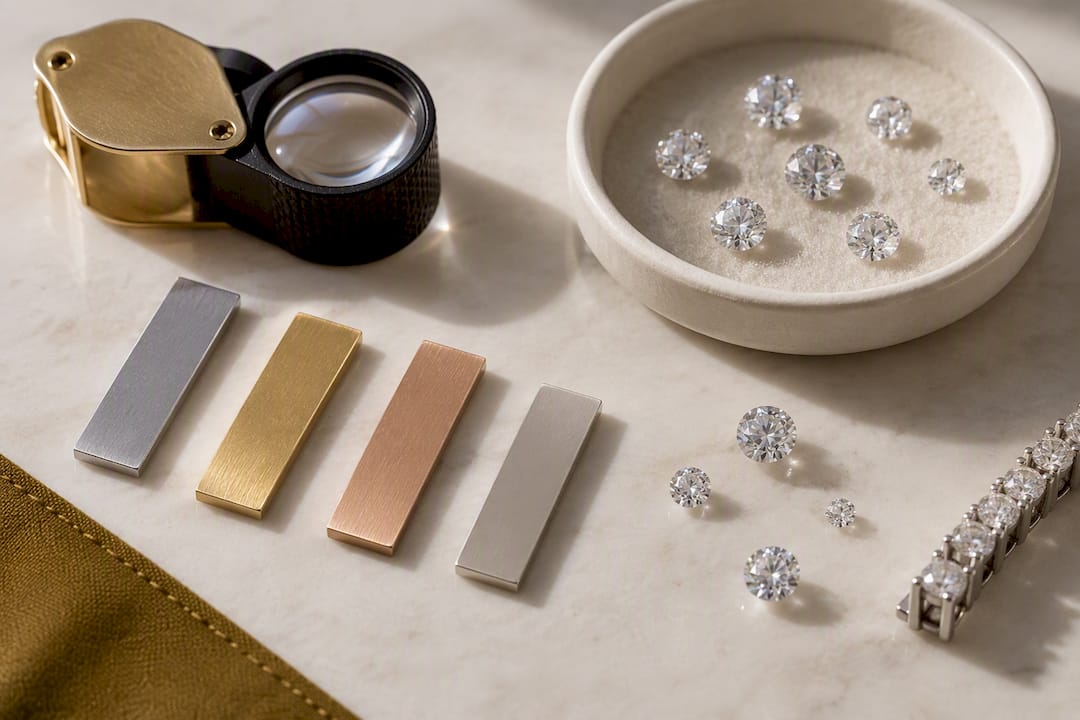
Metal choice affects weight, color, and price more than most first time buyers expect. Fourteen karat gold is more durable for daily wear because it is alloyed with harder metals, while 18 karat gold has a richer color but scratches more easily. Rose gold gets its blush tone from added copper, and platinum, while the most expensive option ounce for ounce, resists tarnish indefinitely and holds prongs more securely over decades of wear.
Stone choice is where budget and personal taste diverge most:
- Natural diamonds carry the highest per carat cost and the most established resale and appraisal markets.
- Lab grown diamonds offer the same optical and physical properties at a lower price point, letting buyers choose a larger total carat weight for the same budget.
- Colored gemstones, sapphires, emeralds, and rubies among them, trade some durability and brilliance for a distinctive look and often a lower cost per carat than diamonds of comparable size.
Style variations matter just as much as material. A full eternity design wraps stones evenly around the entire wrist, while a half eternity version concentrates stones on the top facing side only, a subtle way to reduce cost without an obvious visual difference when worn. Thin, delicate lines suit stacking with other bracelets, while wider multi row designs stand alone as a statement piece. Neutral and men’s takes on the design have grown steadily too, often using larger stones spaced further apart or mixed metal tones.
How to Wear, Size, and Care for a Tennis Bracelet
Fit matters more on a tennis bracelet than almost any other piece of jewelry, because a loose bracelet is a bracelet that eventually falls off unnoticed, the same scenario that made Chris Evert famous in the first place.
- Measure your wrist first. Wrap a soft measuring tape or a strip of paper around your wrist just past the bone, then add half an inch to three quarters of an inch for comfortable movement without excess slack.
- Test the fit at home. A properly sized tennis bracelet should slide slightly on the wrist but not slip over the hand without unclasping.
- Know when to take it off. Remove it before sports, heavy manual work, or swimming, since repeated impact and chemical exposure both stress prongs and clasps over time.
- Clean it gently. Warm water, a drop of mild dish soap, and a soft bristle brush handle most buildup between professional cleanings.
- Inspect the clasp and prongs regularly. Check monthly for any looseness, and have a jeweler tighten prongs at the first sign of a stone shifting.
Pro Tip: Hold the bracelet up to your ear and gently shake it. A faint rattling sound often means a stone has loosened in its setting, which is your signal to get it checked before you lose it.
A Buying Checklist for a Quality Tennis Bracelet
Stone quality is where budgets stretch furthest or get wasted fastest. Cut and symmetry matter more for overall sparkle than color or clarity grades that only a jeweler’s loupe can detect, so a well cut stone with a slightly lower clarity grade will often look brighter to the naked eye than a poorly cut stone with a premium grade. Buyers on a tighter budget get more visual impact prioritizing cut over chasing the highest clarity number on the certificate.
Construction quality is the part shoppers skip most often and regret skipping later.
- Confirm the piece is solid metal, not hollow or plated, since plated pieces wear through at contact points within a few years of daily use.
- Check for a hallmark stamp indicating karat weight or platinum purity.
- Ask specifically about prong security and whether the setting has been reinforced for daily wear versus occasional wear.
- Request diamond certification from an independent grading lab for any center stones or higher carat totals.
- Confirm the return policy and any warranty covering clasp or prong repair.
| What to check | Why it matters | Good sign |
|---|---|---|
| Cut and symmetry | Determines how much light the stone reflects | Even facets, no visible dark spots |
| Metal construction | Solid metal resists wear far longer than plated pieces | Hallmark stamp for karat or purity |
| Clasp type | Prevents loss during daily wear | Box clasp with a fold over safety catch |
| Certification | Confirms diamond quality claims independently | Certificate from a recognized grading lab |
| Return policy | Protects your purchase if fit or quality disappoints | Clearly stated window, ideally one month |
A design your own diamond bracelet option lets you control every one of these variables directly rather than choosing from whatever happens to be in a display case.
Why We Take Tennis Bracelet Meaning Seriously at USA Jewels
We have been designing and manufacturing bracelets in house since 1999, and the tennis bracelet is one of the pieces we get the most detailed questions about, because the meaning genuinely does depend on the choices behind it. The metal you choose, the stone type, and the clasp construction all shape both how the piece looks and how long it lasts on your wrist.
Custom design is not a luxury add on in our shop. It is how we make sure a bracelet meant to symbolize something lasting actually holds up to being worn every day for years. Buyers working with us get support long after checkout too, an important detail when a piece is meant to stay on your wrist for decades.
— Joseph
Design Your Own Tennis Bracelet With USA Jewels
We provide an alternative to traditional retail jewelers for anyone shopping for a tennis bracelet by offering in-house manufacturing that eliminates middlemen markups, helping keep pricing competitive.
Every design your own diamond bracelet starts with your choice of diamond quality, metal type, and clasp style, backed by certified, ethically sourced stones and a lifetime diamond upgrade program if your taste or budget changes down the road. If you would rather start with the stone itself, our certified loose diamonds page lets you compare options before committing to a setting. Every purchase includes insured shipping and a money back guarantee period, allowing you to see the piece in person before making a final decision. Browse our diamond bracelet collection to start comparing settings and stone options today.
Sources
- The Dramatic Sports Story That Inspired the Tennis Bracelet | Vogue
- Jewellery history: tennis bracelet — British Academy of Jewellery (BAJ)
- Nine
- Why Is It Called a Tennis Bracelet? | Mental Floss
FAQ
Why Is the Tennis Bracelet So Popular?
Its popularity comes down to versatility: the low profile, continuous line of stones works with both formal outfits and everyday clothing without looking out of place in either setting. The origin story tied to Chris Evert also gave it a memorable name and a built in narrative that jewelers have leaned on for decades.
When Should You Wear a Tennis Bracelet?
A tennis bracelet works for both daily wear and formal occasions because of its flexible, low profile design. Many people wear one every day as a permanent accessory, while others save it for anniversaries, celebrations, or evenings out, and taking it off before sports or heavy manual work protects the clasp and prongs.
How Do I Properly Size a Tennis Bracelet?
Measure your wrist circumference with a soft tape or a strip of paper, then add half an inch to three quarters of an inch for comfortable movement. The right fit slides slightly on your wrist but does not slip over your hand while still clasped.
What Is the Difference Between a Line Bracelet and a Tennis Bracelet?
They describe the same construction: a continuous row of stones set in a flexible band. “Line bracelet” and “eternity bracelet” are the older jewelry trade terms, while “tennis bracelet” became the popular name after the Chris Evert incident made headlines.
How Much Does a Custom Tennis Bracelet Cost?
Pricing depends on metal type, stone quality, and total carat weight. USA Jewels’ design your own diamond bracelet option starts from $499, with final pricing set by the specific diamonds and metal you choose.
Recommended
- Tennis Bracelet Guide: How to Choose the Perfect One
- Tennis Bracelet Costs: What 2–3 Carats Buy and How to Save 40–70%
- Bracelet Guide: Tennis, Bangle & More

Deep Mehta is the Co-Owner of USA Jewels, a family-owned jewelry business she has led since 2013 in Deerfield Beach, Florida. With over 13 years of hands-on experience in fine jewelry retail, manufacturing, and diamond importing, Deep specializes in engagement rings, wedding bands, and custom jewelry design. She also co-manages Kaash Group Talent Acquisition. Deep is a University of Florida graduate and oversees every aspect of USA Jewels’ operations, from product development to marketing.
Fine Jewelry Collection

You May Also Like
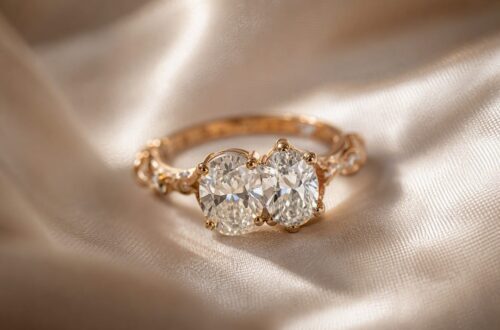
G vs H Diamonds: Save $2,500–$3,000 at 2 Carats
Best Gemstone Alternatives to Diamonds for Rings