Bezel vs Prong Setting: How to Choose the Right One
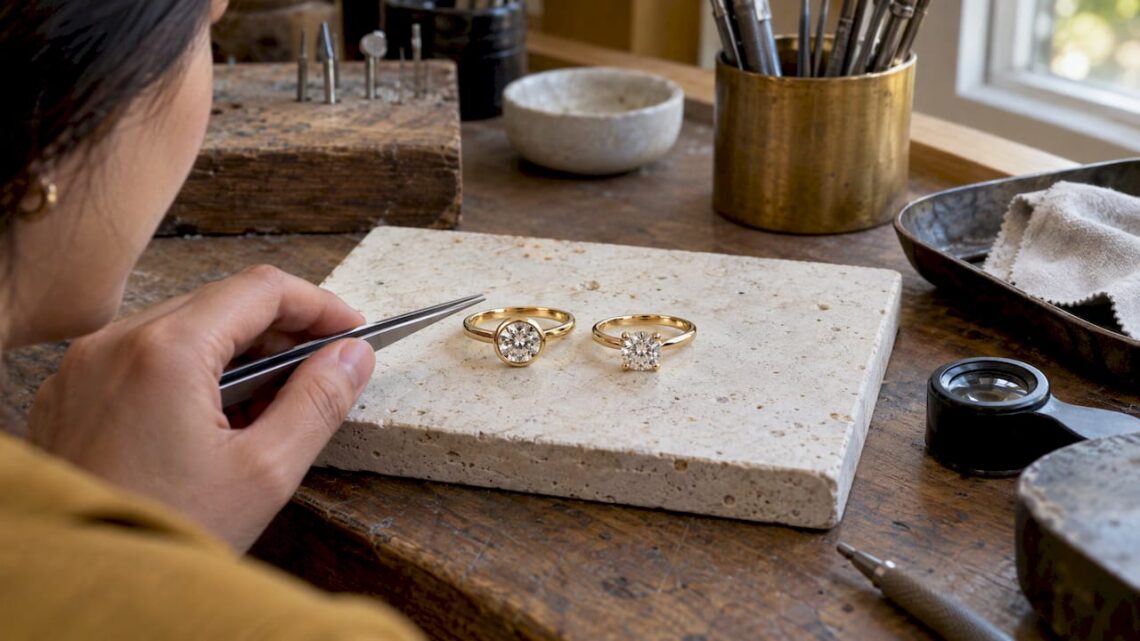
Choose a prong setting if you want the most light and the classic look. Choose a bezel if you want the most protection and a smooth, low-profile feel. A bezel wraps metal around the edge of the stone. Prongs hold it with small metal claws and leave the sides open. Neither is better in general. The right one depends on how you live, which stone shape you love and how much upkeep you want. Below, we walk through each point so you can decide with confidence, and we show where a custom design helps.
TL;DR
- Prong: the stone is held by four or more metal prongs, so more of it is open to light. It is the traditional choice for maximum sparkle.
- Bezel: a rim of metal wraps the stone’s edge. It shields the girdle, the thin edge of the diamond, and suits active hands.
- Security: GIA says a bezel helps keep the center stone from falling out. A six-prong setting can hold better than four prongs if one prong breaks.
- Cost: a bezel usually uses more metal and is fitted to the individual stone, so expect it to cost a little more than a simple prong setting.
- Decide by life, not trend: think about your job, hobbies, stone shape and how often you want to have the ring checked.
Table of Contents
- What each setting actually is
- How they look on the hand
- Sparkle and light
- Security and protection
- Upkeep over the years
- Is a bezel more expensive?
- How to choose: lifestyle, stone and style
- Beyond engagement rings: earrings, pendants and bracelets
- Our perspective
- Design the ring that fits your life
- FAQ
- Sources
What each setting actually is
The setting is the metal structure that holds your diamond to the band. It does three jobs: it keeps the stone safe, it frames how the stone looks, and it decides how much of the diamond meets the light.
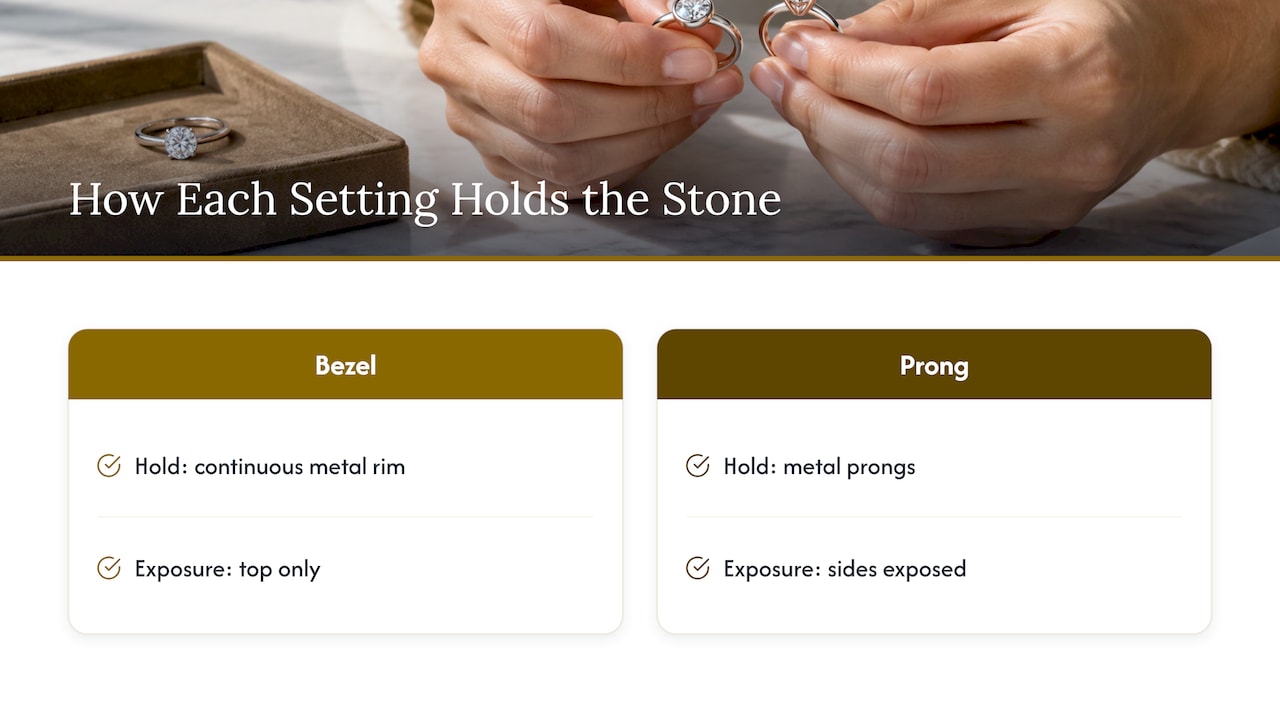
The International Gem Society describes the core difference simply. A bezel wraps metal around the gemstone and leaves only the top surface exposed. A prong setting leaves the sides of the stone exposed.
Prong settings
A prong setting uses small metal arms, usually four or six, that rise from the band and curl over the edge of the diamond. The stone sits up in the air with the sides and crown open to light. That is why the six-prong or four-prong solitaire is the picture most people have in mind when they think of an engagement ring.
Pronged rings come in several styles: round claws, pointed claws, flat tab-like prongs, double prongs and more. The choice changes the look and how snug the grip feels. Our prong style selection guide goes through them one by one.
Bezel settings
A bezel is a thin collar of metal that surrounds the diamond. A full bezel circles the whole stone. A partial or half bezel covers only part of the edge and leaves the rest open, which many people like for a lighter look. Because the metal follows the outline of the diamond, a bezel looks smooth and modern, with no claws to catch on anything.
If you want to see where both fit among the other styles, such as solitaire, halo and channel, our settings guide for prong, bezel and channel lays them side by side.
How they look on the hand
The first thing people notice is the outline. A prong setting looks open and airy. The diamond appears to float, and you see the stone more than the metal. A bezel looks sleek and graphic. The metal rim becomes part of the design, drawing a clean line around the diamond.
There is also a size effect. A thin bezel can make a stone look a touch larger, because the metal line sets off its outline. A thick bezel can do the reverse and look heavier, since the rim covers part of the stone’s edge. A prong setting shows nearly the full width of the diamond, so what you buy is what you see.
Some other points that affect the look:
- Metal color: a bezel puts more metal in view. In white gold or platinum it reads cool and crisp. In yellow or rose gold it adds warmth and becomes a bigger part of the color story.
- Height: prongs usually lift the stone higher off the finger. A bezel can sit lower, which gives a more streamlined profile.
- Vintage versus modern: prongs read as classic and timeless. Bezels read as contemporary, though a bezel with milgrain edging (tiny beads along the rim) can feel vintage.
Sparkle and light
Sparkle comes from light entering the diamond, bouncing around inside and returning to your eye. The more of the stone is open, the more light can enter from the sides and the top.
With prongs, the sides and much of the crown are open, so light comes in from many angles. That is why people who care most about fire and brilliance often lean toward prongs. A bezel covers the edge, so the diamond catches light mainly from above. The effect is a little softer and more contained. It is still lovely, and in bright light the table facet still flashes. It is a different mood, not a lesser one.
A useful test: look at a ring in the kind of light you live in. Office fluorescents, a restaurant, daylight by a window. A well-cut diamond sparkles in either setting. The cut quality of the stone matters more than the setting, and a certified diamond with a strong cut grade will perform well in both. Our diamond certification guide explains what GIA, AGS and IGI reports tell you.
Security and protection
This is where most buyers want a straight answer. GIA, in its guidance on protecting a diamond engagement ring, says a bezel setting helps prevent the center stone from falling out and protects the girdle against bumps, bangs and other accidents.
Prongs are more exposed, since they hold the stone at points rather than all the way around. But prong rings can be made more secure. GIA notes that a six-prong setting can offer more protection than four prongs: if one prong breaks, the extra prongs are more likely to keep the diamond in place. The two additional prongs might also give a little extra girdle protection in daily wear.
Here is how that plays out in practice:
| Situation | Prong | Bezel |
|---|---|---|
| Girdle (edge) protection | Exposed between prongs | Shielded by the metal rim |
| Snagging on fabric or hair | Prongs can catch | Smooth, little to catch |
| If one holding point weakens | Six prongs give more backup than four | The continuous rim holds the whole edge |
| Stone shapes with delicate points | Corners need prong coverage | Rim can cover the points |
Pointed shapes deserve extra thought. Marquise, pear, princess and emerald cuts have corners or edges that are more vulnerable to chips. A prong set over each corner protects it, and a bezel does the same with a continuous rim. Our diamond shapes guide shows how each shape behaves.
Upkeep over the years
Every setting needs care. Prongs are small and take the most contact with everyday life, so it is smart to have a jeweler look at them regularly and tighten or rebuild any that show wear. Checking your ring at least once a year is a habit worth forming, whatever setting you choose.
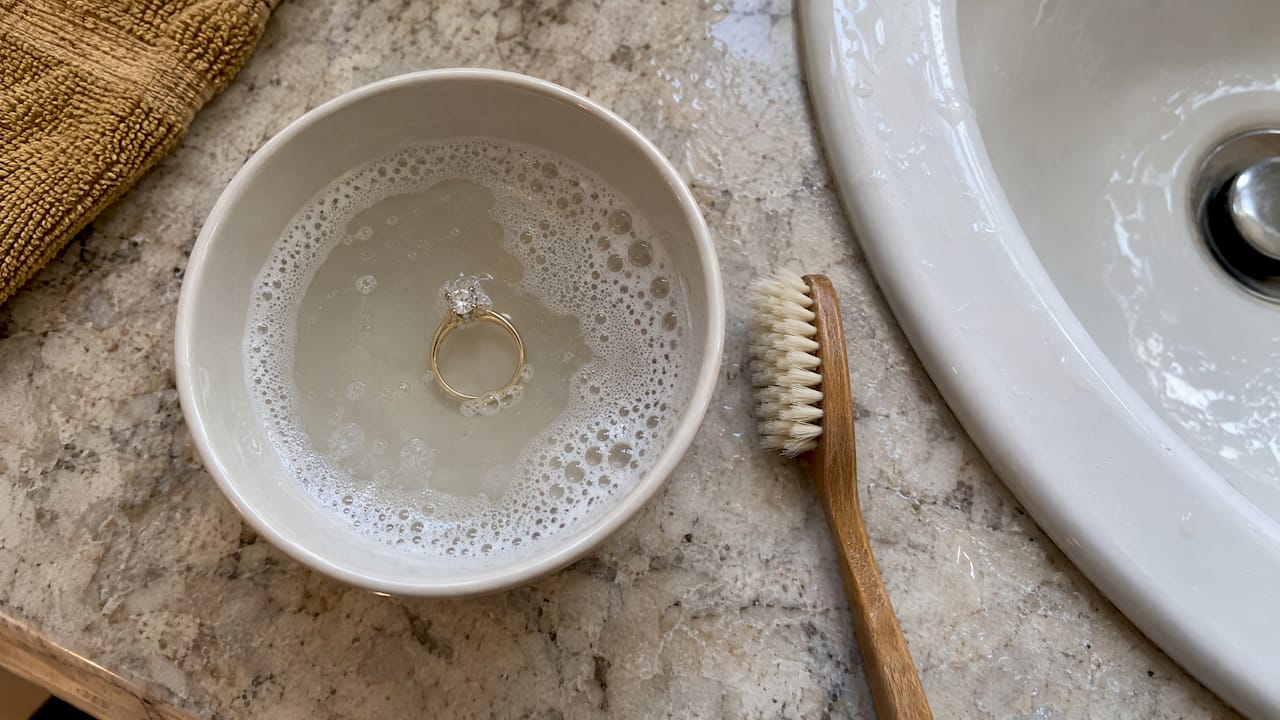
A bezel has no prongs to wear thin, so there is less to inspect on the grip. Dirt is the main matter: soap and skin oils collect under and around the stone, and a bezel can hide it. A soft brush and warm soapy water keep either style bright.
Metal matters too. Platinum and gold behave differently over time, and a solid-metal ring holds its shape better than a hollow or plated one. All our rings are solid, not hollow or plated, so a setting we make has real metal behind it. Our platinum jewelry guide covers how platinum wears and how to care for it.
Is a bezel more expensive?
Usually a little, yes. A bezel uses more metal than a handful of prongs, and it has to be shaped to fit the particular stone, which takes more bench time. That is the logic behind most jewelers’ pricing, and it is why a bezel version of the same ring often costs somewhat more than a simple prong version.
The gap is rarely the main cost. The size and quality of the diamond and your choice of metal move the price far more. Platinum costs more than 14k gold, a larger stone costs more than a smaller one, and extra details like a hidden halo or side stones add up. So set your budget around the stone and metal first, then see what each setting adds.
If you are comparing price points, our engagement rings start from $346, and you can see styles in both open and enclosed settings side by side.
How to choose: lifestyle, stone and style
Here is a simple way to decide. Answer these four questions honestly.
1. How hard are your hands on a ring?
If you work with your hands, lift weights, garden, climb, nurse, cook or play sports, a bezel’s smooth, protective rim is a strong fit. It sits low, resists snags and shields the edge. If your days are mostly desk work and dinners out, prongs will serve you well and give you the sparkle you want.
2. What stone shape do you love?
Round stones suit nearly any setting. Emerald and Asscher cuts look striking in a bezel, which echoes their clean, architectural lines. Marquise and pear stones have delicate points a bezel can cover. Oval stones look elegant in both. When you are torn, think about where the stone is most vulnerable, usually the corners and points, and choose the setting that guards them best.
3. What look do you want to see every day?
If you picture a bright, lifted diamond with light pouring in, choose prongs. If you picture a sleek, modern ring with a clean outline, choose a bezel. A partial bezel is a good middle path: it adds protection and keeps more of the stone open.
4. How much upkeep will you take on?
Pronged rings ask for a regular check. A bezel needs less attention to the grip but benefits from regular cleaning. Either way, plan a yearly visit to your jeweler and keep the ring clean.
For a wider view of what else is out there, such as solitaire, halo, cathedral and channel, see our engagement ring settings explained and the setting style guide for every buyer. Both are written to help you narrow down fast.
Beyond engagement rings: earrings, pendants and bracelets
The same trade-off applies to other jewelry, with a few twists.
- Earrings: studs get knocked by hair, pillows, scarves and phone calls. Prongs show the most sparkle near the face. A bezel is a sensible pick for children’s earrings or anyone who wants a smooth surface. Secure backs matter just as much as the setting.
- Pendants: a pendant hangs and rarely takes hard knocks, so prongs are a popular, light choice. A bezel gives a clean, modern look.
- Bracelets: wrists take more bumps than almost any other spot. Tennis bracelets usually use small prongs or similar settings to keep each stone open to light, and they reward regular checks. Take a look at our diamond tennis bracelets to see the effect.
Our perspective
We are a family business, and we have been making jewelry since 1999. Over those years, one thing has stayed true: people do not really want to choose between a ring that is beautiful and a ring that lasts. They want both, and a good setting is how you get there.
We make our jewelry in-house, so there is no middleman between the bench and your hand. That is how we keep prices direct, and it is why we can build every piece in solid metal, never hollow or plated. A setting only protects a diamond if the metal behind it is real.
Our advice is simple. Start with how you live, then pick the setting. If your hands are busy, give real weight to a protective design. If you love light, think about six prongs. Then pick a certified, ethically sourced diamond and a metal you will love for decades. If your tastes change, our lifetime diamond upgrade program means the stone you choose today can grow with you.
Joseph
Design the ring that fits your life
If you are still weighing the two styles, the easiest way to decide is to see your own stone in the setting you are considering. With our design-your-own ring tool, you choose the diamond shape, the diamond quality and the metal, and build the ring around your choices. Design Your Own Diamond Ring starts from $399, and our step-by-step design guide walks you through each decision.

Our certified natural and lab-grown loose diamonds start from $142, and every order ships free and insured, with a 30-day money-back guarantee. If you would rather start with a finished piece, browse our diamond rings.
FAQ
Is a bezel setting more secure than prongs?
Generally, yes. GIA says a bezel helps keep the center stone from falling out and protects the girdle from bumps. A six-prong setting can narrow the gap, because the extra prongs give backup if one weakens. Whatever the setting, have your ring checked by a jeweler once a year.
Which setting is better for earrings, prong or bezel?
It depends on how you wear them. Prongs let in the most light and give the most sparkle near the face. A bezel gives a smooth, low profile that resists snagging, which suits children and anyone who is hard on jewelry. Both work well with a secure back.
Is a bezel setting more expensive?
Usually a little more. A bezel uses more metal and is shaped to fit the stone, so the bench work takes longer. The diamond’s size and quality and the metal you pick affect the price far more than the setting does.
Is a bezel setting timeless?
Yes. Enclosed settings have a long history in fine jewelry, and the clean outline suits both modern and vintage tastes. Pair it with a classic stone shape and a lasting metal like platinum or gold, and the ring will stay in style.
Sources
- Protective Gem Settings for Rings, International Gem Society
- How to Protect Your Diamond Engagement Ring, GIA
Recommended
- Settings Guide: Prong, Bezel & Channel
- Pick Ring Setting Style Guide for Every Buyer
- Engagement Ring Settings Explained: Solitaire, Halo & More
- Trellis vs Basket Setting: How to Choose Your Ring

Deep Mehta is the Co-Owner of USA Jewels, a family-owned jewelry business she has led since 2013 in Deerfield Beach, Florida. With over 13 years of hands-on experience in fine jewelry retail, manufacturing, and diamond importing, Deep specializes in engagement rings, wedding bands, and custom jewelry design. She also co-manages Kaash Group Talent Acquisition. Deep is a University of Florida graduate and oversees every aspect of USA Jewels’ operations, from product development to marketing.
Fine Jewelry Collection

You May Also Like
Why Lab-Grown Diamonds Cost Less: 2026 Price Guide
5 Bench Steps Every Buyer Should Check for a Flush Setting Ring