Certified vs Non-Certified Diamonds: What Buyers Should Know
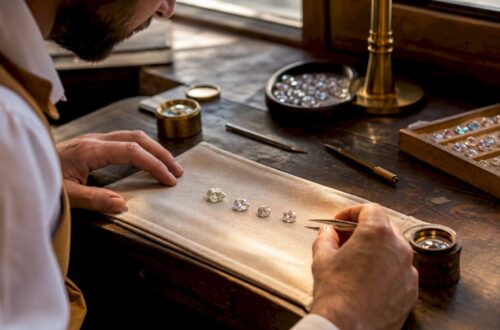
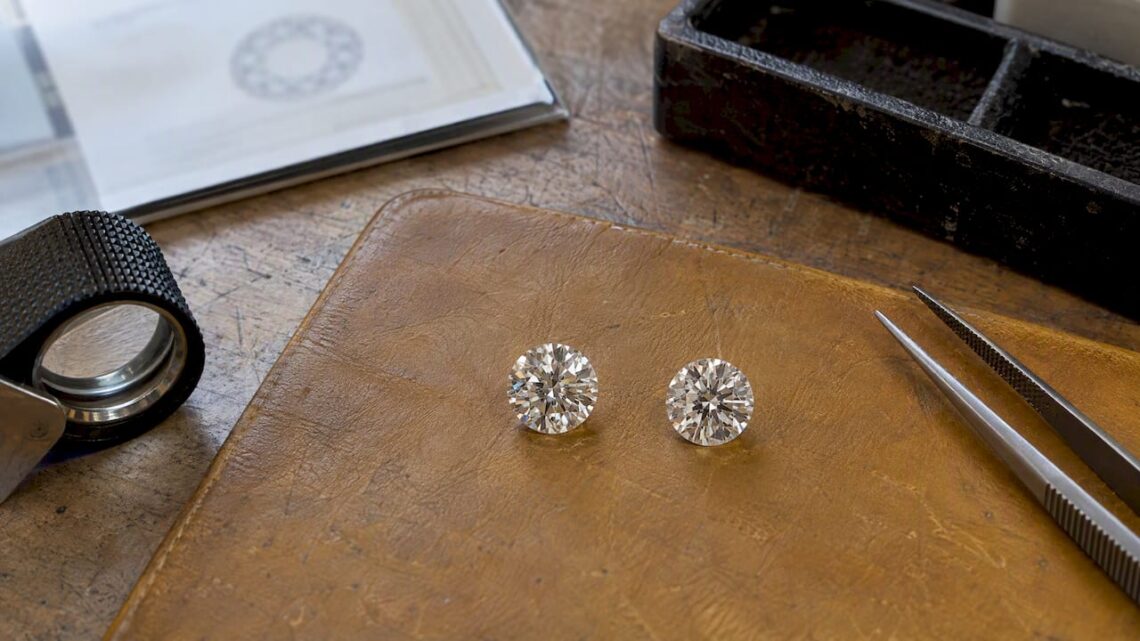
A certified diamond comes with an independent laboratory report that lists its grades, measurements and treatments. A non-certified diamond has no such report, so you are relying on the seller’s word. For most engagement rings and any stone of meaningful size, we recommend the report. For very small or low-value stones, going without one can be reasonable, if you take a few precautions.
TL;DR
- A grading report describes a diamond’s 4Cs, proportions and treatments. It does not set a price or promise beauty.
- Without a report, you can overpay or receive a stone graded lower than advertised.
- Small, lower-color or lower-clarity stones are often sold without reports because of cost.
- If a stone is uncertified, make the sale conditional on an independent grading or appraisal.
- Check the report number with the issuing lab and look for the laser inscription on the stone.
Table of Contents
- What “certified” actually means
- What a non-certified diamond is
- Why some diamonds are sold without a report
- Certified vs non-certified at a glance
- The real risks of buying without a report
- What a report does not do
- Perspective: why we put reports first
- How to protect yourself if a diamond is uncertified
- How to verify a report you are given
- When going without a report is reasonable
- Choosing a certified stone with us
- FAQ
- Sources
What “certified” actually means
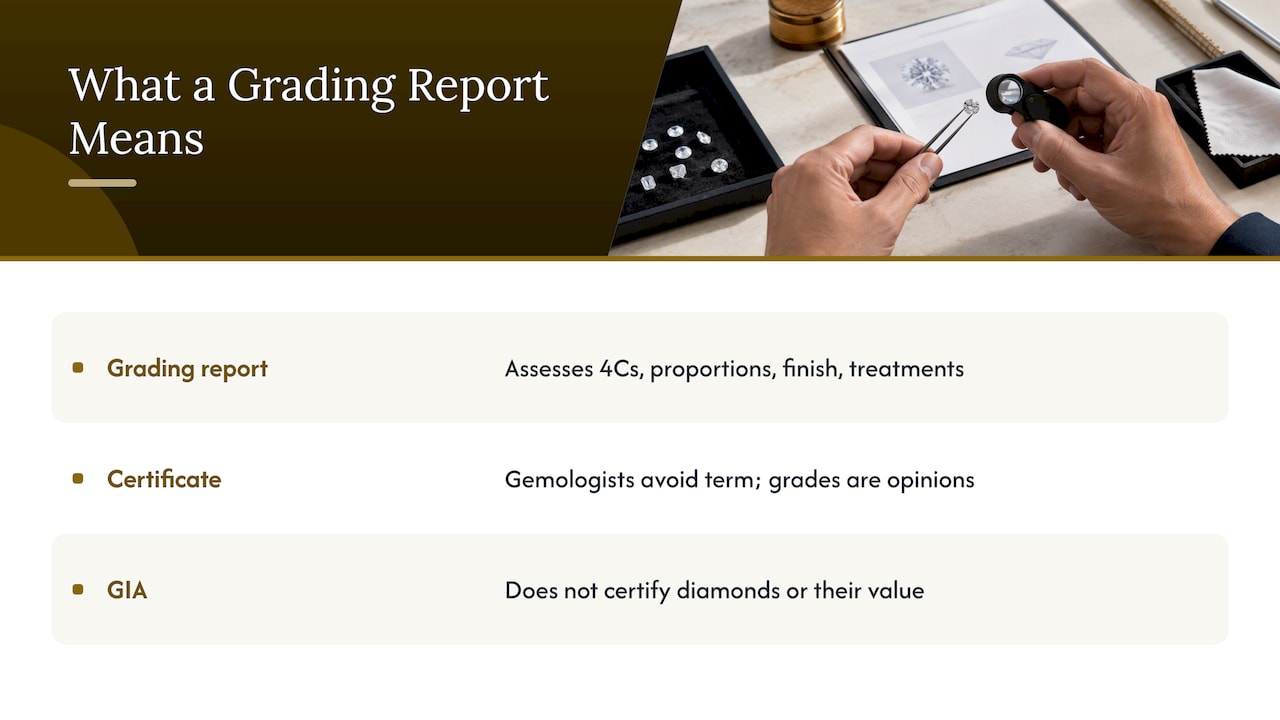
People say “certified diamond,” but the correct term is a grading report. A GIA Diamond Grading Report assesses a natural diamond’s 4Cs, proportions, finish and treatments, and maps its unique characteristics. The lab examines the stone and records what it finds.
Two points matter here. First, gemologists are encouraged to avoid calling grading reports certificates, because grades are expert opinions, not facts. A good lab is consistent, but it is still a professional judgment. Second, GIA does not certify diamonds or their value. A report describes. It does not tell you what to pay.
If you want a deeper walk-through of the major labs, our guide to GIA, AGS and IGI reports compares them side by side.
What a non-certified diamond is
A non-certified diamond has not been graded by an independent lab. It may still come with a description from the seller, a store-written card or an in-house document. Those are claims, not independent findings. Buyers should be cautious of in-house documents or papers from unknown organizations, since they may not follow strict, independent standards.
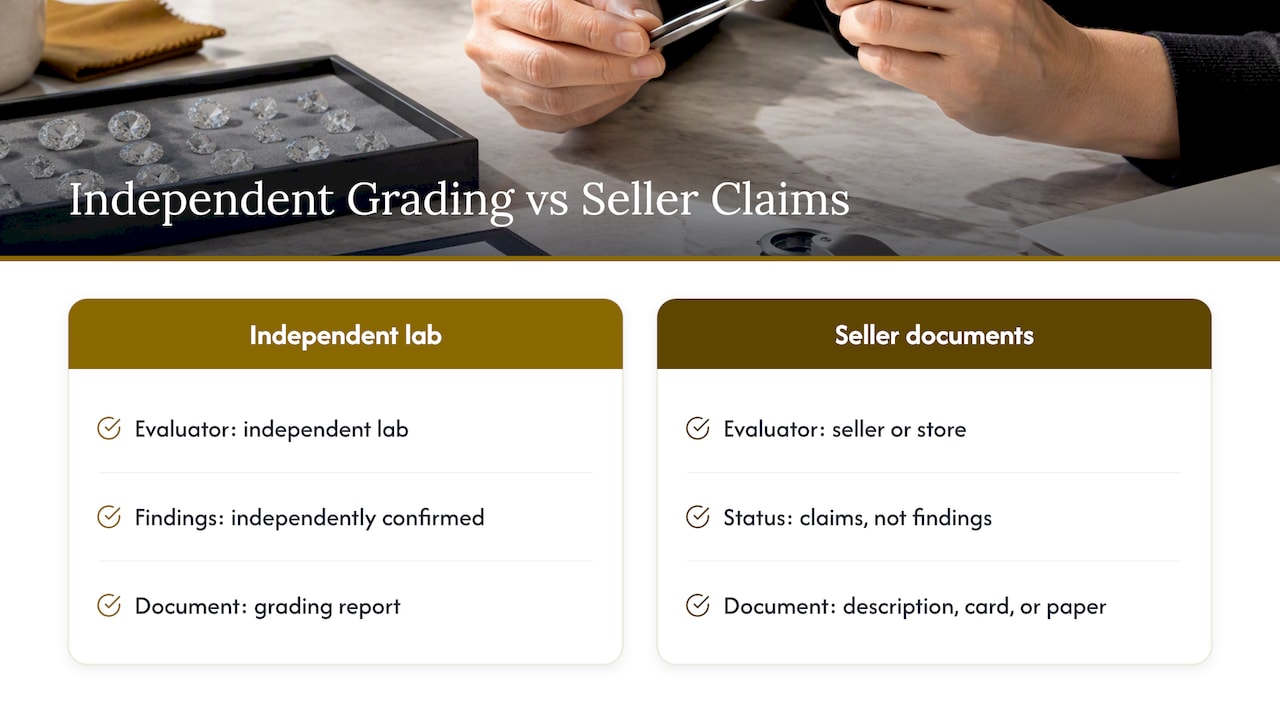
That does not make every uncertified stone a bad one. It means nobody outside the sale has confirmed what you are told.
Why some diamonds are sold without a report
Not every diamond gets graded. Diamonds may be listed as ungraded because of cost, often when they are smaller or have lower color or clarity. A lab fee can be a large share of the value of a tiny stone, so it often does not make sense.
Other common cases:
- Melee and accent stones. The small diamonds around a center stone are rarely graded one by one.
- Antique and heirloom stones. Older diamonds may lack reports, and sending one to a lab can help confirm it is genuine and give an idea of its value.
- Stones whose seller prefers to compete on price. This is the case to look at carefully, since a missing report removes the easiest way to compare.
Certified vs non-certified at a glance
| Certified | Non-certified | |
|---|---|---|
| Grades confirmed by independent lab | Yes | No |
| Easy to compare across sellers | Yes | Hard |
| Treatments disclosed | Yes, in the report | Only if the seller says so |
| Risk of overpaying | Lower | Higher |
| Typical use | Engagement rings, larger stones | Small accents, antiques, some low-value stones |
| Resale and insurance paperwork | Report supports both | Needs a new appraisal |
The real risks of buying without a report
A grading report provides information about a diamond’s quality. Without one, buyers may overpay or receive a stone with different grades than advertised. That is the heart of it.
Price gaps are real. Prices for comparable diamonds can differ by thousands of dollars, which is why a shared, independent description helps you shop. Without it, a seller can call a stone a color or clarity grade that a lab would not.
There is also the matter of how labs themselves are judged. A lab overgrades a diamond when its grade is off by two or more color or clarity grades. So not every report is equal, and the name on it matters.
What a report does not do
A report is not a guarantee of beauty. Fire and brilliance can still vary between stones with similar objective grades. Two diamonds with identical paper can look different on the hand.
It is also not an appraisal. Grading reports describe a diamond’s characteristics without assigning a dollar value, while appraisals set a value for insurance or other purposes. You may need both. And a report on its own is not proof that a stone is conflict-free; that comes from the seller’s sourcing practices, so ask about them directly.
Jewelers of America advises treating a report as an informative blueprint, not the only factor, and comparing stones in person when possible. We agree. Cut quality in particular shapes what your eye sees, and our piece on diamond cut grades explains how.
Perspective: why we put reports first
We have been a family-owned business since 1999, and we make our jewelry in-house. Over those years, the most common regret we hear is not about a stone that was too small. It is about a stone that was not what the buyer thought it was.
That is why our loose diamonds are certified, and why we are comfortable saying the report belongs in the conversation before the price does. A report lets you compare our stones to anyone else’s on equal terms. We would rather win that comparison than avoid it.
We also think the report is a starting point. Look at the stone, ask questions, and take your time. Our lifetime diamond upgrade program exists because we expect people to care about this stone for decades.
— Joseph
How to protect yourself if a diamond is uncertified
Sometimes the stone you love has no report. You still have good options.
- Make the purchase conditional. Buyers can negotiate the sale on the condition of an independent grading or appraisal by a qualified professional. Get that in writing, along with the return terms.
- Work with a reputable jeweler. The same source notes that a highly reputable jeweler can reduce risk when no formal report exists. Ask how long they have operated and what their return policy is.
- Have it looked at under magnification. Any honest seller should be happy to show you the stone under a scope.
- Compare price against graded stones. If an uncertified stone is far cheaper than a graded one with the same stated grades, ask why.
- Send it to a lab yourself. For a stone you already own or are about to buy, a lab report gives you an independent baseline.
How to verify a report you are given
A report is only useful if it is real and belongs to your stone. Legitimate reports come from laboratories independent of suppliers, mines or retailers, so be wary of a lab tied to the seller.
Then check it:
- Look up the report number on the issuing lab’s own website, and check the diamond’s laser inscription.
- Compare the stated measurements and grades with the stone in front of you.
- Confirm the inscription matches the report number.
We have step-by-step guides on how to read a GIA report and how to verify a laser inscription with a 10x loupe. For the wider picture, see our overview of certification types and how the 4Cs work.
When going without a report is reasonable
Uncertified is not always a red flag. It can make sense when:
- The diamonds are small accents in a piece, where individual grading is not practical.
- You are buying an antique or estate piece and plan to have it appraised.
- The budget is modest and the stone is small, and you buy from a seller you trust with a solid return policy.
It makes much less sense for a center stone in an engagement ring, where the price is high and small grade differences change the cost noticeably. Here we would not skip the report.
Choosing a certified stone with us
If you want the report and the design freedom, our certified loose diamonds start from $142. You can pick the shape, quality and metal, then have us set it. Our Design Your Own Diamond Ring option starts from $399, and our engagement rings start from $346.
Shipping is free and insured, there is a 30-day money-back guarantee, and our pieces are solid, not hollow or plated. If you would like a walk-through of the design process first, read our step-by-step design guide.
FAQ
Do all diamonds get certified?
No. Smaller stones and those with lower color or clarity are often sold without a report because of cost. Larger, higher-value stones usually come with one, and it is the norm for engagement ring center stones.
Is a certified diamond always better quality?
Not necessarily. A report tells you what the stone is, not whether it is a good one. A certified stone can still have a weak cut or lower grades, so read the details and look at the diamond itself.
Is a certificate the same as an appraisal?
No. A grading report describes the diamond and does not assign a dollar value. An appraisal states a value, usually for insurance, so you will likely want one after you buy.
Can I trust a store’s own certificate?
Treat it with caution. In-house documents and papers from unknown organizations may lack independent standards. Ask for a report from an independent lab, or make the sale conditional on one.
What if my diamond is an heirloom with no report?
You can send it to a lab. That can confirm the stone is genuine and give you an idea of its value, which is also useful for insurance.
Sources
- GIA: How GIA grades diamonds
- International Gem Society: Diamond certification FAQ
- Rapaport: Understanding diamond grading and certificates
- GIA: What is a GIA diamond?
- Checkbook: Diamonds shopping guide
- Jewelers of America: Diamond buying guide
- Natural Diamonds: Diamond certification and appraisal
- GIA: Does GIA certify or appraise diamonds?
Recommended
- Why Diamond Certifications Differ Globally: 2026 Guide
- Jewelry Certification Types Guide: What U.S. Buyers Need
- GIA Certification Diamonds: What Buyers Need to Know
- How to Choose a Certified Ethical Diamond Jeweler

Deep Mehta is the Co-Owner of USA Jewels, a family-owned jewelry business she has led since 2013 in Deerfield Beach, Florida. With over 13 years of hands-on experience in fine jewelry retail, manufacturing, and diamond importing, Deep specializes in engagement rings, wedding bands, and custom jewelry design. She also co-manages Kaash Group Talent Acquisition. Deep is a University of Florida graduate and oversees every aspect of USA Jewels’ operations, from product development to marketing.
Fine Jewelry Collection

You May Also Like

Affordable Gold Jewelry for Kids: A Parent’s Guide
Promise Ring vs Engagement Ring: What’s the Real Difference?