10–30 Years or a Lifetime: When to Buy Gold Filled vs Solid Gold
If you want the look of gold on a budget for everyday fashion, choose gold filled. If you want a lifetime, repairable heirloom with resale value, choose solid gold. The trade-off comes down to upfront cost versus decades of durability, and you can spot which one you’re holding by checking the stamp: look for “14K GF” or “1/20 14K GF” on gold filled, and a plain karat mark like “14K” or “18K” on solid gold.
TL;DR:
- Gold filled jewelry can last between 10 and 30 years with normal care, while solid gold offers indefinite durability and the ability to be polished or resized repeatedly.
- Gold filled items are bonded through mechanical pressure and heat, with at least 5% gold by weight required by law, making them a cost-effective option for fashion pieces.
- Solid gold is typically the better choice for daily-wear items like rings and bracelets, which experience constant friction and wear through that can thin or damage gold filled layers.
- Gold filled jewelry is less suitable for permanent or highly sensitive skin pieces due to wear of the gold layer exposing base metals, especially nickel-containing alloys.
- Proper identification relies on hallmarks: “14K” or “18K” alone indicates solid gold, while “14K GF” or “1/20 14K GF” confirms gold filled construction.
Table of Contents
- Gold Filled vs Solid Gold: What “Gold Filled” Actually Means
- What Solid Gold Means: Karats, Alloys, and Everyday Trade-Offs
- How Long Does Gold Filled Last Compared to Solid Gold?
- Cost, Resale Value, and What You Actually Pay Per Wear
- Caring for Gold Filled and Solid Gold Jewelry the Right Way
- How to Choose: A Quick Checklist Before You Buy
- Why Working With a Trusted Jeweler Matters More Than the Material
- Will Gold Filled Jewelry Irritate Sensitive Skin?
- Where Does Your Gold Actually Come From?
- What Actually Matters When You’re Choosing Between These Two
- Ready to Find Your Match in Solid Gold?
- Sources
- FAQ
Gold Filled vs Solid Gold: What “Gold Filled” Actually Means
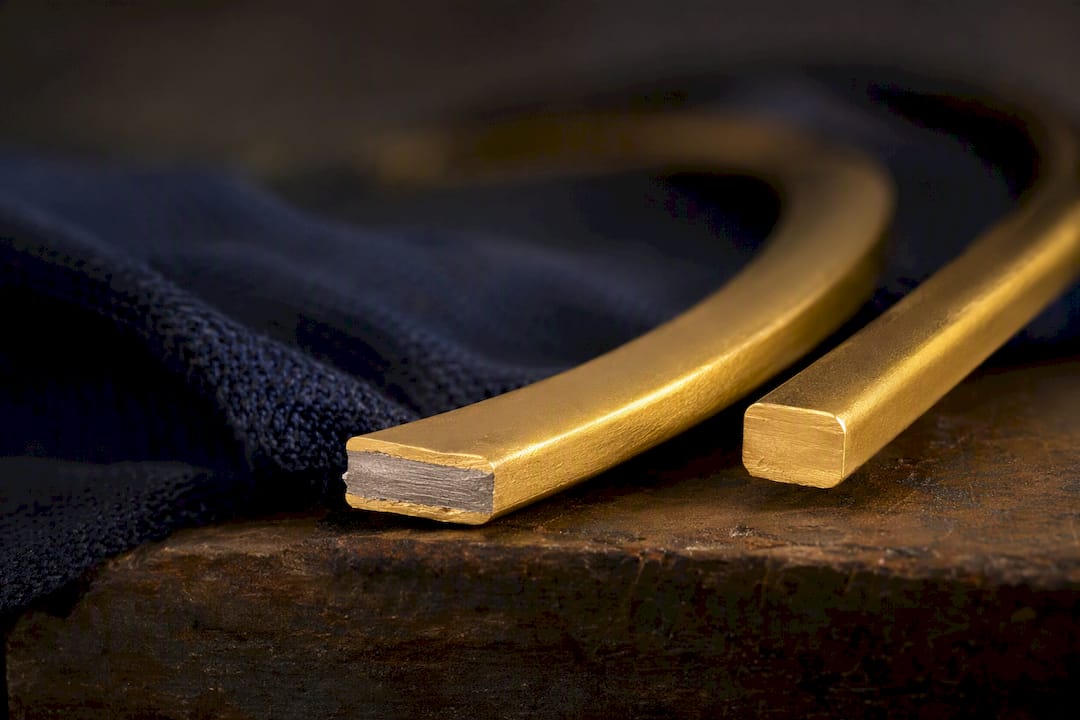
Gold filled starts with a base metal core, usually brass, then a jeweler bonds a layer of real karat gold to it using heat and pressure. That’s mechanical bonding, and it’s a fundamentally different process from gold plating, which uses electricity to deposit a microscopically thin gold coating. Because the layer is fused rather than plated on, it sits far thicker on the surface, often 50 to 100 times thicker than standard plating.
We’re not left to guess at quality standards here, either. The Federal Trade Commission requires that anything marketed as “gold filled” in the United States contain at least 1/20, or 5%, gold by weight. That rule exists specifically to keep sellers honest about what you’re buying.
Here’s what to look for on the piece itself:
- 14K GF — 14-karat gold layer, gold filled construction
- 1/20 14K GF — confirms the legal 1/20 gold-by-weight ratio
- GF or G.F. alone — less specific, worth asking the seller to clarify the karat
What Solid Gold Means: Karats, Alloys, and Everyday Trade-Offs
Solid gold is gold alloyed all the way through, not layered onto anything. The karat number tells you the purity: 10K is 41.7% pure gold, 14K is 58.3%, and 18K reaches 75%, with the remainder made up of metals like copper, silver, or zinc that add strength. Pure 24K gold is too soft for most jewelry, so alloying isn’t a shortcut. It’s what makes a ring survive being worn every day for forty years.
Higher karat means richer color and softer metal. Lower karat means more durability but a paler yellow, or in the case of white gold alloys, a cooler tone. A few practical points worth knowing before you buy:
- 14K is the most common choice in the US for everyday rings and chains because it balances color and hardness
- 18K shows a deeper, warmer gold tone but scratches more easily
- Solid gold can be resized, re-plated if it’s white gold, and repaired by almost any jeweler
- Scrap value stays intact for life, since the gold content doesn’t disappear with wear
How Long Does Gold Filled Last Compared to Solid Gold?
Lifespan is where the two materials really part ways. A well-made gold-filled piece can last 10 to 30 years with normal care, while solid gold effectively lasts indefinitely, since there’s no plated layer to wear through. Where a piece sits in that range depends heavily on how much friction it takes daily.
- Rings and bracelets wear fastest because they’re constantly rubbing against skin, fabric, and surfaces
- Necklaces and earrings tend to hold up longer since they see less direct contact
- Clasps and shanks are common failure points on gold-filled pieces because metal-on-metal friction wears through the layer faster than flat surfaces do
Solid gold doesn’t have this problem. Because the metal is consistent all the way through, a jeweler can polish out scratches, resize a band, or refinish a worn surface without ever hitting bare base metal.
Pro Tip: If you want a ring you’ll wear 24/7 for years, go solid gold. Save gold filled for necklaces, earrings, and pieces you can rotate out of daily wear.
Cost, Resale Value, and What You Actually Pay Per Wear
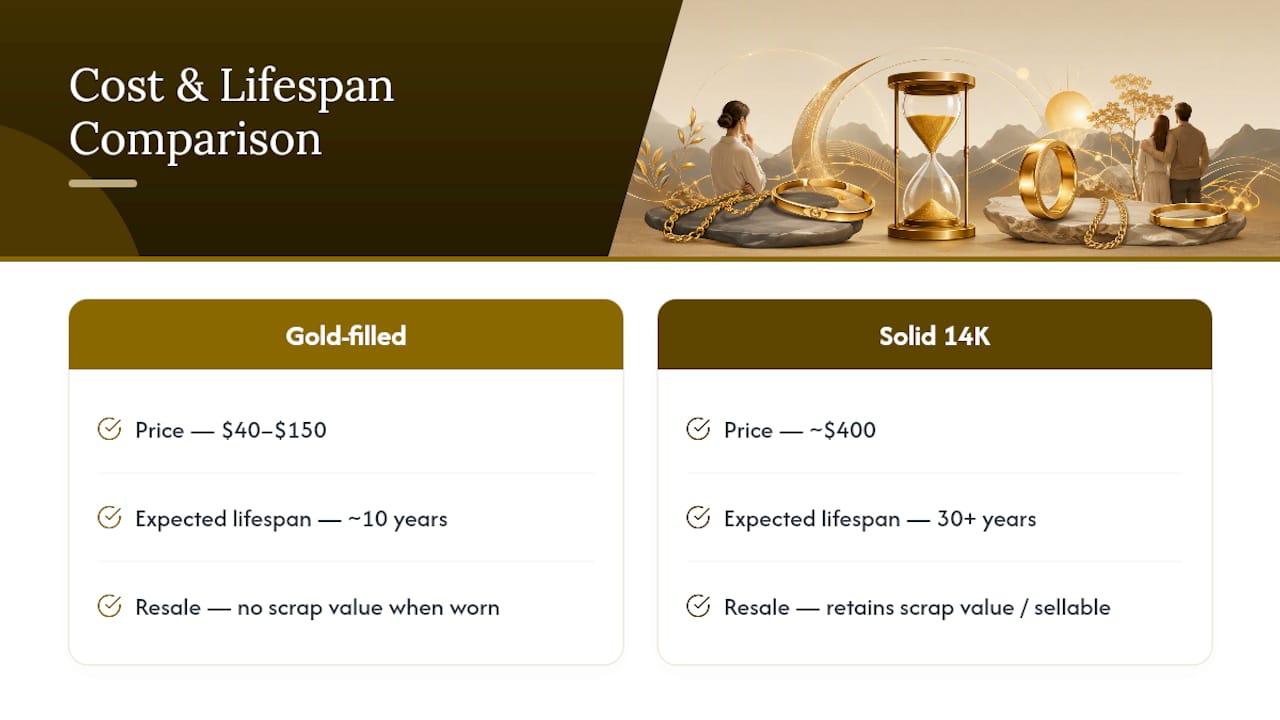
Retail prices tell a clear story. Gold-plated pieces often run under $50, gold filled typically lands between $40 and $150, and solid 14K gold frequently runs into the hundreds of dollars depending on weight and design. That gap looks steep until you factor in what happens after the sale.
Solid gold retains scrap value because the gold content never wears away. Gold filled generally doesn’t; once the outer layer degrades, a jeweler has no gold left to weigh and buy back. That difference changes the math for anyone thinking long term.
Cost-per-wear example: A gold-filled bracelet worn daily might need replacing within about a decade, making the cost per year reasonable with no resale value. A $400 solid gold bracelet worn the same way could last 30-plus years and still hold resale value at the end. For a piece you’ll wear for decades, solid gold is often the cheaper choice per year, even with the higher price tag upfront.
Caring for Gold Filled and Solid Gold Jewelry the Right Way
Both materials reward a little routine care, but gold filled needs more caution since there’s a finite layer to protect.
- Remove jewelry before showering, swimming, or exercising. Chlorine, salt water, and sweat all accelerate wear on gold filled and can dull solid gold’s shine over time.
- Avoid direct contact with perfume, lotion, and cleaning chemicals. These products are a leading cause of premature wear on gold-filled layers.
- Store pieces separately in a dry, soft pouch. Metal-on-metal contact in a jewelry box causes scratching in both materials.
- Have solid gold professionally polished periodically. A jeweler can restore shine and buff out light scratches without losing material integrity.
- Skip gold filled for permanent jewelry or 24/7 wear. If you’re welding a chain shut and never removing it, solid gold holds up far better under constant friction.
How to Choose: A Quick Checklist Before You Buy
Start with how you plan to wear the piece. A stacking ring you’ll swap out weekly has very different needs than an engagement ring you’ll wear for fifty years.
- Ask yourself: is this a fashion piece or an heirloom?
- Check your budget against how long you want the piece to last
- Consider skin sensitivity, especially if you’ve reacted to base metals before
- Ask the seller directly what the base metal is, not just the gold content
- Confirm the hallmark is stamped clearly, not just claimed in the listing
Red flags worth walking away from: no stamp at all, vague language like “gold tone” or “gold look” with no karat listed, or a seller who can’t answer a direct question about the base metal.
Pro Tip: Always ask to see the hallmark before you buy, in person or in a clear product photo. A legitimate seller has nothing to hide about what’s underneath the gold.
Why Working With a Trusted Jeweler Matters More Than the Material
Choosing between gold filled and solid gold gets a lot easier when you’re working with someone who manufactures the piece rather than reselling it. The jeweler has been family-owned since 1999 and builds jewelry in-house, allowing them to provide information about what lies beneath the surface of every piece they sell. That kind of transparency is harder to get from a big-box retailer sourcing from multiple suppliers.
Our 14K and 18K gold collections are built for buyers who want solid gold’s lifetime durability, and our design-your-own feature lets you pick your metal type up front, so there’s no guessing later. We also back pieces with a lifetime diamond upgrade program and ethical sourcing standards, and our reputation is backed by over 222 Google reviews from customers who’ve trusted us with engagements, anniversaries, and everyday gifts alike. If you’re unsure which material fits your piece, our team can walk you through a material check before you buy.
Will Gold Filled Jewelry Irritate Sensitive Skin?
Gold filled tends to be gentler on sensitive skin than plated jewelry because the surface you’re actually touching is real gold, not a thin electroplated coating that can flake off quickly. That’s genuinely good news for people with nickel allergies or reactive skin.
The caveat matters, though. Once the gold layer wears thin, whatever’s underneath, usually brass, gets exposed to your skin. If that base metal contains nickel, reactions can start even though the piece is technically still “gold filled” by weight. This is most likely to happen at friction points: the inside of a ring band, a clasp that rubs against the back of your neck, or an earring post that sits against your earlobe all day.
Solid gold sidesteps this issue entirely because there’s no layer to wear through. What you touch on day one is chemically identical to what you touch on day ten thousand. For anyone with a documented metal allergy, 14K or 18K solid gold is generally the safer long-term bet, especially for pieces with constant skin contact like rings and huggie earrings.
If you already own gold-filled jewelry and notice redness or itching, it’s worth checking the piece for visible wear, thin spots, or discoloration where the gold layer might have broken down. That’s usually a sign it’s time to retire the piece or switch that specific item to solid gold, even if you’re happy with gold filled everywhere else.
Where Does Your Gold Actually Come From?
Sourcing matters more than most shoppers realize, and it applies to both materials, not just solid gold. Gold mining carries real environmental costs, from water use to land disruption, regardless of whether that gold ends up in a solid alloy or a gold-filled layer.

Because gold filled uses so much less actual gold per piece than a solid gold equivalent of the same size, it has a smaller mining footprint per item produced. A gold-filled bracelet might contain a fraction of the gold weight of a comparable solid gold piece, which means less raw material extracted for the same look. That’s a legitimate point in gold filled’s favor if environmental impact per piece is your primary concern.
But durability cuts the other way. A solid gold piece that lasts multiple generations spreads its environmental cost over decades, sometimes over a century, of use. A gold-filled piece that needs replacing every 10 to 20 years multiplies that mining footprint every time you buy a replacement. Looked at over a lifetime rather than per-purchase, the math isn’t as one-sided as it first appears.
Ethical sourcing certifications and recycled gold content are the more reliable signals to look for, regardless of which material you choose. Ask any jeweler, ours included, whether their gold is conflict-free and whether recycled metal is part of their supply chain. That question tells you more about the ethics of your purchase than the karat stamp ever will.
What Actually Matters When You’re Choosing Between These Two
Most advice on this topic treats gold filled like a consolation prize, something you settle for until you can afford “real” gold. That framing misses the point. Gold filled is real gold on the surface, and for the right use case, a stack of trendy rings, a necklace you’ll want to swap out with next year’s trends, it’s the smarter purchase. Paying solid gold prices for a piece you’ll want to replace anyway wastes money on durability you’ll never use.
The mistake I see buyers make most often isn’t picking the wrong material. It’s picking a material without thinking about the specific piece. Someone will buy a gorgeous gold-filled engagement ring, wear it daily for two years, and feel betrayed when the band starts thinning at the palm. That’s not a defect. That’s physics. High-friction, daily-wear pieces need solid gold, full stop. Everything else is a judgment call between budget and how long you want the piece to survive.
If there’s one thing worth prioritizing above hallmark-checking and price comparisons, it’s being honest with yourself about how a piece will actually live on your body. Match the material to the friction, not the occasion.
— Joseph
Ready to Find Your Match in Solid Gold?
Once you know solid gold is the right call for a ring, bracelet, or any piece you’ll wear daily for years, the next question is where to get one built right. The jeweler manufactures every piece in-house, which can reduce markups and provide transparency about the alloys inside each setting.
Browse our 14K and 18K gold collections to see hallmark-stamped solid gold pieces across rings, chains, and pendants, or start a custom design where you choose your metal type, diamond quality, and setting from scratch. Every custom piece comes with our lifetime diamond upgrade program, so your jewelry can grow with you instead of getting replaced. If you want fine settings paired with solid gold bands, our diamond jewelry collection is a solid place to start browsing today. Have questions about which karat or metal fits your budget? Reach out and our team will walk you through it before you commit to anything.
Sources
For deeper reading, see the Wikipedia entry on gold-filled jewelry for FTC standards, and Halstead’s guide for material comparisons.
- Gold-filled jewelry — Wikipedia
- Gold Filled vs. Solid Gold Difference Guide: Bonded Layer Compared With Gold Throughout – KnowledgeNuts
- Gold Plated vs Gold Filled vs Solid Gold — SageStone
- 5 things you may not know about gold filled — Halstead
FAQ
Is Solid Gold or Gold Filled Better?
Neither is universally better. Solid gold wins for daily-wear pieces and heirlooms because it lasts indefinitely and holds resale value, while gold filled offers real gold’s look at a lower price for fashion pieces you’ll rotate or replace.
Is It Worth Buying Gold Filled Jewelry?
Yes, for the right use case. Gold filled is worth it for necklaces, earrings, and trend-driven pieces where you want authentic gold color without solid-gold prices, especially since it can last 10 to 30 years with proper care.
Is Gold Filled Jewelry Junk?
No. Gold filled is a legitimate, FTC-regulated material with a real gold layer bonded to a base metal core, distinct from cheap gold plating that wears off in months.
Is 14K Gold or Gold Filled Better for a Ring?
For rings specifically, 14K solid gold is the better choice because rings experience constant friction that wears through gold-filled layers faster than any other jewelry type. Save gold filled for lower-friction pieces like necklaces or earrings.
How Can I Tell Gold Filled From Solid Gold?
Check the hallmark stamp. Solid gold shows a plain karat mark like “14K” or “18K,” while gold filled shows “GF” alongside the karat, such as “14K GF” or “1/20 14K GF.”
Recommended

Deep Mehta is the Co-Owner of USA Jewels, a family-owned jewelry business she has led since 2013 in Deerfield Beach, Florida. With over 13 years of hands-on experience in fine jewelry retail, manufacturing, and diamond importing, Deep specializes in engagement rings, wedding bands, and custom jewelry design. She also co-manages Kaash Group Talent Acquisition. Deep is a University of Florida graduate and oversees every aspect of USA Jewels’ operations, from product development to marketing.
Fine Jewelry Collection

You May Also Like

Engagement Ring Timeline Planning Steps: 2026 Guide
Why Two-Tone Engagement Rings Are So Popular