The Average Ring Size for Women (and What to Buy When You’re Not Sure)
The most common ring size among American women is US size 6, with most women falling somewhere between a size 5 and 7. If you’re buying an engagement ring or a gift and you don’t know the exact size, starting at 6 or 6.5 gives you the best odds of a comfortable fit or an easy resize later.
That’s the whole answer in two sentences. Here’s the number that backs it up: retail data shows most engagement rings sold fall between size 5.5 and 7.0, with size 6 as the single most common purchase. That’s not a coincidence. It’s why nearly every jeweler, including our team at Usajewels, stocks more inventory in that middle range than at the extremes.
Pro Tip: If you’re planning a proposal and truly cannot find out her size, buy a size 6.5 rather than a 6. A slightly loose ring can be pinched down temporarily with a sizing bead until it’s professionally resized. A ring that’s too tight can’t be worn at all.
Key Takeaways
The average U.S. women’s ring size is 6 to 6.5, and buying at that baseline with a confirmed resizing policy is the safest approach when the exact size is unknown.
| Point | Details |
|---|---|
| Most common size | US size 6 is the single most purchased women’s ring size, with most women falling between 5 and 7. |
| Conversion reference | US 6 equals roughly EU —, a 16.5 mm inside diameter, and a 51.9 mm inside circumference. |
| Measure at the right time | Measure at the end of the day, at normal temperature, and account for knuckle size, not just finger base. |
| Resizing has limits | Gold and platinum bands resize easily; tension settings and heavy pavé styles often cannot be resized at all. |
| Buy up, not down | When unsure, choose 6.5 over 6, since a loose ring is easier to fix than one that’s too tight. |
| Usajewels reduces sizing risk | In-house manufacturing, a lifetime diamond upgrade program, and free sizing resources make correcting a size after purchase simple. |
Table of Contents
- What Is the Average Women’s Ring Size in the U.S.?
- Ring Size Conversion Chart: US, UK/AU, EU, and Millimeters
- How Do You Measure Ring Size at Home?
- How Can You Find Out Her Ring Size Without Asking?
- What Affects Ring Fit Beyond Just Finger Size?
- Can a Ring Be Resized, and What Does It Cost?
- What Should You Do When Buying an Engagement or Gift Ring Without Knowing the Size?
- Why Starting With the Average Size Actually Works
- Get Help With Sizing, Resizing, and Custom Fit at USA Jewels
- Sources
- FAQ
What Is the Average Women’s Ring Size in the U.S.?
Women’s ring sizes in the United States cluster tightly. The average sits between US 6 and 6.5, and that range holds up across multiple independent sources, from retail sales data to jewelry-industry stocking patterns.
Size 6 corresponds to an inside diameter of about 16.5 millimeters and an inside circumference of roughly 51.9 millimeters. Move up to size 6.5, and you’re adding just over half a millimeter to the diameter. That’s how fine the increments are in ring sizing: each whole U.S. size adds about 2.55 mm to inside circumference, which is smaller than the width of a grain of rice.
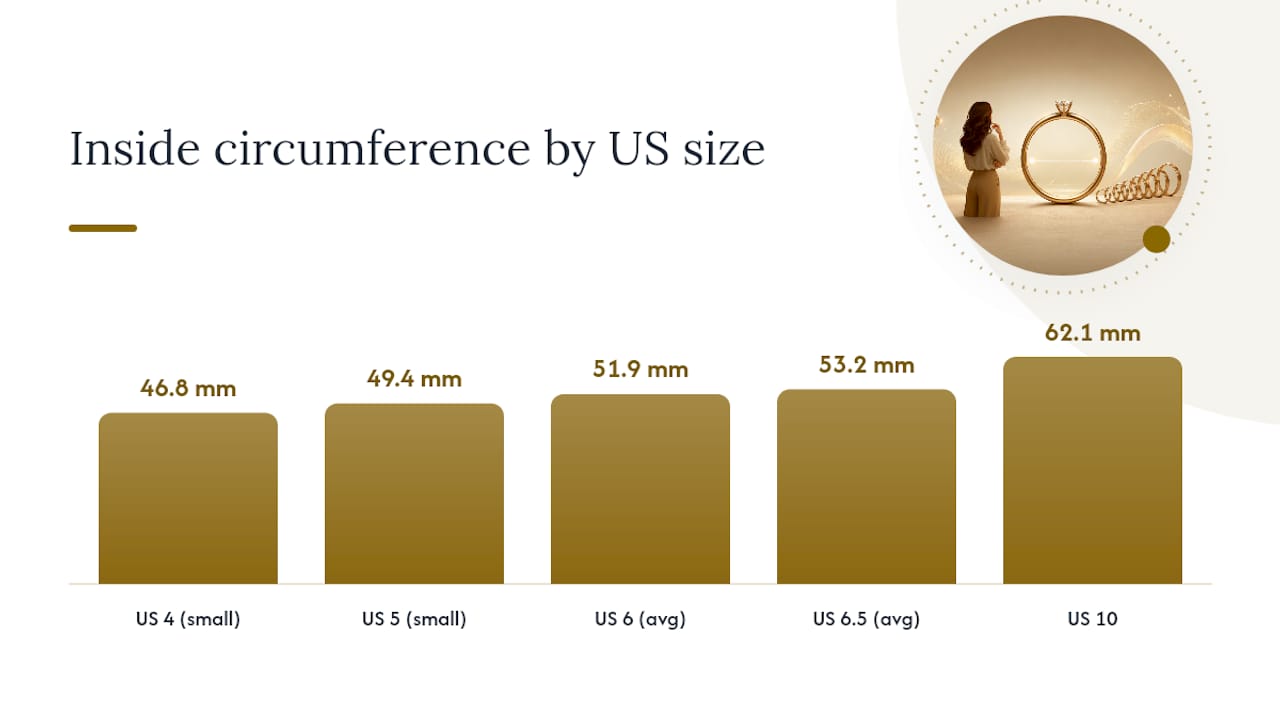
What counts as “small” or “large” in this context? Sizes 4 to 5 are considered small and are more common among petite frames or younger buyers. Sizes 7.5 and up are less common but far from unusual. A size 9 or 10 isn’t abnormal. It simply sits outside the statistical middle, often corresponding to larger hand proportions, which track loosely with overall body size and height. Nobody’s ring size says anything about them beyond finger measurements.
Ring Size Conversion Chart: US, UK/AU, EU, and Millimeters
If you’re shopping internationally, reading a European jewelry site, or trying to make sense of a sizing card that uses a different scale, you need a conversion reference. Ring sizing systems vary by country, and the underlying measurement (inside diameter and circumference in millimeters) is the only truly universal number.
The most common size, US 6, lands at roughly 16.5 mm diameter and 51.9 mm circumference — worth memorizing if you’re comparing sizing tools from different countries or retailers.
A few things this table doesn’t capture. First, half sizes matter more than people expect. The jump from a 6 to a 6.5 can be the difference between a ring that spins on the finger and one that fits perfectly, especially on days when your hands run slightly warmer or cooler than usual.
Second, “comfort fit” bands measure differently than standard bands. A comfort-fit ring has a rounded interior that reduces friction against the finger, which often means the ring feels like it fits a half-size larger than its stated size would suggest on a flat-band chart. If you’ve been sized for a comfort-fit style before, don’t assume that same number applies to a traditional flat-band ring.
Third, band width changes everything. A thin 2mm band and a chunky 8mm band in the “same” size will feel different on your finger, because a wider band contacts more skin and knuckle surface. Jewelers commonly recommend sizing up half a size for wide bands, a detail that trips up a lot of first-time buyers who assume their “size” is one fixed number regardless of ring style.
How Do You Measure Ring Size at Home?
You have five reliable ways to get a ring size without walking into a store, and they range from professional-grade accurate to reasonably close.
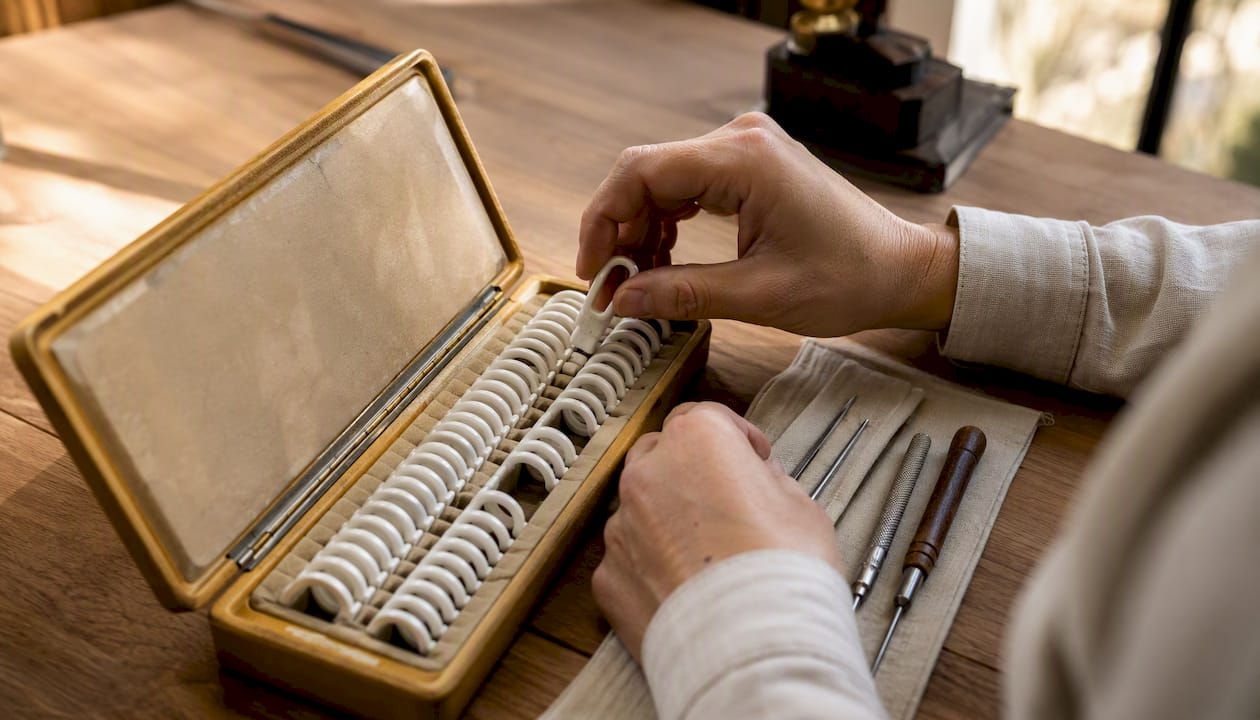
Use a jeweler’s ring sizer. This is a plastic or metal ring set with graduated sizes, similar to what you’d find in a jewelry store. Slide sizers on until you find one that fits snugly over the knuckle but slides off with light resistance. This is the single most reliable at-home method, and Usajewels offers a printable and mail-order ring sizer for exactly this purpose.
Print a paper ring-sizing chart. This works, but only if you print it correctly. Most printable charts include a small calibration square. Measure that square with a ruler before trusting the chart; if your printer defaulted to “fit to page,” your entire chart could be scaled wrong by 5 to 10%, which is enough to throw off an entire size.
Measure a ring the recipient already wears on the correct finger. Lay the ring flat and measure the inside diameter with a ruler, corner to corner, or use a set of digital calipers for precision. Match that number against a diameter chart like the one above.
Try the paper strip or string method. Wrap a thin strip of paper or a piece of non-stretchy string around the base of the finger, mark where it overlaps, then measure that length in millimeters with a ruler. This gives you circumference, which you then match to a size chart. It’s less precise than a sizer because paper stretches and string can be pulled too tight without you realizing it.
Use an inside-diameter ruler if you’re measuring an existing ring. Slide the ring over a tapered ring mandrel or printed diameter ruler until it stops, and read the number where it settles.
A few practical checks make any of these methods more accurate:
- Measure at the end of the day, when fingers are naturally at their largest, not first thing in the morning.
- Avoid measuring in cold weather or right after exercise, both of which temporarily shrink finger size.
- Measure the knuckle, not just the base of the finger. The ring has to pass over the knuckle to go on, so if the knuckle is notably larger than the finger base, size for the knuckle and expect a slightly looser fit below it.
- Take three measurements and use the middle or average value rather than trusting a single reading.
Pro Tip: If you’re measuring for a wide statement band or a stackable set, size a half size larger than your standard chart result. Wide bands sit against more skin surface and almost always feel tighter than a thin band of the same numeric size.
The most common mistakes are avoidable once you know to look for them: printing a chart without checking the scale, measuring over a swollen or cold knuckle, and using a flattened string length as if it were the same thing as circumference (a string pulled taut reads shorter than the finger’s actual resting circumference). Any one of these can shift your result by a full size.
How Can You Find Out Her Ring Size Without Asking?
Surprise proposals create a real logistical problem. You need an accurate size, but asking outright ruins the surprise. Here’s a discreet, ordered approach that works for most situations.
- Borrow a ring she already wears on the correct finger (right hand ring finger, if that’s her habit, or a similar-sized finger like the middle finger on the left hand) for a day. Take it to a jeweler for sizing or measure it yourself with the diameter method above, then return it before she notices it’s gone.
- Trace the inside of a ring onto paper if you can’t remove it for long. A pencil outline of the inner edge, measured afterward with a ruler, gets you close enough to narrow down two adjacent sizes.
- Ask a close friend, sister, or her mother. People this close to her often know her size already, especially if she’s ever had rings resized or mentioned struggling to find rings that fit.
- Compare hands directly. If you know your own ring size, hold hands casually and estimate whether her ring finger looks noticeably smaller, similar, or larger than yours. It’s rough, but it rules out extreme mismatches.
A few ground rules keep this ethical and low-risk. Don’t take a ring she wears daily for longer than a few hours. Don’t involve people she’d be upset to find out were “in on it” if secrecy matters to her. And don’t guess based on shoe size or height, an old wives’ tale with no real correlation to finger size.
If none of this pans out, fall back to the industry standard: buy a size 6 or 6.5, and confirm the retailer’s resizing policy before you check out. A ring that needs a quarter-size adjustment after the proposal is a much smaller problem than a proposal with no ring at all.
What Affects Ring Fit Beyond Just Finger Size?
A ring size measured on a Tuesday morning in January and the same finger measured on a Saturday evening in July can produce two different numbers. Fit isn’t fixed. It shifts with several variables that most first-time buyers don’t think to account for.
- Time of day. Fingers swell slightly throughout the day from normal fluid movement, so a size taken at 8 a.m. often reads a touch smaller than one taken at 6 p.m.
- Temperature. Cold weather constricts blood vessels and shrinks fingers temporarily; heat and humidity do the opposite.
- Pregnancy. Fluid retention during pregnancy commonly increases ring size temporarily, sometimes significantly in the third trimester, and it usually returns to baseline after delivery.
- Weight changes. Meaningful weight gain or loss shifts finger size gradually, which is one reason jewelers see steady resizing demand year over year.
- Activity level and manual labor. Frequent gripping, lifting, or repetitive hand use can build muscle and slightly increase finger size over time.
- Dominant hand differences. Most people’s dominant hand runs slightly larger than the non-dominant one, sometimes by a quarter size.
- Knuckle size relative to the finger base. A prominent knuckle means the ring needs to clear a wider point than where it will ultimately rest.
- Band width, as covered earlier, changes how snug the same numeric size feels.
Given all that variability, when should you measure more than once? If the recipient has mentioned swelling, is currently pregnant, or has had recent significant weight change, measure on at least two separate days under normal conditions rather than trusting a single reading. When results land between two sizes, most jewelers recommend sizing up rather than down. A slightly loose ring is a quick, inexpensive fix. A too-tight ring often means removing the ring under duress, which is neither comfortable nor safe.
Pro Tip: Measure at the end of the day when hands are at a normal, resting temperature, not right after a workout or a cold walk outside. If you’re unsure which hand she’ll wear the ring on, measure both. It’s common for the dominant hand to run a quarter size larger.
Can a Ring Be Resized, and What Does It Cost?
Most rings can be resized, but “most” is doing real work in that sentence. The metal and the setting style both determine how easy, difficult, or outright impossible the job is.
Easy to resize: Plain gold bands, platinum bands, and most solitaire settings with a simple shank can typically be sized up or down two sizes in either direction without much trouble. A jeweler cuts the shank, adds or removes metal, and re-solders and polishes the seam.
Harder or limited: Rings with pavé or channel-set stones running around the entire band are trickier, because resizing the shank means working directly around set stones, which risks loosening them. Halo settings and eternity bands fall into this category too. A skilled jeweler can often still manage a size or two of adjustment, just with more careful, time-intensive work.
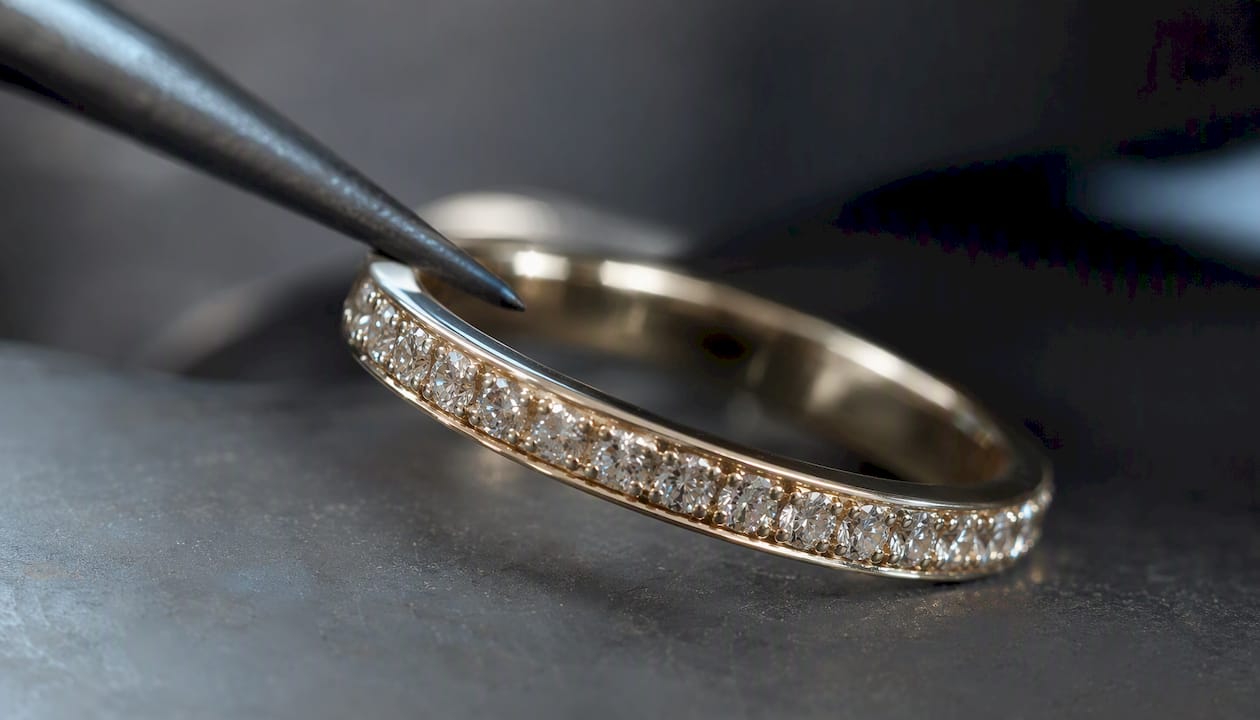
Difficult or impossible: Tension-set rings, where the stone is held purely by the metal’s spring tension rather than prongs, generally can’t be resized at all without remaking the ring entirely. The same goes for many stainless steel and ceramic rings, whose material properties don’t allow the cutting and stretching that gold and platinum tolerate.
Typical standard resizing runs anywhere from a modest fee for a simple gold band adjustment up to a notably higher cost for platinum or intricate stone settings, with turnaround usually taking anywhere from a few days to a couple of weeks depending on complexity and whether stones need to be reset. Exact pricing varies by jeweler, metal, and how many sizes you’re adjusting, so always ask for a quote before committing.
If resizing isn’t practical, a few alternatives buy you time or solve the problem without cutting the ring:
- Sizing beads (small metal balls soldered to the inside of the band) tighten a ring that’s slightly too loose without altering the overall shank.
- Ring guards, small clips or coils that slide onto the band, are a cheap, removable fix for a ring that runs a bit big.
- Adjustable bands with an open or spring-hinged design fit a small range of sizes without any professional work at all.
- A shank swap replaces the band entirely while keeping the center stone, which is sometimes the only real option for tension-set or heavily pavé designs.
If you’re buying a halo or pavé engagement ring and you’re not confident about the size, ask the jeweler directly how they handle resizing on that specific style before you buy. It’s a five-minute conversation that can save weeks of stress later.
What Should You Do When Buying an Engagement or Gift Ring Without Knowing the Size?
You’re not the first person to face this problem, and jewelers have built entire policies around it. Here’s a practical checklist to lower your risk.
- Choose a flexible, easily resizable setting. A classic solitaire or simple band in gold or platinum gives you the most room to correct sizing after the fact.
- Confirm the seller’s resizing policy before you buy, not after. Ask specifically whether the first resize is free, discounted, or full price, and what the time window is.
- Consider a placeholder ring for the proposal itself. Many couples propose with an affordable stand-in or a ring box alone, then shop together for the final ring once the size is confirmed and the surprise no longer matters.
- Default to size 6 or 6.5 if you truly have no information, since that range fits the largest share of women and, per industry data, a slightly loose ring on the high end is easier to fix than one that’s too small.
- Buy an inexpensive ring guard as a stopgap if the ring runs a little loose and you want her to wear it comfortably before a formal resize appointment.
Keep your receipt, the ring’s certification if it has one, and any written resizing guarantee somewhere easy to find. If a resize is needed, you’ll want that paperwork on hand rather than digging through email months later.
Why Starting With the Average Size Actually Works
Treating the size 6 to 6.5 range as your starting point isn’t guesswork dressed up as strategy. It’s backed by a real, tight statistical pattern: most women fall into that band, and most engagement ring sales cluster there too. Starting with the average and correcting later through resizing carries far less risk than guessing wildly or delaying a purchase entirely because you don’t have an exact number.
That’s the philosophy we’ve built into how Usajewels handles custom orders. When a customer isn’t sure of a size, we don’t treat it as a dead end. We treat it as a starting point to work from together.
- In-house manufacturing means resizing and adjustments happen without shipping your ring out to a third-party workshop and waiting weeks longer than necessary.
- A lifetime diamond upgrade program means the center stone in a ring you buy today can grow with you, not just the band.
- Free educational resources, including our own ring size guide, walk customers through measuring at home before they ever place an order.
- Over 222 Google reviews reflect a track record built since 1999, with customers who’ve gone through exactly this sizing uncertainty before.
- Customizable sizing at the design stage lets you choose a setting built with resizing flexibility in mind from day one, rather than discovering after the fact that your chosen style is hard to adjust.
A ring that starts at the industry average and gets fine-tuned afterward beats a ring that never gets bought because the size felt like an unsolvable problem.
Pro Tip: If you’re designing a custom piece and still unsure of the final size, talk to a jeweler before finalizing the setting style. Some designs, like tension settings, lock you into a size early. A quick conversation up front avoids a costly remake later.
A Perspective on Taking the Guesswork Out of Gift Buying
The number one thing I’ve noticed watching people agonize over ring sizing is that the anxiety is almost always bigger than the actual risk. People treat an unknown ring size like a dealbreaker, when in practice, the industry has been solving this exact problem for decades. Starting at 6 or 6.5, confirming a resizing policy, and moving forward has worked for an enormous number of buyers who had zero certainty going in.
What I’d push back on is the instinct to delay a purchase entirely because the size feels unknowable. That instinct usually costs more than it saves, both emotionally and financially, since waiting rarely gets you a more certain number. It just adds stress to the calendar.
The businesses that have earned real trust in this category, the ones with years of reviews and repeat customers, built that reputation by making the “I don’t know her size” conversation a normal, solvable part of the sale rather than a barrier to it. That’s the standard worth expecting from any jeweler you buy from.
Get Help With Sizing, Resizing, and Custom Fit at USA Jewels
If you’d rather not navigate all of this alone, Usajewels builds sizing flexibility into the entire buying process instead of treating it as an afterthought. Because everything is manufactured in-house, adjustments and custom sizing requests move faster than they would through a retailer that outsources production, and our lifetime diamond upgrade program means the ring you choose today isn’t a permanent decision if your needs change down the road.
For gift and proposal buyers specifically, that means you can select a setting designed with resizing in mind, confirm our resizing terms before checkout, and move forward with confidence even without a confirmed size in hand. Browse the fine jewelry collection to see resizable engagement styles built around common baseline sizes, or explore engagement ring options if you’re shopping specifically for a proposal. If measuring at home isn’t giving you a confident answer, reach out and we’ll walk you through custom sizing before you finalize a design. For readers looking into general apparel measurement techniques that use similar at-home principles, this guide to measuring at home covers comparable methods worth knowing.
Sources
- Average Ring Size for a Woman (and a Man) – Stylr
- Average Ring Size for Women & Men (2026 Statistics Setup) | TheCaratCut
- Average Women’s Ring Size – Female Finger Size Statistics
- What is the Average Ring Size for a Woman? (2026 Fit Guide) – DG Jewelry
FAQ
Is Size 7 Big for a Woman?
Size 7 is on the larger end of the common range but not unusual. It falls within the typical 5 to 7 range most women fall into, just at the upper edge rather than the statistical middle.
Is a Size 10 Ring Big for a Woman?
Yes, a size 10 is above the common range for women and would be considered large, though it’s not rare and often corresponds to larger hand proportions or a wider knuckle. It simply sits outside where most women measure.
Is a Size 8 Ring Big for a Girl?
For an adult woman, size 8 is above average but still within a normal range seen at jewelry counters. For a younger girl or teenager, size 8 would be unusually large, since finger size typically grows with age into adulthood.
Is 9 a Big Ring Size?
Size 9 is larger than the average 6 to 6.5 range and less commonly stocked in smaller quantities, but it’s a completely standard, orderable size at any full-service jeweler, including Usajewels.
Recommended
- Pick Ring Setting Style Guide for Every Buyer
- Engagement Ring Buying Guide: How to Choose the Perfect Ring | USA Jewels
- Ring Guide: Engagement Settings & Styles | USA Jewels

Deep Mehta is the Co-Owner of USA Jewels, a family-owned jewelry business she has led since 2013 in Deerfield Beach, Florida. With over 13 years of hands-on experience in fine jewelry retail, manufacturing, and diamond importing, Deep specializes in engagement rings, wedding bands, and custom jewelry design. She also co-manages Kaash Group Talent Acquisition. Deep is a University of Florida graduate and oversees every aspect of USA Jewels’ operations, from product development to marketing.
Fine Jewelry Collection


You May Also Like

What Is Certified Pre-Owned Jewelry: A Buyer’s Guide

Fair Trade Gemstone Examples: What to Ask and Buy