Nickel Free White Gold: Your Guide for Sensitive Skin
Yes, truly nickel free white gold exists — but you need to confirm the alloy, not just take a seller’s word for it. Standard white gold is created by mixing pure gold with whitening metals, and nickel has historically been the most common choice because it is cheap and hard. The problem: nickel is the leading cause of jewelry-related contact dermatitis, and rhodium plating applied over a nickel alloy only delays your exposure until the surface wears thin.
Here is what to do right now:
- Ask for the alloy breakdown. Request the exact metals and percentages used, not just a “nickel-free” label.
- Get it in writing. A written alloy statement, certificate of composition, or XRF test result gives you real protection.
- Safest alloy choice: palladium-based white gold or, if budget allows, solid platinum.
- Top caution: rhodium plating can make a nickel-containing piece look identical to a nickel-free one. The plating is not the alloy.
Key Takeaways
Nickel-free white gold is real and verifiable — but confirmation requires asking for the alloy breakdown, not just accepting a label.
| Point | Details |
|---|---|
| Alloy choice matters most | Palladium-white gold is the most widely available nickel-free option; platinum is the safest overall. |
| Rhodium plating is not a solution | Plating masks the alloy temporarily; always confirm what metal lies beneath before buying. |
| Verification requires documentation | Ask for a written alloy statement or XRF test result — karat stamps alone do not confirm nickel-free status. |
| Higher karat reduces alloy exposure | 18K gold contains 75% pure gold, leaving less room for sensitizing alloy metals than 14K. |
| Usajewels offers custom metal selection | In-house manufacturing lets buyers specify nickel-free alloys and request written composition statements at order time. |
Table of Contents
- What “nickel-free” actually means in white gold
- Nickel-free white gold alloys and how they compare
- Rhodium plating and what it hides from allergy sufferers
- How to verify a nickel-free claim before you buy
- Hypoallergenic alternatives worth knowing about
- What to do if you have a skin reaction to jewelry
- Care, replating, and reducing nickel exposure over time
- How Usajewels supports buyers who need nickel-safe jewelry
- A realistic perspective on choosing nickel-free white gold
- Ready to order a nickel-safe piece from Usajewels
- Sources
- FAQ
What “nickel-free” actually means in white gold
White gold is not a naturally occurring metal. It is created by alloying gold with other metals, and the specific mix controls both color and mechanical properties. Nickel became the dominant whitener because it is inexpensive, dramatically hardens the alloy, and produces a bright, cool-white color. The tradeoff is well-documented: nickel is one of the most common contact allergens in the world.
In the United States, there is no federal labeling law that forces a jeweler to mark a piece as “nickel-free.” A seller can use that phrase without any regulatory obligation to prove it. What “nickel-free” should mean is that no nickel was intentionally added to the alloy. What it sometimes means in practice is that nickel content falls below a threshold the seller has chosen, or that the piece is simply rhodium-plated and the underlying alloy was never disclosed.
Rhodium plating is applied to most white gold jewelry, nickel-based and nickel-free alike, to produce a bright, mirror-white surface. That plating is a surface treatment that wears away over time, and when it does, the underlying alloy comes into direct contact with your skin.
Key reasons nickel ends up in white gold:
- Cost: nickel is far less expensive than palladium, the main alternative whitener.
- Hardness: nickel alloys are easier to cast and hold fine detail well.
- Color: nickel produces a cooler, brighter white than palladium before rhodium plating.
- Workability: nickel-white gold is forgiving for setters and bench jewelers.
Statistic: Contact allergy to nickel affects a significant share of women and men in Western populations, making it one of the most prevalent metal sensitivities a jeweler will encounter.
Nickel-free white gold alloys and how they compare
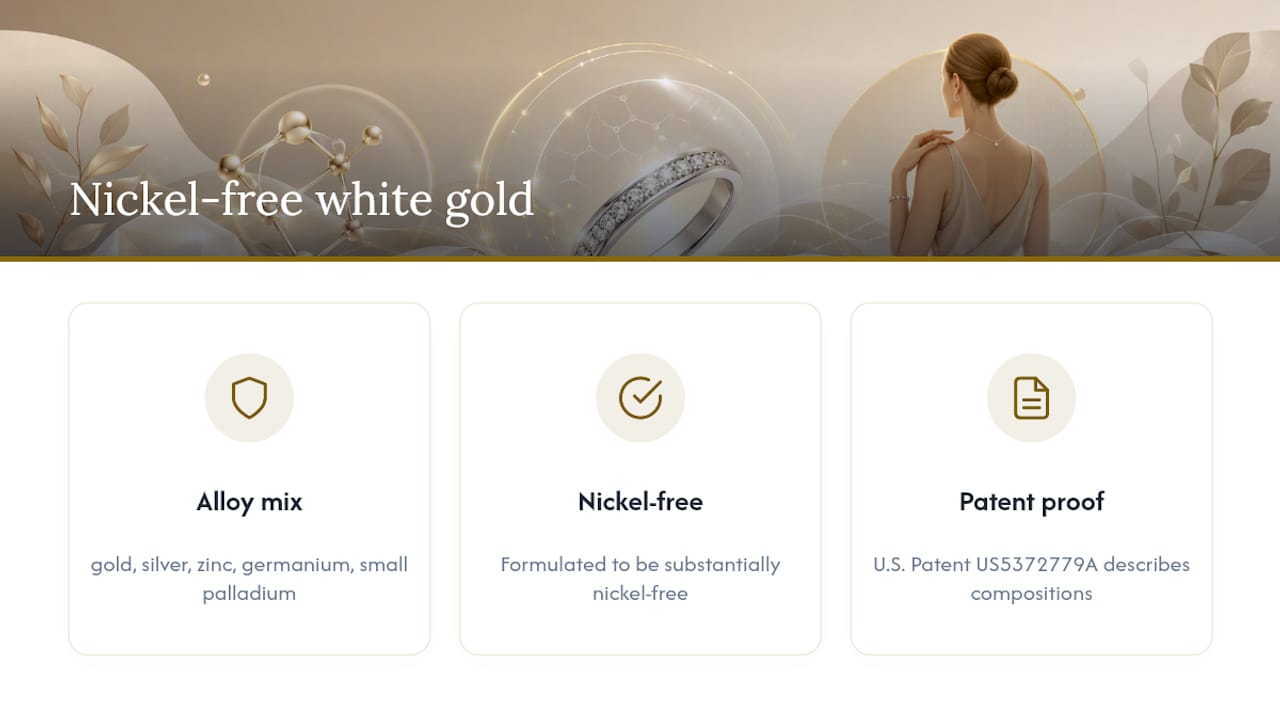
The good news is that metallurgists have been engineering nickel-free alternatives for decades. U.S. Patent US5372779A describes white gold alloy compositions specifically formulated to be substantially nickel-free, using combinations of gold, silver, zinc, germanium, and small palladium additions to achieve whiteness and workability without nickel. That patent is proof that engineered, nickel-free white gold is not a marketing claim — it is a documented metallurgical reality.
Palladium-white gold
Palladium is the most widely used nickel substitute in quality white gold. The result is a warmer, slightly off-white tone before rhodium plating — jewelers who publish nickel-free material statements openly note this natural warmth. Palladium alloys are generally softer than nickel alloys, which can mean slightly more wear on prong tips over years of daily use, but they cast and set reliably. Cost runs higher than nickel-white gold because palladium itself is a precious metal. You will find palladium-white gold most commonly in 14K and 18K.
Silver-, zinc-, and germanium-based blends
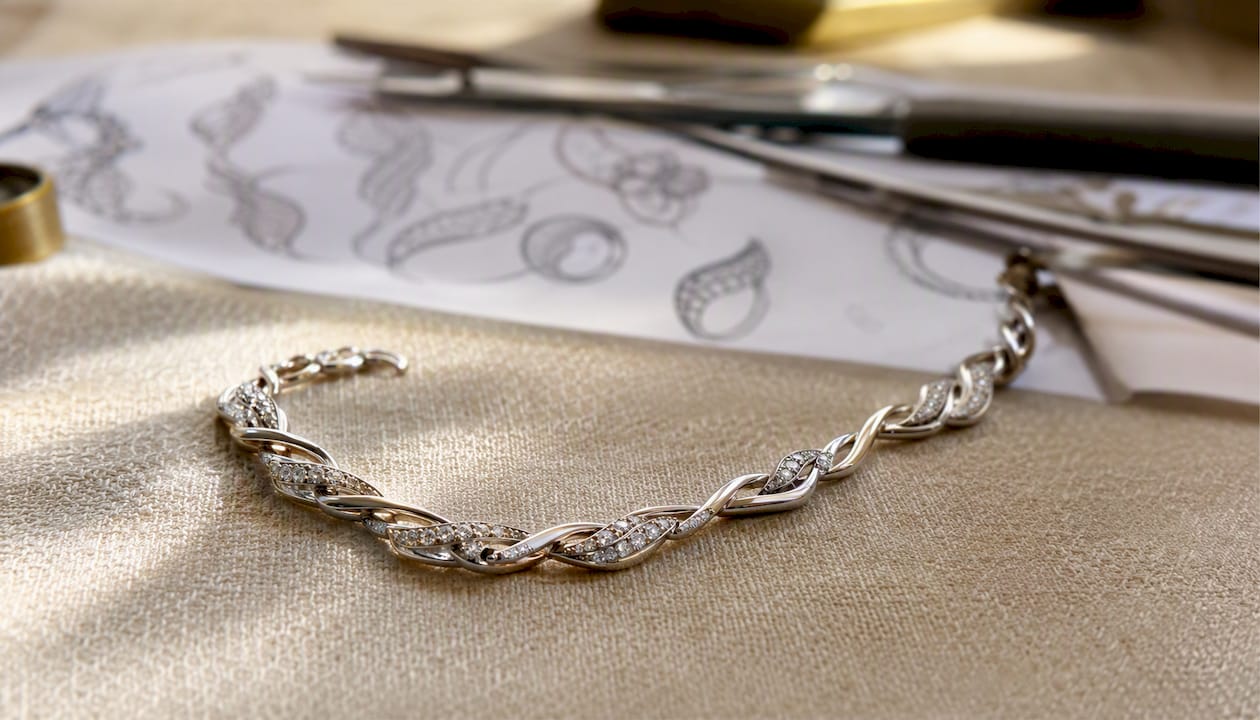
Researchers presented nickel- and palladium-free master alloys at the 2017 Santa Fe Symposium, demonstrating that silver, zinc, and germanium combinations can produce workable white gold across all karats without either sensitizing metal. These alloys tend to appear in specialty and custom work rather than mass-market retail. Germanium in particular improves castability and grain structure, making these blends attractive for precision casting.
How karat affects your allergy risk
Higher karat means more gold and less alloy. Reactions attributed to gold are often caused by nickel or other alloy metals, and higher-karat gold reduces the amount of alloyed metal present, which can lower overall exposure. If you are sensitive but not severely reactive, 18K palladium-white gold gives you both a lower alloy percentage and a nickel-free whitener.
Pro Tip: When a seller says “nickel-free,” ask specifically: “Which metal replaces nickel as the whitener — palladium, silver, or something else?” A seller who can answer that question with percentages is one you can trust.
Rhodium plating and what it hides from allergy sufferers
Rhodium plating is applied to nearly all white gold jewelry, regardless of the underlying alloy. It produces the bright, mirror-white finish most buyers associate with white gold, and it adds a thin layer of a platinum-group metal that is itself hypoallergenic. The problem is durability.
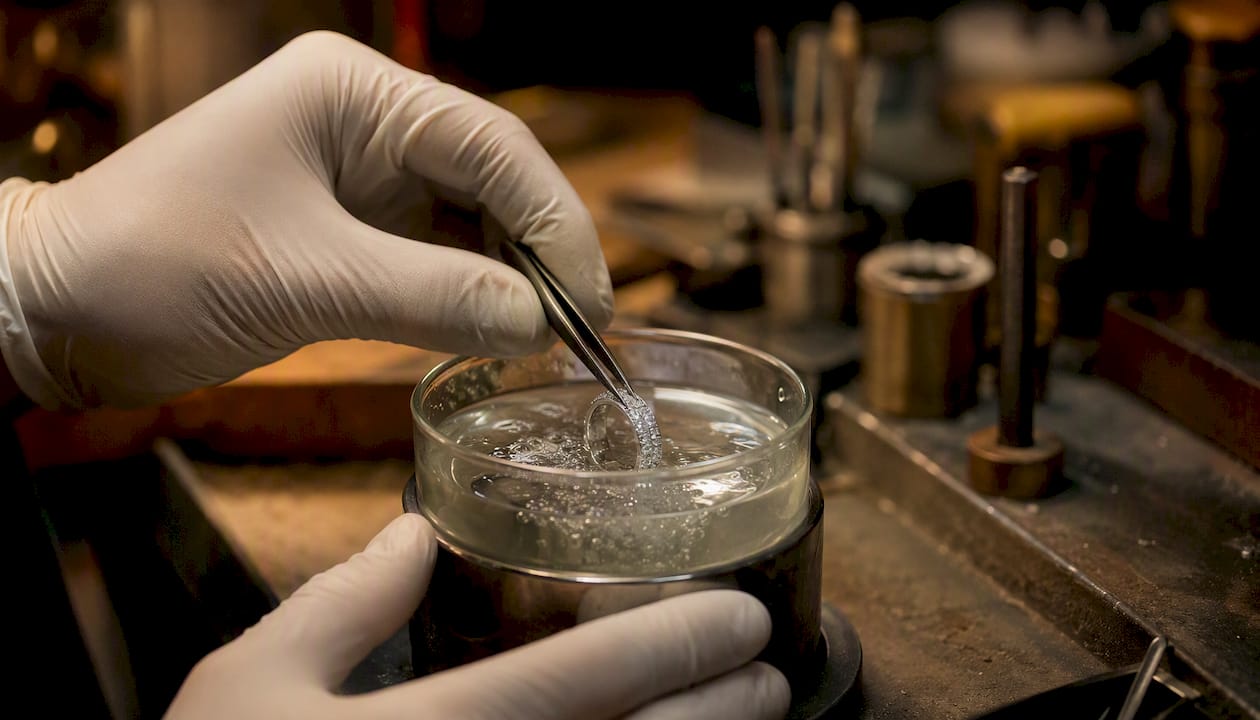
Rhodium plating masks the color of nickel-containing white gold and is a surface treatment that can wear away over time, potentially exposing nickel beneath. How quickly it wears depends on plating thickness, your skin chemistry, and how much friction the piece experiences. Rings wear faster than pendants. High-contact areas like the inside of a ring shank or the back of a bracelet clasp wear first.
Warning signs that plating is thinning:
- A yellowish or warm tint appearing at wear points (inner shank, prong bases).
- Slight skin discoloration or a metallic smell after wearing.
- Visible color difference between the plated surface and worn edges.
- A rash or itching that develops months after purchase, not immediately.
Nickel in white gold alloys is a frequent cause of contact allergic dermatitis, and rhodium plating only delays exposure until it wears away. For someone with a confirmed nickel allergy, this delay can be months or years — but it is not a permanent solution.
Pro Tip: Rhodium plating is acceptable as a finish on a nickel-free alloy. It is not acceptable as a substitute for a nickel-free alloy. If a seller’s only answer to your allergy concern is “it’s rhodium-plated,” that is not a sufficient answer. Ask what is underneath.
How to verify a nickel-free claim before you buy
No hallmark or karat stamp tells you whether nickel was used. A “14K” stamp confirms gold purity; it says nothing about the whitening metal. Verification requires a few deliberate steps.
- Ask for the alloy breakdown. Request the specific metals and their weight percentages. A reputable jeweler or manufacturer can provide this.
- Request a written alloy statement or certificate of composition. This is a document you keep. If a reaction occurs, it is your evidence.
- Ask whether palladium or another nickel-free whitener was used. The answer should be specific, not vague.
- Consider XRF (X-ray fluorescence) testing. An XRF gun reads elemental composition non-destructively. Many independent jewelers and appraisers offer this service for a modest fee. It is the most reliable field test available.
- Request a written return or exchange policy for allergic reactions. A seller confident in their alloy will stand behind it.
- Check plating disclosure. Ask whether the piece is rhodium-plated and, if so, what the underlying alloy is.
Pro Tip: Bring any piece you already own and suspect to a local jeweler with an XRF analyzer. The test takes minutes and gives you a full elemental readout. If nickel shows up above trace levels, you have your answer.
Hypoallergenic alternatives worth knowing about
If you want to sidestep the alloy question entirely, several metals are genuinely low-risk for jewelry for metal allergies.
- Platinum: Naturally white, requires no whitening alloy, and is one of the most hypoallergenic metals used in fine jewelry. It is heavier than gold and commands a higher price, but it is the most predictable nickel-safe choice available. No plating needed for color.
- Palladium: White in appearance, lighter than platinum, and generally non-sensitizing. Usajewels offers palladium jewelry options and it is worth reading about as a standalone metal, not just as a white gold component.
- Titanium and niobium: Both are highly hypoallergenic and extremely lightweight. They are used in body jewelry and some fashion pieces but are less common in traditional fine jewelry settings. Finishing options are more limited.
- 18K yellow or rose gold: Higher karat reduces total alloy content. An 18K yellow gold piece contains 75% pure gold and avoids the whitening-alloy question entirely. For buyers who can accept a warm color, this is a straightforward path.
- 316L stainless steel: A practical, budget-friendly option for everyday wear. Hypoallergenic material guidance places platinum and titanium at the top safety tier, with 18K gold and 316L stainless steel as high-safety options for buyers who need reliable daily wear without fine-jewelry pricing.
What to do if you have a skin reaction to jewelry
A reaction to jewelry is almost always contact dermatitis — redness, itching, or a rash at the point of contact. Act quickly and methodically.
- Remove the piece immediately. Do not wear it again until you have confirmed the alloy.
- Rinse the area gently with mild soap and cool water. Pat dry.
- Apply an over-the-counter hydrocortisone cream (1%) to calm inflammation. Antihistamines can help with itching.
- Photograph the reaction. Date the photo. This documentation matters if you need to return the piece or consult a doctor.
- Keep your purchase receipt and any alloy documentation you received at the time of sale.
- See a dermatologist if the reaction is severe, spreads, or does not clear within a few days. A patch test can confirm nickel sensitivity and identify other metals you may react to.
- Stop wearing similar pieces from the same source until you have clarity on the alloy.
Pro Tip: A patch test from a dermatologist is the gold standard for confirming nickel allergy. It takes about 48–72 hours and gives you a definitive answer you can use when shopping for any metal jewelry going forward.
Care, replating, and reducing nickel exposure over time
Rhodium plating on white gold typically lasts six months to two years on a ring worn daily, depending on plating thickness and lifestyle. Pendants and earrings last considerably longer because they experience less friction. Replating at a jeweler generally costs $50–$100 per piece, though pricing varies by region and piece complexity.
Practical habits that extend plating life:
- Remove rings before washing dishes, using cleaning products, or applying lotion or sunscreen. Chemicals accelerate plating wear.
- Take off jewelry before heavy manual work, gardening, or exercise. Physical abrasion is the primary cause of thinning.
- Store pieces separately in soft pouches or lined compartments to prevent surface scratching.
- Clean white gold with mild soap and warm water, then dry thoroughly. Avoid ultrasonic cleaners if the plating is already thin.
When replating is a reasonable ongoing solution: if the underlying alloy is nickel-free and you simply want to maintain the bright-white finish, regular replating is a normal part of white gold ownership. When replating is a workaround rather than a solution: if you are replating to avoid a nickel reaction from the base alloy, the better long-term answer is a nickel-free alloy or platinum.
Pro Tip: Ask your jeweler about plating thickness when you have a piece replated. A thicker rhodium layer (measured in microns) lasts longer. Some jewelers offer a “heavy plate” option that can extend wear significantly.
How Usajewels supports buyers who need nickel-safe jewelry
Usajewels has been a family-owned, in-house manufacturer since 1999, which means the team controls the metal selection process directly rather than relying on third-party suppliers to make alloy decisions for them. That matters for buyers with nickel sensitivity, because you can request specific alloy information at the point of custom design rather than guessing after purchase.
What Usajewels can offer buyers with allergy concerns:
- Metal type selection at design: when you use the “design your own” feature, you choose the metal and karat, giving you direct input over what touches your skin.
- In-house manufacturing transparency: because pieces are made in-house, alloy sourcing is traceable. You can request a written alloy statement at the time of order.
- Palladium options: Usajewels carries palladium chains and jewelry as a nickel-free white-metal alternative for buyers who want the look of white gold without the allergy risk.
- Replating services and guidance: the team can advise on plating maintenance and what to expect from your piece over time.
Trust signals to request from any seller, including Usajewels:
- Written alloy breakdown with metal percentages.
- Confirmation of whether the piece is rhodium-plated and the alloy beneath.
- A return or exchange policy that covers allergic reactions.
Before you buy any white gold piece, ask this: “Can you provide a written statement of the alloy composition, including which metal was used as the whitener?” A seller who answers that question clearly and in writing has earned your trust. One who cannot should give you pause.
A realistic perspective on choosing nickel-free white gold
The most common doubt buyers share is whether nickel-free white gold will look different. Honestly, once rhodium-plated, a palladium-white gold ring and a nickel-white gold ring are visually indistinguishable. The difference shows up only when plating wears and the raw alloy is exposed — palladium-white gold will show a warmer, slightly golden tone, while nickel-white gold turns more yellow-gray. For most buyers, that difference appears years into ownership, not at purchase.
Cost is the other hesitation. Palladium-white gold does cost more than nickel-white gold, and platinum costs more still. But for someone who has experienced a nickel reaction, the cost of replating, dermatologist visits, and discomfort from a reactive piece quickly exceeds the premium paid upfront for a nickel-safe alloy. The math usually favors getting the right metal the first time.
The realistic expectation: a nickel-free white gold piece, properly maintained with periodic rhodium replating, will look beautiful and wear safely for decades. The warmer raw tone of the alloy is not a flaw — it is simply what the metal looks like before its finish coat. Knowing that going in means no surprises later.
Ready to order a nickel-safe piece from Usajewels
Usajewels gives you something most online jewelers cannot: direct access to in-house manufacturing with full metal-type selection at the design stage. For buyers with nickel sensitivity, that means you can specify a palladium-based or other nickel-free alloy before the piece is ever made, not after a reaction forces the conversation.
Browse fine diamond jewelry and use the “design your own” feature to select your metal type. At checkout or through customer support, request a written alloy statement confirming the whitening metal used and the plating status of your piece. The team is available to answer allergy-specific questions and can advise on replating schedules and warranty options. With over 222 verified Google reviews and more than 25 years of family-owned craftsmanship, Usajewels is a trusted place to start that conversation.
Sources
- An introduction to White Gold
- Jewellery allergy – DermNet NZ
- US5372779A – Nickel-free white gold alloys – Google Patents
- Nickel allergy – Symptoms and causes – Mayo Clinic
- Nickel Free White Gold Guide | Alpha Jewelry
This article is general information, not a substitute for advice from a qualified doctor. Consult a qualified healthcare professional about your own circumstances before acting on anything here.
FAQ
Is there white gold without nickel?
Yes. Palladium-based white gold alloys and silver/zinc/germanium blends are formulated without nickel, and U.S. Patent US5372779A documents engineered nickel-free white gold compositions. Ask your jeweler specifically which whitening metal was used.
Can I wear white gold with a nickel allergy?
You can wear white gold safely if the alloy is confirmed nickel-free. Mayo Clinic recommends avoiding nickel-containing jewelry and choosing hypoallergenic alternatives such as platinum, titanium, or verified nickel-free alloys when you have a confirmed sensitivity.
Should I get nickel-free white gold or just go with platinum?
Platinum is the more predictable choice because it is naturally white and requires no whitening alloy at all. Nickel-free white gold is a sound alternative at a lower price point, provided you verify the alloy in writing and maintain the rhodium plating regularly.
Can you get gold without nickel?
Yes. Higher-karat yellow gold (18K) contains very little alloy of any kind. For white metals, palladium-white gold and platinum are both nickel-free options. Reactions attributed to gold are usually caused by alloy metals, not gold itself, so choosing a higher karat or a palladium-based alloy significantly reduces your risk.
Recommended
- Palladium Guide: The Platinum Alternative | USA Jewels
- Sterling Silver vs White Gold | USA Jewels
- Platinum Jewelry Guide: Benefits & Care | USA Jewels
- Gold Mens Shop, Inspired by Beauty | USA Jewels

Deep Mehta is the Co-Owner of USA Jewels, a family-owned jewelry business she has led since 2013 in Deerfield Beach, Florida. With over 13 years of hands-on experience in fine jewelry retail, manufacturing, and diamond importing, Deep specializes in engagement rings, wedding bands, and custom jewelry design. She also co-manages Kaash Group Talent Acquisition. Deep is a University of Florida graduate and oversees every aspect of USA Jewels’ operations, from product development to marketing.
Fine Jewelry Collection


You May Also Like

Anniversary Jewelry Milestone Gifts That Last a Lifetime

Top 5 bayamjewelry.com Engagement Ring Alternatives 2026