Pink Tourmaline: Meaning, Properties & Buyer’s Guide
Pink tourmaline is the manganese-colored elbaite variety of the tourmaline mineral family, prized for its color saturation, emotional warmth, and a Mohs hardness of 7–7.5 that makes it genuinely suitable for daily wear. The single most important thing to know before you buy: color saturation evaluated in natural daylight determines both price and long-term satisfaction. A stone that glows in a warm showroom or looks vivid in a filtered photo may appear dull or grayish at home. Labs like GIA and IGI can confirm a stone’s identity and treatment status, and trusted sellers like Usajewels back their pieces with ethical sourcing and clear provenance.
Here is what you need to know before choosing a stone or a finished piece:
- Pink tourmaline belongs to the elbaite species; manganese (Mn) drives the pink color
- Hardness of Mohs 7–7.5 means it handles daily wear but needs a protective setting for rings
- Color saturation in natural daylight is the primary value driver, ahead of carat weight
- Treatments like irradiation can deepen color; always ask for disclosure
- GIA or IGI lab reports are worth requesting for rubellite-grade or higher-value stones
Table of Contents
- What are the key facts about pink tourmaline?
- What is pink tourmaline, and why does the color vary so much?
- What color varieties does pink tourmaline come in?
- Where does pink tourmaline come from?
- How is pink tourmaline valued, and what should you expect to pay?
- How do you choose and buy pink tourmaline with confidence?
- How does lighting change the way pink tourmaline looks?
- How can you tell natural pink tourmaline from treated or synthetic stones?
- How do you care for pink tourmaline jewelry?
- Key Takeaways
- Why pink tourmaline deserves more attention than it gets
- Usajewels brings custom pink tourmaline jewelry within reach
- Sources and further reading
- FAQ
What are the key facts about pink tourmaline?
| Property | Detail |
|---|---|
| Mineral species | Elbaite (tourmaline group) |
| Color cause | Manganese (Mn) at the Y crystallographic site |
| Hardness | Suitable for jewelry wear |
| Refractive index | 1.620–1.640 |
| Specific gravity | ~3.06 |
| Birthstone | October (alongside opal) |
| Major sources | Brazil, Mozambique, Nigeria, Afghanistan |
| Typical price range | Varies by quality and saturation, with pale pink stones being the most affordable and top rubellite commanding premium prices. |
Color saturation is the single biggest price lever. A pale, washed-out pink stone and a vivid hot-pink stone of identical carat weight can differ in price by several hundred dollars per carat.
Price ranges above reflect general retail market guidance and vary with carat size, origin, and treatment status. They are not fixed benchmarks.
What is pink tourmaline, and why does the color vary so much?
Pink tourmaline is a gem-quality member of the elbaite species, itself part of the broader tourmaline group of complex boron silicate minerals. What makes elbaite special among tourmaline species is its capacity to carry trace elements, particularly lithium, that allow a wide palette of colors in a single mineral family.
The pink color comes down to manganese. Peer-reviewed crystal chemistry research confirms that Mn occupancy at the Y site in the crystal lattice is the primary control on pink hue, and that the concentration of Mn directly governs how pale or saturated the pink appears. Higher Mn levels push the stone toward hot pink and eventually into the deep red-pink range called rubellite. Lithium content can also subtly shift hue and affects how evenly color is distributed through the crystal.
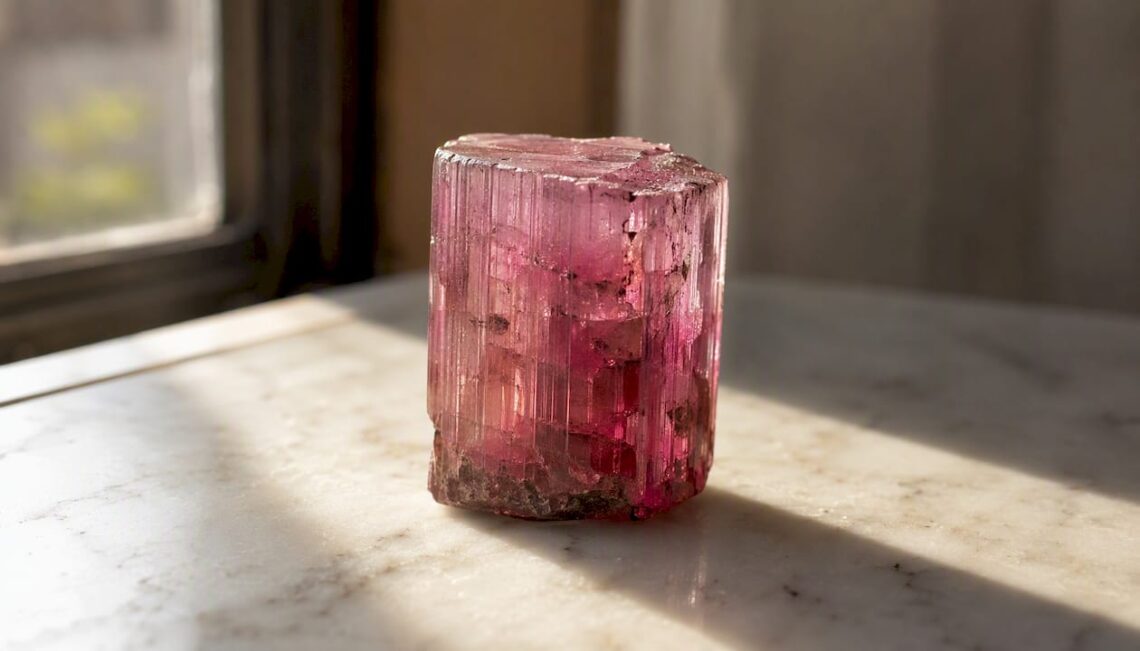
Crystals grow in trigonal prisms with characteristic vertical striations along the length of the stone, a feature visible under magnification and useful for identification. The mineral also displays pleochroism, meaning it shows different colors when viewed from different angles. Skilled cutters orient the stone so the face-up position shows the truest, most saturated pink.
Pro Tip: When buying a loose stone, ask whether the cutter oriented the pavilion to maximize face-up color. A poorly oriented cut can hide the stone’s best hue entirely.
What color varieties does pink tourmaline come in?
The practical color spectrum runs from barely-there baby pink through candy pink, hot pink, and magenta, all the way to the deep red-pink known as rubellite. Each step up in saturation typically corresponds to a step up in price.
Rubellite is a trade name recognized by GIA for the most saturated red-pink tourmalines. The distinction matters commercially: a stone labeled rubellite commands a premium, and that label should be backed by a gemological report when the price reflects it. Not every vivid pink qualifies; rubellite has a specific depth of color that holds under multiple lighting conditions, not just warm indoor light.
Lighter pinks, sometimes called “bubble gum” or “cotton candy” pink in the trade, are more abundant and more affordable. They can be beautiful in finished jewelry, especially in rose gold settings where the metal’s warmth complements the stone’s softness.
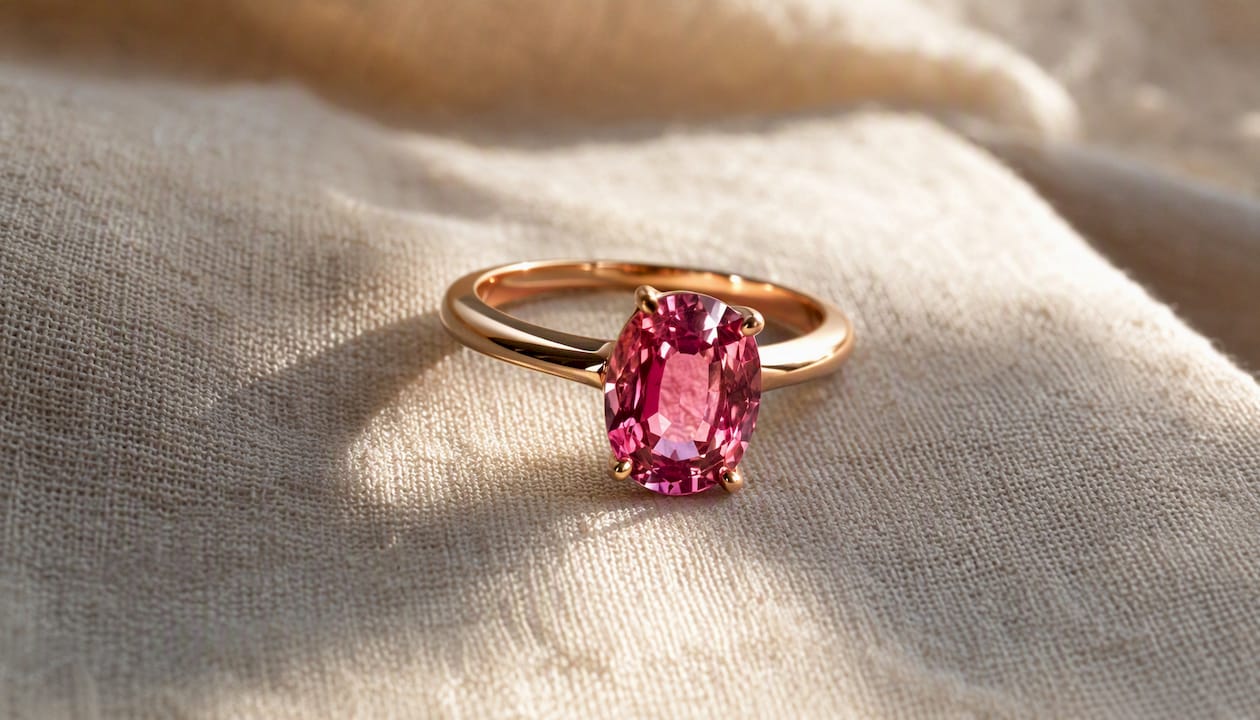
Pro Tip: *Always view a pink tourmaline under at least two light sources: natural daylight and standard indoor lighting. A stone that looks vivid only under warm tungsten but turns grayish in daylight is showing you its pleochroism at its worst. Request photos or video in natural light before committing to any online purchase. A helpful visual comparison of rubellite versus lighter pink tourmaline is available in this
.*
Where does pink tourmaline come from?
Modern supply is dominated by a handful of producing regions, each with its own characteristic chemistry and color profile:
- Brazil (Minas Gerais): The world’s most prolific source of gem-quality elbaite, producing stones across the full color range from pale pink to rubellite. Brazilian material is widely available in the U.S. market.
- Mozambique and Nigeria: African sources have grown significantly in recent decades, often yielding well-saturated pinks and rubellites at competitive prices.
- Afghanistan (Nuristan and Kunar provinces): Afghan tourmaline has a devoted collector following; some of the finest rubellites on record have come from this region, though supply is irregular.
- California and Maine (historic U.S. sources): The Pala district in San Diego County and the mines of Oxford County, Maine, were once major producers. Empress Dowager Cixi of China famously purchased large quantities of Californian pink tourmaline in the early 20th century, driving a brief but intense market. These deposits are largely exhausted today, making historic U.S.-origin material a collector’s item.
Origin matters most when a seller is charging a premium for it. A claim of “Afghan rubellite” or “Pala pink” should come with documentation, ideally a lab report noting chemical characteristics consistent with that locality. Ethical sourcing practices and traceability have become increasingly important to U.S. buyers, and reputable sellers can provide supply chain information on request.
How is pink tourmaline valued, and what should you expect to pay?
Color is the dominant value factor, full stop. Within color, saturation and evenness matter most. A stone with a vivid, consistent pink across the entire face is worth considerably more than one with color zoning, where pale and saturated areas appear side by side.
Beyond color, the valuation hierarchy runs roughly as follows: clarity (eye-clean stones command premiums, though some inclusions are accepted in rubellite), cut quality (well-proportioned cuts that maximize face-up color), carat weight (larger stones are rarer and priced exponentially higher per carat), and origin (documented provenance from premium localities adds value).
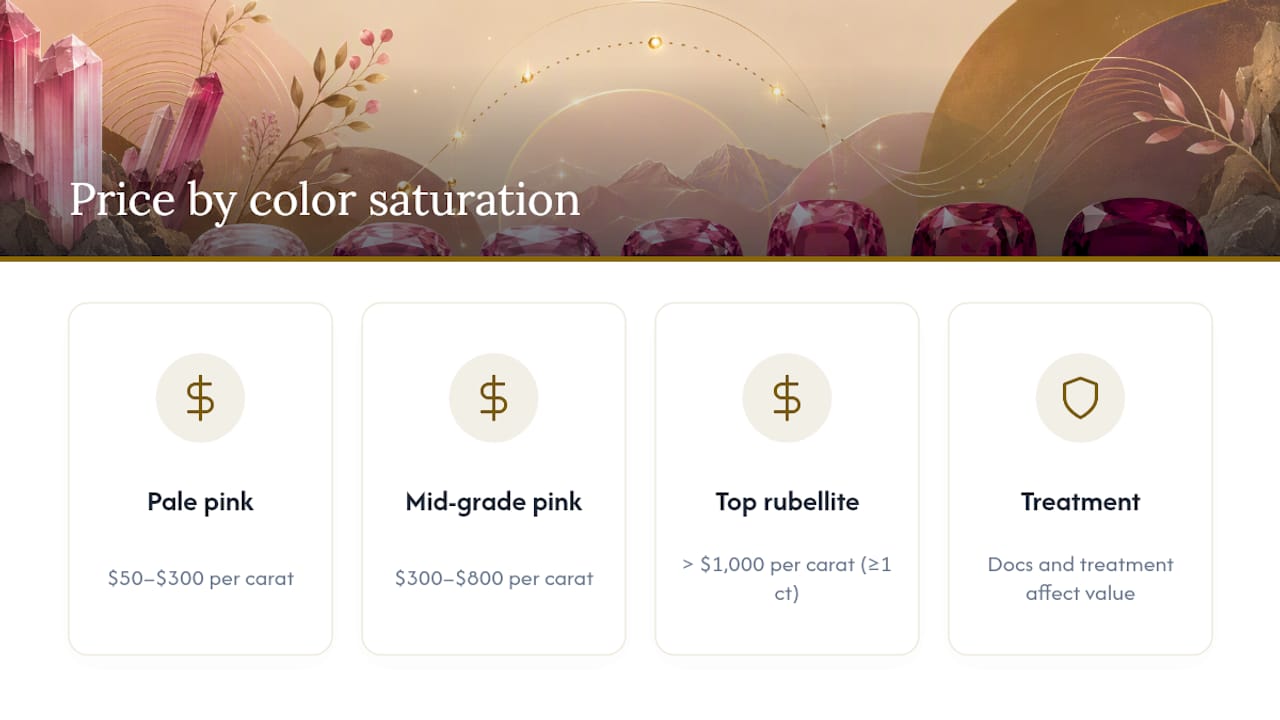
| Grade | Typical Characteristics | Approximate Price Range |
|---|---|---|
| Commercial pale pink | Light saturation, may have inclusions | ~$50–$300 per carat |
| Mid-grade fine pink | Good saturation, eye-clean or near-clean | ~$300–$800 per carat |
| Top rubellite | Deep red-pink, vivid, eye-clean, 1+ ct | $1,000+ per carat |
Treatment disclosure is non-negotiable. Irradiation is used in the trade to deepen pink color in some tourmalines. The treatment can be stable, but undisclosed irradiation misrepresents the stone’s natural state and affects its fair market value. Always ask.
Crystal Almanac’s market guidance notes that irradiation stabilizes color in treated stones, but buyers paying rubellite prices deserve to know whether the saturation is natural. A GIA or IGI report for any stone priced above the mid-grade band is a reasonable and worthwhile request.
How do you choose and buy pink tourmaline with confidence?
Whether you are shopping online or in a showroom, a short checklist protects you from overpaying or receiving a misrepresented stone.
- Request a lab report for higher-value stones — For rubellite-grade material or any stone above roughly one carat at a premium price, a GIA, IGI, or SSEF report is worth the cost.
Red flags to watch: stock photos only (no images of the actual stone), vague or absent treatment disclosure, no return policy, and origin claims without any supporting documentation.
How does lighting change the way pink tourmaline looks?
This is one of the most practical things a buyer can understand, and most people learn it the hard way after a purchase. Pink tourmaline is strongly pleochroic, which means the stone absorbs light differently along different crystal axes. The result: the same stone can look bright pink in daylight and shift toward a grayish or purplish tone under tungsten or warm incandescent light.
The chemistry behind this is well-documented. Research published in the journal Crystals shows that Mn concentration at the Y crystallographic site controls the pink absorption band, and that regional differences in pegmatite chemistry create measurable variation in how stones from different origins respond to light. Stones from some localities are more stable across lighting conditions than others, though this is difficult to assess without a lab report or direct comparison.
Practically, this means a stone photographed under warm studio lighting may look considerably more vivid than it will in your home or office. The fix is simple: always request images in natural daylight, and if possible, ask the seller to photograph the stone next to a neutral white card so you can judge color without the influence of background warmth.
Pro Tip: If you are buying a pink tourmaline ring or pendant online, ask the seller for a short video clip in outdoor shade. Shade light is neutral and reveals the stone’s true color better than direct sun, which can wash out saturation.
How can you tell natural pink tourmaline from treated or synthetic stones?
Natural, untreated pink tourmaline is the most desirable and typically the most valuable. Here is what to look for and ask about:
- Vertical striations: Natural tourmaline crystals grow with characteristic lengthwise striations visible under magnification. These are a reliable indicator of natural material and are documented in mineral specimen records.
- Irradiation treatment: — This is the most common treatment in the market. It deepens color and is not always detectable without advanced lab testing. For premium stones, a GIA, IGI, or SSEF report is the only reliable confirmation of treatment status.
- Lab-grown tourmaline: Synthetic tourmaline exists but is uncommon in the commercial market. If a seller cannot confirm natural origin, a lab report resolves the question. For a broader comparison of lab-grown versus natural gemstones, Usajewels’s education center covers the key differences.
For rubellite above roughly one carat, or any stone where the price reflects a premium, insist on a lab report before finalizing the purchase.
How do you care for pink tourmaline jewelry?
Pink tourmaline’s Mohs 7–7.5 hardness makes it durable enough for rings, earrings, and pendants worn regularly. The caveat is its conchoidal fracture: unlike diamonds, which cleave along flat planes, tourmaline fractures in curved, shell-like breaks. A sharp impact to the edge or corner of a stone can chip it, even without cracking it through.
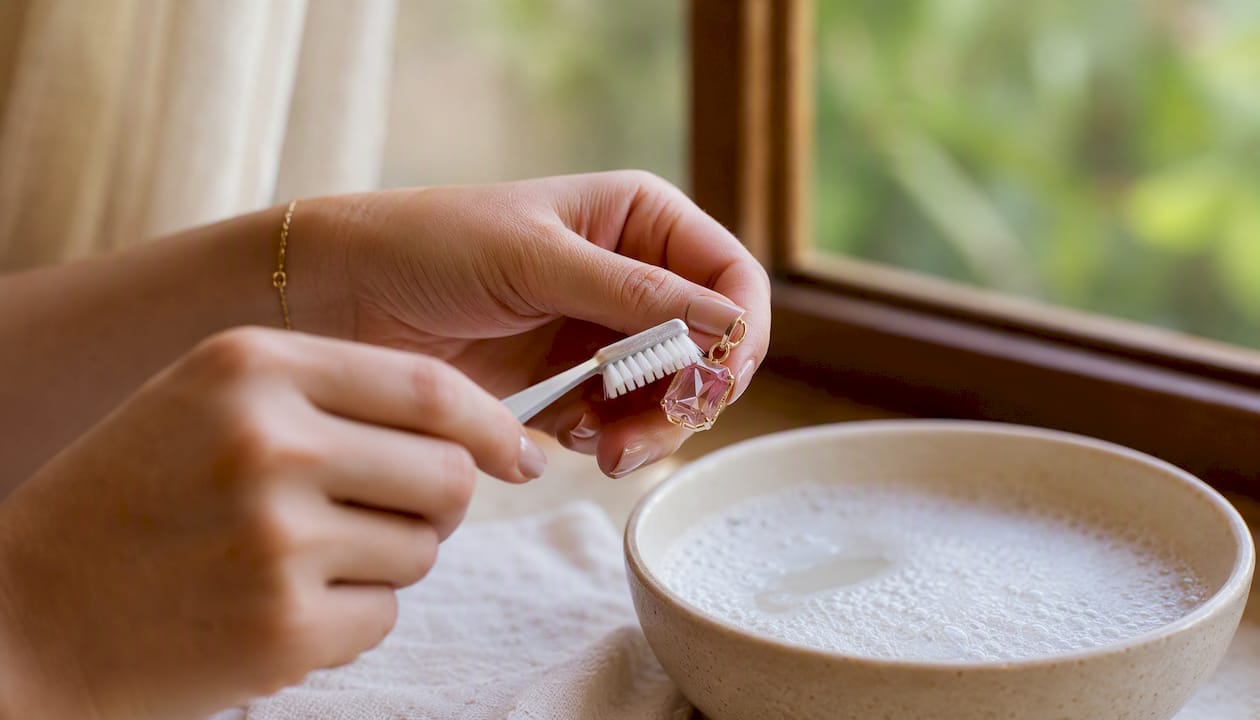
Cleaning: Warm water, a drop of mild dish soap, and a soft toothbrush work well for most pieces. Rinse thoroughly and pat dry. Avoid steam cleaners if the stone has any fractures or inclusions, as thermal shock can worsen them. Ultrasonic cleaners are generally safe for clean, untreated stones but should be skipped for stones with visible inclusions or known fractures.
Wearing: Remove pink tourmaline rings before gardening, sports, or any activity involving hard surfaces. The stone handles everyday wear gracefully, but a sharp knock against a countertop edge is the most common cause of chips.
Storage: Keep tourmaline pieces in individual soft pouches or compartments. Diamonds and sapphires are harder and will scratch tourmaline if stored together loosely.
Pro Tip: Schedule an annual prong inspection with your jeweler. Prongs wear down over time, and a loose prong on a pink tourmaline ring is the most preventable cause of stone loss. Bezel settings reduce this risk considerably for daily-wear pieces.
Key Takeaways
Pink tourmaline’s value is driven by color saturation in natural daylight, and every buying decision should start there before considering carat weight or price.
| Point | Details |
|---|---|
| Color drives value | Saturation evaluated in natural daylight is the primary price factor, ahead of carat weight. |
| Verify treatments | Always ask sellers whether a stone has been irradiated; request a GIA or IGI report for rubellite-grade or higher-value stones. |
| Protect the stone | Mohs 7–7.5 suits daily wear, but conchoidal fracture means bezel or halo settings reduce chip risk for rings. |
| Check lighting carefully | Pleochroism means the same stone can shift from vivid pink to grayish under tungsten; always request natural-daylight images. |
| Usajewels as a trusted source | Usajewels offers ethically sourced fine jewelry with in-house manufacturing, a lifetime upgrade program, and over 222 verified Google reviews. |
Why pink tourmaline deserves more attention than it gets
Most buyers walk into a jewelry conversation thinking about diamonds or sapphires, and pink tourmaline ends up as an afterthought. That’s a missed opportunity, and I think it comes down to a simple misunderstanding: people assume a colored stone that costs less than a ruby must be lesser in some meaningful way.
It isn’t. The color range in fine pink tourmaline, from a soft blush to a vivid magenta, is genuinely hard to match in any other gem at a comparable price. The science backs this up: manganese-driven color in elbaite produces a warmth and depth that photographs beautifully and wears even better in person. The pleochroism that confuses buyers when they see a stone shift under different lights is actually a sign of a natural, complex mineral, not a flaw.
What I’d push back on is the idea that a lab report is optional for anything above a modest pale pink. The irradiation issue is real, and the market is inconsistent about disclosure. A GIA or IGI report for a rubellite-grade stone isn’t excessive caution; it’s basic due diligence. Usajewels’s commitment to ethical sourcing and transparent provenance is exactly the kind of trust signal that matters here, because the difference between a $300-per-carat stone and a $1,000-per-carat stone often comes down to what the seller is willing to put in writing.
Pink tourmaline also pairs beautifully with custom design work. The stone’s color responds to metal choice and accent stones in ways that give a skilled jeweler real creative latitude. If you are considering a custom pink tourmaline ring or pendant, the conversation with your jeweler about setting and metal pairing is as important as the stone selection itself.
Usajewels brings custom pink tourmaline jewelry within reach
Finding a quality colored-stone piece without overpaying is genuinely difficult when most traditional jewelers mark up through multiple middlemen. Usajewels operates differently: as a family-owned, in-house manufacturer since 1999, we cut out the intermediaries and pass that savings directly to you.

For pink tourmaline specifically, that means you can request a custom design with your choice of stone saturation, metal type, and setting style, with full transparency on sourcing and treatment status. Our ethical sourcing commitment means you can ask the hard questions about provenance and get straight answers. Over 222 Google reviews reflect the trust our customers place in that process, and our lifetime diamond upgrade program means your investment is protected long after the purchase.
Ready to find the right piece? Browse our fine jewelry collection or reach out directly to discuss a custom pink tourmaline ring, pendant, or earring design. We can provide natural-daylight photos of specific stones and walk you through setting options that protect and showcase the color you love.
Sources and further reading
These resources support the technical and market claims in this article:
- All About Colored Stones: Pink Tourmaline – IGI
- Crystal Chemistry and Genetic Implications of Pink Tourmalines from Distinct Pegmatite Provinces
- Tourmaline Description
- Pink Tourmaline – The Manganese Elbaite | Crystal Almanac
- Pink Tourmaline: Meaning, Properties & Value | GemstoneRush
-
- mindat.org
FAQ
What is pink tourmaline good for?
Pink tourmaline is valued for its durability (Mohs 7–7.5) in everyday jewelry and is associated in crystal traditions with emotional healing, love, and compassion. It works well in rings, earrings, and pendants across a wide range of settings.
How much is a pink tourmaline worth?
Price varies widely by color saturation: pale commercial pinks typically run roughly $50–$300 per carat, mid-grade fine pinks around $300–$800 per carat, and top rubellite-quality stones above one carat can exceed $1,000 per carat. Treatment status and origin documentation affect value significantly.
Why is pink tourmaline expensive at the top end?
Top rubellite-grade stones combine rare natural manganese concentration, vivid color that holds across lighting conditions, eye-clean clarity, and documented natural (untreated) status. Each of those factors is uncommon individually; finding them together in a large stone is genuinely rare.
What is the spiritual meaning of pink tourmaline?
In crystal and metaphysical traditions, pink tourmaline is associated with the heart chakra, emotional healing, and attracting love and compassion. These associations are cultural and traditional rather than scientifically verified, but they make the stone a meaningful gift for anniversaries, engagements, and personal milestones.
How do you clean pink tourmaline jewelry at home?
Warm water, a small amount of mild dish soap, and a soft brush are all you need. Rinse thoroughly and pat dry. Avoid steam cleaners on stones with inclusions or fractures, and skip ultrasonic cleaning if you are unsure of the stone’s treatment status.
Recommended
- USA Jewels: Gemstone Buyers Guide – Engagement, Wedding Rings &
- Gemstone Treatments & Enhancements Guide | USA Jewels
- Pink Diamond Guide | Argyle Pinks & Fancy Pink Value | USA Jewels
- Emerald vs Tsavorite Garnet | USA Jewels

Deep Mehta is the Co-Owner of USA Jewels, a family-owned jewelry business she has led since 2013 in Deerfield Beach, Florida. With over 13 years of hands-on experience in fine jewelry retail, manufacturing, and diamond importing, Deep specializes in engagement rings, wedding bands, and custom jewelry design. She also co-manages Kaash Group Talent Acquisition. Deep is a University of Florida graduate and oversees every aspect of USA Jewels’ operations, from product development to marketing.
Fine Jewelry Collection


You May Also Like
Nickel Free White Gold: Your Guide for Sensitive Skin

Design a Custom Wedding Ring Set That’s Truly Yours