Nearly Twice the Weight: Platinum vs Palladium for Rings and Investing
For heavy daily wear and long-term durability, platinum is the stronger choice. For a lighter feel and a friendlier price, palladium wins. Both metals carry price swings tied to industrial demand, so if you are buying as an investment rather than a ring, treat volatility as part of the deal. The sections below walk through the density numbers, the alloys, the market forces, and the care routine behind that recommendation.
TL;DR:
- An identical design feels heavier in platinum, at 21.5 g/cm³ versus palladium’s roughly 12, and a Pt950 hallmark indicates 95% platinum.
- Before buying, check the hallmark and ask for the full alloy composition, because nickel or other added metals can trigger reactions in sensitive skin.
- Palladium suits simpler designs, while platinum prongs tend to bend rather than wear away and help secure stones over years of daily wear.
- Resizing and repairs generally cost more and take longer for platinum, so compare lifetime maintenance costs rather than relying on the purchase price alone.
- Finished jewelry rarely follows spot metal prices closely, so buy rings for wear rather than returns; bullion or coins track metal prices more directly.
Table of Contents
- Platinum vs Palladium at a Glance
- The Physical and Chemical Differences That Matter
- How Platinum and Palladium Perform as Everyday Jewelry
- Color, Finish, and the Feeling of Weight
- What Drives Platinum and Palladium Prices
- How to Choose Between Platinum and Palladium
- Caring for Platinum and Palladium Jewelry
- Where This Comparison Comes From
- Our Take on the Platinum vs Palladium Debate
- Build Your Ring in Platinum or Palladium
- FAQ
- Sources
Platinum vs Palladium at a Glance
Before you dig into the technical reasons, here is how the two metals stack up side by side:
- Density: platinum weighs in at about 21.5 g/cm³, while palladium sits closer to 12 g/cm³, so a platinum ring of the same design feels noticeably heavier on the hand.
- Typical purity: platinum jewelry is commonly stamped Pt950 (95% pure), while palladium pieces are usually alloyed for strength and the composition varies more by maker, so the hallmark matters.
- Color and tarnish: both metals keep a naturally white tone without rhodium plating, though platinum develops a soft patina while palladium tends to show scratches more plainly over time.
- Price behavior: palladium has swung harder in recent years because its price leans heavily on automotive catalyst demand, while platinum’s broader industrial and jewelry use spreads that risk out.
Each of these points has a practical consequence for your wallet and your finger, which the following sections unpack.
The Physical and Chemical Differences That Matter
The numbers behind platinum and palladium explain almost everything about how they behave in a ring or a bar.
Platinum weighs nearly double what palladium does for the same volume: its density of 21.5 g/cm³ compares to palladium’s roughly 12 g/cm³, which is why identical ring designs feel so different in hand. That heft is part of why platinum has long carried a reputation for substance and permanence.
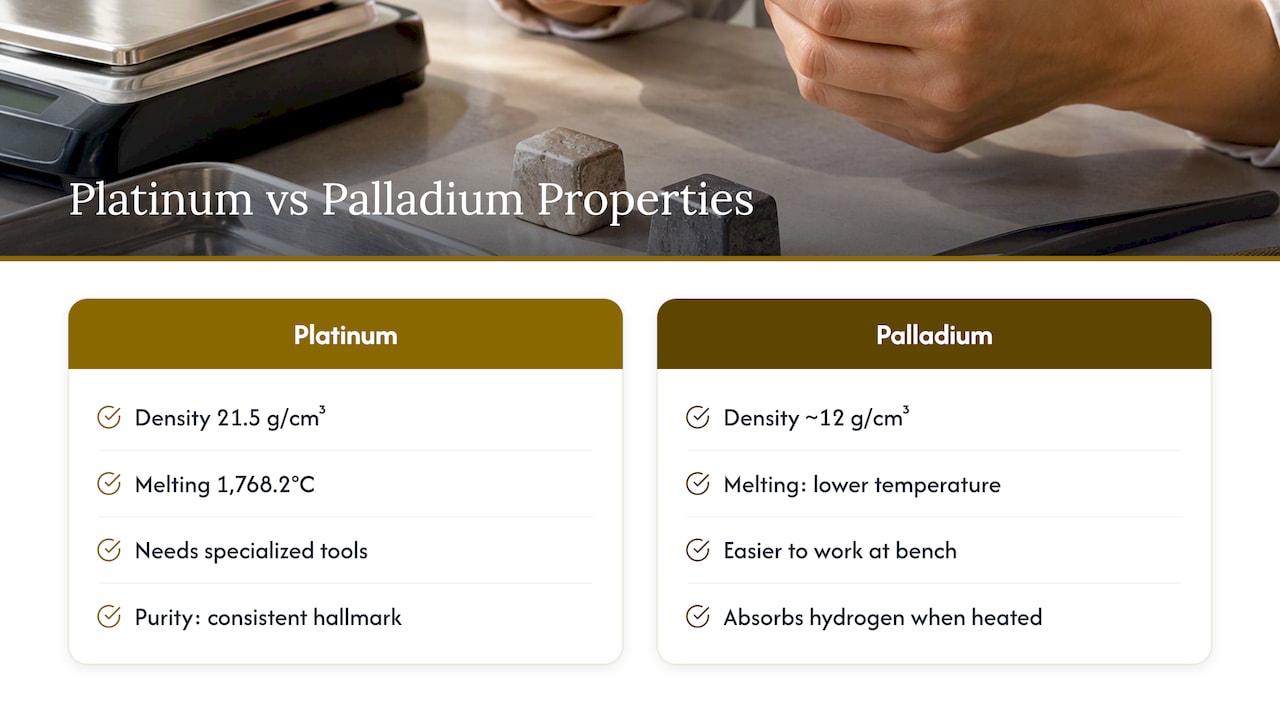
Melting points diverge too. Platinum melts at 1,768.2°C, a temperature that demands specialized equipment and experienced hands when casting or repairing a piece. Palladium’s lower melting point makes it somewhat easier to work with on the bench, though its own quirks, including a tendency to absorb hydrogen during heating, require a jeweler who knows the metal well.
Purity standards diverge as well. Palladium jewelry rarely follows one universal standard, so the alloy mix can shift from one manufacturer to the next. That is exactly why the hallmark stamped inside a band matters: it tells you what you are actually buying, not just what the salesperson calls it.
These properties ripple into manufacturing and repair. Platinum’s density and higher melting point mean it resists wear and holds its shape over decades, which is part of why it remains the default choice for settings that need to grip a diamond securely for fifty years. Palladium’s lighter structure and different working properties make it a capable metal for simpler designs but a less forgiving one for intricate, high-stress settings. If a ring will see decades of handshakes, dish washing, and gym bags, the physical numbers favor platinum.
How Platinum and Palladium Perform as Everyday Jewelry
Once a ring leaves the showroom, its real test is years of daily wear, not a jeweler’s loupe.
- Platinum resists scratching less than some harder metals, but because it is so dense, it does not lose volume the way softer metals do. Scratches become a soft patina rather than thinning metal.
- Palladium holds up well against tarnish and is naturally hypoallergenic, making it a solid option for people with sensitive skin who still want a white precious metal.
- Prongs made of platinum tend to bend rather than wear away, which keeps stones more secure over long stretches of daily wear.
- Resizing and repair work on platinum generally costs more and takes longer because of its melting point and density, while palladium is often quicker and cheaper to adjust.
Hardness plays into all of this. If you want a general sense of how metals and gems resist scratching, the Mohs hardness scale is a useful reference point, though neither platinum nor palladium rates particularly high on it; both rely on density and alloy composition rather than raw hardness to resist long-term wear.
Allergy concerns deserve a closer look too. Pure platinum and palladium are both considered friendly to sensitive skin, but once a piece is alloyed with nickel or other metals, that can change. Always ask what the alloy contains, not just what the base metal is.
Pro Tip: Before you buy, ask your jeweler three things: what the hallmark stands for, what the full alloy composition is, and roughly what a resizing or repair would cost five years from now.
Color, Finish, and the Feeling of Weight
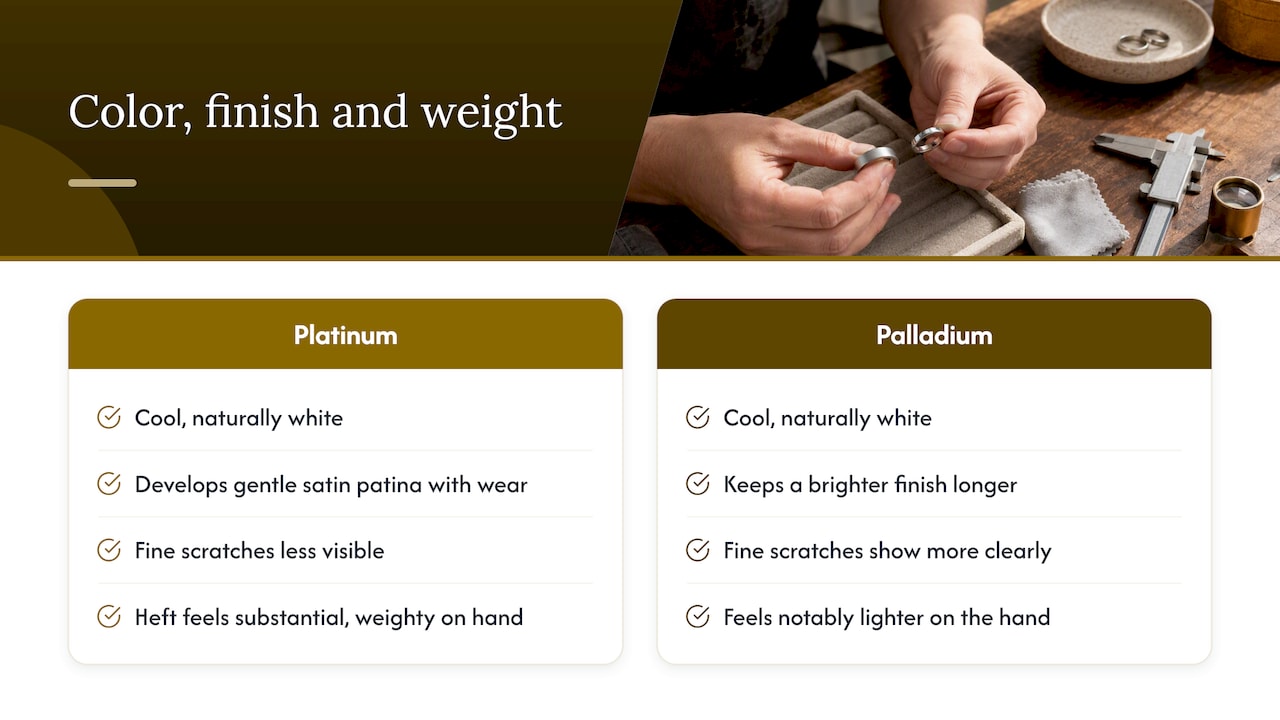
Platinum and palladium both read as a cool, naturally white metal, closer to each other than either is to white gold before rhodium plating. The difference shows up at the edges. Platinum develops a gentle, satin-like patina as it wears, a look many people grow to prefer over a mirror polish. Palladium tends to keep a brighter finish longer but can show fine scratches more visibly since it does not patina the same way.
Weight shapes perception as much as appearance does. A platinum ring’s heft often reads as substantial and permanent to the person wearing it, while a palladium piece of the same design feels notably lighter on the hand. Neither is objectively better, but if you associate value with weight, that difference will matter the moment you try pieces on side by side. For more on how metal choice changes the feel of a ring, our platinum versus gold engagement ring comparison covers similar tradeoffs from another angle.
What Drives Platinum and Palladium Prices
Jewelry shoppers often assume precious metal prices move together, but platinum and palladium respond to different pressures, and understanding why helps you time a purchase or judge resale value.
Both metals belong to the platinum-group family used heavily in automotive catalytic converters, and USGS reporting confirms that catalytic converters remain the primary end use for both metals. Palladium has historically been favored in gasoline-engine catalysts, while platinum sees broader use across diesel catalysts, industrial processes, and jewelry. When one metal gets expensive relative to the other, manufacturers substitute, and that substitution is a real market force: platinum-group metal markets are linked closely enough that a sustained palladium premium tends to push some catalyst makers back toward platinum over time, according to market analysis from the World Platinum Investment Council.
Supply matters as much as demand. The USGS Mineral Commodity Summaries track mine production, imports, consumption, and recycling for both metals, and recycling recovered from catalytic converters is a meaningful piece of the supply picture, which means scrap availability can soften or sharpen price swings depending on how much old material flows back into the market.
For jewelry buyers, here is what that macro picture means in practice:
- Palladium has tended to run more volatile because it leans more heavily on a single industrial demand source, while platinum’s end uses are more spread out, which can mean steadier pricing over time.
- Spot-price swings in either metal affect manufacturing costs more than they affect a finished ring’s retail price, since labor, design, and stones make up a large share of what you pay.
- Resale value on jewelry rarely tracks spot metal price closely, so neither metal should be bought as a ring with an expectation of investment-grade returns.
- If you want direct exposure to metal price movement, bullion or coins track spot price far more closely than a finished piece of jewelry ever will.
How to Choose Between Platinum and Palladium
Matching the right metal to your situation comes down to a short set of honest questions.
- Decide how the piece will be worn. Daily wear for decades favors platinum’s density and prong security; occasional wear opens the door to palladium’s lighter feel.
- Set your budget first. Palladium typically costs less per piece, which can free up budget for a larger diamond or better cut.
- Think about how heavy you want it to feel. If you want a ring that feels substantial on your hand, platinum delivers that in a way palladium does not.
- Flag any metal sensitivities. Both metals are generally skin-friendly in their pure forms, but ask about the specific alloy before you commit.
- Consider long-term maintenance. Platinum repairs and resizing tend to cost more over the life of the piece; factor that into the sticker price.
- Be honest about investment intent. If you are buying metal as a store of value rather than jewelry, understand that palladium’s price has shown more volatility tied to catalyst demand than platinum’s.
For an engagement ring meant to be worn every day for the rest of your life, platinum’s track record makes it the safer long-term pick. For a wedding band, fashion piece, or a gift on a tighter budget, palladium holds up well and costs less. If someone is trying to sell you either metal with vague language about alloy content or no visible hallmark, treat that as a red flag and ask for documentation before you buy.
Caring for Platinum and Palladium Jewelry
Both metals are forgiving to live with, but a few habits keep them looking their best for decades.
- Clean either metal with warm water, a drop of mild dish soap, and a soft brush, then rinse and dry with a lint-free cloth.
- Avoid chlorine and harsh household chemicals, which can dull the surface finish on both platinum and palladium over time.
- Have prongs checked by a jeweler every year or two, especially on rings worn daily, since loose prongs put a stone at risk long before you notice visible damage.
- Store pieces separately in a soft pouch or lined box to avoid scratches from harder gems or other jewelry.
A platinum piece that develops a patina does not need constant repolishing. Many people prefer to let it age naturally rather than restoring a mirror finish every few months.
Where This Comparison Comes From
This comparison draws on element data from the periodic table reference for platinum and palladium, combined with USGS Mineral Commodity Summaries for market and supply figures. We draw on extensive experience hand-manufacturing fine jewelry in-house, and that bench experience informs how we talk about wear, repair costs, and hallmark standards. We have developed a reputation supported by customer reviews, educational resources on metal choice, and a diamond upgrade program for pieces we craft.
Our Take on the Platinum vs Palladium Debate
The conventional advice tends to frame this choice as platinum for luxury and palladium for budget, and that oversimplifies a decision that is really about how a ring gets used. We think the weight question deserves more attention than it gets: plenty of buyers choose platinum for its reputation, then find the heft uncomfortable for daily wear, or choose palladium for the price and miss the substantial feel they actually wanted.
The market-driver side gets underrated too. Jewelry buyers often treat spot price as if it dictates resale value, but a finished ring is not a bullion bar. Labor, design, and stone quality shape resale far more than the metal’s daily price swing does.
If we had to name one priority, it would be this: try both metals on in a design you actually want, in the weight and width you would wear, before you decide based on price charts or reputation alone.
— Joseph
Build Your Ring in Platinum or Palladium
We offer crafting of platinum or palladium settings around the exact diamond, cut, and design you have in mind. Every piece starts with ethically sourced stones and solid metal, never hollow or plated.
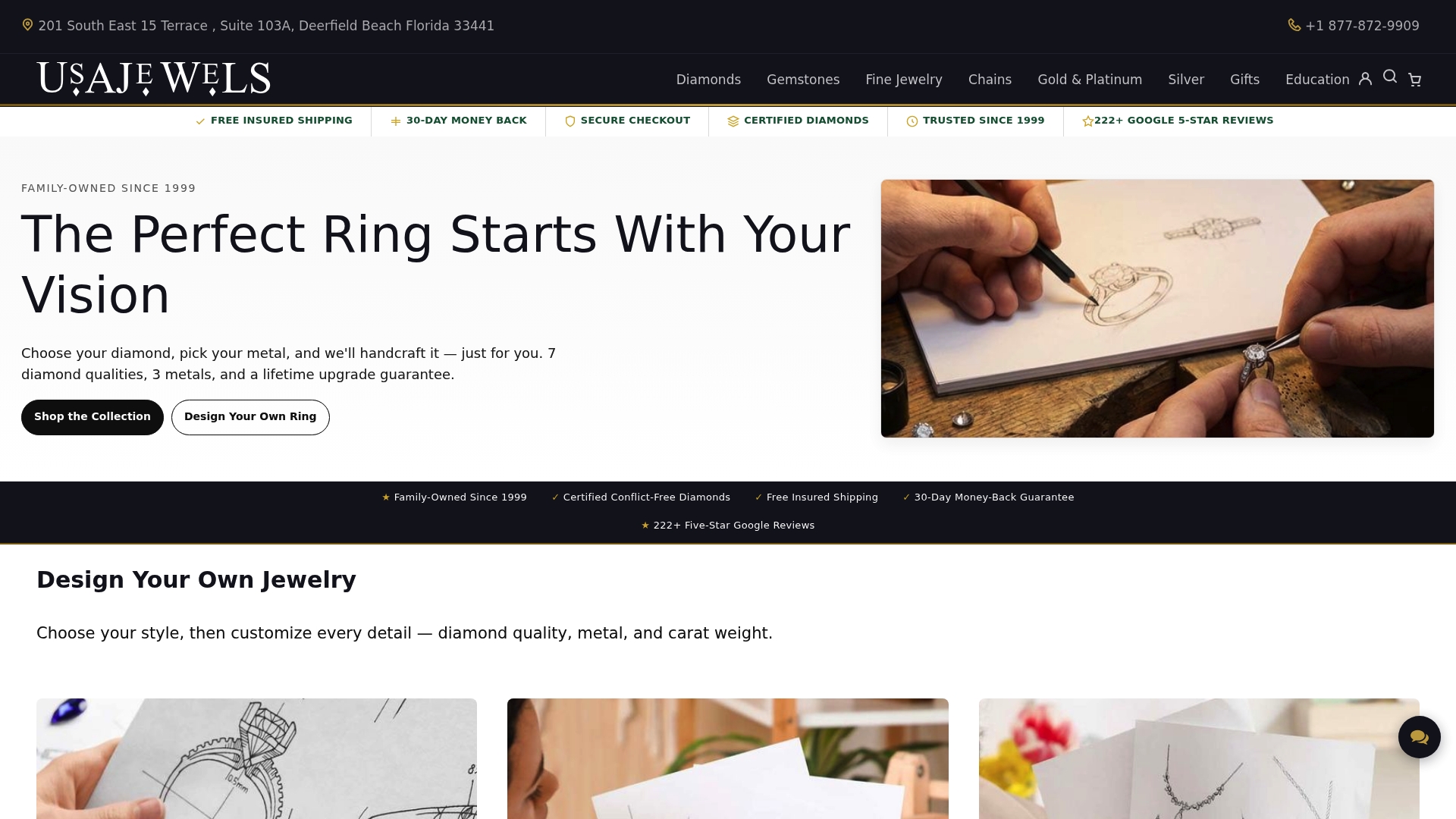
If you are ready to see what your design would look like in either metal, start with our Design Your Own Diamond Ring tool and compare the look and weight for yourself before you commit.
FAQ
How much is 1 oz of palladium worth?
Palladium’s spot price has shown significant swings in recent years, driven largely by automotive catalyst demand, and USGS price data tracks this volatility through 2025. Because spot price changes often, check a live precious metals quote for the current figure rather than relying on a fixed number.
What metal is 30 times rarer than gold?
Platinum-group metals, including platinum and palladium, are considered far rarer than gold, though the exact rarity ratio varies by source and extraction data. The USGS Mineral Commodity Summaries track production volumes that illustrate just how limited global supply is compared to gold.
What are the top three rarest metals?
Platinum-group metals, including platinum, palladium, and rhodium, consistently rank among the rarest commercially mined metals. Definitions of “rarest” vary depending on whether you measure by annual mine production or total known reserves, so different sources will list them in a slightly different order.
Is palladium a precious metal?
Yes, palladium is classified as a precious metal and belongs to the platinum-group metals, alongside platinum, rhodium, and others. It is used both in fine jewelry and heavily in automotive catalytic converters, which is one of the main forces behind its market price.
Sources
- Platinum – Element information, properties and uses | Periodic Table
- Mineral Commodity Summaries 2026 — Platinum-group metals (USGS)
- Platinum vs palladium as precious metals investments — USA Today
Recommended
- Platinum vs Gold Engagement Rings: Pick by Priority
- Palladium Guide: The Platinum Alternative
- Platinum Jewelry Guide: Benefits & Care
- Sterling Silver vs Platinum

Deep Mehta is the Co-Owner of USA Jewels, a family-owned jewelry business she has led since 2013 in Deerfield Beach, Florida. With over 13 years of hands-on experience in fine jewelry retail, manufacturing, and diamond importing, Deep specializes in engagement rings, wedding bands, and custom jewelry design. She also co-manages Kaash Group Talent Acquisition. Deep is a University of Florida graduate and oversees every aspect of USA Jewels’ operations, from product development to marketing.
Fine Jewelry Collection

You May Also Like
Should I choose Gold or Platinum?
In-House Jewelry Manufacturing: What It Is and Why It Matters