Engagement Ring Prong Style Selection: 2026 Guide
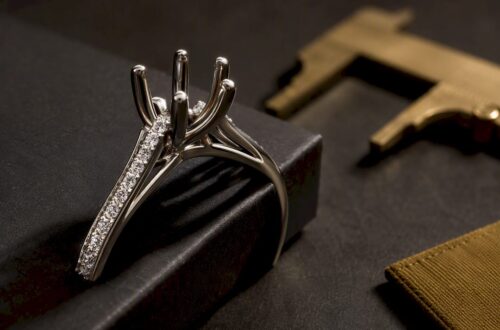
Engagement ring prong style selection is the single most consequential design decision you make when building a custom ring. Prongs are the small metal claws that grip your gemstone, and their shape, number, and proportion directly control how much light enters the stone, how secure it sits, and how the ring looks on your hand. Prong settings have dominated engagement ring design since the early 1900s, and trade associations like Jewelers of America recognize multi-prong solitaire designs as the most sought-after mount. Getting this choice right means your ring will look stunning and hold its stone safely for decades.
What are the most common engagement ring prong styles?
The prong setting is the most popular engagement ring mount because it maximizes light return to the diamond while using minimal metal. That combination of brilliance and simplicity is why prong style engagement rings remain the default choice for couples worldwide. Understanding each style gives you a real foundation for making the right call.
Four-prong settings
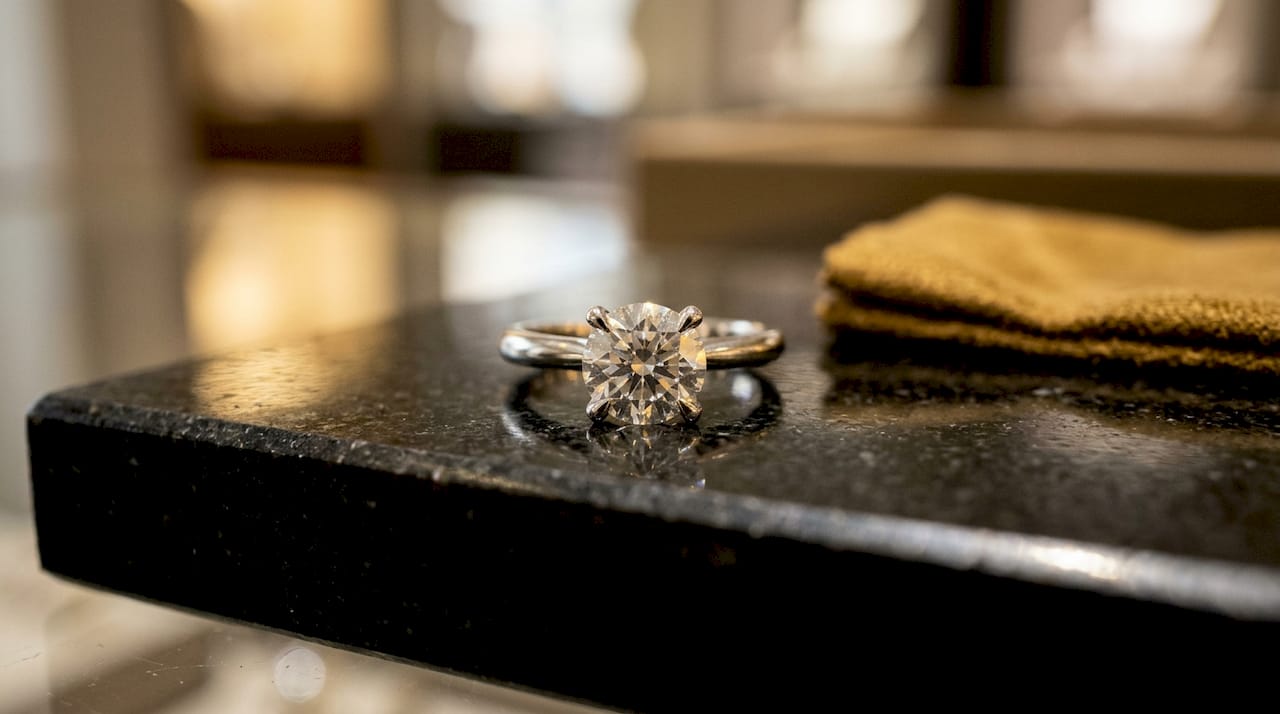
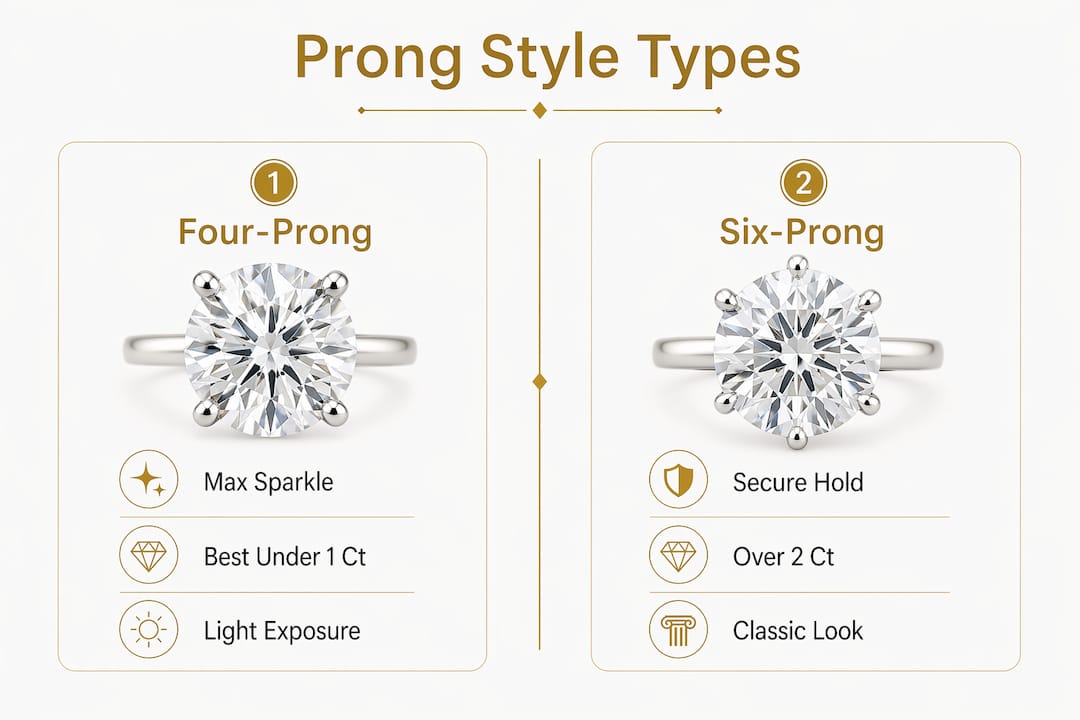
A four-prong setting grips the stone at four equidistant points, leaving the maximum amount of the diamond’s surface exposed. This style suits round brilliant cuts particularly well because it creates a square visual frame that complements the stone’s symmetry. The tradeoff is that four contact points offer slightly less security than six, which matters most for larger stones or very active wearers.
Six-prong settings
Six prongs distribute holding force more evenly around the girdle of the stone. This style is the classic Tiffany-style mount, and it gives round diamonds a rounder, more circular appearance. The additional metal contact also means the stone is less likely to shift or loosen over years of daily wear.
Claw prongs
Claw prongs taper to a sharp point and work best with elongated or uniquely shaped diamonds like oval, marquise, and pear cuts. The pointed tip creates a visual contrast against the stone’s edge that reads as elegant and modern. Round or button prongs, by contrast, create a softer, more classic look and pair naturally with round brilliant cuts.
V-prongs
V-prongs are shaped like a small “V” and wrap around the pointed corners of princess, marquise, and heart-shaped diamonds. Sharp corners are the most vulnerable part of any faceted stone. A V-prong cradles that corner completely, protecting it from chips while keeping the stone’s geometric silhouette visible.
Here is a quick reference for matching prong style to diamond shape:
| Diamond Shape | Recommended Prong Style | Key Reason |
|---|---|---|
| Round brilliant | Four-prong or six-prong | Maximizes light exposure and symmetry |
| Princess cut | V-prong | Protects vulnerable sharp corners |
| Oval or pear | Claw prong | Follows elongated outline naturally |
| Marquise | V-prong or claw prong | Secures pointed ends and sides |
| Heart shape | V-prong at tip, round elsewhere | Preserves the distinctive silhouette |
How to select the right prong style based on diamond shape and size
Diamond geometry and carat weight are the two most reliable guides for narrowing down your prong options. Choosing prongs that fight against your stone’s shape creates visual tension and can actually weaken the mount over time.
-
Match prong count to carat weight. Four-prong settings suit diamonds under 1 carat, while six-prong settings are preferred for diamonds above 2 carats for better security. A larger stone carries more weight and puts more stress on each prong, so adding two extra contact points is a practical safeguard, not just a style choice.
-
Align prong shape to stone outline. Round and oval stones pair naturally with round or claw prongs that follow their curved girdle. Stones with corners, such as princess or marquise cuts, need V-prongs at those corners to prevent chipping. Forcing a round prong onto a sharp corner leaves the corner partially exposed and vulnerable.
-
Scale prong thickness to stone size. Properly proportioned prong thickness provides security without visually overwhelming the diamond. A prong that is too thick covers too much of the stone’s table and kills brilliance. A prong that is too thin bends easily and risks losing the stone.
-
Consider the setting height. Taller prongs lift the stone higher off the band, which allows more light to enter from below. This works beautifully for round brilliants and ovals. Lower, shorter prongs suit active wearers who need a ring that sits closer to the finger and catches on fewer surfaces.
-
Think about the band width. A narrow band calls for delicate, slender prongs that keep the ring looking proportional. A wider band can support heavier, more architectural prong styles without looking unbalanced.
Pro Tip: If you are unsure about prong count, hold a round brilliant diamond up to light with four contact points versus six. The four-prong version will show noticeably more fire and scintillation. If sparkle is your top priority and your stone is under 1 carat, four prongs win every time.
What lifestyle factors affect engagement ring prong style selection?
Your daily routine matters as much as your diamond’s shape when choosing a prong style. A ring worn by a nurse, a potter, or a rock climber faces very different stresses than one worn by someone who works at a desk.
More prongs mean better security but slightly less diamond visibility. That tradeoff becomes concrete when you think about your lifestyle. If you work with your hands, use gym equipment, or frequently handle rough materials, a six-prong setting in platinum is the most durable choice you can make.
- Active lifestyles: Choose six prongs over four. More contact points reduce the chance of a prong snagging and bending away from the stone.
- Delicate prong styles: Petite prongs are visually minimal but require more care and suit wearers with gentler daily routines.
- Metal choice: Platinum prongs offer higher durability than gold because platinum is denser and more resistant to wear. Gold prongs, especially in 14k or 18k, are strong but will show wear faster under heavy daily use.
- Maintenance schedule: All prong settings need professional inspection at least once a year. A jeweler checks for prong movement, metal thinning, and stone security.
“The best prong style is the one that fits your life, not just your finger. A ring that matches your daily routine will look as beautiful in ten years as it does on day one.”
Pro Tip: Ask your jeweler to check prong tightness every six months if you wear your ring during workouts or outdoor activities. Catching a loose prong early costs far less than replacing a lost diamond.
Caring for your ring long-term is just as important as the initial design. The Usajewels jewelry care guide covers cleaning methods and storage practices that protect prong integrity over time.
What mistakes should you avoid when choosing prong styles?
Most ring regrets come from one of four predictable errors. Knowing them in advance saves you from a costly redesign.
- Choosing prongs that are too thin for the stone. Thin prongs look elegant in photos but bend under real-world pressure. A prong that bends away from the stone is the leading cause of diamond loss in everyday rings.
- Choosing prongs that are too thick. Oversized prongs cover the stone’s crown and girdle, blocking light and reducing brilliance. The stone looks smaller and duller than it actually is.
- Ignoring diamond shape compatibility. Common mistakes include ignoring gem shape compatibility and prioritizing style over security. A princess cut in round prongs is a real example of this error. The corners sit partially exposed, and one hard knock can chip the stone.
- Overprioritizing aesthetics over security. A prong style that photographs beautifully but does not grip the stone firmly is a liability. Security is the foundation. Aesthetics build on top of it.
- Skipping the lifestyle conversation with your jeweler. Many couples choose a prong style based on photos alone without discussing how the ring will be worn. A trusted jeweler will ask about your daily routine and steer you toward the right balance of form and function.
Reviewing the full engagement ring settings guide at Usajewels before your consultation gives you the vocabulary to have that conversation confidently.
Key takeaways
The most effective engagement ring prong style selection balances diamond shape, stone size, metal durability, and your daily lifestyle to protect the stone and maximize its brilliance.
| Point | Details |
|---|---|
| Match prong count to carat weight | Use four prongs for stones under 1 carat; choose six prongs for stones above 2 carats. |
| Align prong shape to stone outline | V-prongs protect sharp corners; claw prongs suit elongated shapes; round prongs complement round cuts. |
| Scale thickness to stone size | Prongs that are too thin bend and lose stones; prongs that are too thick block light and reduce sparkle. |
| Metal choice affects longevity | Platinum prongs outlast gold under daily wear and require less frequent maintenance. |
| Lifestyle drives the final decision | Active wearers need more prongs and stronger metal; delicate styles suit gentler daily routines. |
Why proportion is the detail most couples miss
I have spent years watching couples agonize over four prongs versus six, platinum versus gold, claw versus round. Those are all valid questions. But the detail that actually makes or breaks a ring is proportion, and almost no one talks about it until something goes wrong.
A prong that is even slightly too thick for the stone it holds will visually shrink the diamond. The eye reads the metal first and the stone second. You paid for the stone. The prong should disappear into the background and let the diamond do the work. Getting that proportion right requires a jeweler who understands both the geometry of the stone and the mechanics of the mount.
The other thing I have seen couples get wrong is treating security and sparkle as opposites. They are not. A well-proportioned six-prong setting in platinum can be just as brilliant as a four-prong setting in white gold. The difference is in the craftsmanship, not the count. When prongs are shaped correctly and seated at the right height, they guide light into the stone rather than blocking it.
My honest advice: bring your diamond shape and your lifestyle to the conversation, not just a photo of a ring you saw online. The right prong style for you is the one that holds your stone securely for the next fifty years while showing it off at its absolute best. That combination is always achievable. You just need a jeweler who takes both goals seriously.
— Joseph
Custom prong styles, built the way you want them
At Usajewels, we have been helping couples design rings that fit their lives since 1999. Our family-owned, in-house manufacturing model means you work directly with the people building your ring, not a middleman who passes your order down the line.
Whether you are choosing between four and six prongs, deciding on V-prongs for a princess cut, or selecting the right metal for your lifestyle, our team walks you through every decision. You can design your own ring step by step with full control over prong style, metal type, and diamond quality. Our fine diamond jewelry collection also shows you finished examples of each prong style so you can see exactly how your choices will look before you commit.
FAQ
What is the most popular prong style for engagement rings?
The six-prong round solitaire setting is the most recognized style, endorsed by trade associations like Jewelers of America for its balance of security and brilliance. Four-prong settings are also widely chosen for smaller diamonds because they expose more of the stone’s surface.
How do I choose between four and six prongs?
Choose four prongs for diamonds under 1 carat to maximize sparkle, and six prongs for diamonds above 2 carats to add security. Your daily activity level should also factor in, since more prongs reduce the risk of stone loss during active wear.
Are V-prongs necessary for princess cut diamonds?
V-prongs are strongly recommended for princess cut diamonds because they protect the stone’s sharp corners, which are the most vulnerable points on any faceted gem. Round prongs leave those corners partially exposed and at risk of chipping.
Does metal type affect prong durability?
Platinum prongs are more durable than gold prongs under daily wear because platinum is denser and resists bending. Gold prongs in 14k or 18k are still strong, but they require more frequent professional inspection for active wearers.
How often should prongs be inspected?
Prongs should be professionally inspected at least once a year for most wearers, and every six months for those with active lifestyles. A jeweler checks for metal thinning, prong movement, and stone security during each visit.
Recommended
- Vintage Engagement Ring Styles: Your 2026 Era Guide
- Ring Guide: Engagement Settings & Styles | USA Jewels
- Engagement Ring Buying Guide: How to Choose the Perfect Ring | USA Jewels
- How Engagement Ring Appraisal Works: 2026 Guide

Deep Mehta is the Co-Owner of USA Jewels, a family-owned jewelry business she has led since 2013 in Deerfield Beach, Florida. With over 13 years of hands-on experience in fine jewelry retail, manufacturing, and diamond importing, Deep specializes in engagement rings, wedding bands, and custom jewelry design. She also co-manages Kaash Group Talent Acquisition. Deep is a University of Florida graduate and oversees every aspect of USA Jewels’ operations, from product development to marketing.
Frequently Asked Questions
Can I use a four-prong setting with a large diamond, or is six-prong always safer?
Why do marquise diamonds need different prong protection than round brilliant cuts?
How does choosing between round and claw prongs affect the overall look of my engagement ring?
What should I know about V-prongs for protecting heart-shaped diamonds?
Does the number of prongs affect how much of my diamond is visible in the setting?
Fine Jewelry Collection


You May Also Like
Split Shank Ring: 5 Buyer Priorities to Boost Center Stone Presence
Save 30–40%: Wedding Band Cost and Buyer’s Checklist