Round 26% vs Oval 25%: Design a 2026 Engagement Ring That Lasts
Engagement ring trends for 2026 favor elongated shapes like oval and marquise, substantial sculptural bands, warm antique-inspired cuts, and a fast-growing share of lab-grown diamonds. The through line is individuality: buyers want rings that read as heirlooms, not algorithm-approved solitaires. That shift changes how you should think about setting protection, metal warmth, and where to spend your budget.
TL;DR:
- Elongated shapes like oval and marquise, along with vintage cuts such as Old Mine and Old European, are dominating the 2026 trend, with round and oval nearly tied in popularity.
- Chunky sculptural bands and substantial gold settings are replacing thin pavé styles, with bezel settings favored for durability, especially for active lifestyles.
- Buyers are increasingly choosing warmer diamond tones like champagne and cognac, and colored gemstones such as sapphires and spinel are gaining acceptance for personalization.
- Growth in lab-grown diamonds allows for larger carat sizes at lower prices, making bigger, expressive stones more accessible but with lower resale value than natural diamonds.
- Customization with engraved details, unique stone arrangements, and recycled or ethically sourced metals is more common, reflecting a focus on individuality and sustainability.
Table of Contents
- Engagement Ring Trends 2026: The Quick Snapshot
- Why Ovals, Elongated Cushions, and East-West Settings Are Winning
- Chunky Bands and Bezel Settings Are Replacing Delicate Pavé
- Old Mine, Old European, and Elongated Cushion Cuts Are Back
- Warmer Diamonds and Colored Gemstones Are Gaining Ground
- What Lab-Grown Diamonds Mean for Carat Size and Budget
- How to Choose a Ring That Will Actually Last
- How Usajewels’ Approach Fits 2026’s Ring Trends
- Personalized Engravings and Unique Stone Arrangements Are the New Signature
- Sustainability and Ethical Sourcing Are Shaping Buying Decisions
- The Metals Defining 2026: Warm Tones and Textured Finishes
- Beyond Diamonds: The Non-Traditional Stones Gaining Fans
- What Actually Matters When You Cut Through the Trend Talk
- Ready to Design Your Own 2026 Engagement Ring?
- Sources
- FAQ
Engagement Ring Trends 2026: The Quick Snapshot
Before we dig into each shift, here’s the shorthand version of where 2026 is heading:
- Shape: Round and oval are nearly tied, with elongated silhouettes gaining fast.
- Bands: Chunkier, sculptural gold shanks replace thin pavé.
- Cuts: Old Mine, Old European, and elongated cushions bring vintage warmth.
- Color: Champagne and cognac diamonds, plus sapphires and spinel, add personality.
- Stones: Lab-grown diamonds are pushing average carat sizes upward without blowing budgets.
Round diamonds still lead at 26% of selections, but oval trails by just one point at 25%, according to National Jeweler’s 2026 shape data. Meanwhile, The Knot’s reporting on lab-grown diamonds shows the category’s growth is directly tied to buyers choosing bigger center stones. Each section below unpacks what these numbers mean when you’re actually picking a ring.
Why Ovals, Elongated Cushions, and East-West Settings Are Winning
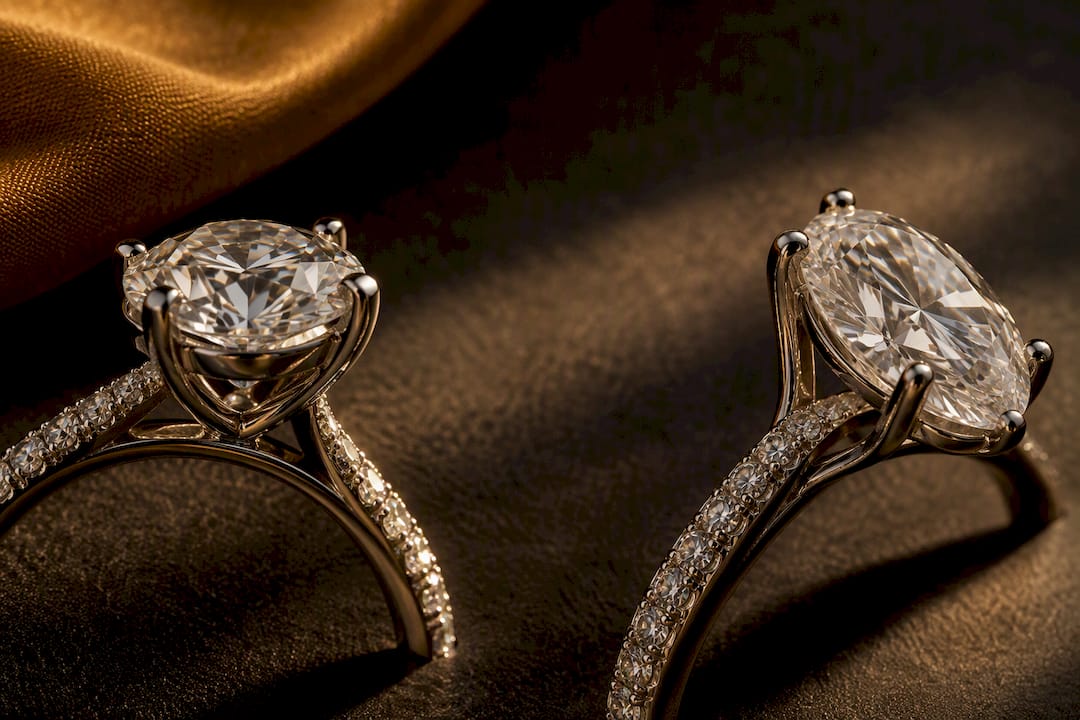
The near tie between round and oval is the headline number of this trend cycle. Round diamonds hold 26% of the market, with oval right behind at 25%, and marquise, emerald, pear, and princess each drawing roughly 8%, with cushion and radiant closer to 6%, according to National Jeweler.
That near tie signals something bigger than a passing preference: shoppers are actively choosing shapes that look different from what their parents wore.
Elongated shapes like oval, marquise, and elongated cushion create a visual stretch that makes the finger look longer and the stone look larger than its actual carat weight suggests. Emerald cuts do something similar with a more architectural, stepped effect. East-west settings, where the stone sits sideways across the finger instead of point to knuckle, push this even further, giving a ring a completely different silhouette from the traditional north-south orientation.
A few practical notes worth knowing before you commit to a shape:
- Oval and marquise tend to show inclusions more visibly at the tips, so clarity matters more than with round cuts.
- Shorter or wider fingers often benefit most from the elongating effect of oval and elongated cushion shapes.
- East-west settings limit your options for future resizing or restyling, so consider that before choosing one for a ring you plan to wear for decades.
Our round vs oval diamond comparison breaks down the tradeoffs in more depth if you’re torn between the two leaders.
Chunky Bands and Bezel Settings Are Replacing Delicate Pavé
Thin, delicate bands are losing ground fast. Jewelers are reporting a clear pivot toward thicker, sculptural shanks and substantial gold bands, a move away from the barely-there pavé styles that dominated the 2010s, according to Veranda’s coverage of 2026’s luxury jewelry trends. Melted textures, twisted shanks, and architectural details are showing up on rings that used to be plain and thin.
That heft comes with a real functional tradeoff between bezel and prong settings:
- Prong settings let more light hit the stone from the sides, which usually means more brilliance and fire.
- Bezel settings wrap metal around the stone’s edge, cutting some side light entry and slightly dampening sparkle, but offering far better protection against chips and knocks.
If you work with your hands, play sports, or just tend to bang your ring on things, a bezel is worth the small brilliance tradeoff. It’s also the smarter choice if you’re pairing a chunky band with an antique cut, since those stones often need extra structural support anyway.
Pro Tip: Yellow gold warms the look of a stone considerably more than white metals do, so if you’re drawn to champagne or cognac diamonds, pair them with yellow or rose gold rather than platinum for a cohesive, warm palette.
For a deeper walkthrough of setting styles and maintenance, our ring setting style guide covers the full range.
Old Mine, Old European, and Elongated Cushion Cuts Are Back
Antique-inspired cuts are having a real moment, and the appeal comes down to character over perfection. Old Mine and Old European cuts, both predecessors to the modern round brilliant, have smaller tables, higher crowns, and larger facets that produce a softer, “candlelit” sparkle instead of the sharp, uniform brilliance of a modern cut.
There is genuine demand for these antique-inspired cuts because they read as warmer and more individual, and celebrity influence, notably Taylor Swift’s engagement ring, has pushed elongated cushions into the mainstream faster than usual, according to Vogue’s 2026 engagement ring coverage.
That warmth comes with real structural considerations you should ask about before buying:
- Antique cuts often have thinner girdles than modern stones, which raises chipping risk at the edges.
- Larger facets mean more visible inclusions, so inspect clarity carefully in person if possible.
- Ask whether the stone has been reinforced with a thicker girdle or set in a protective bezel or halo, since modern recuts of vintage silhouettes often build in durability the originals lacked.
Our vintage engagement ring styles guide walks through how to spot a well-reinforced antique cut versus one that’s purely aesthetic.
Warmer Diamonds and Colored Gemstones Are Gaining Ground
Bright white brilliance is no longer the only goal. Champagne and cognac diamonds, with their soft golden and brown undertones, are showing up more often as center stones, and they pair especially well with yellow or rose gold for a cohesive warm look.
Colored gemstones are climbing too. Trade reporting from the American Gem Trade Association documents growing retail interest in sapphires, tourmaline, and spinel, with jewelers actively merchandising color as a point of differentiation rather than a niche request.
A few things to weigh before choosing color for your center stone:
- Sapphires rank high on hardness and hold up well to daily wear; softer stones like tourmaline need more careful handling.
- Colored stones can limit resale value compared with a certified diamond, so think of color as a personal choice rather than an investment.
- Using color as an accent stone, rather than the center, is a lower-risk way to add personality without sacrificing flexibility later.
Our champagne diamond jewelry collection shows how warm tones look set against different metals.
What Lab-Grown Diamonds Mean for Carat Size and Budget
Lab-grown diamonds have moved from a niche alternative to a mainstream default for a large share of buyers. Industry data shows adoption climbing fast, and that growth is directly tied to bigger average carat weights, since lab-grown stones typically cost significantly less per carat than natural diamonds, according to The Knot’s reporting.
That price gap is reshaping how people shop. Instead of stretching to afford a 1-carat natural stone, many buyers are choosing a 1.5 or 2-carat lab-grown diamond for a similar or lower price. The tradeoff sits on the other side of the ledger: lab-grown diamonds generally hold less resale value than natural stones, and buyers who care specifically about geological rarity or long-term investment potential should weigh that before deciding.
- Lab-grown diamonds let you prioritize size or color grade without inflating your budget.
- Natural diamonds still carry stronger resale and heirloom value for buyers who prioritize that oversize.
- Certification matters equally for both, so never skip a grading report regardless of origin.
How to Choose a Ring That Will Actually Last
Trends are only useful if the ring survives daily life. Before you finalize anything, run through this:
- Match the setting to your lifestyle. Active hands need bezels or reinforced prongs, not delicate claws.
- Check the girdle thickness, especially on antique or elongated cuts, since thin girdles chip more easily.
- Ask about stone origin and certification so you know exactly what you’re paying for, whether natural or lab-grown.
- Confirm the return, resizing, and upgrade policy before you buy, not after.
- Try the shape and carat size on your own hand in person, or use a reliable visualization tool, since photos rarely capture true proportions.
Pro Tip: Bring a list of specific questions to any consultation, jeweler or online, including girdle thickness, whether the setting has been reinforced, and what the upgrade policy covers. A jeweler who can’t answer clearly is a red flag.
Our engagement ring buying guide covers the full checklist in more detail if you want to go deeper before you shop.
How Usajewels’ Approach Fits 2026’s Ring Trends
We’ve been family-owned since 1999, and everything we make is manufactured in-house, which means we build the exact tradeoffs this year’s trends demand instead of pulling from a limited catalog. When a customer wants an elongated cushion with a reinforced bezel, or a chunky yellow gold band paired with a champagne center stone, our design team builds it to spec rather than asking them to compromise.
That flexibility matters for the trends covered here:
- Customizing shape, metal, and setting lets you build protection into antique or elongated cuts from the start.
- Ethically sourced natural and lab-grown diamonds give you the carat and price flexibility this year’s market rewards.
- Lifetime diamond upgrades mean you’re not locked into today’s carat choice if your preferences change later.
Numerous positive Google reviews back a reputation for getting these details right. If you’re ready to translate a trend into an actual ring, our design-your-own guide and engagement ring collection are good starting points.
Personalized Engravings and Unique Stone Arrangements Are the New Signature
Customization is no longer limited to picking a shape and a metal. Buyers are increasingly asking for details that make a ring unmistakably theirs, and jewelers are responding with more flexible design options than the standard catalog ever offered.
Hidden engravings are one of the simplest, most popular ways to personalize a ring without changing its outward look. A coordinate, a date, or a short phrase engraved on the inside of the band or under the setting keeps the ring’s public face clean while carrying real meaning underneath.
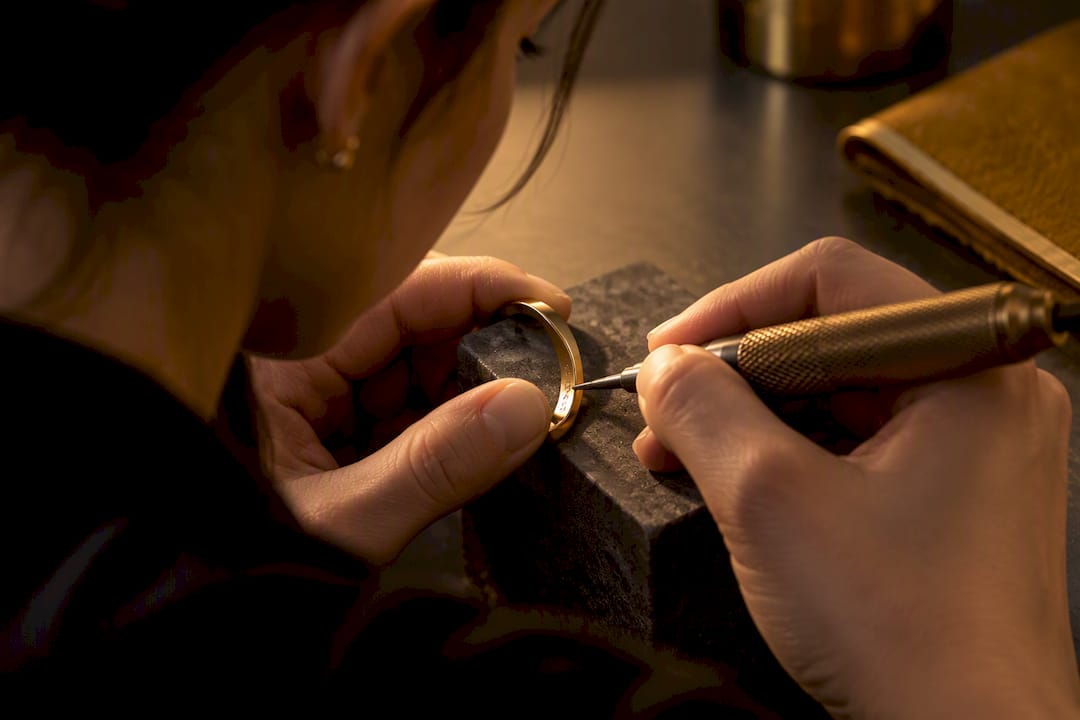
Stone arrangement is where things get more interesting. Instead of a single center stone flanked by matching accents, couples are requesting asymmetrical clusters, mixed shapes within one setting, or a small colored accent stone tucked at the base of the shank where it catches the light unexpectedly. Toi et moi styles, featuring two different stones side by side, have moved from a niche request to a genuine mainstream option.
Family stones are also seeing renewed interest. Rather than buying an entirely new diamond, some buyers are having an heirloom stone recut or reset into a modern silhouette, blending sentimental value with current style.
A few ways this shows up in practice:
- Engraved initials, dates, or short phrases inside the band, invisible unless you’re looking for them.
- Mixed-shape side stones, such as baguettes next to a round or oval center, for asymmetrical interest.
- Recut family diamonds reset into elongated or antique-style mountings.
- Personalized gallery details, like milgrain edging or filigree, that echo a specific era or aesthetic.
The common thread is that none of this requires an unlimited budget. It requires a jeweler willing to build around your specifics instead of handing you a fixed template.
Sustainability and Ethical Sourcing Are Shaping Buying Decisions
Ethical sourcing has moved from a nice-to-have talking point to a genuine factor in where people choose to buy. Buyers increasingly want a clear answer to a simple question: where did this stone actually come from?
For natural diamonds, that means conflict-free sourcing and traceability documentation are now expected, not optional. Certification from an independent grading lab remains the baseline for verifying a stone’s quality, but sourcing transparency, knowing the diamond’s chain of custody, has become just as important to a growing share of buyers.
Lab-grown diamonds play into this conversation directly. Because they’re created in controlled environments rather than mined, they sidestep many of the ethical and environmental concerns tied to traditional mining operations. That said, lab-grown production still requires significant energy, so “sustainable” isn’t an automatic label. It’s more accurate to say lab-grown diamonds shift the environmental tradeoff rather than eliminate it entirely.
Recycled metals are another piece of this picture. Reusing gold and platinum reduces the demand for new mining, and more jewelers now offer recycled metal as a standard option rather than a special request.
Practical takeaways for buyers who care about this:
- Ask specifically about diamond origin and whether conflict-free sourcing is documented, not just claimed.
- Consider lab-grown as an ethically simpler option if mining concerns are your top priority.
- Ask whether recycled gold or platinum is available for your band, since many jewelers now offer it at no extra cost.
The Metals Defining 2026: Warm Tones and Textured Finishes
Metal choice is doing more heavy lifting in 2026 than in previous years, largely because it has to complement the warmer diamond tones and antique cuts driving this cycle’s aesthetic.
Yellow gold has fully reclaimed its position as a top choice, particularly for pairing with champagne or cognac diamonds and antique-inspired cuts, where its warmth complements the softer sparkle of Old Mine and Old European stones. Rose gold remains strong as well, especially for buyers who want warmth without going fully vintage in style.
Platinum hasn’t disappeared, but it’s increasingly positioned as the practical choice for buyers who want maximum durability and don’t mind its cooler tone. It’s also naturally hypoallergenic, which matters for buyers with sensitive skin. White gold sits in between, offering a similar look to platinum at a lower price point, though it requires periodic rhodium replacing to keep its bright finish.
Texture is the other half of this story. Matte, brushed, and hammered finishes are showing up more often on chunky bands, softening the look of thicker gold and giving it a handmade, less machine-perfect feel that fits the individuality theme running through this year’s trends.
Quick guide to matching metal and finish:
- Yellow gold, high polish or brushed: best with warm-toned diamonds and antique cuts.
- Rose gold: versatile, flattering against most skin tones, pairs well with both modern and vintage silhouettes.
- Platinum: the most durable option and hypoallergenic, best for buyers prioritizing longevity over cost.
- White gold: budget-friendly platinum alternative, needs occasional replating.
Our gold jewelry collection and platinum jewelry collection both reflect this shift toward warmer tones and textured finishes.
Beyond Diamonds: The Non-Traditional Stones Gaining Fans
Diamonds still dominate, but the list of stones buyers are willing to consider for a center setting has expanded noticeably. Part of this ties directly back into the colored gemstone momentum documented by the American Gem Trade Association, but a few specific stones deserve their own mention.
Sapphires remain the most practical non-diamond option because of their hardness, ranking just below diamond on the Mohs scale, which makes them genuinely suitable for daily wear. Blue is the classic choice, but padparadscha (a rare pink-orange sapphire), yellow, and green sapphires are all gaining traction with buyers who want color without sacrificing durability.
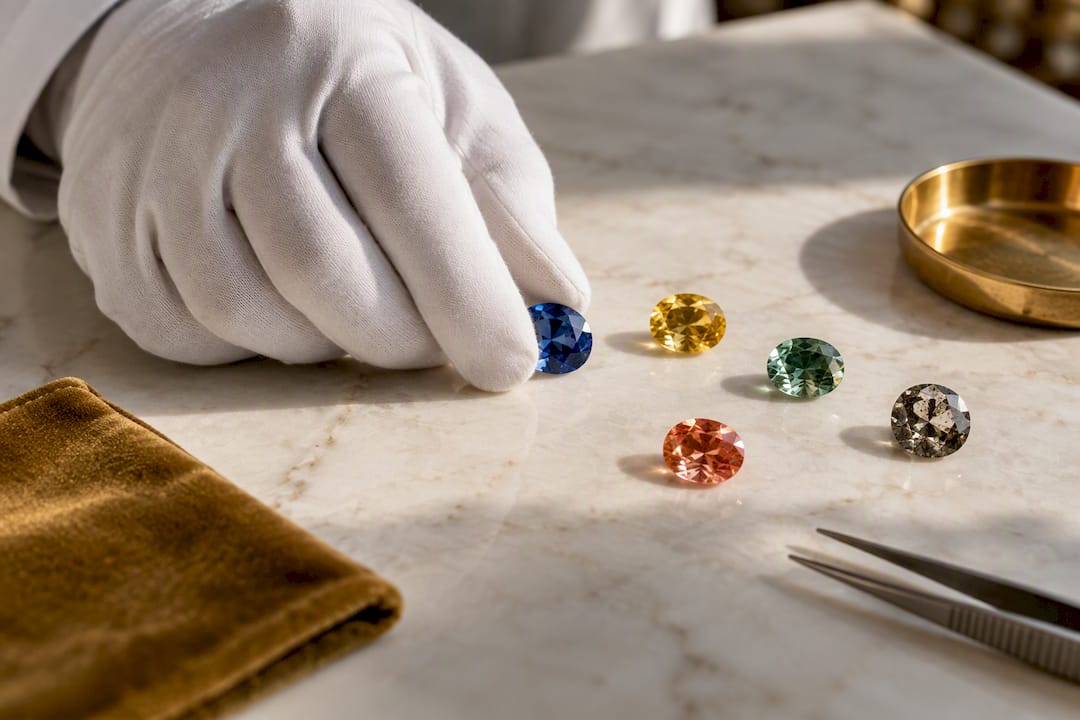
Spinel is newer to mainstream attention but is winning fans for a simple reason: it comes in a wide range of colors, is reasonably durable, and costs considerably less than sapphire or ruby at comparable sizes. Tourmaline offers even more color variety, including the vivid blue-green Paraiba variety, though it’s softer and needs more careful handling.
Salt and pepper diamonds, natural diamonds with visible black and white inclusions, have carved out their own niche among buyers who want a stone that’s undeniably one of a kind. Every stone looks different, which is exactly the point for buyers chasing individuality over uniformity.
A quick comparison of durability, since this matters more than color when picking a daily-wear stone:
What Actually Matters When You Cut Through the Trend Talk
Most coverage of engagement ring trends treats them as a fashion report, listing shapes and finishes like a runway recap. That’s a mistake. The trends dominating 2026, elongated silhouettes, chunky sculptural bands, antique cuts, and lab-grown adoption, are only interesting because of what they let a buyer actually do differently, not because they look good in a photo spread.
Here’s where I think the conventional advice falls short: it treats durability as an afterthought, something you ask about after you’ve fallen in love with a design. That’s backwards. If you want an antique cut, the bezel-or-reinforced-prong question isn’t optional homework, it’s the difference between a ring that lasts thirty years and one that chips in three.
The lab-grown shift deserves more credit than it usually gets, too. It’s not just a cheaper diamond, it’s a tool that lets buyers solve the actual tension this whole trend cycle is built around: wanting a bigger, more expressive stone without wanting the bigger price tag that used to come with it.
If you take one thing from this: pick your non-negotiable first, whether that’s shape, color, or provenance, and build the durability plan around it before you fall for the finish.
— Joseph
Ready to Design Your Own 2026 Engagement Ring?
Following these trends is one thing. Getting a ring built to your exact shape, metal, and protection needs is another, and that’s where a catalog-only jeweler runs out of options fast. Jewelry manufacturers who produce in-house can build an elongated cushion in a reinforced bezel, or a chunky yellow gold band with a champagne center stone, rather than asking you to settle for the closest thing on the shelf.
If you already know the diamond you want, our certified loose diamonds page lets you shop natural and lab-grown stones directly, sorted by shape, carat, and grade. If you’re starting from scratch, our design-your-own guide walks you through choosing shape, metal, and setting step by step, backed by free insured shipping, a 30-day money-back guarantee, and lifetime diamond upgrades if your preferences change down the road. Prefer to browse finished styles first? Our engagement ring collection is a solid place to start narrowing down what fits your 2026 vision.
Sources
- Engagement ring trends 2026: what’s in and why
- The Biggest Engagement Ring Trends of 2026, According to Luxury Jewelry Pros
- The Engagement Rings You’ll See on the Chicest Brides-to-Be in 2026
- Takeaways from state of the colored gemstone industry at JCK Las Vegas 2026
- Welcome to the Era of Lab-Grown Diamonds: What Is a Lab Diamond?
FAQ
What are the biggest engagement ring trends for 2026?
Elongated shapes like oval and marquise, chunky sculptural bands, and antique-inspired cuts like Old Mine and Old European are the defining trends. Round diamonds still lead shape popularity at 26%, with oval close behind at 25%, according to National Jeweler. Warmer diamond tones and rising lab-grown adoption round out the picture.
How is 2026 different from 2025’s engagement ring trends?
The shift toward vintage-inspired cuts and colored gemstones has grown stronger, with 2026 pushing these trends into the mainstream. The gap between round and oval popularity is very narrow, and chunky, sculptural bands have become a dominant look rather than a niche alternative to thin pavé styles.
How much does the average engagement ring cost in 2026?
Costs vary widely based on carat size, stone origin, and metal, so there’s no single flat number that applies to every buyer. Lab-grown diamonds are helping many buyers afford larger carat weights at the same price point they’d have paid for a smaller natural stone, according to The Knot. Usajewels’ engagement ring collection starts from $346, giving a real sense of where entry-level custom options land.
Should I choose a bezel or prong setting for a trending ring shape?
Choose a bezel if you want maximum protection, especially for antique cuts or active lifestyles, since it wraps metal around the stone’s edge to guard against chips. Choose prongs if you want maximum brilliance, since they let more light reach the stone from the sides. Bezels slightly reduce sparkle but are the safer choice for daily wear or structurally delicate cuts.
Are lab-grown diamonds a good choice for 2026 engagement rings?
Yes, for many buyers lab-grown diamonds offer a practical way to get a larger, higher-quality stone without increasing budget. They generally cost less per carat than natural diamonds, which is part of why average carat sizes have climbed. The main tradeoff is lower resale value compared with natural stones, so weigh that against your priorities.
Recommended
- Engagement Ring Prong Style Selection: 2026 Guide
- 10 Engagement Ring Design Mistakes to Avoid
- Custom Engagement Ring Design Process: A Couples’ Guide
- Round vs Oval Diamond: Which Shape Is Right for You?

Deep Mehta is the Co-Owner of USA Jewels, a family-owned jewelry business she has led since 2013 in Deerfield Beach, Florida. With over 13 years of hands-on experience in fine jewelry retail, manufacturing, and diamond importing, Deep specializes in engagement rings, wedding bands, and custom jewelry design. She also co-manages Kaash Group Talent Acquisition. Deep is a University of Florida graduate and oversees every aspect of USA Jewels’ operations, from product development to marketing.
Fine Jewelry Collection

You May Also Like
Safe Jewelry Metals for Children: A Parent’s Guide
How to Personalize Engraving on an Engagement Ring