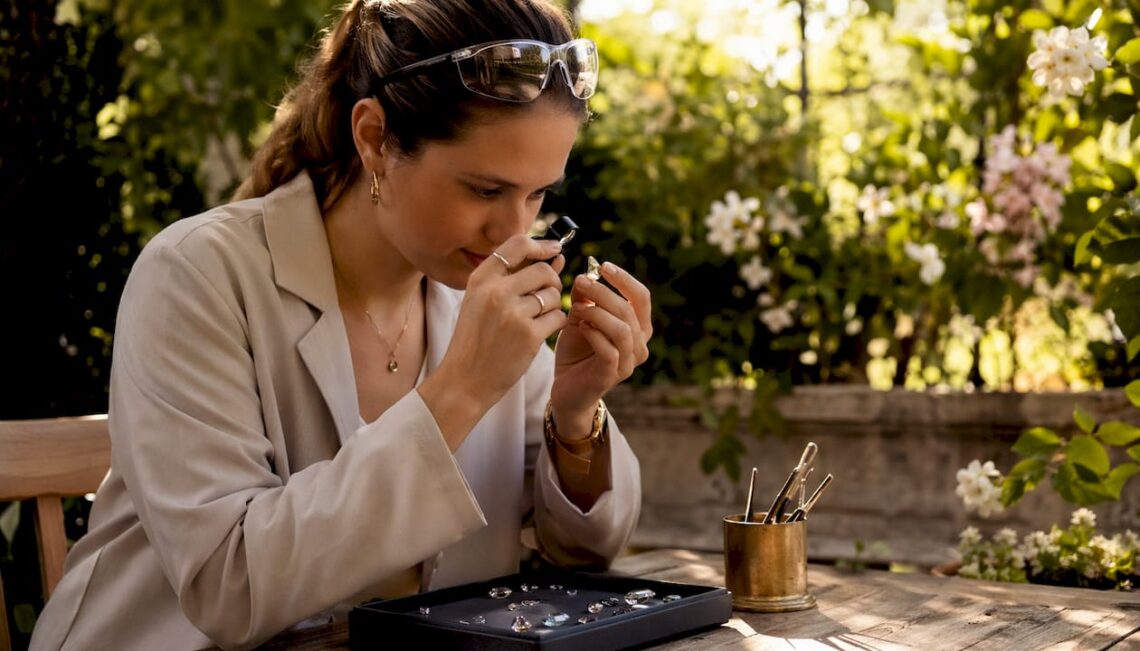
What Does Diamond Provenance Mean for Your Purchase?
What does diamond provenance mean, and why does it matter?
Diamond provenance is the documented history of where a diamond was mined and how it traveled through the supply chain to reach you. Think of it as a diamond’s biography: it records the extraction site, every transfer of ownership, and each step from rough stone to finished jewelry. The GIA Diamond Origin Report defines provenance as proof of both a diamond’s geographic origin and its chain-of-custody integrity.
Two things make a provenance claim complete. First, geographic specificity: the country or mine where the diamond was extracted. Second, an unbroken chain of custody confirming the stone was never mixed with diamonds of unknown origin. A claim that omits either half is incomplete.
- Authenticity: Provenance confirms a diamond is natural, not lab-grown or misrepresented.
- Ethical sourcing: It verifies the stone was mined responsibly, free from conflict financing.
- Community benefit: Documented origin connects your purchase to real jobs, healthcare, and education in mining communities.
- Consumer trust: Independent certifiers like GIA provide third-party confirmation that no brand can self-issue.
Where do the world’s diamonds actually come from?
Diamond mining spans dozens of countries, and geographic origin is the foundation of any provenance claim. Each region carries its own story of geology, labor practices, and regulatory standards.
- Botswana: One of the world’s leading producers, known for government-regulated, community-benefiting mining. Tiffany & Co. sources diamonds ethically primarily from Botswana and Canada.
- Canada: Canadian mines operate under strict environmental and labor laws. CanadaMark® Diamonds are a well-known example of provenance tied to Canadian origin and ethical practices, tracked from mine to market.
- Angola, Namibia, and South Africa: Major African producers with varying levels of traceability infrastructure.
- Russia: Significant producer, though geopolitical factors have complicated supply chain transparency in recent years.
- Australia: Home to the historic Argyle mine, famous for rare pink diamonds.
Geographic origin alone does not guarantee ethical sourcing. A diamond from a well-regulated Canadian mine carries different assurances than one from a region with weaker oversight, which is exactly why documentation matters as much as the origin itself.
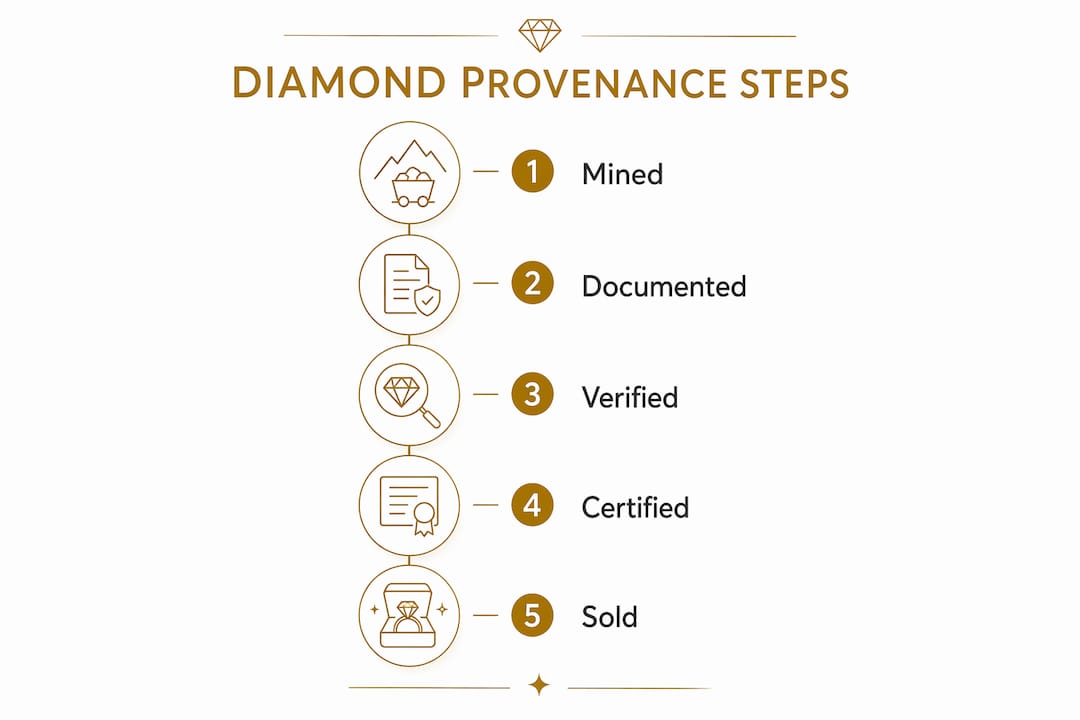
How a diamond travels from mine to your jewelry
The path from rough stone to finished ring is longer and more complex than most buyers realize.
- Extraction: Miners remove ore from kimberlite pipes. About 200–250 tons of ore must be processed to uncover a single one-carat gem-quality diamond, and only 20–30% of diamonds found in kimberlite pipes are gem-quality.
- Sorting and sale: Rough diamonds are sorted into parcels by size, color, and clarity, then sold to manufacturers. This is where provenance documentation is most at risk of being lost.
- Cutting and polishing: Manufacturers cut and polish the rough stone, transforming it into the faceted gem you recognize.
- Grading: Independent labs like GIA evaluate the polished diamond against the 4Cs (color, cut, clarity, and carat weight).
- Wholesale and retail: The graded diamond moves to wholesalers and then to retailers, each transfer requiring documentation to maintain chain of custody.
- Consumer purchase: You receive the finished piece, ideally with a certificate confirming every step above.
“A diamond’s journey is every bit as fascinating as its sparkle. GIA’s Diamond Origin and its related resources help you tell the story of the people in the country who brought you your diamond and helped make it shine.” — GIA
The critical vulnerability in this chain is step two. Once rough diamonds are mixed into undifferentiated parcels, origin information is permanently lost unless documentation was established at the mine.
How scientists and industry experts verify diamond provenance
Verification is harder than it sounds. No universal chemical test can independently identify a diamond’s mine of origin. GIA’s research on geographic origin found that trace element patterns overlap too much between worldwide deposits to serve as a reliable fingerprint.
“For now and the foreseeable future, the only definitive method to establish diamond origin depends on preserving and retaining origin information from the time of mining.” — GIA Gems & Gemology
The practical solution is rough-to-polish matching, the industry’s current standard for provenance verification. GIA scientists document a rough diamond’s unique characteristics, including dimensions, spectroscopic data, growth structure, and inclusions. After cutting, they compare the polished stone to those records. A match confirms country of origin with scientific certainty.
- Spectroscopic analysis: Measures light absorption patterns unique to each stone’s growth history.
- Inclusion mapping: Photographs and maps internal features that survive the cutting process.
- Chain-of-custody documentation: Paper and digital records that follow the stone through every transfer.
Pro Tip: When buying a diamond with a provenance claim, ask specifically whether the verification was done by an independent third party like GIA or by the brand itself. Brand-controlled programs and independent audits are not the same thing.
Why ethical sourcing depends on provenance
Provenance is the foundation of ethical sourcing. Without a verified origin, no brand can honestly claim its diamonds are conflict-free or community-supporting, making provenance documentation essential for ethical diamond resale. Proof of origin assures consumers that a diamond was mined responsibly and positively impacted its local community through jobs, healthcare, and education.
Tiffany & Co. has made provenance central to its sourcing policy, publicly committing to known suppliers in Botswana and Canada. CanadaMark® Diamonds go further, providing mine-specific documentation that buyers can verify independently.
For U.S. consumers, ethical sourcing has moved from a niche concern to a mainstream expectation. Brands that cannot document origin are increasingly at a disadvantage with buyers who want their purchase to reflect their values.
How provenance is verified in practice
Verification happens at two levels. At the mine, operators establish origin documentation before rough diamonds enter the supply chain. At the grading stage, independent labs like GIA use rough-to-polish matching to link the polished stone back to its documented rough. Choosing a certified ethical diamond jeweler means asking for both: mine-level documentation and independent lab confirmation.
Brands conduct internal provenance programs, but independent third-party verification remains the gold standard. A GIA Diamond Origin Report, for example, states the country of origin directly on the certificate, backed by over 60 years of gemological research.
Technologies and documentation used to track provenance
Several tools now support provenance tracking across the supply chain.

Blockchain platforms create tamper-resistant digital records of each transfer. De Beers’ Tracr and Sarine Diamond Journey are two examples, though both are brand-controlled rather than independently audited. That distinction matters: a brand-controlled platform records what the brand chooses to record.
GIA Diamond Origin Reports are the most widely recognized independent certification. The report includes the 4Cs grading assessment and a clear statement of the diamond’s country of origin, confirmed through scientific matching. Understanding how global certifications differ helps you evaluate which documents carry real weight.
Laser inscription links a physical diamond to its paper certificate by engraving the GIA report number on the girdle, making substitution nearly impossible.
For lab-grown diamonds, provenance verification focuses on the production facility and growth method rather than a geographic mine, with the same chain-of-custody standards applying.
How provenance affects a diamond’s value and your trust in it
Provenance adds a layer of value that the 4Cs alone cannot capture. A diamond with a verified Canadian or Botswanan origin, confirmed by an independent GIA report, commands stronger buyer confidence than a comparable stone with no documented history. For certain famous diamonds, geographic provenance has historically been treated as part of the stone’s identity and story.
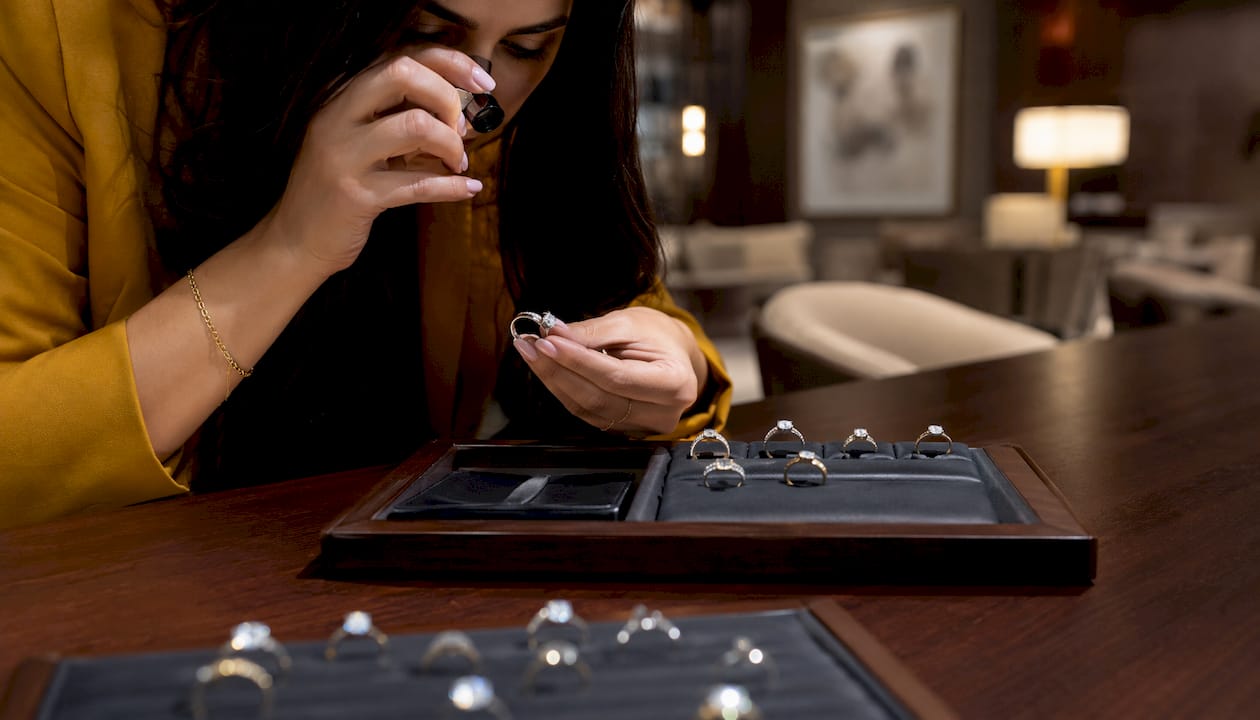
For everyday purchases, the practical impact is trust. Buyers who know exactly where their diamond came from and can verify the documentation are far less likely to question their purchase years later. That peace of mind is part of what you are paying for when you choose a jeweler committed to transparency.
Common challenges and controversies in provenance verification
Provenance claims are not always what they appear. Several real challenges complicate the picture.
Parcel mixing is the most common problem. Rough diamonds are routinely sorted and sold in mixed lots, erasing origin information before documentation can be established. Once mixed, there is no scientific method to separate them by origin.
Brand-controlled programs create a conflict of interest. When a company both sources and certifies its own diamonds, the verification is only as trustworthy as the company’s internal controls.
Incomplete claims are widespread. A provenance claim that names a country but cannot document the chain of custody from mine to retailer is, by definition, unverifiable. Provenance and traceability are related but distinct: provenance identifies the point of origin, while traceability tracks every transfer through the supply chain. A claim needs both to be credible.
Lab-grown diamond labeling adds another layer of complexity. Without clear disclosure, lab-grown stones can be misrepresented as mined diamonds, making independent grading reports more important than ever.
At Usajewels, we believe every diamond should come with a story you can trust. Our fine diamond jewelry is ethically sourced, and we are happy to walk you through the documentation behind any stone in our collection.
Key Takeaways
Diamond provenance requires both verified geographic origin and an unbroken chain of custody; a claim missing either element is incomplete and less credible.
| Point | Details |
|---|---|
| Provenance defined | The documented history of a diamond’s origin and supply chain journey, confirming authenticity and ethical sourcing. |
| No chemical test exists | No scientific method can independently determine a diamond’s mine of origin; documentation from mining is the only reliable proof. |
| Rough-to-polish matching | GIA links polished diamonds to their original rough stones using spectroscopy and inclusion mapping to confirm country of origin. |
| Two-part claim | Complete provenance requires both geographic specificity and chain-of-custody integrity; one without the other is insufficient. |
| Independent verification | Third-party certification from GIA carries more weight than brand-controlled provenance programs. |
FAQ
What does diamond provenance mean?
Diamond provenance is the documented record of where a diamond was mined and how it moved through the supply chain to reach the consumer, confirming both its geographic origin and chain of custody.
What is the GIA Diamond Origin Report?
The GIA Diamond Origin Report is an independent certification that uses rough-to-polish matching to scientifically confirm a polished diamond’s country of origin, stated directly on the printed report alongside 4Cs grading.
Where does Tiffany & Co. source its diamonds?
Tiffany & Co. sources its diamonds primarily from known suppliers in Botswana and Canada, reflecting a public commitment to responsible, traceable sourcing.
How can you tell if a diamond’s provenance claim is genuine?
Look for independent third-party verification, such as a GIA Diamond Origin Report, rather than relying solely on a brand’s internal provenance program. Ask for mine-level documentation and confirm the chain of custody is unbroken from extraction to sale.
Are lab-grown diamonds subject to the same provenance standards?
Yes. Lab-grown diamond provenance focuses on verifying the production facility and growth method rather than a geographic mine, and the same chain-of-custody documentation standards apply.
Recommended
- Lab-Created Diamonds: Process & Value | USA Jewels
- Natural Diamonds: Quality, Value & Origin | USA Jewels
- Diamond Certification Guide: GIA vs AGS vs IGI Compared | USA Jewels
- USA Jewels: Blue Diamond Jewelry – Modern Elegance & Timeless S

Deep Mehta is the Co-Owner of USA Jewels, a family-owned jewelry business she has led since 2013 in Deerfield Beach, Florida. With over 13 years of hands-on experience in fine jewelry retail, manufacturing, and diamond importing, Deep specializes in engagement rings, wedding bands, and custom jewelry design. She also co-manages Kaash Group Talent Acquisition. Deep is a University of Florida graduate and oversees every aspect of USA Jewels’ operations, from product development to marketing.
Fine Jewelry Collection


You May Also Like

Role of Center Stone in Engagement Rings: Full Guide
Should I choose Gold or Platinum?