
Why Jeweler Reputation Matters When Buying Fine Jewelry
A jeweler’s reputation is the most reliable signal of quality, trust, and service you will receive before a single purchase is made. When you buy an engagement ring or a meaningful gift, you are not just buying metal and stone. You are buying confidence that the piece is what it claims to be, priced fairly, and backed by someone who stands behind their work. Consumer research confirms that trust directly drives repeat purchase intentions and reduces brand switching in high-involvement jewelry purchases. That finding matters because jewelry is rarely an impulse buy. Understanding why jeweler reputation matters buying decisions is the first step toward protecting both your money and your peace of mind.
Why jeweler reputation matters when buying jewelry
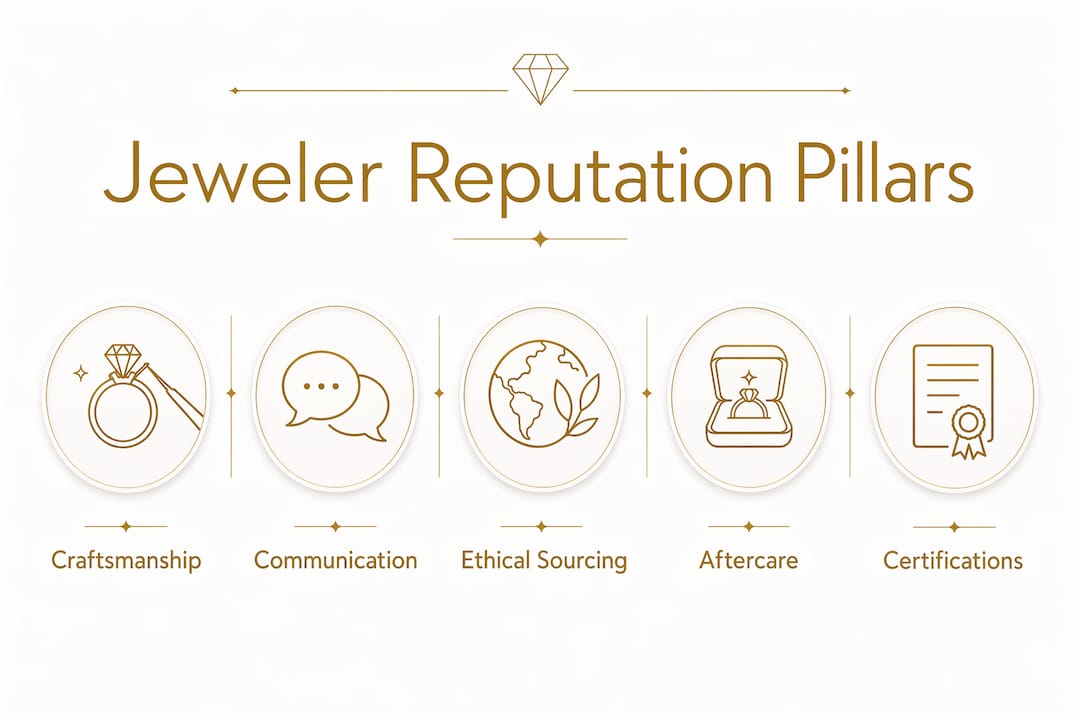
Reputation in the jewelry industry is built on four pillars: craftsmanship quality, transparent communication, ethical sourcing, and consistent aftercare. Each one is verifiable. Each one shapes your experience from the first conversation to the moment you open the box years later.
Craftsmanship and certifications are the foundation. A jeweler who invests in quality manufacturing does not hide that process. They show you how stones are set, explain metal grades, and point you toward quality verification standards that protect your purchase. Reputation follows craftsmanship because customers talk.
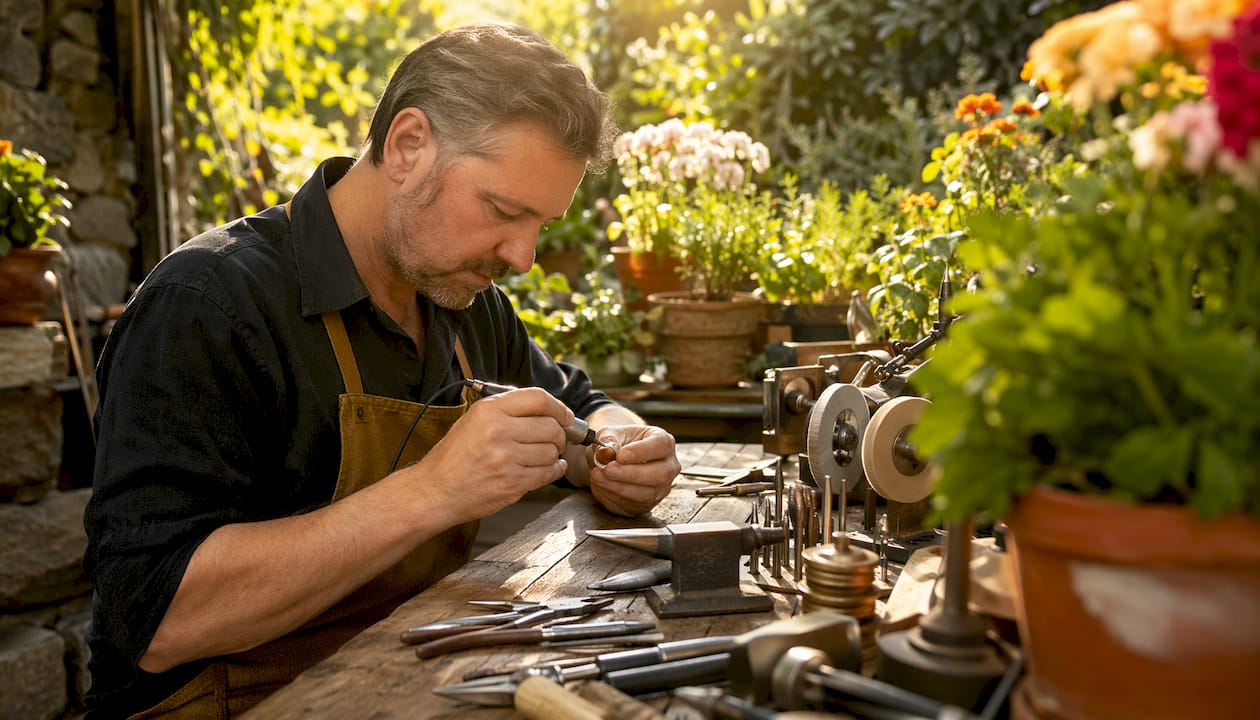
Transparent communication separates trusted jewelers from transactional ones. Clarity and consistency, not flashy slogans, win customer confidence. A jeweler who explains trade-offs honestly, such as why one diamond cut costs more than another, builds trust faster than one who leads with discounts.
Ethical sourcing carries real weight. Conflict-free diamonds and responsibly mined metals are not marketing language. They reflect a jeweler’s values and their willingness to be accountable for the full supply chain.
Aftercare support is where reputation is tested most. A jeweler who offers repair services, resizing, and lifetime upgrades signals that the relationship does not end at the register.
Pro Tip: Ask any jeweler directly: “What happens if I need a repair six months from now?” A confident, specific answer is a strong reputation signal. Vague or evasive responses are a warning.
How do you identify a reputable jeweler before buying?
Spotting a trustworthy jeweler before you spend a dollar takes a few deliberate steps. The signs are consistent and easy to check once you know what to look for.
-
Check for recognized certifications. GIA and AGS certifications are strong indicators of credibility. These bodies hold jewelers to documented standards that protect your purchase. A jeweler who cannot produce or explain certification documents is a red flag.
-
Cross-reference reviews across multiple platforms. Consistent praise across platforms reveals authentic reputation more reliably than a single five-star rating. Look for patterns in what customers say about pricing accuracy, communication, and post-purchase support.
-
Read the return and exchange policy carefully. Trustworthy stores disclose policy terms upfront and make them easy to find. Buried or vague policies are a sign the jeweler expects problems they would rather not resolve.
-
Listen to how they explain things. Reputable jewelers communicate simply and openly about trade-offs and care. If a salesperson uses jargon to avoid answering a direct question, that is not expertise. That is deflection.
-
Notice the sales environment. High-pressure tactics, countdown timers, and “today only” pricing are incompatible with genuine reputation. A jeweler confident in their quality does not need to rush you.
Pro Tip: Search the jeweler’s name alongside the word “complaint” on Google and the Better Business Bureau. What comes up, and how the jeweler responded, tells you more than any marketing copy.
Learning to spot quality craftsmanship yourself also helps you evaluate what a jeweler is showing you. Knowledge is your best protection.
What are the long-term benefits of buying from a reputable jeweler?
Buying from a jeweler with a strong reputation pays off well beyond the day of purchase. The advantages are concrete and cumulative.
- Reduced buyer’s remorse. When a jeweler has been transparent about materials, pricing, and quality, you walk away certain you made the right call. That certainty is worth more than a small discount from an unknown source.
- Reliable aftercare. Reputable jewelers provide ongoing repair and resizing support that protects your piece for years. A ring that fits perfectly at purchase may need adjustment over time. A trusted jeweler handles that without friction.
- Stronger insurance and resale value. Jewelry from a known, reputable source carries documented provenance. Insurers and appraisers assign higher confidence to pieces with clear purchase records and certified quality.
- A personalized buying experience. Community memory through honest service creates a competitive advantage no marketing budget can replicate. A jeweler who knows your story, your preferences, and your budget delivers something no algorithm can match.
“A jeweler’s reputation is not just goodwill. It has measurable financial value. One store-closing event generated over $600,000 in 55 days because of the community trust built over decades. That trust was the inventory.”
The long-term relationship with a trusted jeweler also means you have someone to call when you want to add to a collection, upgrade a stone, or find a gift for a milestone anniversary. That continuity has real value.
Common misconceptions about jeweler reputation
The biggest mistake buyers make is equating a jeweler’s appearance or price point with their trustworthiness. A polished storefront and a high price tag do not equal a strong reputation. Reputation is earned through consistent behavior, not aesthetics.
| What buyers often assume | What actually builds reputation |
|---|---|
| High prices signal quality | Transparent pricing with clear explanations |
| Fancy store design means trustworthy | Consistent service quality across every interaction |
| Big advertising budget equals credibility | Genuine customer reviews over time |
| Brand popularity guarantees satisfaction | Ethical sourcing and honest aftercare policies |
Marketing polish and genuine reputation are not the same thing. A jeweler can spend heavily on advertising and still deliver poor service. Reputation, by contrast, is built interaction by interaction. Local jewelers who build community memory through honest and consistent service earn a competitive advantage that no ad campaign can manufacture.
Consistent service quality across every customer touchpoint is what separates a truly reputable jeweler from one who simply looks the part. That means the same honesty on a $300 purchase as on a $3,000 one. It means the same care for a repair as for a new sale. Reputation is not a campaign. It is a pattern.
Key Takeaways
A jeweler’s reputation is the single most reliable predictor of quality, trust, and long-term satisfaction in any meaningful jewelry purchase.
| Point | Details |
|---|---|
| Reputation signals quality | Certifications, craftsmanship, and transparent policies confirm what a jeweler claims about their work. |
| Reviews reveal real reputation | Cross-checking feedback across multiple platforms shows consistent patterns that marketing cannot fake. |
| Aftercare defines long-term value | Repair support, resizing, and upgrade policies protect your investment well beyond the purchase date. |
| Appearance is not reputation | Flashy stores and high prices do not equal trustworthiness. Consistent, honest service does. |
| Community trust has financial value | Jewelers with deep community standing generate loyalty and revenue that no advertising alone can produce. |
What I’ve learned about trusting a jeweler with something that matters
I have seen customers walk into a purchase armed with nothing but a price comparison and walk out with a piece that disappointed them within a year. The ring looked right. The price felt fair. But the jeweler never explained the metal grade, never mentioned the stone’s clarity trade-offs, and vanished when a prong loosened six months later.
The customers who had the best experiences shared one thing: they chose a jeweler they trusted before they chose a piece they loved. They asked hard questions. They read the policies. They checked the certifications. And they paid attention to how the jeweler responded when things got complicated, not just when the sale was going smoothly.
My honest advice is this. Reputation is not a feeling. It is a track record. Look for jewelers who have been in business long enough to have one. Look for the ones who explain things clearly, who choose certified ethical diamonds, and who treat a repair request with the same care as a new sale. Those are the jewelers worth your trust and your money.
— Joseph
Usajewels: a reputation built on trust since 1999
Usajewels has operated as a family-owned, in-house manufacturer since 1999, which means no middlemen and no inflated prices. Every piece is crafted with hand-selected, conflict-free diamonds and backed by transparent policies including lifetime diamond upgrades. With over 222 Google reviews consistently praising service, pricing, and quality, Usajewels has built the kind of community trust that takes decades to earn.
If you are ready to buy with confidence, browse the fine diamond jewelry collection or explore engagement rings designed for proposals that deserve a jeweler you can count on. Every purchase comes with the support of a team that stands behind their work, long after the box is opened.
FAQ
Why does jeweler reputation matter for engagement rings?
Engagement rings are high-value, emotionally significant purchases where quality and trust are non-negotiable. A reputable jeweler provides certified stones, transparent pricing, and aftercare support that protects your investment for life.
How do I verify a jeweler’s reputation before buying?
Check for GIA or AGS certifications, read reviews across multiple platforms, and confirm that return and exchange policies are clearly stated upfront. Evasive answers or hidden policies are reliable red flags.
Does a higher price mean a more reputable jeweler?
Price does not equal reputation. Reputable jewelers earn trust through consistent service, honest communication, and certified quality, not through premium pricing or elaborate store design.
What role do customer reviews play in assessing a jeweler?
Customer reviews that consistently praise service, pricing accuracy, and post-purchase support are strong indicators of genuine reputation. Cross-referencing reviews across Google, Yelp, and the Better Business Bureau gives the most accurate picture.
What should I ask a jeweler to test their trustworthiness?
Ask about their return policy, how they handle repairs, and what certifications their diamonds carry. A trustworthy jeweler answers these questions directly, specifically, and without hesitation.
Recommended
- How to Spot Quality Jewelry Craftsmanship Like a Pro
- Fine Diamond Jewelry: Rings & Earrings | USA Jewels
- How Jewelry Quality Is Verified in Manufacturing
- Jewelry Repair Guide: When to Fix, Resize & Restore | USA Jewels

Deep Mehta is the Co-Owner of USA Jewels, a family-owned jewelry business she has led since 2013 in Deerfield Beach, Florida. With over 13 years of hands-on experience in fine jewelry retail, manufacturing, and diamond importing, Deep specializes in engagement rings, wedding bands, and custom jewelry design. She also co-manages Kaash Group Talent Acquisition. Deep is a University of Florida graduate and oversees every aspect of USA Jewels’ operations, from product development to marketing.
Frequently Asked Questions
How can I verify that a jeweler's diamond certifications are actually legitimate?
What specific questions should I ask about a jeweler's aftercare and repair policies before buying?
Why do some jewelers charge more for the same diamond cut and carat weight as competitors?
How do I know if a jeweler truly sources conflict-free diamonds versus just claiming it?
Should I trust a jeweler with amazing reviews on only one platform, or is that a reputation red flag?
Fine Jewelry Collection


You May Also Like
Safe Jewelry Metals for Children: A Parent’s Guide

Why Custom Jewelry Is a Meaningful Gift for Any Occasion