Design a Custom Wedding Ring Set That’s Truly Yours
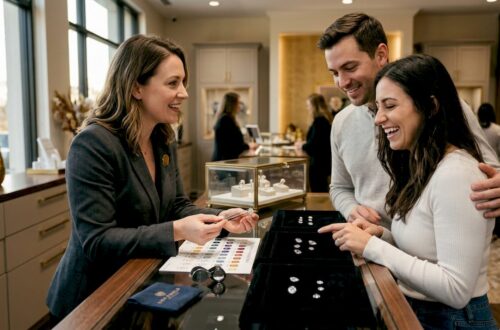
Designing a custom wedding ring set means creating a personalized symbol of your commitment by choosing every element yourself, from metal type and stone shape to engraving and setting style. Unlike buying off the shelf, the custom process, known in the industry as bespoke jewelry design, puts every decision in your hands. You work directly with a jeweler or use digital tools like CAD software and 3D renderings to see your vision before it’s cast in metal. This guide walks you through the four decisions that matter most: design choices, accurate sizing, smart budgeting, and building a cohesive set that looks like it was always meant to be together.
What design options do you need to consider for a custom ring set?
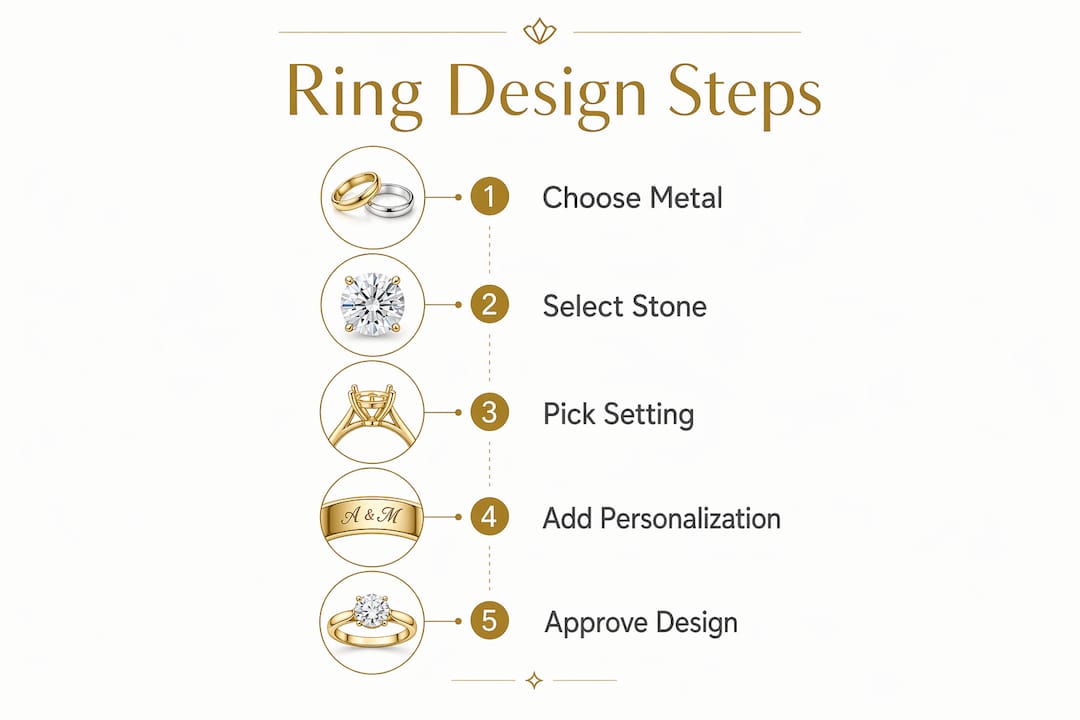
When you design a custom wedding ring set, the process covers six core categories: metal type, ring profile, stone selection, setting style, personalization details, and design approval. Each choice affects the others, so understanding them together saves time and prevents costly revisions later.
Metal type and karat set the foundation for color, durability, and price. The most common options are:
- 14k yellow gold: Warm tone, durable, and budget-friendly. The most popular choice in the U.S.
- 18k white gold: Cooler, brighter finish. Requires rhodium plating over time to maintain its color.
- Platinum: The most durable and naturally white metal. Heavier and more expensive than gold.
- Rose gold (14k or 18k): A romantic, warm pink tone that pairs beautifully with both white and champagne diamonds.
Ring profile refers to the cross-section shape of the band. A flat profile sits flush against the finger and looks modern. A comfort-fit profile has a slightly rounded interior, which most people find more wearable for everyday use. A knife-edge profile tapers to a ridge at the top, adding visual drama without extra width.
Stone selection is where diamond shapes become a defining choice. Round brilliants maximize sparkle. Oval and elongated cushion cuts create the illusion of a longer finger. Princess and emerald cuts suit geometric, architectural styles. Each shape also affects price per carat, with round brilliants typically commanding a premium over fancy shapes.
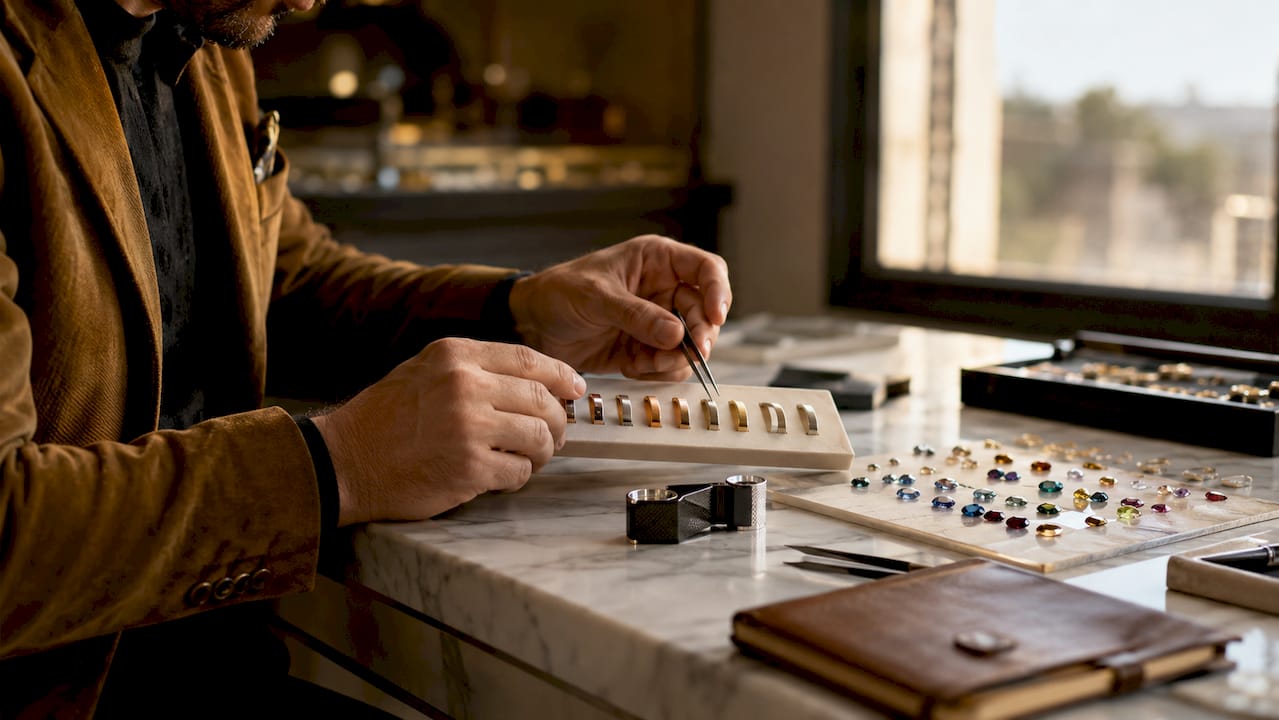
Setting styles determine how the stone is held and how much light it receives. Solitaire settings are timeless and let the diamond speak for itself. Halo settings surround the center stone with smaller diamonds, amplifying visual size. Pavé and channel settings embed accent stones along the band for continuous sparkle. Contour bands are shaped to nest snugly against an engagement ring, which matters a great deal for the set’s overall look.
Personalization details include engraving on the interior or exterior of the band, mixed metal combinations, milgrain edges, and hand-hammered textures. These touches are what transform a beautiful ring into a ring that tells your story.
Pro Tip: Request a 3D rendering before approving the final design. Reputable custom jewelers use CAD software to produce photorealistic previews, and seeing the ring from every angle catches proportion issues that flat sketches miss.
How can you measure your ring size accurately at home?
Ring sizing is the step most couples underestimate, and a poor fit on a custom ring is expensive to correct. Finger size changes throughout the day due to temperature, hydration, and activity level, so a single measurement is never enough.
Follow these steps for the most reliable at-home result:
- Cut a thin strip of paper approximately 6 inches long and a quarter-inch wide.
- Wrap it snugly around the base of your finger, just below the knuckle joint. The paper should sit flat without cutting off circulation.
- Mark where the paper overlaps with a pen, then lay it flat against a ruler and record the length in millimeters.
- Use a ring size chart to convert that measurement to a U.S. ring size. A circumference of 52mm corresponds to a size 6, for example.
- Repeat the measurement three times at different points in the day, ideally morning, midday, and evening. Multiple measurements improve accuracy to within half a size.
- Measure the knuckle too. If your knuckle is noticeably wider than the base of your finger, size up and plan for a sizing bead or spring insert to keep the ring from spinning.
Temperature matters more than most people expect. Fingers shrink in cold weather and swell in heat. If you live in a climate with significant seasonal variation, size for your warmer months since it’s easier to size down slightly than to stretch a ring.
Pro Tip: Wide bands, anything over 6mm, fit tighter than narrow bands of the same size. If your wedding band will be 8mm or wider, go up half a size from your standard measurement to account for the added coverage across the finger.
Common sizing errors include measuring the wrong finger (always measure the hand you plan to wear the ring on), measuring after exercise when fingers are swollen, and ignoring the knuckle entirely. A professional jeweler can confirm your size with a set of mandrel sizers, which is worth doing before placing a custom order.
What budgeting trade-offs help you design an affordable custom ring set?
The diamond is typically the largest single cost in any custom engagement ring set, and understanding how to allocate your budget across the four Cs, cut, color, clarity, and carat, determines how much beauty you get per dollar spent.
Cut quality is the single most important factor. An Excellent or Ideal cut grade determines how well a diamond reflects light. A poorly cut 1-carat diamond looks dull next to a well-cut 0.80-carat stone. Cut is the one factor you should never compromise on.
Here is how the other three Cs compare as budget levers:
| Factor | Recommended range | Why it works |
|---|---|---|
| Color | G or H | Differences from D are invisible to the naked eye in most settings |
| Clarity | VS2 or SI1 | Inclusions at this grade are not visible without magnification |
| Carat | 0.90 instead of 1.00 | A 10% size reduction saves 20–30% in cost with no visible difference |
Lab-grown versus natural diamonds is the most significant budget decision you will make. Lab-grown diamonds cost 60–80% less than natural diamonds of equivalent cut, color, and clarity. A high-quality 1-carat natural diamond ranges from $2,000 to $15,000 or more depending on grade, while a comparable lab-grown stone runs $800 to $2,000. Lab-grown diamonds are chemically and physically identical to mined stones. The price difference reflects supply chain economics, not quality.
Strategies to stretch your budget without sacrificing beauty:
- Choose a lab-grown center stone and natural accent diamonds for the band.
- Select a fancy shape like oval or pear, which costs less per carat than round brilliant.
- Prioritize the engagement ring’s center stone, then allocate remaining budget to the wedding band design.
- Ask your jeweler for diamond pricing transparency upfront, including a breakdown of stone cost versus labor and metal.
Custom jewelers typically require a deposit at the design approval stage, and late design changes delay production. Locking in your budget and stone selection before approving the 3D model prevents both cost overruns and timeline stress.
How do harmonized design elements create a cohesive wedding ring set?
A cohesive set looks intentional, not accidental. The rings should feel like they belong together even when worn separately. Achieving that requires attention to four specific design relationships.
Metal consistency is the starting point. Matching karat weights, not just metal types, keeps color uniform across both rings. Pairing 18k yellow gold with 14k yellow gold creates a subtle but noticeable color mismatch because higher karat gold has a richer, deeper tone. If both partners are wearing rings, agreeing on the same metal and karat creates visual unity in photos and in person.
Contour bands solve the gap problem. A standard straight band sits next to an engagement ring but leaves a visible gap if the center stone has a high setting or a wide prong basket. Contour and notched bands are shaped to follow the curve of the engagement ring, eliminating that gap and making the set look like a single piece. This is especially important for rings with oval, marquise, or pear-shaped stones that extend beyond the band’s width.
Shared design motifs tie the set together without making both rings identical. Consider these combinations:
- Pavé diamonds on the engagement ring echoed by a thin pavé band
- Milgrain detailing on both the engagement ring’s gallery and the wedding band’s edge
- A rose gold accent stripe in the wedding band that matches rose gold prongs on the engagement ring
- Matching engraved text on the interior of both bands, a date, a phrase, or a coordinate
Design tools have made cohesion easier to achieve. AI-assisted platforms and CAD software let you visualize both rings side by side before committing to production. Some jewelers offer digital try-on tools that show the stacked set on a hand model. These previews catch proportion mismatches, like a delicate engagement ring paired with a wide, heavy band, before metal is poured.
Key takeaways
Designing a custom wedding ring set requires clear decisions on metal, stone quality, sizing, and design harmony before production begins.
| Point | Details |
|---|---|
| Prioritize cut quality | An Excellent cut grade maximizes sparkle more than any other diamond factor. |
| Measure size multiple times | Repeat measurements at different times of day to account for natural finger fluctuation. |
| Match karat weights | Pairing the same karat in both rings maintains consistent color and durability across the set. |
| Use contour bands for cohesion | Shaped bands eliminate gaps and make the engagement ring and wedding band look unified. |
| Lab-grown diamonds save significantly | Lab-grown stones cost 60–80% less than natural equivalents with no difference in appearance. |
What I’ve learned from watching couples design their rings
I’ve seen couples approach the custom design process in two very different ways. Some arrive with a clear vision, a saved folder of inspiration images, a preferred metal, and a stone shape they’ve already researched. Others arrive with only a feeling, something meaningful, something that doesn’t look like everyone else’s. Both groups end up with beautiful rings. But the second group almost always takes longer and spends more than they planned.
The most common mistake I see is treating the design consultation as the starting point rather than the confirmation point. By the time you sit down with a jeweler or log into a design tool, you should already know your metal preference, your approximate budget, and whether you want a natural or lab-grown stone. Those three decisions alone narrow the field dramatically and make every subsequent choice faster and clearer.
I also think couples underestimate how much the timeline matters. Custom rings take four to eight weeks on average, and that’s before accounting for revisions. Approving a 3D model and then changing the setting style two weeks later doesn’t just cost money. It can push your delivery date past the wedding. Lock in your design before you approve the model, not after.
The part I find most rewarding is the engraving conversation. Couples often treat it as an afterthought, something to decide at the end. But the interior of a ring is the most private real estate in jewelry. A date, a word, a set of coordinates. That detail costs almost nothing and means everything. Don’t skip it.
Enjoy the process. You are designing something you will wear every day for the rest of your life. That deserves your full attention and a little joy.
— Joseph
Start designing your custom ring set with Usajewels
Usajewels has been helping couples create meaningful, personalized jewelry since 1999. As a family-owned business with in-house manufacturing, Usajewels offers direct pricing that removes the middleman markup you find at traditional retailers. You get certified, conflict-free diamonds, your choice of metal and karat, and a team that walks you through every design decision with care.
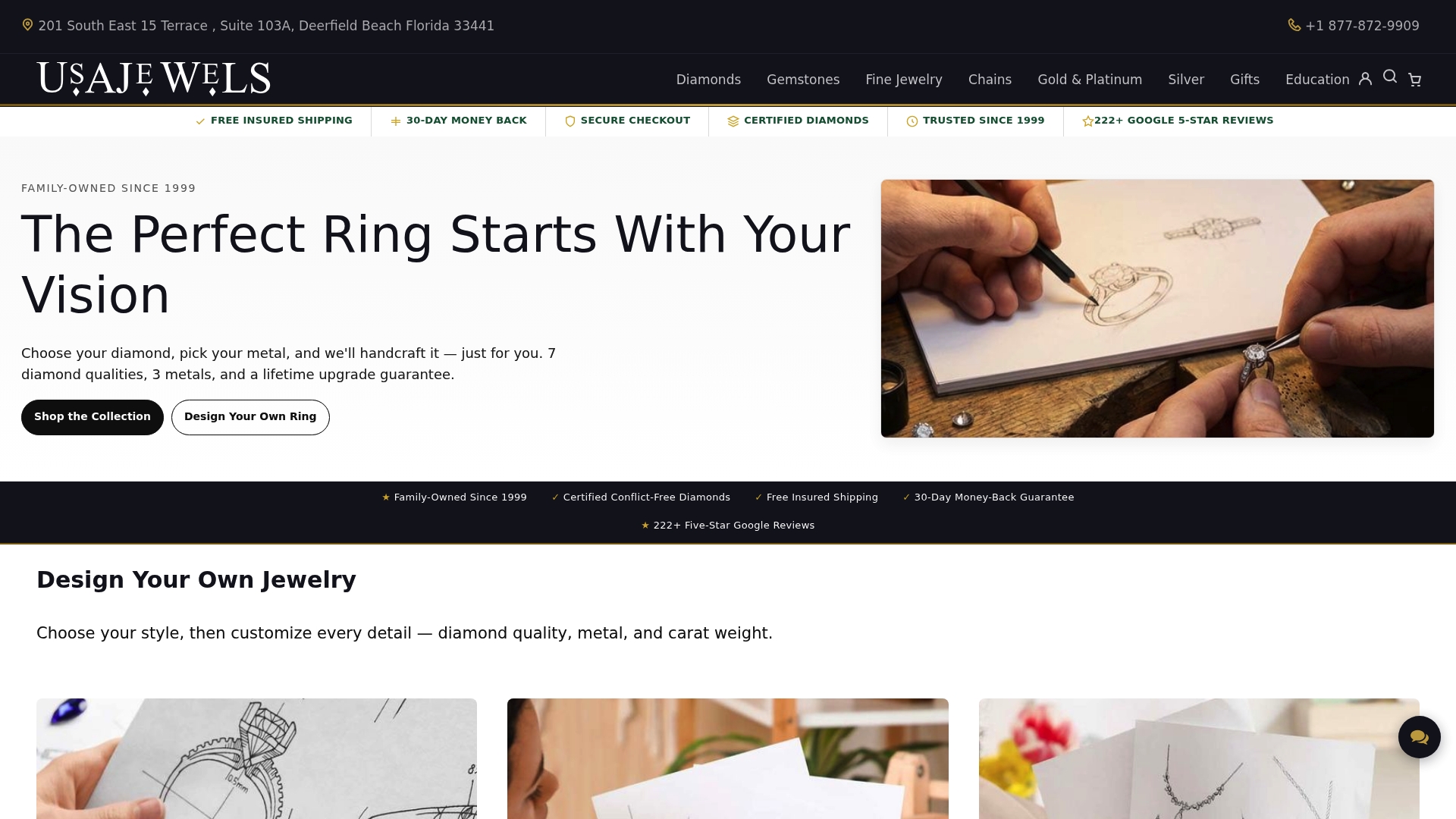
Whether you are starting with a center stone or a design concept, Usajewels’ fine diamond jewelry collection gives you the quality and variety to build a set that reflects exactly who you are. With over 222 five-star Google reviews and a lifetime diamond upgrade policy, this is a team you can trust with one of the most personal purchases of your life. Start your custom ring journey at Usajewels today.
FAQ
What does it mean to design a custom wedding ring set?
Designing a custom wedding ring set means selecting every element yourself, including metal type, stone shape, setting style, and engraving, rather than choosing a pre-made design. The process typically involves working with a jeweler who uses CAD software and 3D design approval to confirm your vision before production.
How long does it take to design and receive a custom ring set?
Most custom ring sets take four to eight weeks from design approval to delivery. Late changes after the 3D model is approved can extend that timeline, so finalizing all design decisions before sign-off is critical.
Is a lab-grown diamond a good choice for a custom engagement ring?
Lab-grown diamonds are chemically identical to natural diamonds and cost significantly less, making them an excellent choice for couples who want maximum stone quality within a set budget. Review the lab vs. natural diamond differences to decide which fits your priorities.
How do I make sure my engagement ring and wedding band match?
Use the same metal type and karat weight for both rings, and consider a contour band shaped to follow your engagement ring’s profile. Shared design details like matching pavé accents or coordinated engraving reinforce the set’s visual unity.
What ring size should I order for a wide wedding band?
For bands wider than 6mm, order half a size larger than your standard measurement. Wide bands cover more of the finger and fit noticeably tighter, so the sizing adjustment prevents discomfort during everyday wear.
Recommended
- Custom Diamond Jewelry & Engagement Rings | USA Jewels
- Wedding Jewelry | Bridal Rings & Earrings | USA Jewels
- Wedding Ring Guide: How to Choose the Perfect Wedding Band | USA Jewels
- Top 5 oradina.com Custom Jewelry Alternatives 2026

Deep Mehta is the Co-Owner of USA Jewels, a family-owned jewelry business she has led since 2013 in Deerfield Beach, Florida. With over 13 years of hands-on experience in fine jewelry retail, manufacturing, and diamond importing, Deep specializes in engagement rings, wedding bands, and custom jewelry design. She also co-manages Kaash Group Talent Acquisition. Deep is a University of Florida graduate and oversees every aspect of USA Jewels’ operations, from product development to marketing.
Frequently Asked Questions
Should my engagement ring and wedding band be the same metal type?
What's the price difference between round brilliant and fancy cut diamonds?
Do I need to size my ring before or after the custom design is finalized?
What's the advantage of a halo setting versus a solitaire setting for a custom wedding ring?
Can I engrave the inside and outside of my custom wedding band?
Fine Jewelry Collection


You May Also Like
VVS vs VS: Which Diamond Clarity Should You Buy?
Necklace Length Guide: Find Your Perfect Fit