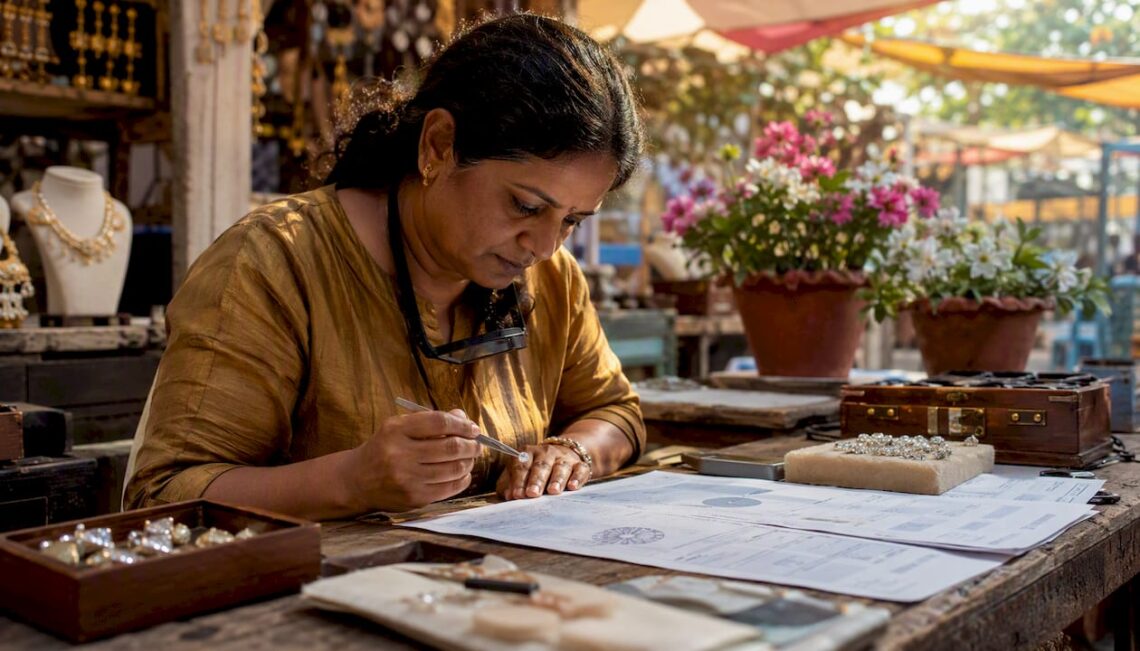
Jewelry Certification Types Guide: What U.S. Buyers Need
For any diamond or gemstone purchase above a few hundred dollars, insist on a grading report from a reputable independent laboratory — GIA or AGS for diamonds, GIA or GRS for colored stones — plus a metal hallmark and, if you’re insuring the piece, a USPAP-compliant appraisal. That combination gives you technical proof of quality, legal proof of metal fineness, and a monetary valuation your insurer will actually accept.
Here’s what to ask for right now, before you hand over payment:
- For diamonds: Request the lab report number, confirm the issuing lab (GIA or AGS carry the most weight in the U.S.), and verify the number on the lab’s official portal.
- For colored gemstones: Ask for a species ID, treatment disclosure, and origin opinion from GIA, GRS, or SSEF, especially for rubies, sapphires, and emeralds.
- For metal: Check the hallmark stamp (925, 14K, 18K, 750, PLAT) and ask for an assay document if the seller cannot explain it.
- For insurance: Get a separate written appraisal from a credentialed appraiser — a lab report alone does not assign a dollar value.
- For fashion or low-value pieces: A hallmark and a return policy are usually enough. A full lab report is rarely cost-effective under $300.
Pro Tip: Before paying, type the report number into the issuing lab’s online verification portal — GIA Report Check, AGS Report Verification, or IGI’s lookup tool — and confirm the stone’s measurements match what you see in person. This single step catches the most common certificate fraud.
Table of Contents
- What does “jewelry certification” actually mean?
- What do diamond grading reports measure, and which labs should you trust?
- Why colored gemstone reports work differently than diamond reports
- What metal hallmarks tell you and when to test independently
- Appraisals vs. lab reports vs. seller authentication: which do you actually need?
- How to verify a certificate and spot the most common scams
- Ethical sourcing certifications every modern buyer should recognize
- Which certifications should you ask for depending on your purchase?
- How Usajewels handles certification, sourcing, and guarantees
- Key Takeaways
- Why certification is the foundation, not the fine print
- Certified jewelry, made personal at Usajewels
- Useful sources and further reading
- FAQ
What does “jewelry certification” actually mean?
The term gets used loosely, and that looseness costs buyers money. There are four distinct documents in circulation, and each serves a different purpose.
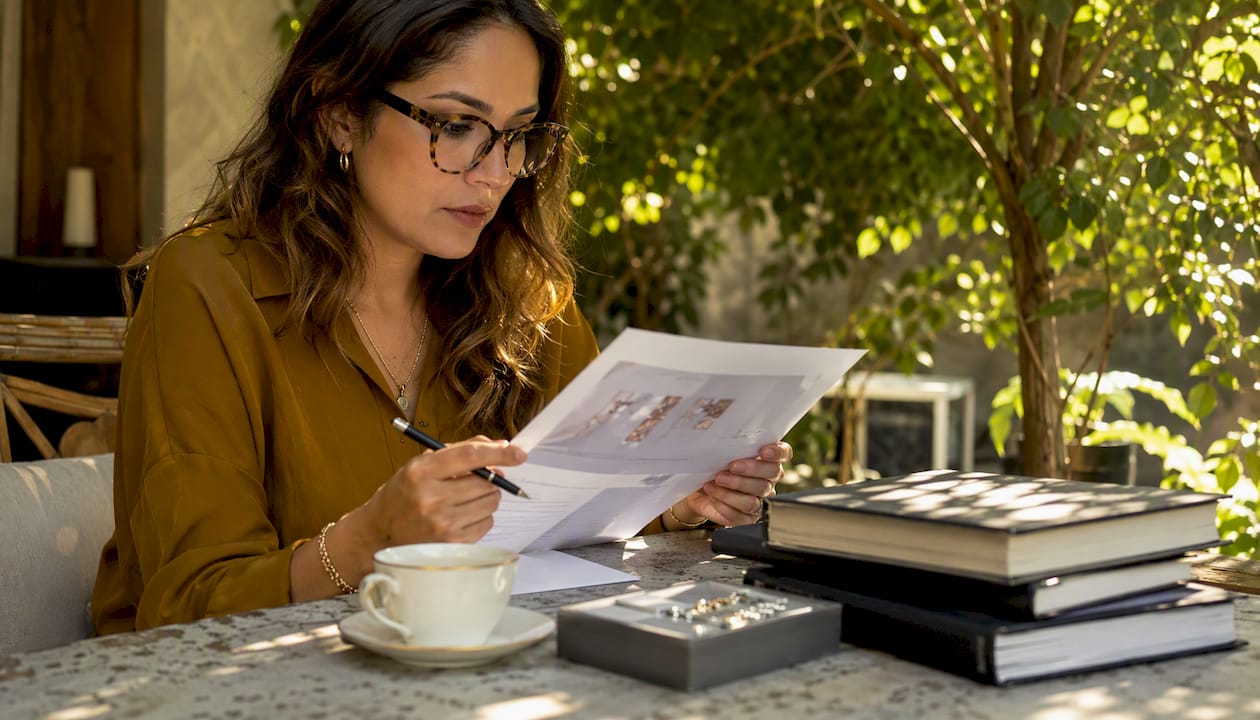
Lab report (grading report): An independent laboratory examines the stone and documents its physical characteristics. For diamonds, that means the 4Cs — cut, color, clarity, and carat weight — plus polish, symmetry, fluorescence, and a plotted clarity map showing the exact position of inclusions. The report carries a unique report number, often laser-inscribed on the stone’s girdle. It does not assign a price.

Appraisal: A credentialed appraiser assigns a monetary value tied to a specific intended use. Jewelry appraisals are used for insurance replacement value, estate valuation, or liquidation — and the methodology differs for each. Insurance replacement value typically exceeds fair market value, so giving your appraiser the wrong intended use produces the wrong number.
Hallmark: A stamp pressed or laser-engraved into the metal itself, indicating fineness. “925” means 92.5% silver. “750” means 75% gold (18K). “PLAT” or “PT950” indicates platinum at 95% purity. In the U.S., hallmarking is governed by the National Gold and Silver Stamping Act, which requires that any karat mark be accurate within a legal tolerance.
Seller authentication: A document issued by the retailer or maker attesting to provenance, production method, or brand origin. This is not an independent third-party verification. It can support a story, but it cannot substitute for a lab report or a hallmark.
A lab report tells you what a stone is. An appraisal tells you what it’s worth for a specific purpose. A hallmark tells you what the metal contains. Confusing these three documents is the single most common mistake buyers make — and it can leave you underinsured, overpaying, or unable to resell.
Common terms you’ll encounter:
- Report number: The unique identifier on every lab report, often inscribed on the diamond’s girdle with a laser. Use it to pull up the report on the lab’s portal.
- Plotted clarity map: A diagram on the report showing the exact location and type of each inclusion or blemish.
- Treatment disclosure: A statement noting whether the stone has been heated, oiled, fracture-filled, or otherwise enhanced. Required on reputable lab reports.
- Intended use: The purpose stated on an appraisal (insurance, fair market, liquidation) that determines the valuation methodology.
What do diamond grading reports measure, and which labs should you trust?
A GIA diamond grading report documents the 4Cs — cut, color, clarity, and carat weight — along with cut grade, polish, symmetry, and fluorescence. The clarity section includes a plotted diagram mapping every inclusion. The report number is typically laser-inscribed on the girdle, giving you a physical cross-reference point.
Not all labs apply the same standards, and that gap matters when you’re spending thousands of dollars. Here’s how the major labs compare on the dimensions that affect your purchase, insurance, and resale.
| Lab | Reputation / consistency | Best for | Report detail | Grading strictness | Resale / insurance usability |
|---|---|---|---|---|---|
| GIA | Highest in U.S. market | Natural diamonds, colored stones | 4Cs, plot, fluorescence, inscription | Very strict | Accepted by virtually all U.S. insurers and resellers |
| AGS | Highest for cut grading | Natural diamonds where cut is priority | 4Cs, proprietary cut grade (0–10 scale), plot | Very strict | Widely accepted; especially valued for ideal-cut stones |
| IGI | Strong for lab-grown | Lab-grown diamonds, natural diamonds | 4Cs, plot, laser inscription | Moderately strict; slightly more lenient than GIA on color/clarity | Accepted by many retailers; growing insurer acceptance |
| HRD Antwerp | Strong in Europe | Natural diamonds | 4Cs, plot | Strict; comparable to GIA in most categories | Less common in U.S. market; accepted by some insurers |
| GSI | Common in retail trade | Natural and lab-grown | 4Cs, basic plot | More lenient; grades can run 1–2 grades looser than GIA | Accepted by some retailers; less preferred for high-value resale |
| EGL | Controversial | Not recommended for high-value purchases | 4Cs, plot | Significantly more lenient; grades often 1–3 grades above GIA equivalent | Frequently rejected by U.S. insurers and resellers — use with caution |
GIA and AGS are the primary labs U.S. buyers should insist on for engagement rings and investment-grade diamonds. IGI has earned a strong position specifically for lab-grown diamonds, where its grading is more consistent with market expectations. HRD is reputable but less common in U.S. retail, so resale liquidity can be lower.
EGL deserves a direct caution. Its grading has historically been more lenient than GIA’s by a meaningful margin, and many U.S. insurers and auction houses decline to accept EGL reports at face value. If a seller is offering an EGL-certified stone at a price that looks attractive, factor in the cost of an independent GIA recheck before committing.
For lab-grown diamonds specifically, check the lab vs. natural gemstone comparison to understand how reports differ between the two categories — the grading criteria are the same, but origin disclosure requirements vary.
How to verify a diamond report in three steps
- Run the portal check — Enter the report number at GIA Report Check, AGS Report Verification, or the relevant lab’s portal. The portal should return the same 4Cs and diagram you see on the paper report.
Pro Tip: Take a clear photo of the stone next to the paper report before you leave the store. That timestamp becomes your baseline if a dispute arises later, and it takes thirty seconds.
Why colored gemstone reports work differently than diamond reports
Colored gemstones — rubies, sapphires, emeralds, alexandrites, and others — do not have a single universal grading system the way diamonds do. Species, variety, geographic origin, and treatment history all interact to determine value, and no single scale captures that complexity.
What a trusted colored-gem report does instead is document three things: species identification, treatment disclosure, and, for high-value stones, an origin opinion. Top-tier labs including GIA, SSEF, and GRS provide all three, along with the testing instruments used — a detail that matters because origin opinions are probabilistic, not absolute, and methodology transparency lets buyers and insurers assess confidence.
Treatment disclosure is where the stakes are highest. An untreated Burmese ruby commands a dramatically different price than a heat-treated one of identical apparent color. Without a lab report, you have only the seller’s word.
Common treatments and what they mean for buyers
- Heat treatment: Applied to most sapphires and rubies to improve color and clarity. Widely accepted in the trade, but must be disclosed. Reduces value relative to untreated stones of equal quality.
- Fracture filling: Glass or resin injected into surface-reaching fractures to improve apparent clarity. Significantly reduces durability and value; requires special care during cleaning.
- Oiling / resin impregnation: Common in emeralds. Cedar oil or synthetic resin fills surface fractures. Degree of filling (minor, moderate, significant) affects value and care requirements.
- Diffusion treatment: Elements diffused into the stone’s surface layer to alter color. Surface-only and can be removed by recutting; must be disclosed.
For colored gemstone grading details, including how treatment levels are described on lab reports, Usajewels’s education hub walks through each category with practical buyer guidance.
| Stone type | Recommended lab | When to insist on a report | Key disclosure to check |
|---|---|---|---|
| Ruby | GIA, GRS, SSEF | Any stone over $1,000 or with origin claim | Heat treatment, fracture filling |
| Sapphire | GIA, GRS | Any higher-value stone or with Kashmir/Burma claim | Heat treatment, beryllium diffusion |
| Emerald | GIA, GRS | Any higher-value stone | Oiling degree (minor / moderate / significant) |
| Alexandrite | GIA | Any natural stone; lab-grown must be disclosed | Origin (natural vs. synthetic) |
| Other colored stones | GIA | High-value or rare origin claims | Species ID, any treatment |
Expect top-tier colored-gem reports to take two to four weeks and cost $100–$200 or more depending on stone complexity. That cost is worth absorbing on any stone where origin or treatment status materially affects the price you’re paying.
What metal hallmarks tell you and when to test independently
Metal stamps are the most immediate consumer protection you have at the point of purchase. They’re legally regulated in the U.S. under the National Gold and Silver Stamping Act, which means a seller who stamps “18K” on a piece that doesn’t meet that fineness is violating federal law.
| Stamp | Metal | Purity | What it means in practice |
|---|---|---|---|
| 925 | Sterling silver | 92.5% silver | Standard for silver jewelry; widely accepted by insurers |
| 10K | Gold | – | Minimum legal karat in the U.S. for a gold stamp |
| 14K | Gold | – | Most common in U.S. fine jewelry |
| 18K / 750 | Gold | 75% gold | Higher purity; preferred for investment and heirloom pieces |
| PLAT / PT950 | Platinum | 95% platinum | Premium metal; hallmark required for any platinum claim |
| Vermeil | Gold over silver | Varies | FTC-regulated; base must be sterling silver |
A hallmark alone is sufficient for most retail purchases from established jewelers. Hallmarking shows metal fineness, and XRF (X-ray fluorescence) testing offers a nondestructive way to confirm it independently. Fire assay is more accurate but destructive, so it’s reserved for situations where XRF results are ambiguous or the piece is high-value enough to warrant it.
When should you go beyond the stamp?
- Vintage or estate pieces where stamps may be worn, altered, or absent.
- Purchases from unfamiliar online sellers without a physical return address or verifiable business history.
- Pieces priced significantly below market for the claimed metal type.
- Any piece where the seller cannot explain the hallmark or provide an assay document.
For a deeper look at how metal purity intersects with manufacturing quality, Usajewels’s precious metals guide covers gold, platinum, and silver standards with practical buyer context.
Appraisals vs. lab reports vs. seller authentication: which do you actually need?
These three documents answer three different questions, and conflating them is expensive.
A lab report answers: What is this stone, and what are its measurable characteristics? It gives you objective, graded data — no price attached. A jewelry appraisal answers: What is this piece worth for a specific purpose? The intended use drives the methodology — insurance replacement value, fair market value, and liquidation value produce different numbers from the same piece. A seller authentication answers: Who made this, and where did it come from? It’s a provenance claim, not an independent technical assessment.
When you need an appraisal:
- Insuring a piece (your insurer needs a replacement-value figure, not a lab grade)
- Estate settlement or charitable donation
- Divorce proceedings or asset division
- Resale where a buyer requests documented value
When a lab report is the priority:
- Buying a diamond or colored stone where quality grade affects price
- Verifying treatment status before purchase
- Confirming origin claims on high-value colored stones
Appraisal checklist — what a good one includes:
- Appraiser’s credentials (GIA Graduate Gemologist, ASA member, or equivalent)
- Stated intended use (insurance replacement, fair market, liquidation)
- Detailed description of the piece (measurements, weight, metal, stone grades)
- Photographs of the piece
- Methodology statement
- Signed declaration of impartiality
- USPAP compliance statement where applicable
Appraisals from credentialed appraisers typically cost $50–$150 per piece for straightforward items, with complex or high-value pieces running higher. Lab reports from GIA run $50–$150 for standard diamond reports depending on carat weight and service level; colored-stone reports are generally higher.
One warning worth stating plainly: an appraisal is not a substitute for a lab report when you need to assess stone quality. Appraisals are valuation tools, not scientific grading instruments — a high insurance value tells you nothing about whether the stone’s color grade is accurate.
How to verify a certificate and spot the most common scams
Certificate fraud is a real and ongoing risk. The most reliable defense is a systematic cross-reference check before you pay.
Step-by-step verification workflow:
- Inspect the report itself. Confirm it carries the lab’s name, logo, and a unique report number. A vague “Certificate of Authenticity” with no technical data and no lab name is not a grading report.
- Compare the plotted diagram. The clarity plot on the report should match the inclusions you can see under magnification. Ask the jeweler for a loupe or request a microscope view.
- Check the measurements. The report lists exact millimeter dimensions. Ask the jeweler to measure the stone in front of you and confirm they match within 0.1mm.
- Verify the laser inscription. For GIA and AGS diamonds, the report number is inscribed on the girdle. Confirm it matches the report number under magnification.
- Run the portal check. Enter the report number at the issuing lab’s official verification portal. The returned data should match the paper report exactly.
Red flags that should stop a purchase:
- No lab name or report number on the certificate
- “Certificate of authenticity” language with no 4Cs data, no measurements, no plot
- Measurements on the report don’t match the stone in hand
- Seller discourages or refuses verification (“it’s a hassle,” “the system is down”)
- Brand-only certificates with no independent lab backing
- Pressure to decide before you’ve had time to verify
If something doesn’t match, request an independent recheck in writing. A reputable seller will agree. If the seller refuses, walk away.
Pro Tip: Photograph the stone next to the open report before leaving the store. The timestamp on that photo is your legal baseline if the stone is later swapped or disputed.
Cross-reference verification has become standard practice precisely because certificate fraud remains a tangible risk — mismatches between a report’s plotted diagram and the actual stone are the most common indicator of falsification or misassignment.
Ethical sourcing certifications every modern buyer should recognize
Ethical and responsible sourcing certifications have moved from a niche concern to a mainstream buying filter. By 2026, RJC COP 2024 became mandatory for many suppliers, requiring third-party audits, human-rights due diligence, Scope 1 and 2 greenhouse gas reporting, and documented supplier audits. U.S. retail buyers are increasingly asking for this documentation at the point of sale.
Key standards to recognize:
- RJC Code of Practices (COP): The Responsible Jewellery Council’s core standard. Covers human rights, labor practices, environmental impact, and business ethics across the supply chain. Third-party audited on a three-year cycle.
- RJC Chain of Custody (CoC): Tracks certified material from mine to retail. A CoC certificate means the specific material in your piece can be traced through a documented chain of custody.
- Kimberley Process Certification Scheme (KPCS): The international standard for conflict-free rough diamonds. Required for all rough diamond exports from member countries. Note that KPCS covers armed conflict specifically — it does not address labor or environmental standards.
- Fairtrade Gold: A certification for gold mined under Fairtrade standards, covering fair pricing, safe working conditions, and environmental protections for small-scale miners.
How to validate ethical claims:
- Ask the seller for their RJC membership number and audit date. RJC publishes a public member directory you can cross-reference.
- Request the scope of any CoC certificate — it should specify which materials are covered and the date of certification.
- For conflict-free diamond claims, ask whether the stone was sourced from a KPCS-compliant country and whether the seller can provide documentation.
- Be skeptical of vague “ethically sourced” language with no third-party audit backing it.
For practical guidance on verifying ethical credentials before purchase, Usajewels’s guide on choosing a certified ethical diamond jeweler walks through the questions to ask and what genuine documentation looks like.
Which certifications should you ask for depending on your purchase?
The documentation you need scales with the stakes of the purchase. Here’s a decision-oriented framework.
Numbered decision rules by purchase type:
- Engagement ring with a center diamond over 0.50 carats: Insist on a GIA or AGS grading report, confirm the hallmark on the setting, and get a separate insurance appraisal within 30 days of purchase.
- Investment-grade colored gemstone (ruby, sapphire, emerald) over $1,000: Require a GIA, GRS, or SSEF report with treatment disclosure and, where relevant, an origin opinion.
- Lab-grown diamond: An IGI or GIA report is appropriate. Confirm the report explicitly states “laboratory-grown” — this is a legal disclosure requirement in the U.S.
- Estate or vintage jewelry: Request an independent appraisal from a credentialed appraiser and, for any significant stones, a lab recheck. Original documentation may be outdated or absent.
- Fashion or gift jewelry under $300: A hallmark and a clear return policy are usually sufficient. A full lab report adds cost that exceeds the piece’s value.
Questions to ask any seller before purchase:
- What lab issued the certificate, and what is the report number?
- Has the stone been treated? Is that disclosed on the report?
- What does the hallmark on the metal indicate, and can you show me assay documentation?
- Will you allow me to verify the report number online before I pay?
- What is your return policy if the stone or metal does not match the documentation?
How certification affects insurance and resale:
Insurers in the U.S. typically require a replacement-value appraisal to issue a scheduled jewelry rider. Many also require a lab report for stones above a certain value threshold — confirm this with your insurer before purchase. For resale, GIA and AGS reports carry the most liquidity: auction houses, estate buyers, and online resale platforms treat them as the baseline for pricing. An EGL report or no report at all can reduce a stone’s resale price by a meaningful margin relative to an equivalent GIA-graded stone.
Certification also matters for jewelry insurance coverage — Usajewels’s insurance guide explains what documentation your policy will typically require and how to keep it current as values change.
How Usajewels handles certification, sourcing, and guarantees
Usajewels has operated as a family-owned, in-house manufacturing business since 1999, which means the documentation trail for every piece starts at the source. There are no middlemen adding markups or obscuring provenance.
Every diamond Usajewels sells is ethically sourced and conflict-free. Customers can request lab reports for loose diamonds at the time of purchase, and the team can walk you through reading the report, matching the laser inscription, and understanding what the grades mean for your specific stone. For custom pieces, hallmark documentation and metal specifications are provided as part of the order.
At Usajewels, we believe every customer deserves to know exactly what they’re buying — the stone’s grade, the metal’s purity, and the story behind how it was sourced. Certification isn’t paperwork to us. It’s the foundation of trust we’ve built with our customers for over 25 years.
For insurance purposes, Usajewels can guide customers toward credentialed appraisers and explain what documentation to bring. The lifetime diamond upgrade program means your original certification documentation also becomes the baseline for any future upgrade transaction — so keeping it organized matters.
With over 222 Google reviews reflecting consistent customer satisfaction, the track record speaks to a buying experience where transparency is standard, not optional.
Key Takeaways
For any significant jewelry purchase, a reputable lab report, a verified metal hallmark, and a USPAP-compliant appraisal together give you the documentation needed for quality assurance, insurance, and resale protection.
| Point | Details |
|---|---|
| Lab report first for stones | GIA or AGS reports carry the most weight for diamonds; GIA, GRS, or SSEF for colored gems. |
| Appraisal serves insurance | A lab report has no dollar value — get a separate appraisal stating “insurance replacement” as the intended use. |
| Verify before you pay | Enter the report number on the issuing lab’s portal and confirm measurements match the stone in hand. |
| Hallmarks protect metal buyers | U.S. law requires karat stamps to be accurate; ask for assay documentation on vintage or high-value metal pieces. |
| Usajewels provides documentation | Usajewels offers ethically sourced, certified diamonds with lab reports available and supports customers through the insurance appraisal process. |
Why certification is the foundation, not the fine print
Most buyers treat certification as a box to check after they’ve already fallen in love with a piece. That’s understandable — jewelry is emotional. But the documentation question deserves to come first, not last.
Here’s what I’ve seen happen when buyers skip the verification step: they pay a premium for a stone graded by a lenient lab, discover the discrepancy when they try to insure it, and find the replacement value their insurer assigns is significantly lower than what they paid. Or they buy a colored stone described as “untreated” with only a seller’s word, then learn during a resale appraisal that it’s heavily oiled — a fact that cuts the value substantially.
The certification system isn’t perfect. Origin opinions are probabilistic. Lab grading has some variance even at the top labs. And ethical sourcing certifications like RJC COP don’t guarantee a perfect supply chain — they document due diligence. But imperfect documentation is still vastly better than none. A GIA report with a 0.1-grade variance is still the most reliable baseline the U.S. market has. An RJC audit is still more credible than a marketing claim.
What I’d push back on is the idea that certification is only for high-end buyers. A $600 sapphire with no treatment disclosure is a real financial risk. A $400 gold chain with no hallmark is a legal gray area. The threshold for asking questions is lower than most buyers think — and the questions themselves take thirty seconds.
Certified jewelry, made personal at Usajewels
Knowing which documents to ask for is only half the work. The other half is finding a jeweler who makes it easy to get them.
Usajewels was built on exactly that premise. As a family-owned, direct-to-consumer manufacturer operating since 1999, we skip the middlemen — which means lower prices and a cleaner documentation trail from the start. Every piece of fine diamond jewelry we sell comes with clear metal hallmarks, and our certified natural and lab-grown loose diamonds are available with lab reports from recognized grading laboratories. You can design your own ring, choose your diamond quality and shape, and request the supporting documentation before checkout.
Our lifetime diamond upgrade program means your original certification stays relevant long after the initial purchase — it becomes the baseline for any future upgrade. Whether you’re buying an engagement ring, a gift, or an investment piece, we’re here to walk you through the paperwork, not just the sparkle. Browse our jewelry collections and reach out to our team to request lab reports, hallmark documentation, or guidance on getting your piece appraised for insurance.
Useful sources and further reading
These are the authoritative resources to bookmark for verification, standards, and deeper reading:
- GIA (Gemological Institute of America) — The primary source for diamond grading standards, the 4Cs framework, and the GIA Report Check portal for verifying report numbers online.
- American Gem Society (AGS) — Home of the AGS cut-grading system and the AGS Laboratories report verification tool; particularly useful for ideal-cut diamond buyers.
- IGI (International Gemological Institute) — Report lookup and grading standards for natural and lab-grown diamonds; widely used in retail and growing in insurer acceptance.
- Jewelers of America — Appraisals — Consumer guidance on what a qualified appraisal should include and how to find a credentialed appraiser.
- American Society of Appraisers — Gem and Jewelry Valuation — Defines what qualifies a gem and jewelry appraiser and what USPAP-compliant methodology requires.
- CIBJO Retailers’ Reference Guide — A comprehensive retailer and buyer reference covering diamonds, gemstones, pearls, precious metals, and responsible sourcing standards.
- Usajewels Jewelry Education Hub — Guides on diamond certification, gemstone grading, metal standards, and treatment disclosures written for U.S. buyers.
FAQ
What certifications should a jeweler have?
A qualified gem and jewelry appraiser should hold credentials from a recognized body such as the GIA (Graduate Gemologist designation), the American Society of Appraisers (ASA), or equivalent, and should follow USPAP-compliant methodology. For the lab reports they reference, GIA and AGS are the most widely accepted in the U.S. market.
What are the different types of diamond certifications?
The main diamond grading reports come from GIA, AGS, IGI, HRD Antwerp, GSI, and EGL. GIA and AGS are considered the most rigorous and carry the most weight for insurance and resale in the U.S.; IGI is widely used for lab-grown diamonds; EGL reports should be treated with caution due to historically lenient grading.
How do I verify that a jewelry certificate is real?
Enter the report number on the issuing lab’s official online portal (GIA Report Check, AGS Report Verification, or IGI’s lookup), then confirm the stone’s measurements and clarity plot match what you see in person. A mismatch between the report and the physical stone is the most common sign of certificate fraud.
What is the difference between a jewelry appraisal and a lab report?
A lab report provides objective technical grading of a stone’s characteristics with no price attached; an appraisal assigns a monetary value tied to a specific intended use, such as insurance replacement or fair market value. You typically need both: the lab report to verify stone quality and the appraisal to satisfy your insurer.
Does Usajewels provide certified diamonds and lab reports?
Yes. Usajewels sells ethically sourced certified natural and lab-grown loose diamonds, and customers can request lab reports at the time of purchase. The team can also guide you through the insurance appraisal process to make sure your documentation is complete before you finalize your purchase.
Recommended
- Diamond Certification Guide: GIA vs AGS vs IGI Compared | USA Jewels
- What Is Certified Pre-Owned Jewelry: A Buyer’s Guide
- Why Diamond Certifications Differ Globally: 2026 Guide
- How to Spot Quality Jewelry Craftsmanship Like a Pro

Deep Mehta is the Co-Owner of USA Jewels, a family-owned jewelry business she has led since 2013 in Deerfield Beach, Florida. With over 13 years of hands-on experience in fine jewelry retail, manufacturing, and diamond importing, Deep specializes in engagement rings, wedding bands, and custom jewelry design. She also co-manages Kaash Group Talent Acquisition. Deep is a University of Florida graduate and oversees every aspect of USA Jewels’ operations, from product development to marketing.
Fine Jewelry Collection


You May Also Like
How Jewelry Personalization Options Work for Gifts
Anniversary Jewelry Milestone Gifts That Last a Lifetime