
What Is Certified Pre-Owned Jewelry: A Buyer’s Guide
Certified pre-owned jewelry is previously owned jewelry that has been professionally inspected, authenticated, and often refurbished to meet defined quality standards before resale. The term “certified” signals that a qualified expert or independent laboratory has verified the piece’s metal purity, stone authenticity, and overall condition. Industry standards like GIA grading, AGS reports, and hallmark verification form the backbone of this process. Usajewels has built its reputation on exactly this kind of transparency since 1999, and understanding what certification really means gives you the confidence to buy with purpose rather than guesswork.
What does the certification process for pre-owned jewelry involve?
Certification is a structured process, not a single stamp of approval. Professional authentication covers metal purity verification, brand authentication, and condition assessment before any piece reaches a buyer. Each step adds a layer of trust that a simple “pre-owned” label cannot provide.
Here is what a thorough certification process typically includes:
-
Metal and hallmark verification. A gemologist or certified appraiser tests the metal using acid testing, X-ray fluorescence, or electronic verification to confirm karat weight and purity. Hallmarks stamped inside rings or on clasps are cross-referenced against official standards.
-
Stone authentication. Diamonds and gemstones are examined under magnification and tested with a thermal conductivity probe or spectroscopy to confirm they are natural, lab-grown, or simulant as described. GIA grading reports include unique report numbers you can verify online, giving you an independent check on every stone characteristic.
-
Brand and maker authentication. For designer pieces, maker’s marks, serial numbers, and hallmarks are compared against brand records. This step catches misrepresented pieces before they reach the market.
-
Condition assessment and refurbishment. Certified pre-owned pieces often receive professional cleaning, prong retipping, and polishing to restore near-new condition. This is a key difference from ordinary pre-owned jewelry sold “as is.”
-
Documentation. A legitimate certification includes an appraisal or valuation report, a condition disclosure, and any available grading certificates. These documents protect you at resale and during insurance claims.
One critical distinction separates independent lab certificates from in-house certificates. Third-party certifications from organizations like GIA or IGI carry objective, verifiable grading. Retailer-issued in-house certificates vary widely in objectivity. Always ask which type you are receiving.
Pro Tip: Request the GIA or IGI report number and verify it directly on the issuing lab’s website before completing any purchase. This takes two minutes and confirms the certificate is genuine.

How does certified pre-owned jewelry differ from regular pre-owned, estate, or vintage jewelry?
Not all previously owned jewelry carries the same level of assurance. Estate, vintage, and pre-owned are distinct categories, and understanding the differences protects your investment.
Regular pre-owned jewelry is simply used jewelry sold without formal inspection or documentation. The seller may describe its condition honestly, but no independent party has verified the claims. You take the seller’s word for metal purity and stone quality.
Estate jewelry refers to older, previously owned pieces, often from a deceased person’s collection. Estate pieces frequently carry historical or collectible value. However, estate status alone does not guarantee authentication. A stunning Art Deco brooch can be estate jewelry and still lack any formal certification.
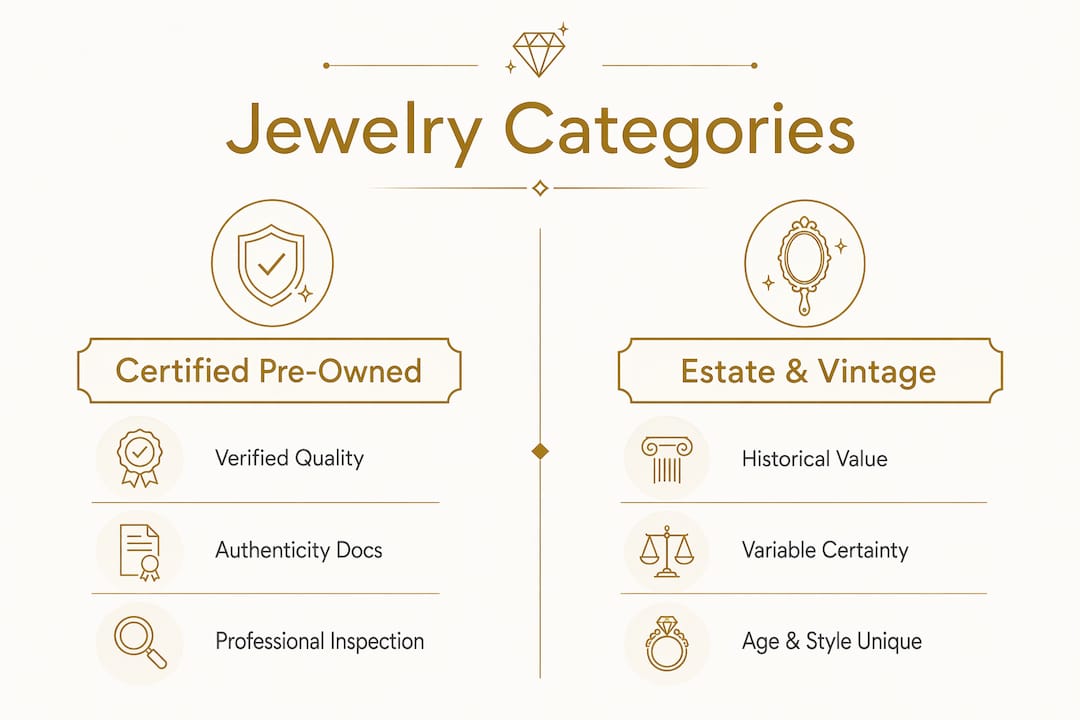
Vintage jewelry describes pieces from specific past eras, typically 20 to 100 years old. Vintage items are appraised for era-specific craftsmanship and materials. Appraisal considerations differ from modern pieces because metal alloys and stone cutting techniques changed significantly across decades.
Certified pre-owned jewelry sits at the top of this trust hierarchy. It combines the character of previously owned pieces with the assurance of professional verification.
Here is a quick comparison of what each category typically offers:
- Regular pre-owned: No formal inspection, no documentation, price reflects condition as described by seller
- Estate jewelry: Historical value, possible appraisal, no standardized certification requirement
- Vintage jewelry: Era-specific appraisal, collectible premium, authentication varies by seller
- Certified pre-owned: Independent inspection, grading documentation, refurbishment to quality standard, strongest resale value support
Certification adds reassurance that no other label provides. It converts a subjective seller description into an objective, documented record.
What are the benefits of buying certified pre-owned jewelry?
The financial case for certified pre-owned jewelry is direct. Savings range from 20% to 70% compared to buying the same piece new at retail. That range means a $5,000 diamond ring could cost you as little as $1,500 in the certified pre-owned market, with full authentication intact.
Beyond price, the benefits stack up across several areas:
- Buyer confidence. Certification documentation gives you an objective record of what you own. This matters at resale, for insurance purposes, and simply for peace of mind.
- Access to luxury pieces. Certified pre-owned channels bring designer and fine jewelry within reach of buyers who could not justify full retail prices. A certified platinum and diamond piece from a respected maker is a genuine luxury purchase at a fraction of its original cost.
- Environmental responsibility. Buying pre-owned jewelry reduces demand for newly mined materials. Less mining means less land disruption, lower carbon output, and a smaller ecological footprint. For buyers who care about ethical sourcing, this is a meaningful advantage.
- Resale value support. A piece with GIA or IGI documentation retains its value more reliably than one without. Buyers in the secondary market pay more for documented pieces because the risk is lower.
- Risk reduction. Professional inspection catches hidden damage, undisclosed repairs, or misrepresented stones before you pay. Return policies from reputable sellers add another safety net.
Pro Tip: When comparing two certified pieces at similar prices, choose the one with an independent lab report over an in-house certificate. The independent report holds its credibility regardless of which seller you use next.
Learning to spot quality craftsmanship yourself adds another layer of confidence on top of any certificate you receive.
How to verify and buy certified pre-owned jewelry safely
“Certified pre-owned” is not a legally regulated term and its definition varies across sellers. That fact makes buyer diligence non-negotiable. A disciplined, objective buying approach consistently produces better outcomes than decisions driven by emotion or urgency.
Follow these steps before committing to any certified pre-owned purchase:
- Request all documentation upfront. Ask for the appraisal report, any grading certificates, and a full condition disclosure. A reputable seller provides these without hesitation.
- Verify independent certificates directly. Use the GIA, IGI, or AGS report number to confirm the certificate on the lab’s official website. This step takes minutes and eliminates the risk of a forged document.
- Review the condition disclosure carefully. Ask specifically about prior repairs, replaced stones, resizing history, and any structural work. Undisclosed repairs affect both value and durability.
- Evaluate the seller’s return policy. A professional seller welcomes questions about return terms and independent appraisal. A vague or restrictive return policy is a warning sign.
- Use objective criteria for comparison. For diamonds, apply the 4Cs: cut, color, clarity, and carat weight. For metal, confirm karat and alloy type. Use gemstone comparison guides to evaluate stones objectively rather than relying on seller descriptions alone.
- Request high-resolution images or an in-person inspection. Photos should show the piece from multiple angles, including the setting, prongs, and any hallmarks. For high-value purchases, an in-store or third-party inspection is worth the time.
- Never rush the decision. The three most common buyer mistakes are overlooking certification, ignoring return policies, and rushing the purchase. Pressure to decide quickly is a red flag, not a reason to act.
Pro Tip: Before buying, get an independent appraisal from a certified gemologist who has no financial stake in the sale. The cost is typically $50–$150 and can save you thousands.
Key Takeaways
Certified pre-owned jewelry offers verified quality, documented authenticity, and savings of 20%–70% versus new retail prices, making it the most trustworthy category in the pre-owned jewelry market.
| Point | Details |
|---|---|
| Certification means verified quality | Professional inspection confirms metal purity, stone authenticity, and condition before resale. |
| Independent lab reports matter most | GIA and IGI certificates are verifiable online and carry more weight than in-house documents. |
| Savings are substantial | Buyers typically save 20%–70% compared to buying the same piece new at retail. |
| “Certified” is not legally regulated | Seller reputation and return policy strength are as important as the certification label itself. |
| Buyer diligence is non-negotiable | Always verify documents, review condition disclosures, and never rush a high-value purchase. |
Why I think most buyers underestimate the “certified” label
After years of working with fine jewelry buyers, I have seen the same pattern repeat. A buyer finds a beautiful piece, sees the word “certified,” and relaxes their guard entirely. The certificate becomes a substitute for thinking rather than a starting point for it.
The truth is that certification is one critical factor, not a guarantee. The word “certified” on a tag tells you that someone inspected the piece. It does not tell you who that someone was, what standards they applied, or whether the seller’s return policy protects you if something is wrong. I have seen in-house certificates that amounted to little more than a seller’s opinion typed on letterhead.
The buyers who get the best outcomes treat certification as the floor, not the ceiling. They verify the certificate independently, read the condition disclosure word by word, and ask the seller direct questions about repairs and history. They compare pieces using objective criteria like the 4Cs and metal purity rather than letting price or aesthetics drive the decision alone.
The certified pre-owned market genuinely rewards careful buyers. The savings are real, the quality can be exceptional, and the environmental case is solid. But the buyers who benefit most are the ones who stay methodical, prioritize transparency, and never let urgency override their judgment.
— Joseph
Fine certified jewelry from Usajewels, built on trust
Usajewels has operated as a family-owned, in-house manufacturer since 1999, which means every piece comes with direct pricing and full transparency. No middlemen, no inflated markups, and no guessing about what you are actually buying. Whether you are drawn to the depth of black diamond jewelry or the elegance of classic white diamond designs, each piece is backed by clear documentation and a commitment to ethical sourcing. Usajewels also offers a lifetime diamond upgrade policy, so your purchase grows with you. With over 222 verified Google reviews and a full catalog of fine diamond jewelry spanning rings, earrings, and custom designs, you can shop with the same confidence you would expect from any certified purchase.
FAQ
What does “certified pre-owned jewelry” mean?
Certified pre-owned jewelry is previously owned jewelry that has been professionally inspected, authenticated, and documented to verify metal purity, stone quality, and overall condition before resale.
How is jewelry officially certified?
Jewelry is certified through inspection by a qualified gemologist or independent laboratory such as GIA or IGI, which issues a grading report with a unique number you can verify online.
Is certified pre-owned jewelry worth buying?
Certified pre-owned jewelry offers savings of 20%–70% versus new retail prices while providing documented quality assurance, making it a strong value choice for informed buyers.
What is the difference between estate and certified pre-owned jewelry?
Estate jewelry refers to older, previously owned pieces that may have historical value but do not require formal certification. Certified pre-owned jewelry has been independently inspected and documented regardless of age.
How do I know if a jewelry certificate is legitimate?
Use the report number on the certificate to verify it directly on the issuing lab’s website, such as GIA.edu or IGI.org. A legitimate certificate will match the stone’s exact characteristics listed in the report.
Recommended
- Diamond Certification Guide: GIA vs AGS vs IGI Compared | USA Jewels
- How to Spot Quality Jewelry Craftsmanship Like a Pro
- How to Choose a Certified Ethical Diamond Jeweler
- Gemstone Grading Guide: How Colored Gems Are Evaluated | USA Jewels

Deep Mehta is the Co-Owner of USA Jewels, a family-owned jewelry business she has led since 2013 in Deerfield Beach, Florida. With over 13 years of hands-on experience in fine jewelry retail, manufacturing, and diamond importing, Deep specializes in engagement rings, wedding bands, and custom jewelry design. She also co-manages Kaash Group Talent Acquisition. Deep is a University of Florida graduate and oversees every aspect of USA Jewels’ operations, from product development to marketing.
Fine Jewelry Collection


You May Also Like
1796’s Toi et Moi Ring: Meaning, History, and Stones First Design
Hypoallergenic Jewelry Metals: Why Nickel Release Beats Labels