How Diamond Simulants Compare to Real Diamonds
A diamond simulant is a gemstone designed to replicate the appearance of a real diamond but without sharing its chemical composition or physical properties. Understanding how diamond simulants compare to real diamonds is the single most important step before buying an engagement ring or any fine jewelry piece. The industry term for these stones is “simulated diamond,” and it covers materials like cubic zirconia and moissanite. Lab-grown diamonds are not simulants. They are real diamonds grown in a laboratory, with the same carbon crystal structure as natural stones. Knowing that distinction protects you from costly misunderstandings.
How do diamond simulants differ from real diamonds chemically and physically?
Real diamonds consist of pure carbon atoms arranged in a cubic crystal structure. That structure is what gives diamonds their legendary hardness and optical brilliance. Simulated diamonds mimic diamond appearance but lack that carbon composition entirely. They are made from completely different materials.
The two most common simulants are cubic zirconia and moissanite. Cubic zirconia is made from zirconium dioxide. Moissanite is made from silicon carbide. Industry and legal standards require pure carbon crystalline structure for a stone to be called a diamond. Neither simulant meets that standard.

Lab-grown diamonds, by contrast, are chemically and physically identical to natural diamonds. They are real diamonds, just grown in a controlled environment rather than mined from the earth. You can read more about the differences in this lab-grown vs. natural diamond guide from Usajewels. Standard diamond testers detect the difference between simulants and real diamonds by measuring thermal and electrical conductivity, properties that vary significantly between these materials.
Pro Tip: Never assume a stone is real simply because it looks flawless. Flawlessness is actually a common trait of simulants, not natural diamonds.
What are the differences in hardness and durability?
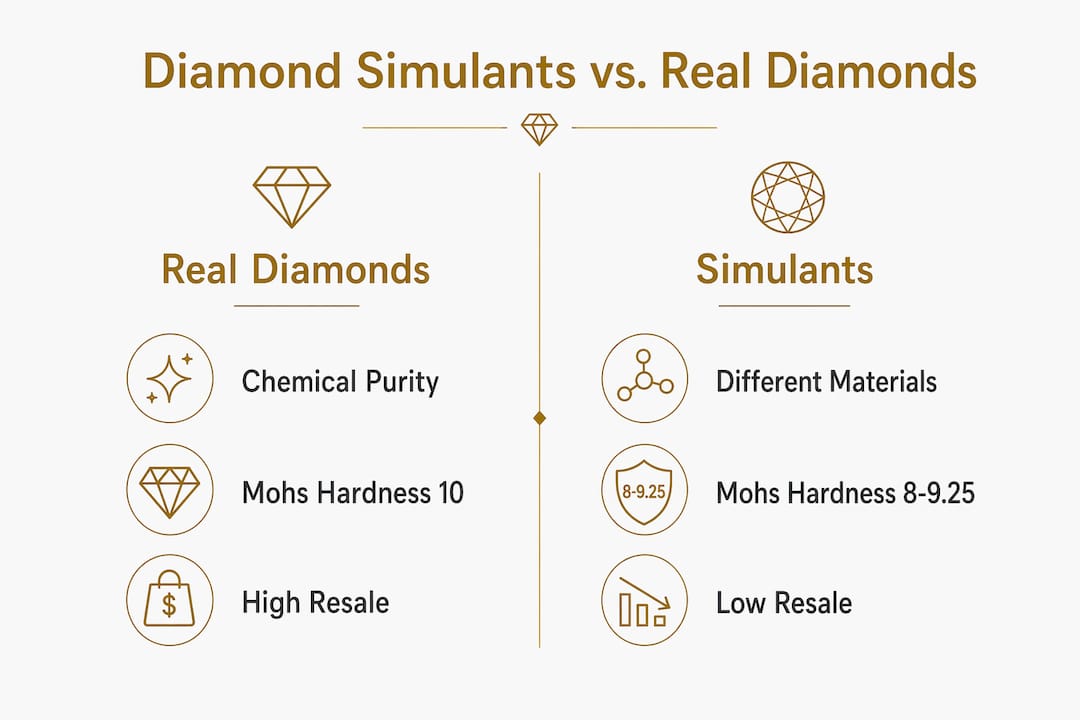
Hardness determines how well a stone resists scratches and daily wear. The Mohs hardness scale rates minerals from 1 to 10. Natural and lab-grown diamonds score 10, the highest possible rating. Moissanite scores approximately 9.25. Cubic zirconia scores between 8 and 8.5.
| Stone | Mohs Hardness | Daily Wear Durability |
|---|---|---|
| Natural diamond | 10 | Excellent, resists scratching |
| Lab-grown diamond | 10 | Excellent, identical to natural |
| Moissanite | ~9.25 | Very good, minor scratch risk |
| Cubic zirconia | 8–8.5 | Moderate, clouds and scratches over time |
Those numbers have real consequences. Cubic zirconia worn daily in a ring will develop surface scratches and a cloudy appearance within a few years. Moissanite holds up better but still falls short of diamond’s permanence. For an engagement ring worn every day for decades, that gap matters.
Simulants are also more prone to chipping under hard impact because their crystal structures are less tightly bonded than diamond’s. A diamond ring can survive a knock against a countertop that would chip a cubic zirconia stone. For occasional wear pieces like fashion jewelry or travel accessories, that trade-off is entirely acceptable. For a piece meant to last a lifetime, it is worth weighing carefully.
Pro Tip: If you choose moissanite for daily wear, have the setting inspected annually. The stone’s slightly lower hardness means prongs can loosen faster than they would with a diamond.
How do optical properties and visual performance compare?
Sparkle is where simulants genuinely shine, sometimes too much. Real diamonds have a refractive index of approximately 2.41. Moissanite’s refractive index is approximately 2.65, which produces stronger fire, the rainbow flashes of color you see when light passes through the stone. Some simulants have color dispersion more than four times that of diamonds. That sounds appealing, but trained eyes notice it immediately.
Here is how the key optical properties stack up:
| Property | Natural Diamond | Moissanite | Cubic Zirconia |
|---|---|---|---|
| Refractive index | ~2.41 | ~2.65 | ~2.15 |
| Fire (color dispersion) | Moderate | Very high | High |
| Brilliance | High | High | Moderate |
| Typical clarity | Inclusions common | Eye-clean | Flawless |
A few visual clues help you tell them apart:
- Rainbow flashes: Moissanite produces a disco-ball effect in direct sunlight that diamonds do not.
- Flawlessness: Cubic zirconia is typically internally flawless and completely colorless. Natural diamonds almost always contain small inclusions or slight color tints. A stone that looks too perfect is often a simulant.
- Facet sharpness: Under magnification, diamonds show crisp, well-defined facet edges. Simulants like cubic zirconia have rounded or blurred facet junctions.
- Color under light: Real diamonds reflect white light cleanly. Moissanite tends to show more colored light at certain angles.
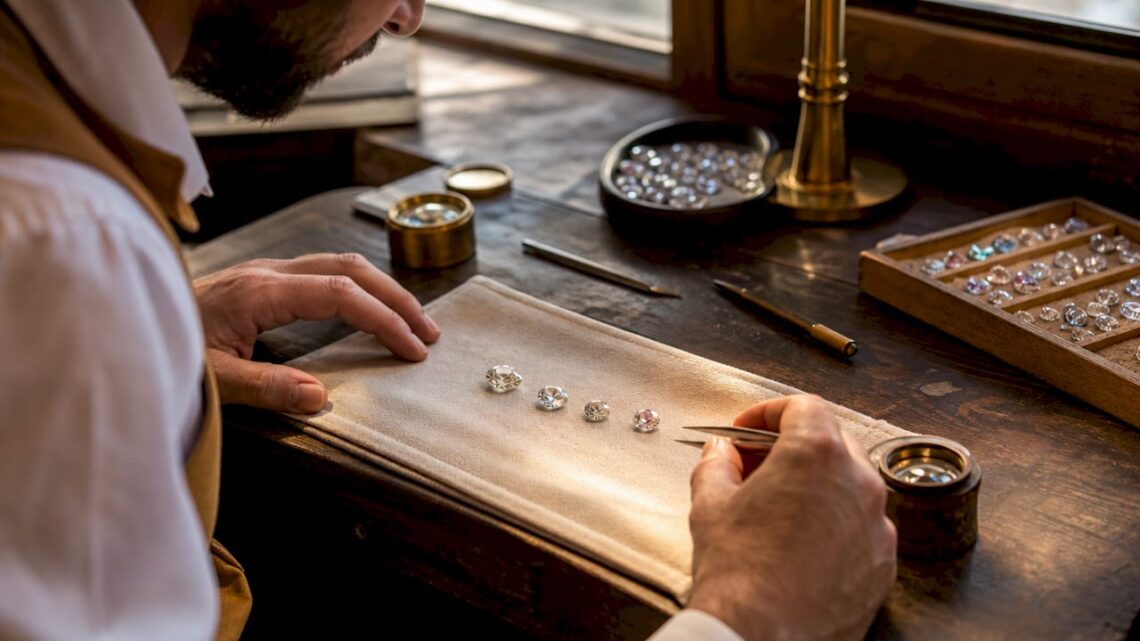
Without magnification or testing equipment, the differences between diamond simulants and genuine diamonds are genuinely hard to spot for most buyers. That is both a selling point for simulants and a reason to buy from trusted, certified sources.
What are the financial differences and value implications?
Price is where the gap between simulants and real diamonds becomes most obvious. Lab-grown diamonds cost 60–80% less than natural diamonds. Simulants go even further. A 1-carat equivalent cubic zirconia or moissanite stone typically ranges from $20 to $600. A comparable natural diamond starts in the thousands.
| Stone type | Approximate price (1-carat equivalent) | Resale value |
|---|---|---|
| Natural diamond | $3,000–$10,000+ | Moderate to high |
| Lab-grown diamond | $500–$2,000 | Low to moderate |
| Moissanite | $200–$600 | Negligible |
| Cubic zirconia | $20–$100 | Negligible |
Simulants carry negligible resale value. The market treats them as fashion jewelry, not investment pieces. That is not a flaw if you buy them knowing that. A cubic zirconia travel ring that costs $50 and looks stunning on a beach vacation is a smart purchase. A simulant presented as a long-term investment or heirloom piece is a mismatch of expectations.
Who benefits most from simulants? Buyers who prioritize visual impact over long-term value. Fashion-focused shoppers, travelers who do not want to risk losing an expensive stone, and budget-conscious buyers planning to upgrade later all have good reasons to choose simulants. Usajewels offers a lifetime diamond upgrade program, which means you can start with a more affordable option and move to a certified diamond when the time is right.
Certification matters here too. Gemological lab certification from recognized bodies like GIA, AGS, or IGI confirms a stone’s identity and quality. Simulants do not receive diamond certifications. If a seller cannot provide documentation, that is a clear signal to ask more questions.
How to identify diamond simulants when shopping
Knowing how to identify diamond simulants protects you from both accidental purchases and deliberate misrepresentation. These are the most reliable methods:
- Use a thermal conductivity tester. Standard diamond testers measure how quickly a stone conducts heat. Diamonds conduct heat rapidly. Most simulants do not. This test correctly identifies cubic zirconia in seconds.
- Add an electrical conductivity test for moissanite. Moissanite is electrically conductive, unlike diamonds, which are electrical insulators. A dual-mode tester catches moissanite that passes a thermal-only test.
- Examine facet edges under magnification. A jeweler’s loupe at 10x magnification reveals facet sharpness. Crisp, precise junctions indicate diamond. Rounded or soft edges point to a simulant.
- Look for inclusions. Natural diamonds almost always have minor internal flaws. A stone that appears completely flawless under magnification is likely a simulant or a lab-grown diamond, not a natural stone.
- Request certification. Ask for a grading report from GIA, AGS, or IGI. A certified stone has been independently verified. No certification means no independent proof of identity.
Common myths worth dismissing: the scratch test does not work reliably because several simulants are hard enough to scratch glass. Color brilliance alone does not confirm diamond status because moissanite can appear just as bright. Visual inspection without tools is not enough for a confident identification.
Pro Tip: When buying online, always request the grading certificate number and verify it directly on the issuing lab’s website before completing your purchase.
Key takeaways
Diamond simulants look like real diamonds but differ fundamentally in chemical composition, hardness, optical behavior, and long-term value, making the right choice entirely dependent on your priorities and how you plan to wear the piece.
| Point | Details |
|---|---|
| Chemical identity | Only pure carbon crystal structures qualify as diamonds; simulants use different materials entirely. |
| Hardness gap | Diamonds score 10 on the Mohs scale; cubic zirconia scores 8–8.5 and clouds with daily wear. |
| Optical differences | Moissanite produces stronger fire than diamonds, making it visually distinct under direct light. |
| Resale value | Simulants carry negligible resale value and are best treated as fashion rather than investment pieces. |
| Identification tools | Dual-mode thermal and electrical testers, plus magnification, reliably distinguish simulants from real diamonds. |
When simulants make sense, and what buyers often miss
I have spent years watching buyers agonize over this decision, and the honest truth is that most people ask the wrong question. They ask, “Is a simulant as good as a real diamond?” The better question is, “What do I actually need this stone to do?”
A simulant worn in a fashion ring for a vacation is a genuinely smart choice. Losing a $50 cubic zirconia ring at the beach stings far less than losing a $5,000 diamond. For that use case, simulants are not a compromise. They are the right tool.
Where I see buyers go wrong is in underestimating long-term wear. Cubic zirconia in a daily-wear engagement ring will look noticeably different in five years. The clouding is not dramatic, but it is real. Moissanite holds up much better, and for buyers who love the look but want durability, it is worth the extra cost over cubic zirconia. You can explore the full moissanite vs. diamond comparison at Usajewels for a detailed breakdown.
The other thing buyers miss is the emotional dimension. Jewelry carries meaning. An engagement ring is not just a purchase. It is a symbol. For many people, knowing a stone is a real diamond, with all its geological history, matters deeply. That is not irrational. It is human. If that meaning matters to you or your partner, a simulant will not fully satisfy, no matter how beautiful it looks.
My recommendation: match the stone to the purpose. Fashion piece? Simulant makes sense. Daily engagement ring meant to last decades and carry sentimental weight? Invest in a certified diamond, lab-grown or natural, and buy from a source you trust.
— Joseph
Real diamonds and custom rings from Usajewels
Usajewels has been helping families find the right jewelry since 1999, with a family-owned, in-house manufacturing model that removes middlemen and keeps prices honest.

Whether you want a certified natural diamond, a lab-grown stone, or guidance on designing your own engagement ring, Usajewels offers transparent pricing and lifetime diamond upgrades. Their fine diamond jewelry collection covers everything from classic solitaire rings to custom pieces built around your preferences and budget. With over 222 verified Google reviews and a commitment to conflict-free, ethically sourced stones, Usajewels gives you the confidence to buy with clarity. Reach out to their team for personalized guidance on choosing the right stone for your lifestyle.
FAQ
Are diamond simulants real diamonds?
Diamond simulants are not real diamonds. They mimic diamond appearance but are made from different materials, such as zirconium dioxide or silicon carbide, and do not share diamond’s carbon crystal structure.
What is the most durable diamond simulant?
Moissanite is the most durable common simulant, scoring approximately 9.25 on the Mohs hardness scale. It resists scratches better than cubic zirconia and holds its clarity longer under daily wear.
How do I identify a diamond simulant at home?
Look for rainbow-colored flashes in direct light, which indicate moissanite, or a completely flawless, colorless appearance, which is typical of cubic zirconia. A jeweler’s loupe revealing rounded facet edges also points to a simulant rather than a real diamond.
Do diamond simulants hold their value?
Simulants carry negligible resale value and are not considered investment pieces. They are best purchased for their visual appeal and affordability rather than long-term financial return.
What is the difference between a lab-grown diamond and a simulant?
A lab-grown diamond is a real diamond with the same chemical and physical properties as a natural diamond. A simulant only resembles a diamond visually and is made from an entirely different material.
Recommended
- Natural Diamonds: Quality, Value & Origin | USA Jewels
- Best Gemstone Alternatives to Diamonds for Rings
- Moissanite vs Diamond Comparison | USA Jewels
- Lab-Grown vs Natural Diamonds Guide | USA Jewels

Deep Mehta is the Co-Owner of USA Jewels, a family-owned jewelry business she has led since 2013 in Deerfield Beach, Florida. With over 13 years of hands-on experience in fine jewelry retail, manufacturing, and diamond importing, Deep specializes in engagement rings, wedding bands, and custom jewelry design. She also co-manages Kaash Group Talent Acquisition. Deep is a University of Florida graduate and oversees every aspect of USA Jewels’ operations, from product development to marketing.
Frequently Asked Questions
Will a diamond tester tell me if my stone is a simulant or a real diamond?
If I buy a cubic zirconia engagement ring, how long will it actually last?
Is a lab-grown diamond better than a moissanite simulant for an engagement ring?
Why do simulants look so flawless compared to real diamonds?
Can moissanite be set in platinum or gold the same way as a real diamond?
Fine Jewelry Collection


You May Also Like

GIA Certification Diamonds: What Buyers Need to Know
Cut First, Then Color vs Clarity for Engagement Rings