
Engagement Ring Metal Types: Your 2026 Buying Guide
Engagement ring metal types are the foundation of every ring’s durability, appearance, and long-term comfort. The metal you choose affects how well your ring holds its shape, how it interacts with your skin, and how it looks alongside your center stone. Platinum, white gold, yellow gold, rose gold, and palladium are the five metals recognized most widely by American jewelers. Each carries distinct trade-offs in cost, hardness, and care. This guide breaks down every major option so you can make a confident, personal choice.
1. What are the most popular engagement ring metal types?
Choosing the right ring metal starts with understanding what each option actually delivers. Here are the top metals used in engagement rings today.
Platinum is the most durable and prestigious metal for engagement rings. It is naturally hypoallergenic, highly resistant to wear, and develops a soft vintage patina over time that many couples find beautiful. Platinum also enhances diamond brightness by reflecting light cleanly. The trade-off is cost. Platinum costs more than gold, but it loses minimal metal over time, making it a strong long-term investment.
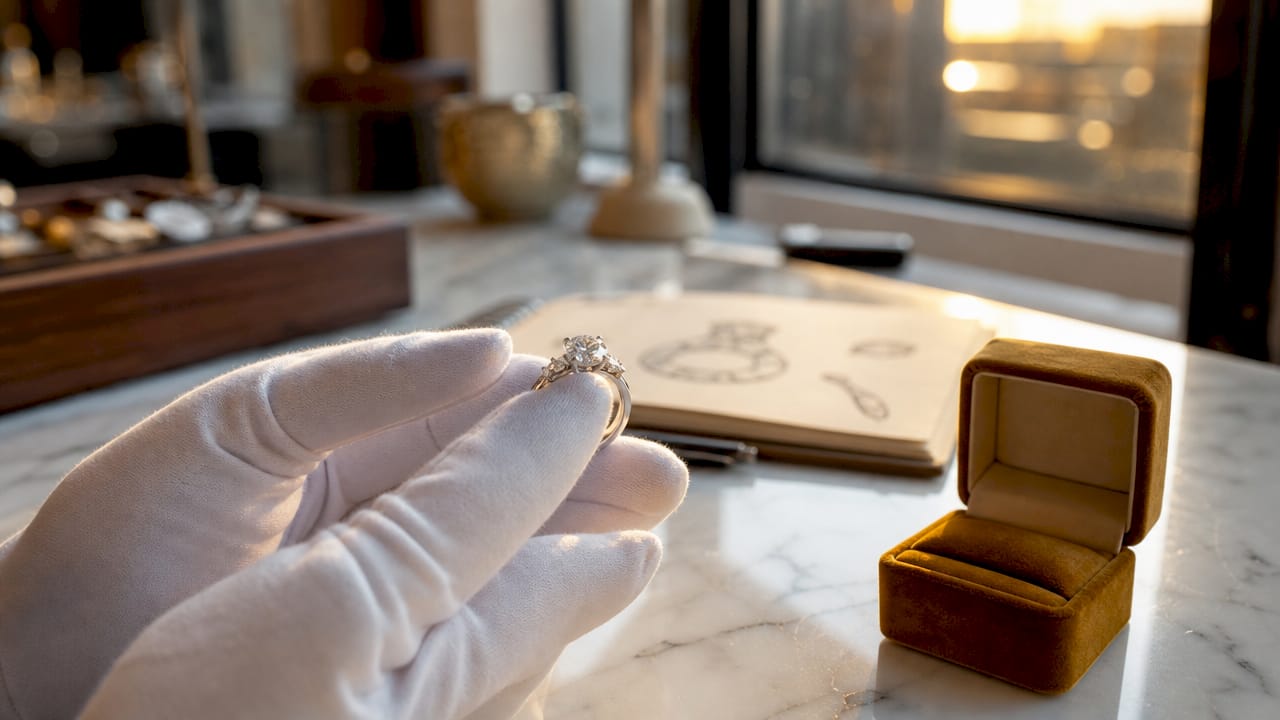
White gold offers a similar bright, silver-toned look at a lower price point. It requires rhodium replating every 1–3 years to maintain its white finish, costing $50–$100 per professional visit. That ongoing maintenance cost is worth factoring into your budget from the start.
Yellow gold is the classic choice and the most historically significant metal in jewelry. The karat level matters here. 14-karat gold balances durability and color richness, making it ideal for daily wear. 18-karat gold offers a richer, deeper color but is softer and more prone to scratching.
Rose gold has surged in popularity and carries a warm, romantic tone. Its copper alloy composition actually makes it one of the more durable gold options. Rose gold pairs beautifully with warm skin tones and works well in mixed-metal designs.
Palladium is a lesser-known metal that shares many of platinum’s best qualities. It is lightweight, hypoallergenic, and naturally white without needing rhodium plating. Palladium typically costs less than platinum, though it is harder to resize and less widely available from jewelers.
Pro Tip: If you or your partner have sensitive skin, choose platinum or palladium. Some white gold alloys contain nickel, which can cause reactions in people with metal sensitivities.
2. How do mixed-metal and two-tone engagement rings work?
Mixed-metal rings combine two or more metals in a single piece, either in the band, the setting, or both. This design approach has deep roots in jewelry history and is one of the biggest bridal trends for 2026.
The practice of pairing metals for structural reasons goes back to the Edwardian era. Jewelers used yellow gold for band strength and platinum for prongs because platinum holds stones more securely. That same logic applies today. A yellow gold band with platinum prongs gives you warmth and tradition in the shank while protecting your diamond with the strongest available metal.
Mixed-metal wedding sets are a trending bridal style for 2026, combining aesthetic contrast with practical benefits. The most popular pairings include:
- Yellow gold band with platinum or white gold setting
- Rose gold band with white gold prongs
- Tri-tone rings combining yellow gold, white gold, and rose gold
- Platinum setting with a yellow gold comfort-fit band
One practical concern with mixing metals is uneven wear. Metals with very different hardness levels will wear against each other over years of daily friction. White gold is closer in hardness to platinum than yellow gold is, making it a smarter pairing choice when you want to minimize long-term wear between your engagement ring and wedding band.
Two-tone rings let couples enjoy classic gold warmth alongside the durability and modern look of white metals, serving both aesthetic and practical purposes.
For more on why this style has taken hold, the Usajewels guide on two-tone ring popularity covers the retail and design trends in detail.
3. Durability, maintenance, and cost compared
Understanding the practical differences between metals helps you match your ring to your actual lifestyle. Here is how the top options compare across the three factors that matter most.
Durability ranks platinum at the top. It is the densest of the common ring metals and holds its shape under daily stress better than any gold alloy. White gold and 14-karat yellow gold sit in the middle tier. Rose gold, thanks to its copper content, is harder than pure yellow gold. 18-karat yellow gold is the softest of the common options.
Maintenance varies significantly. Platinum requires no replating, but it does develop a patina that some people polish out periodically. White gold needs professional rhodium replating every 1–3 years at $50–$100 per visit. Yellow and rose gold need only routine cleaning. Palladium is similarly low-maintenance to platinum.
Cost follows a clear order. Platinum is the most expensive at purchase and over time, though its durability means fewer repairs. White gold costs less upfront but carries ongoing replating costs. Yellow gold at 14 karats is the most affordable durable option. Palladium sits between white gold and platinum in price.
Skin sensitivity is a deciding factor for many couples. Platinum and palladium are hypoallergenic, while nickel-based white gold alloys can cause reactions. If sensitivity is a concern, ask your jeweler specifically about nickel-free white gold alloys or choose platinum outright.
Pro Tip: Ask your jeweler for a nickel-free white gold alloy if you want the white gold look without the allergy risk. Many jewelers offer palladium-based white gold that eliminates the problem entirely.
4. Which metal suits your lifestyle and personal style?
The best ring metal for you depends on how you live, not just how you want your ring to look. A few honest questions will point you in the right direction.
For active lifestyles: If you work with your hands, exercise frequently, or spend time outdoors, prioritize hardness and scratch resistance. Platinum and 14-karat white or yellow gold hold up best under daily physical stress. Rose gold is also a strong choice given its copper-reinforced hardness. Avoid 18-karat yellow gold if your hands take regular punishment.
For skin tone matching: Yellow gold flatters warm and olive skin tones. White gold and platinum complement cool and fair skin tones. Rose gold works across a wide range of skin tones and is particularly striking on medium and warm complexions. The center stone’s visual impact also shifts depending on the metal surrounding it.
For budget-conscious couples: 14-karat yellow gold delivers excellent durability and a classic look at the lowest price point. White gold costs more upfront than yellow gold but less than platinum. Factor in the long-term replating cost for white gold when comparing true total costs.
For pairing with a wedding band: Metal compatibility matters when stacking rings. Pairing metals with similar hardness prevents one ring from wearing down the other over time. White gold and platinum pair well together. If you love the look of yellow gold with a white metal band, choose a two-tone design from the start rather than mixing separate rings later.
- Identify your daily activity level before choosing hardness.
- Test metals against your skin tone in natural light.
- Calculate total cost over five years, including maintenance.
- Confirm hypoallergenic status if you have known metal sensitivities.
- Choose metals with compatible hardness if you plan to stack rings.
Usajewels offers a detailed precious metals guide covering gold and platinum options with shopping guidance tailored to durability, cost, and style.
Key takeaways
The right engagement ring metal balances durability, maintenance cost, skin compatibility, and personal style, with platinum leading on longevity and 14-karat gold leading on value.
| Point | Details |
|---|---|
| Platinum leads on durability | Platinum loses minimal metal over time and never needs replating, making it the longest-lasting choice. |
| White gold needs ongoing care | Budget $50–$100 every 1–3 years for rhodium replating to keep white gold looking its best. |
| 14-karat gold is the value leader | 14-karat yellow gold offers the best balance of durability, color, and affordability for daily wear. |
| Mixed metals serve both style and function | Pairing yellow gold bands with platinum prongs is a proven technique for strength and diamond security. |
| Match hardness when stacking rings | Choosing metals with similar hardness prevents uneven wear between your engagement ring and wedding band. |
What I’ve learned from years of watching couples choose ring metals
The most common regret I hear from couples is choosing a metal based purely on how it looks in a display case. A ring that sits under store lighting looks different after two years on an active hand. White gold is a perfect example. It photographs beautifully and costs less than platinum, but the replating requirement surprises people who did not plan for it. I always tell couples to think of white gold like a car that needs regular oil changes. It is a great choice if you know what you are signing up for.
The mixed-metal trend is one I genuinely support, but only when the pairing is intentional. Yellow gold and platinum together is a combination that has worked for over a century for good reason. It is not just a style choice. It is a structural one. When couples come to me wanting to mix rose gold with platinum, I walk them through the hardness difference and suggest they consider white gold as the white metal instead. Small decisions like that protect the ring for decades.
My honest advice is to spend as much time thinking about your lifestyle as you do about aesthetics. The most beautiful ring is the one you can wear every day without worrying about it. If you work with your hands, platinum or 14-karat gold will serve you far better than a soft 18-karat setting, no matter how stunning it looks. And if you are unsure, talk to a jeweler who will give you a straight answer rather than just selling you the most expensive option on the shelf.
— Joseph
Your next step with Usajewels
Usajewels has been helping couples find the right ring since 1999, with in-house manufacturing that keeps prices honest and quality high. Whether you are drawn to classic yellow gold, the clean look of platinum, or a custom two-tone design, the team works directly with you to match your metal choice to your style, budget, and lifestyle.
Every ring is crafted with conflict-free diamonds and ethically sourced metals. You can browse the full fine diamond jewelry collection to see how different metals look in finished pieces, or use the custom design guide to build your ring from scratch. With over 222 five-star Google reviews and a lifetime diamond upgrade policy, Usajewels gives you the confidence to choose well and wear it for life.
FAQ
What is the most durable metal for an engagement ring?
Platinum is the most durable engagement ring metal. It loses minimal material over time and holds its shape under daily wear better than any gold alloy.
Does white gold require more maintenance than yellow gold?
Yes. White gold requires professional rhodium replating every 1–3 years at $50–$100 per visit to maintain its bright white finish. Yellow gold needs only routine cleaning.
Are platinum and palladium truly hypoallergenic?
Both platinum and palladium are naturally hypoallergenic. Some white gold alloys contain nickel, which can cause skin reactions in sensitive individuals.
What is the best metal for mixing with a wedding band?
White gold and platinum are the best pairing for stacked rings because their similar hardness levels prevent one metal from wearing down the other over years of daily contact.
Is rose gold a good choice for everyday wear?
Yes. Rose gold’s copper alloy content makes it harder than many yellow gold options, and it holds up well under daily wear while maintaining its warm, distinctive color.
Recommended
- Vintage Engagement Ring Styles: Your 2026 Era Guide
- Precious Metals Guide: Gold & Platinum | USA Jewels
- Why Rose Gold Engagement Rings Trend in 2026
- Gemstone Engagement Rings: Complete Guide | USA Jewels

Deep Mehta is the Co-Owner of USA Jewels, a family-owned jewelry business she has led since 2013 in Deerfield Beach, Florida. With over 13 years of hands-on experience in fine jewelry retail, manufacturing, and diamond importing, Deep specializes in engagement rings, wedding bands, and custom jewelry design. She also co-manages Kaash Group Talent Acquisition. Deep is a University of Florida graduate and oversees every aspect of USA Jewels’ operations, from product development to marketing.
Frequently Asked Questions
Should I choose 14-karat or 18-karat gold for my engagement ring?
Why does white gold need rhodium plating, and how often should I have it done?
What's the difference between platinum and palladium for engagement rings?
How do two-tone rings combine metals, and what are the structural benefits?
Which metal is best if I have sensitive skin or metal allergies?
Fine Jewelry Collection


You May Also Like

10 Engagement Ring Design Mistakes to Avoid

Why Custom Jewelry Is a Meaningful Gift for Any Occasion