Why Rose Gold Engagement Rings Trend in 2026
Rose gold engagement rings are defined by their warm pink hue, created by alloying gold with copper, and they have grown from a niche choice into one of the most requested metals in modern engagement jewelry. The reason why rose gold engagement rings trend so consistently comes down to three forces working together: a flattering color that suits nearly every skin tone, a romantic symbolism rooted in over a century of jewelry history, and a versatility that works across vintage, minimalist, and mixed-metal styles. Rose gold’s popularity has matured from novelty to genuine preference, driven by warmth, durability, and real-world wearability rather than marketing cycles.
Why does rose gold’s composition make it so appealing?
Rose gold is a gold-copper alloy, and that copper content is the source of everything that makes it special. Copper gives the metal its signature blush tone, ranging from a soft pink to a deeper reddish warmth depending on the copper percentage. It also makes rose gold stronger than yellow gold at the same karat, which matters a great deal for a ring worn every day.
The flattering effect on skin tone is one of rose gold’s most underrated advantages. The warm pink undertone complements both cool and warm complexions, making it a genuinely universal choice. Yellow gold can wash out fair skin, and white gold can look stark against deeper tones. Rose gold sits in a sweet spot that works across a wide range of people.
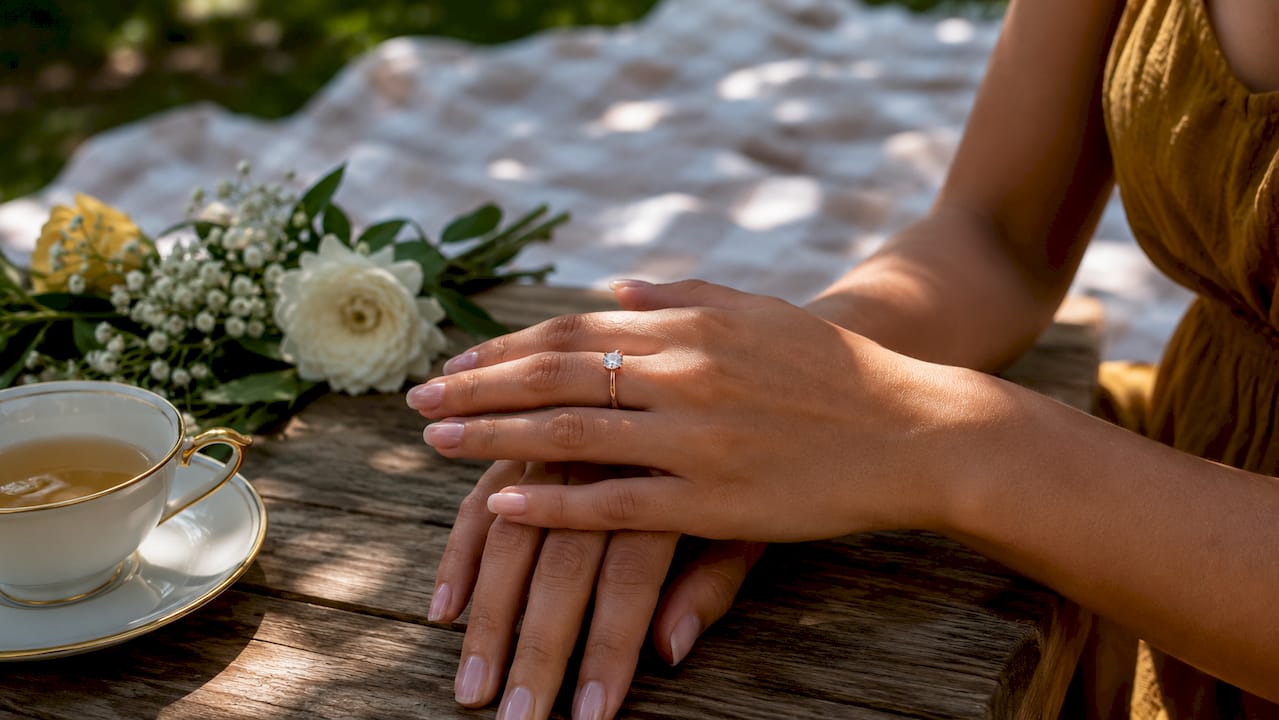
Rose gold also bridges two design worlds effortlessly. It carries the warmth and richness of vintage Victorian jewelry while looking completely at home in a clean, modern setting. That dual compatibility is rare in any metal.
Here is what makes rose gold’s composition stand out:
- Color depth: Higher copper content creates a deeper, more dramatic rose tone. Lower copper content produces a softer, blush pink.
- Durability: Copper hardens the alloy, making rose gold more scratch-resistant than comparable karat yellow gold.
- Skin tone versatility: The warm pink hue flatters fair, medium, olive, and deep skin tones equally.
- Design range: Works with vintage filigree, solitaire settings, halo designs, and minimalist bands.
- Aging gracefully: Rose gold develops a subtle patina over decades that many wearers find adds character rather than diminishing beauty.
Pro Tip: If you want a deeper, richer pink tone, ask your jeweler about 18K rose gold. If you prefer a softer blush, 14K rose gold contains slightly more copper and reads as a lighter pink in most lighting.
What is the history behind rose gold engagement rings?
Rose gold first gained prominence in 19th-century Russia, where jeweler Carl Fabergé used it extensively in his imperial commissions. The metal was called “Russian gold” in its early years, a name that reflected both its geographic origin and its association with luxury and craftsmanship. From there, it moved into Victorian-era jewelry, where its warm tone aligned perfectly with the era’s love of romantic, ornate design.
Rose gold’s cultural symbolism has always centered on emotion. The color pink carries associations with love, tenderness, and warmth across many cultures. When that symbolism is built into the metal itself rather than applied through a gemstone or enamel, it creates a piece of jewelry that feels inherently personal.
“Rose gold reflects a cultural shift toward valuing material honesty and emotional connection in jewelry, going beyond fashion cycles.” — Rose Gold and Engagement Rings
The metal’s periodic resurgences follow a clear pattern:
- Victorian era (1837–1901): Rose gold appeared in sentimental lockets, mourning jewelry, and romantic brooches, cementing its association with deep personal feeling.
- Art Deco period (1920s–1930s): Rose gold appeared alongside platinum in two-tone designs, valued for its contrast against cooler metals.
- Mid-century revival (1940s–1950s): Cartier popularized rose gold in its Trinity ring, a three-band design that became one of the most recognized jewelry pieces in history.
- Modern resurgence (2014 to present): Search volume for rose gold engagement rings rose 250% between 2014 and 2017, establishing it as a foundational metal choice rather than a passing trend.
Each resurgence connects rose gold to a cultural moment that values craftsmanship, individuality, and emotional authenticity. That pattern suggests its current popularity is not a cycle waiting to end.
Rose gold vs white gold and other metals: how do they compare?
Choosing an engagement ring metal is a practical decision as much as an aesthetic one. Rose gold holds its own against yellow gold, white gold, and platinum in ways that surprise many buyers.
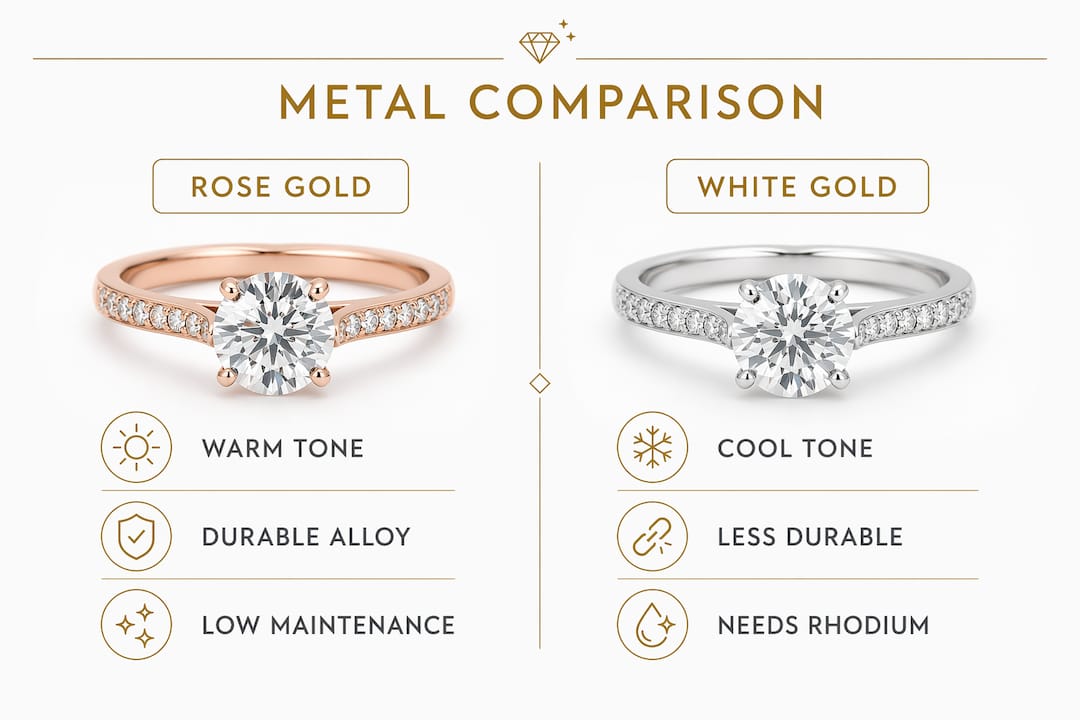
Rose gold is more durable than yellow gold and white gold alloys at the same karat, though platinum remains the hardest of the common ring metals. That durability gap matters for daily wear. White gold requires rhodium plating every few years to maintain its bright finish, adding ongoing maintenance costs. Rose gold needs no such treatment. Its color is inherent to the alloy, not a surface coating.
Here is a direct comparison across the metals most couples consider:
| Metal | Color | Durability | Maintenance | Relative cost |
|---|---|---|---|---|
| Rose gold | Warm pink | High (copper alloy) | Low (no replating needed) | Moderate |
| Yellow gold | Classic warm gold | Moderate | Low | Moderate |
| White gold | Cool silver-white | Moderate | High (rhodium replating) | Moderate |
| Platinum | Cool silver-white | Very high | Low | High |
The cost comparison is worth noting. Platinum commands a significant premium over gold alloys. Rose gold and white gold sit at similar price points for the same karat weight, but rose gold eliminates the replating expense that white gold accumulates over time.
Over 60% of engagement rings sold in the U.S. now feature mixed-metal elements, and rose gold is frequently the connecting metal in those designs. Its warm tone creates visual contrast against white gold or platinum prongs without clashing, making it the natural choice for couples who want a ring that coordinates with a broader jewelry wardrobe.
Pro Tip: When comparing rose gold vs white gold for an engagement ring, consider your partner’s existing jewelry. Rose gold pairs naturally with yellow gold pieces and creates a striking contrast with silver-toned accessories. White gold blends more uniformly with silver and platinum.
Why are modern couples choosing rose gold engagement rings?
The current engagement ring trends reflect a clear shift away from convention. Couples today are less interested in choosing a ring because it is traditional and more interested in choosing one that feels personal. Rose gold fits that preference precisely.
Several practical and cultural factors are driving rose gold ring popularity in 2026:
- Personal expression over tradition: Rose gold signals a deliberate aesthetic choice rather than a default. Couples who choose it are making a statement about their own taste.
- Mixed-metal compatibility: Rose gold works as a connector piece in stacked rings and bridal sets. It pairs with white gold, yellow gold, and platinum without visual conflict, making it ideal for couples who plan to add anniversary bands over time.
- Ethical sourcing alignment: Advances in metallurgical refining and ethical sourcing practices have made rose gold a strong choice for buyers who prioritize sustainability and material transparency. Recycled gold alloys are widely available, and rose gold’s copper content can be sourced responsibly.
- Diamond shape versatility: Rose gold pairs well with a wide variety of diamond shapes, from oval and pear cuts that emphasize its romantic warmth to emerald and cushion cuts that contrast beautifully against its blush tone. You can explore diamond shape options to find the cut that works best with a rose gold setting.
- Social media influence: Rose gold photographs exceptionally well. Its warm tone catches light in a way that reads as rich and distinct in photos, which matters to couples sharing their engagement on Instagram or Pinterest.
- Longevity over trend: Market analysis confirms that rose gold’s appeal has moved beyond fashion hype. It now represents a foundational metal in mixed-metal designs, not a novelty waiting to be replaced.
The combination of these factors explains why rose gold is not fading. It answers real needs: durability, low maintenance, ethical sourcing, and a look that feels both timeless and distinctly personal.
Key takeaways
Rose gold engagement rings trend because they combine genuine durability, romantic symbolism, and unmatched versatility across skin tones, design styles, and mixed-metal settings.
| Point | Details |
|---|---|
| Composition drives appeal | Copper alloy gives rose gold its pink tone and makes it stronger than same-karat yellow or white gold. |
| History reinforces staying power | Rose gold’s roots in Victorian and imperial Russian jewelry connect it to lasting romantic symbolism, not passing trends. |
| Low maintenance advantage | Unlike white gold, rose gold requires no rhodium replating, reducing long-term care costs. |
| Mixed-metal connector | Rose gold acts as the natural bridge in stacked and mixed-metal ring designs, a role that now defines over 60% of U.S. engagement ring sales. |
| Ethical sourcing alignment | Recycled rose gold alloys are widely available, making it a strong choice for sustainability-minded couples. |
Rose gold’s staying power: a perspective from Joseph
I have watched rose gold move through at least two full trend cycles in the jewelry world, and what strikes me most is that it never actually left. It just waited for the culture to catch up with what it always offered.
The couples who chose rose gold in 2015 were not chasing a trend. They were choosing a metal that felt warmer and more personal than the white gold and platinum that had dominated engagement rings for two decades. That instinct was right, and it has proven durable.
What I find most telling is the mixed-metal shift. When over 60% of engagement rings sold in the U.S. incorporate multiple metals, and rose gold is consistently the connecting piece, that tells you something important. It is not a statement metal anymore. It is a foundational one. Foundational choices do not go out of style.
The ethical sourcing dimension is also more significant than most buyers realize. Rose gold made from recycled gold and responsibly sourced copper is a genuinely cleaner choice than many alternatives. For couples who care about where their materials come from, that matters. I expect that alignment between rose gold and ethical values will only strengthen as recycled metal sourcing becomes more standard across the industry.
My honest view: rose gold is the most versatile engagement ring metal available right now. It flatters more skin tones, requires less maintenance, and carries more emotional resonance than any comparable option. If you are choosing a ring that will look as meaningful in 30 years as it does today, rose gold is a very strong answer.
— Joseph
Find your perfect rose gold ring at Usajewels
At Usajewels, we have been helping couples find rings that tell their story since 1999. Our family-owned, in-house manufacturing model means you get direct pricing without the middleman markup, and every piece is crafted with the care and attention it deserves.
Our fine diamond jewelry collection includes a curated selection of rose gold engagement rings paired with hand-selected, conflict-free diamonds. You can choose your diamond quality, setting style, and metal type to create a ring that is genuinely yours. If you are still exploring your options, our engagement ring buying guide walks you through every decision with clear, honest guidance. With over 222 five-star Google reviews and a lifetime diamond upgrade policy, we stand behind every ring we make.
FAQ
Why is rose gold so popular for engagement rings?
Rose gold’s warm pink tone flatters a wide range of skin tones, requires no replating maintenance, and carries strong romantic symbolism. Its search volume rose 250% between 2014 and 2017, reflecting genuine consumer preference rather than short-term trend.
Does rose gold fade or change color over time?
Rose gold does not fade because its color comes from the copper alloy itself, not a surface coating. It may develop a subtle patina over decades, which most wearers consider a desirable sign of the ring’s history.
Is rose gold more durable than white gold?
Yes. Rose gold is stronger than white gold at the same karat due to its copper content. White gold also requires periodic rhodium replating to maintain its finish, while rose gold needs no such treatment.
What diamond shapes look best with rose gold?
Oval, pear, cushion, and round brilliant cuts all complement rose gold beautifully. The warm tone of the metal enhances the fire of colorless diamonds and pairs especially well with near-colorless stones in the G to I color range.
Is rose gold a good choice for mixed-metal jewelry?
Rose gold is the most common connector metal in mixed-metal engagement ring designs. It pairs naturally with yellow gold and creates striking contrast against white gold or platinum, making it ideal for couples who plan to stack rings or add anniversary bands.
Recommended
- USA Jewels – Beauty, Style & Elegance
- How Engagement Ring Appraisal Works: 2026 Guide
- USA Jewels: Halo Gemstone Rings – Diamond Jewelers & Luxury Cra
- Custom Diamond Jewelry & Engagement Rings | USA Jewels

Frequently Asked Questions
Should I choose 14K or 18K rose gold for my engagement ring?
Does rose gold pair well with different diamond cuts and settings?
How does rose gold age compared to yellow or white gold?
Why does rose gold complement nearly every skin tone better than other metals?
What should I know about maintaining and cleaning rose gold jewelry?
Fine Jewelry Collection


You May Also Like
Safe Jewelry Metals for Children: A Parent’s Guide
How Jewelry Personalization Options Work for Gifts