How Jewelry Personalization Options Work for Gifts
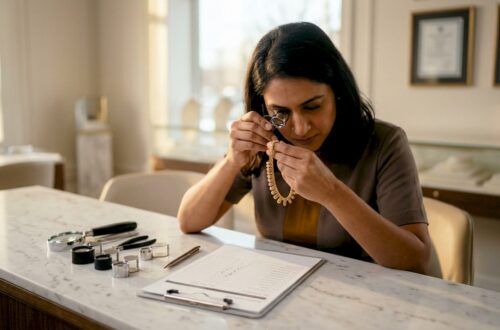
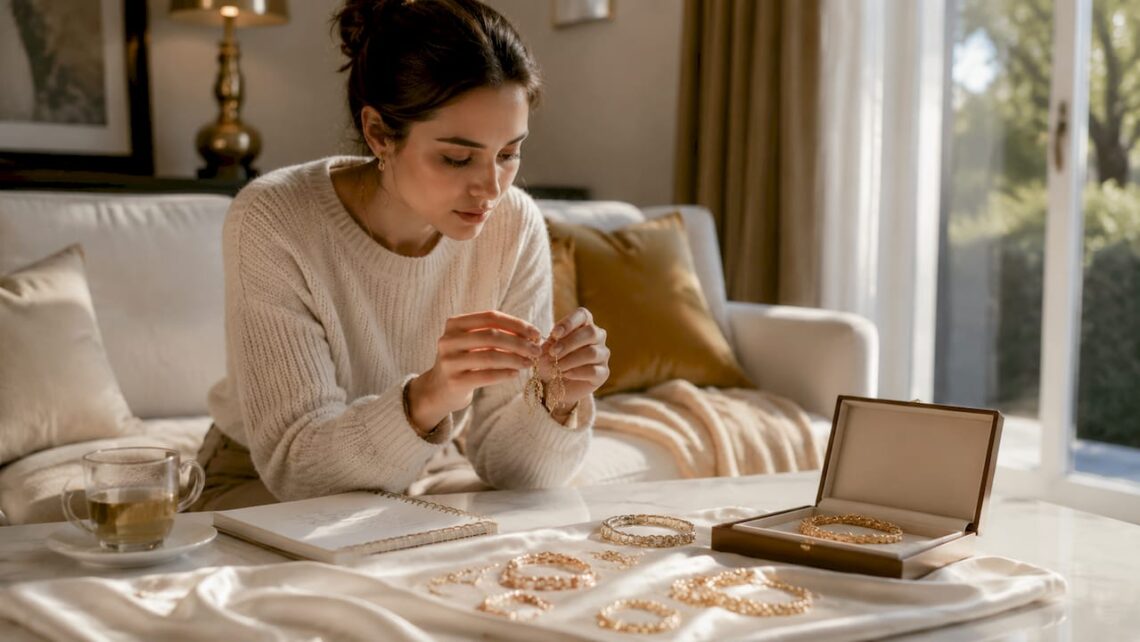
Jewelry personalization is defined as the process of customizing a piece by selecting its style, metal type, stones, settings, and engraving to create something that carries personal meaning. Understanding how jewelry personalization options work matters most when you are choosing a gift for an engagement, anniversary, or milestone moment. Modern jewelers use CAD (Computer-Aided Design) software, wax prototypes, and online configurators to translate your choices into a finished piece with precision. The result is a piece of jewelry that tells a story no off-the-shelf design ever could.
How jewelry personalization options work: the main choices
The jewelry customization process begins with four core decisions: style, metal, stones, and engraving. Each choice affects both the look of the piece and its final price. Understanding what each option involves helps you make confident decisions without second-guessing yourself halfway through the process.
Style selection sets the overall direction. Modern styles favor clean lines and geometric shapes, while traditional designs lean on filigree, milgrain edges, and symmetry. Minimalist options strip everything back to a single stone or a plain band. The style you choose determines which metal and stone combinations make sense, so it is the right place to start.
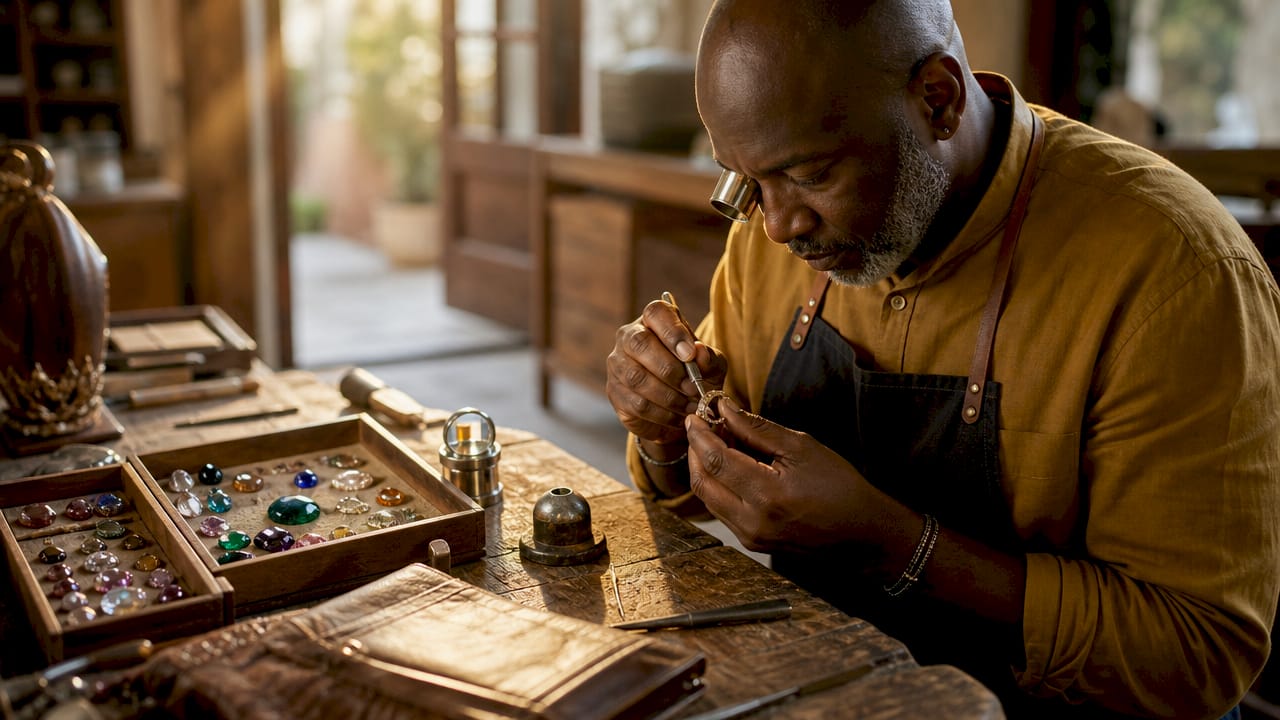
Metal type shapes both aesthetics and cost. Gold comes in yellow, white, and rose varieties, with 14K and 18K being the most common choices for fine jewelry. Platinum is denser and more durable than gold, which makes it a premium option for engagement rings worn daily. Titanium sits at the affordable end of the spectrum and works well for modern, lightweight designs. Removing retail layers helps buyers choose metal weight and complexity to fit their price range, which is why direct-from-manufacturer models consistently deliver better value.
Stone selection and setting styles give a piece its character. Diamonds remain the most requested stone for engagement and anniversary jewelry, but sapphires, emeralds, and morganite are popular alternatives. Setting styles determine how a stone sits in the metal:
- Prong settings lift the stone high, maximizing light exposure and brilliance
- Bezel settings wrap the stone in metal for a sleek, protective look
- Channel settings line multiple stones in a row within a metal channel, ideal for wedding bands
- Pavé settings cover the surface with small stones held by tiny prongs, creating a sparkling effect
Engraving adds the most personal layer to any piece. A 2–3mm band holds roughly 8–15 characters, which means word choice matters. Laser engraving produces permanent, precise results. Font style also affects how many characters fit legibly, so compact fonts like block lettering outperform ornate scripts when space is tight.
Pro Tip: Before finalizing your engraving text, count the characters including spaces. Then ask your jeweler to confirm the character limit for your specific band width before placing the order.
What is the jewelry personalization process from concept to finished piece?
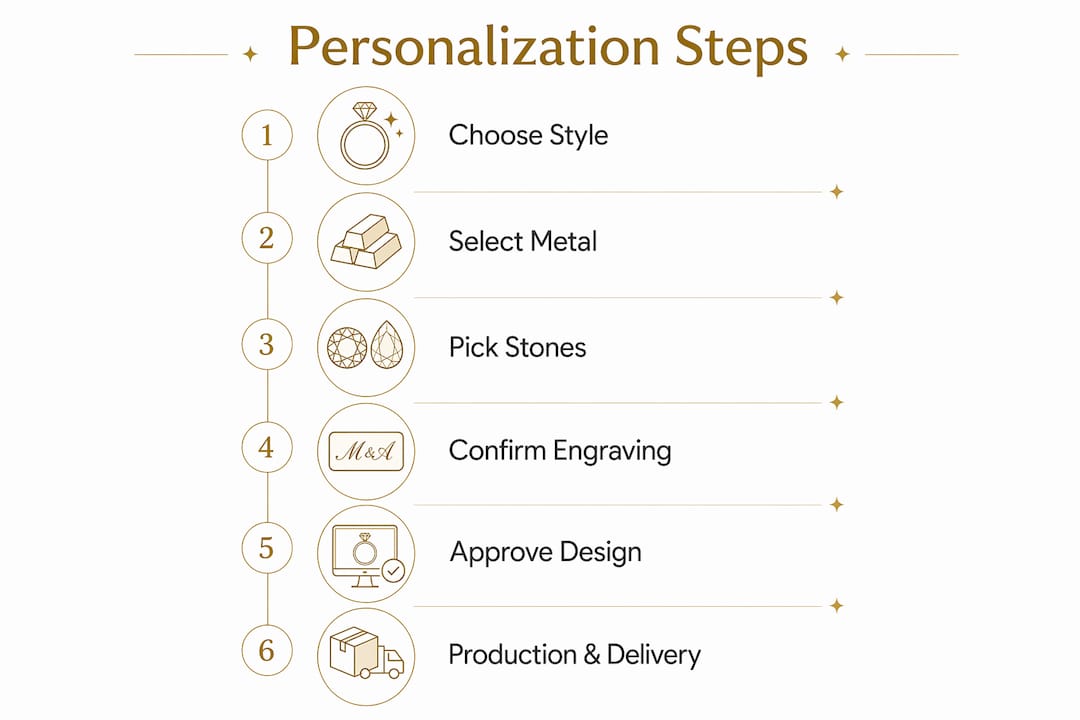
The jewelry customization process follows a defined sequence that most reputable jewelers use. Knowing each stage helps you understand where your input matters most and where delays can occur.
-
Concept and style definition. You describe the design direction, occasion, and budget. A jeweler translates this into a brief that guides every decision that follows.
-
CAD modeling. A designer builds a precise 3D digital model of the piece using CAD software. You review this rendering and approve proportions, stone placement, and overall shape before anything physical is made. This is the most critical approval stage.
-
Wax prototype. A physical wax model is produced from the CAD file. You can hold it, check the sizing, and confirm the design feels right. Changes after casting are expensive and time-consuming, so this is your last low-cost opportunity to request adjustments.
-
Casting. The approved wax model is used to create a mold, and molten metal is poured in to form the piece. The metal cools, the mold is removed, and the raw jewelry piece emerges.
-
Stone setting. A skilled setter places each stone by hand, securing it in the chosen setting style. Precision matters here because a poorly set stone can loosen over time.
-
Finishing and engraving. The piece is polished, any engraving is added, and a final quality inspection confirms the piece meets specifications.
| Stage | Purpose | Customer involvement |
|---|---|---|
| CAD design | Visualize and approve proportions | High: review and sign off |
| Wax prototype | Physical fit and design check | High: last chance for changes |
| Casting | Form the metal piece | None |
| Stone setting | Secure stones in place | None |
| Finishing | Polish, engrave, inspect | Low: final approval |
Custom production timing commonly ranges between 7 and 21 days for standard pieces. Complex engagement rings can take 4 to 8 weeks from consultation to delivery. That timeline is additive to shipping, which is why planning ahead is non-negotiable.
Pro Tip: Request your CAD rendering as a PDF or 3D file you can view on your phone. Reviewing it on a small screen mimics how the piece looks at actual scale and often reveals proportion issues that a large monitor hides.
How do online jewelry configurators improve the customization experience?
Online configurators have changed how people approach unique jewelry personalization. Instead of scheduling multiple consultations and waiting days for quotes, you can build a piece in real time from your own home.
A well-designed configurator walks you through choices in a logical sequence: metal type, stone grade, size, engraving text, and packaging. Real-time 3D visuals and price updates allow shoppers to iterate designs without waiting for quotes. That live feedback loop closes what designers call the “imagination gap,” the anxiety that comes from not knowing what a piece will actually look like until it arrives.
The practical benefits are significant:
- You see the price change immediately when you upgrade from a 14K gold band to 18K or swap a diamond for a sapphire
- Font previews for engraving show you exactly how your text will appear before you commit
- Size guides built into the tool reduce the risk of ordering the wrong ring size
- Packaging options let you prepare a gift-ready presentation without a separate conversation
Online design tools with live pricing also remove the awkwardness of negotiating over cost. You control the budget by adjusting choices in real time rather than receiving a surprise quote after the design is complete.
What to know about timing when ordering personalized jewelry gifts
Timing is the most common source of frustration in the personalized jewelry guide experience. Production and shipping are two separate timelines, and both need to be factored in when you are ordering for a specific date.
Order personalized jewelry at least two weeks ahead of your target date to allow for production and standard shipping. For complex pieces or peak seasons like Valentine’s Day and the winter holidays, four weeks is a safer target. Adding five extra business days as a buffer beyond the stated production time reduces the risk of late delivery significantly.
Engraving adds time to the process. A simple date or initials on a standard band typically adds one to two business days. A longer phrase on a narrow band requires more planning because font style and band width directly affect whether the text is legible or becomes a blurred line of characters.
Common mistakes to avoid when ordering personalized gifts:
- Typos in engraving text. Once engraved, text cannot be removed without refinishing the surface. Proofread your submission twice.
- Ignoring character limits. A message that fits on a wide band may be completely unreadable on a narrow one.
- Skipping the preview approval. Always review the CAD rendering or digital proof before the order moves to production.
- Underestimating shipping time. Standard shipping for fine jewelry often requires signature confirmation, which adds a day or two to the delivery window.
Pro Tip: When ordering a personalized anniversary gift, use the anniversary date itself as the engraving text rather than a phrase. Dates are short, always fit within character limits, and carry deep personal meaning.
Key takeaways
Jewelry personalization works best when you understand each decision point before you reach it, from metal and stone selection through CAD approval and engraving confirmation.
| Point | Details |
|---|---|
| Start with style, then materials | Define the design direction before choosing metal type or stone grade to avoid costly revisions. |
| CAD approval is the critical stage | Most design changes must be finalized at the CAD stage; changes after casting are expensive. |
| Engraving has hard limits | A 2–3mm band holds 8–15 characters; font choice determines whether text is legible or muddled. |
| Order at least two weeks early | Production time is additive to shipping; a five-day buffer beyond stated timelines reduces delivery risk. |
| Configurators reduce uncertainty | Real-time 3D visuals and live pricing let you iterate designs confidently without waiting for quotes. |
What I have learned from years of watching personalized jewelry go right and wrong
Working closely with customers who are ordering jewelry for some of the most meaningful moments of their lives has taught me one thing above everything else: the pieces that disappoint are almost never the result of bad craftsmanship. They are the result of skipped steps.
The CAD preview is the step most people rush through. They approve it quickly because they are excited to get to the finished product. Then the ring arrives and the band feels thicker than expected, or the stone sits slightly higher than they imagined. Those surprises are completely avoidable. Spend real time with the 3D rendering. Zoom in. Rotate it. Ask your jeweler to show you the side profile, not just the top-down view.
Engraving is the other area where I see people underestimate the details. A message that sounds beautiful in your head can become a cramped, illegible line of tiny characters on a narrow band. The fix is simple: ask for a font preview before you approve. Most jewelers who take their craft seriously will provide one without hesitation.
The emotional value of a personalized piece is real. A ring with a date, a pendant with initials, a bracelet with a name carries weight that a standard piece simply does not. But that emotional value only lands when the execution is right. Plan ahead, review every proof, and do not be afraid to ask questions. The jewelers worth working with will welcome them.
— Joseph
Start your personalized jewelry journey with Usajewels
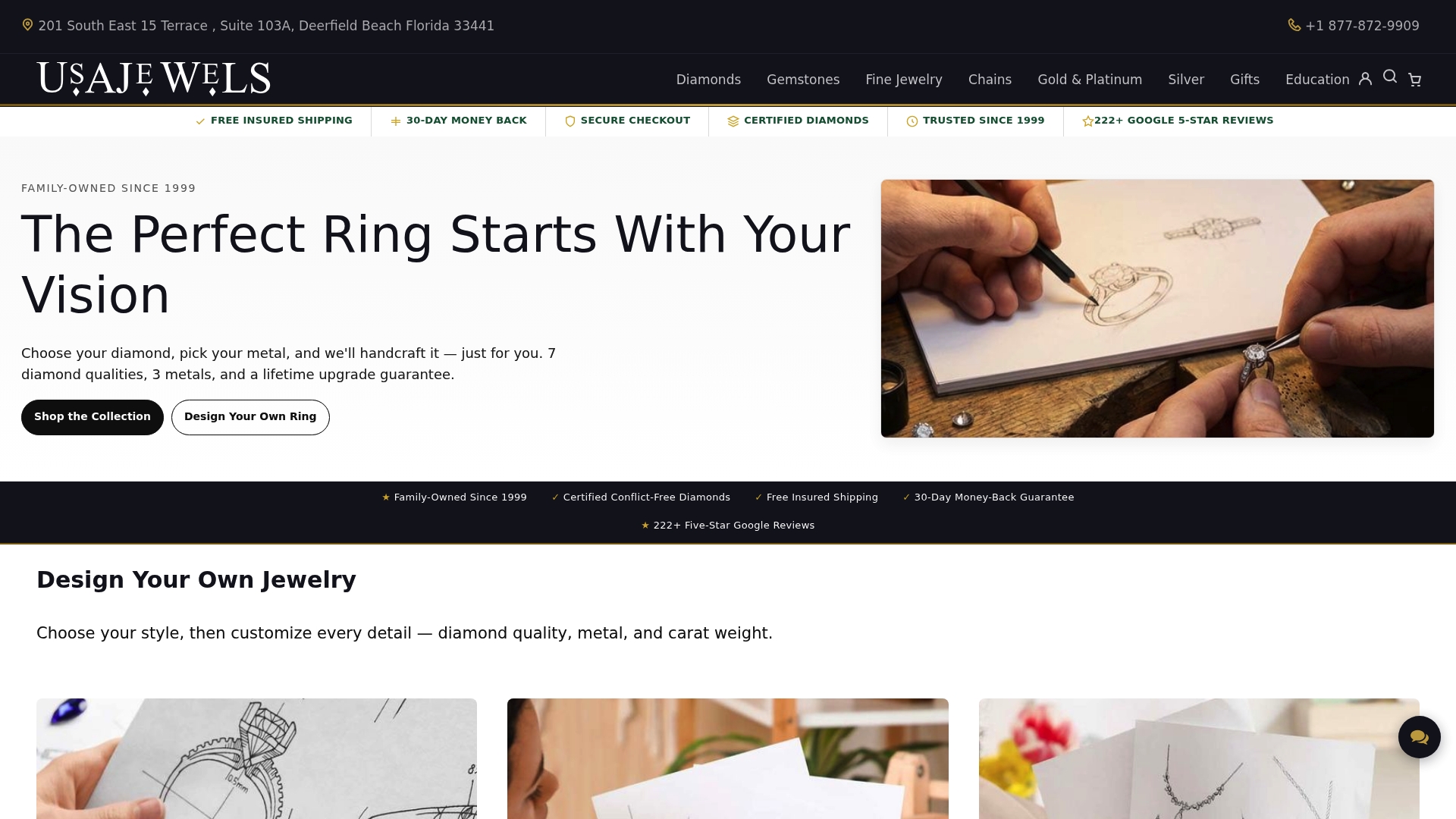
At Usajewels, we have been helping families create meaningful, custom jewelry since 1999. Our in-house manufacturing model means you work directly with the people crafting your piece, with no middlemen and no inflated markups. You choose the metal, the stone quality, and the design details. We handle the rest with the care and expertise our family has built over decades.
Whether you are designing an engagement ring, an anniversary gift, or a personal keepsake, our fine diamond jewelry collection gives you a strong starting point. Browse our diamond jewelry pieces to find styles you can personalize for any occasion. Our team is ready to guide you through every step, from your first design idea to the finished piece in your hands.
FAQ
How long does personalized jewelry take to make?
Custom jewelry production typically takes 7 to 21 days for standard pieces, with complex engagement rings requiring 4 to 8 weeks from consultation to delivery. Always add shipping time on top of production time when planning for a specific date.
What are the character limits for ring engraving?
A 2–3mm wide band holds approximately 8 to 15 characters including spaces. Wider bands accommodate more text, and compact fonts fit more characters legibly than ornate script styles.
Can I see what my personalized jewelry will look like before it is made?
Yes. Most jewelers use CAD software to produce a 3D digital rendering for your approval before any physical work begins. Many also offer a wax prototype so you can check the sizing and proportions before the final piece is cast.
What metal is best for personalized engagement rings?
Platinum is the most durable option for daily wear and holds prong settings securely over time. Gold in 14K or 18K is a popular and more affordable alternative, available in yellow, white, and rose tones to suit different style preferences.
How do online jewelry configurators work?
Online configurators guide you through sequential choices including metal, stone, size, engraving, and packaging, with real-time 3D visuals and live price updates at each step. This removes the need for back-and-forth quotes and lets you finalize a design confidently from home.
Recommended
- Jewelry Gift Ideas | Earrings, Pendants & More | USA Jewels
- Best Jewelry Gifts for Women | USA Jewels
- Jewelry Collections: Diamond & Gold | USA Jewels
- Jewelry Gift Guides: Find the Perfect Gift for Every Occasion | USA Jewels

Deep Mehta is the Co-Owner of USA Jewels, a family-owned jewelry business she has led since 2013 in Deerfield Beach, Florida. With over 13 years of hands-on experience in fine jewelry retail, manufacturing, and diamond importing, Deep specializes in engagement rings, wedding bands, and custom jewelry design. She also co-manages Kaash Group Talent Acquisition. Deep is a University of Florida graduate and oversees every aspect of USA Jewels’ operations, from product development to marketing.
Frequently Asked Questions
What's the difference between prong and bezel settings for personalized engagement rings?
How many characters can I fit in an engraved wedding band?
Should I choose 14K or 18K gold for a personalized ring I'll wear daily?
What stone alternatives to diamonds work well for personalized anniversary jewelry?
Why does buying personalized jewelry directly from a manufacturer save money compared to retail jewelers?
Fine Jewelry Collection


You May Also Like
Mother’s Ring Design: What It Means and How to Choose
Engagement Ring Prong Style Selection: 2026 Guide