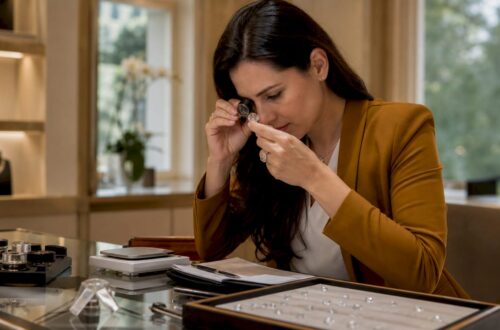
Diamond Quality 4Cs Breakdown: Your Buying Guide
Diamond quality is defined by four measurable characteristics: cut, color, clarity, and carat weight. These four factors, collectively known as the 4Cs, form the global standard for evaluating any diamond’s beauty, rarity, and price. The Gemological Institute of America (GIA) established this grading system, and it applies to every certified diamond you will encounter, whether natural or lab-grown. Understanding the diamond quality 4Cs breakdown before you buy protects you from overpaying and helps you choose a stone that genuinely dazzles.
1. What is diamond cut and why does it matter most?
Cut is the most important factor affecting a diamond’s brilliance and sparkle. A poorly cut diamond looks dull regardless of its color or clarity grade. Cut determines how light enters the stone, bounces between facets, and returns to your eye as fire and brilliance.
The GIA grades cut on a five-point scale:
- Excellent / Ideal: Maximum light return, the top choice for sparkle
- Very Good: Slightly less precise, still visually stunning
- Good: Acceptable light performance, better value trade-off
- Fair: Noticeable light leakage, visible dullness
- Poor: Significant light loss, avoid this grade entirely
A diamond with an Excellent cut grade in G color and VS2 clarity will outshine a Flawless, D-color stone with a Fair cut. The cut is the one factor where you should never compromise. Every other C can be adjusted for budget, but a poorly cut diamond cannot be fixed after purchase.
Pro Tip: Always ask for the cut grade on the grading certificate before looking at color or clarity. If the cut is not Excellent or Very Good, move on to the next stone.
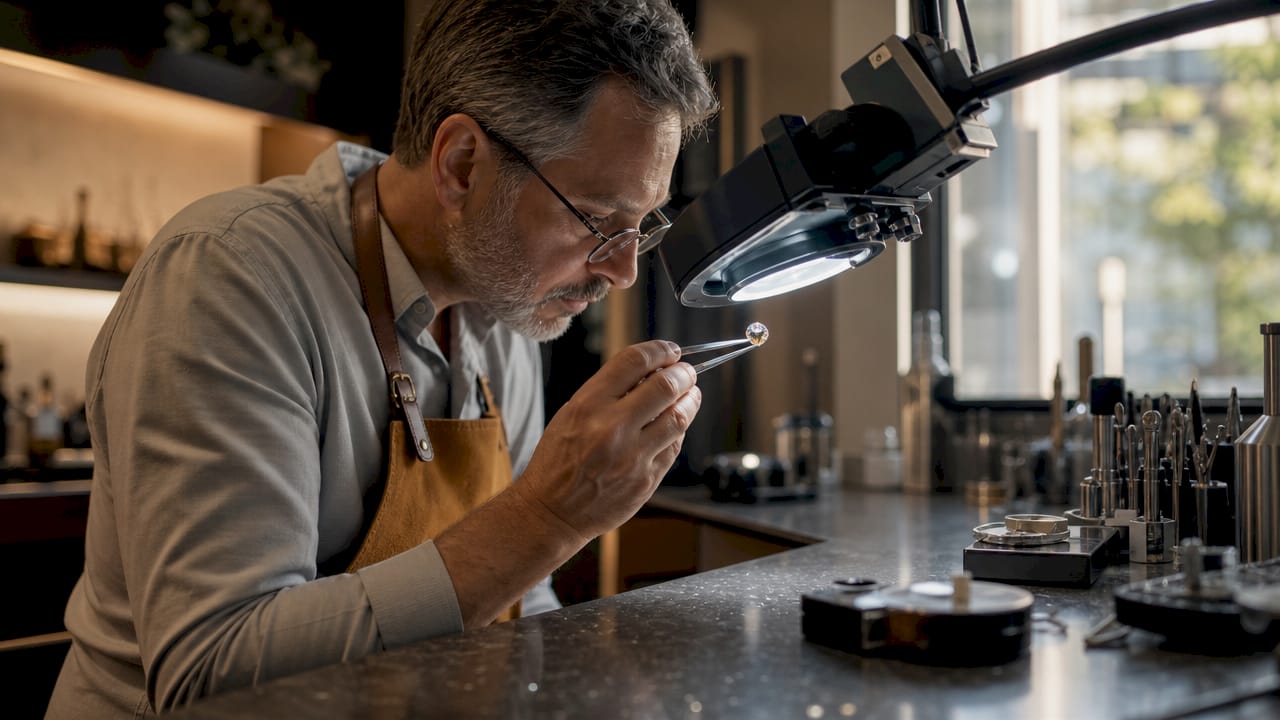
The shape of the diamond also influences how cut quality is assessed. Round brilliants receive the most precise GIA cut grades. Fancy shapes like ovals, cushions, and pear cuts are graded differently, so pay close attention to the stone’s proportions and symmetry ratings when shopping outside the round brilliant category.
2. How diamond color grading works and what to look for
Color grading ranges from D (colorless) to Z, which represents light yellow or brown hues. The scale measures the absence of color, not the presence of it. A D-grade diamond is chemically pure and structurally perfect in terms of color. A Z-grade stone shows a visible yellow or brown tint to the naked eye.
Here is how the scale breaks down practically:
- D, E, F (Colorless): The rarest and most expensive color grades. Differences between D and F are invisible without magnification.
- G, H, I, J (Near Colorless): The sweet spot for most buyers. Color differences are subtle, especially once the diamond is set in a ring.
- K, L, M (Faint): A slight yellow tint becomes visible, particularly in larger stones.
- N–Z (Very Light to Light): Noticeable color that affects the diamond’s appearance and significantly lowers its price.
Most buyers find color differences subtle from G to J once a diamond sits in a setting. A yellow gold band, for example, actually masks slight color in a J-grade stone, making it look whiter than it would in a platinum or white gold setting. A white gold or platinum setting, on the other hand, pairs best with D through H grades.
The diamond color chart at Usajewels gives you a visual reference for each grade, which makes it far easier to understand the real-world differences before you commit to a purchase.
3. Understanding diamond clarity grades and their practical impact
Diamond clarity reflects the size, type, and visibility of inclusions and blemishes inside or on the surface of a stone. Grades range from Flawless through Included, covering a wide spectrum of visual impact and price difference.
The full clarity scale works like this:
- FL (Flawless): No inclusions or blemishes under 10x magnification
- IF (Internally Flawless): No internal inclusions, minor surface blemishes only
- VVS1 / VVS2 (Very Very Slightly Included): Inclusions extremely difficult to see under magnification
- VS1 / VS2 (Very Slightly Included): Minor inclusions, not visible to the naked eye
- SI1 / SI2 (Slightly Included): Inclusions visible under magnification, sometimes visible to the naked eye
- I1 / I2 / I3 (Included): Inclusions visible without magnification, affecting transparency and brilliance
Less than 1% of gem-quality diamonds are graded Flawless. That rarity commands a steep price premium that most buyers will never see the benefit of in everyday wear. A VS1 diamond looks virtually identical to a Flawless stone once it is set in a ring.
Pro Tip: Target VS1 or VS2 clarity for the best balance of appearance and value. Use the Usajewels diamond clarity chart to compare grades side by side before deciding.
The setting style also affects how much clarity matters. A bezel or halo setting can conceal minor inclusions near the edge of the stone. A solitaire setting with a prong mount leaves more of the diamond exposed, so clarity becomes slightly more important in that context.
4. What carat weight really means and how it affects perception and price
Carat is a measure of weight, not size. One metric carat equals exactly 200 milligrams, roughly the weight of a small paperclip. Two diamonds with identical carat weights can look noticeably different in size depending on their shape and how they are cut.
The table below shows how common carat weights translate to approximate diameter in a round brilliant cut:
| Carat Weight | Approximate Diameter (Round Brilliant) |
|---|---|
| 0.50 ct | ~5.2 mm |
| 0.75 ct | ~5.9 mm |
| 1.00 ct | ~6.5 mm |
| 1.50 ct | ~7.4 mm |
| 2.00 ct | ~8.2 mm |
Diamond prices increase disproportionately at certain carat weights, often called “magic numbers.” The 0.50, 0.75, 1.00, and 1.50 carat marks trigger significant price jumps. A 0.95-carat diamond looks nearly identical to a 1.00-carat stone but costs meaningfully less. That price gap is real money you can redirect toward a better cut or color grade.
Fancy shapes like oval and marquise cuts tend to look larger than round brilliants of the same carat weight because their elongated outlines cover more finger surface. If size matters to you, shape selection is a powerful tool. The Usajewels carat weight guide walks through how dimensions affect perceived size in detail.
5. How to balance the 4Cs based on your budget and style
Not every C carries equal weight for every buyer. The right balance depends on your budget, the ring setting you choose, and what you personally value most in a diamond’s appearance.
A practical starting framework recommended by industry graders is Excellent cut, G–J color, and VS clarity for strong sparkle and solid value. This combination gives you a diamond that performs beautifully without paying premiums for grades that are invisible in real-world conditions.
Here is how priorities shift based on common buyer situations:
| Buyer Priority | Recommended Focus | Where to Adjust |
|---|---|---|
| Maximum sparkle | Excellent cut | Accept G–H color, VS2 clarity |
| Larger appearance | Higher carat, elongated shape | Accept H–I color, SI1 clarity |
| Budget-conscious | Near-colorless (H–I), SI1 clarity | Never compromise on cut |
| Colorless look | D–F color, white gold setting | Accept VS2, slightly smaller carat |
| Best overall value | Excellent cut, G color, VS1–VS2 | Stay just below magic carat numbers |
Common buying mistakes include chasing a 1.00-carat stone at the expense of cut quality, or paying for Flawless clarity that no one will ever see. The 4Cs buying guide at Usajewels helps you map these trade-offs to your specific ring style and budget.
Lab-grown diamonds follow the same grading system as natural diamonds for cut, color, clarity, and carat. This means every principle in this guide applies equally, regardless of the diamond’s origin.
Key takeaways
The most effective approach to buying a diamond is to prioritize cut quality first, then balance color and clarity within your budget, and treat carat weight as a dimension to manage, not just a number to maximize.
| Point | Details |
|---|---|
| Cut comes first | An Excellent cut grade delivers more sparkle than any other single upgrade. |
| Color sweet spot | G–J near-colorless grades look white in most settings and cost less than D–F. |
| Clarity value zone | VS1 and VS2 diamonds are eye-clean and far more affordable than Flawless grades. |
| Carat weight strategy | Buy just below magic carat numbers to save money without losing visible size. |
| Balance all four Cs | No single C defines quality; the combination determines beauty and value. |
What I’ve learned about the 4Cs after years in the diamond business
People walk in fixated on carat weight more than any other factor. A customer will pass over a stunning 0.90-carat Excellent-cut stone to chase a 1.00-carat diamond with a Good cut, and then wonder why their ring does not sparkle the way they expected. The number wins in conversation, but the cut wins in the light.
The clarity obsession is the other trap I see constantly. Paying a premium for Flawless clarity is often unnecessary since VS1 diamonds offer nearly identical appearance in rings. That money almost always buys more cut quality or a slightly better color grade, both of which you will actually see every day.
My honest advice: get a certified stone. A GIA or AGS grading report is not just paperwork. It is the only objective proof that the diamond you are buying matches the quality you are paying for. You can learn more about reading those reports at the Usajewels diamond certification guide. The 4Cs only protect you when they are verified by a trusted third party.
— Joseph
Usajewels makes the 4Cs work for you
Understanding the 4Cs is only half the work. Finding a jeweler who applies that knowledge honestly, at a fair price, is the other half.

Usajewels has been a family-owned, in-house manufacturer since 1999, which means no middlemen and direct pricing on every piece. You can browse the full fine diamond jewelry collection to see how cut, color, clarity, and carat come together in real rings and earrings. Every diamond Usajewels carries is ethically sourced and certified, and the team is ready to help you apply everything you have learned here to find the piece that tells your story.
FAQ
What does the GIA 4Cs grading system measure?
The GIA 4Cs system grades a diamond’s cut, color, clarity, and carat weight on standardized scales. These four grades together determine a diamond’s quality, beauty, and market value.
Which of the 4Cs affects a diamond’s sparkle the most?
Cut is the most important factor for sparkle. A poorly cut diamond appears dull regardless of its color or clarity grade.
What clarity grade offers the best value?
VS1 and VS2 clarity grades offer the best balance of appearance and price. These grades are eye-clean and visually indistinguishable from Flawless diamonds once set in a ring.
How does carat weight relate to diamond size?
Carat measures weight, not diameter. A 1.00-carat round brilliant is approximately 6.5 mm across, but shape and cut proportions affect how large the stone actually appears on the finger.
Do lab-grown diamonds use the same 4Cs grading system?
Lab-grown diamonds are graded the same way as natural diamonds for cut, color, clarity, and carat weight. Every principle in the 4Cs system applies equally to both origins.
Recommended
- Diamond Buying Guide: The 4 C’s Explained | USA Jewels
- Diamond Pricing Guide: What Diamonds Cost | USA Jewels
- Natural Diamonds: Quality, Value & Origin | USA Jewels
- Lab-Created Diamonds: Process & Value | USA Jewels

Deep Mehta is the Co-Owner of USA Jewels, a family-owned jewelry business she has led since 2013 in Deerfield Beach, Florida. With over 13 years of hands-on experience in fine jewelry retail, manufacturing, and diamond importing, Deep specializes in engagement rings, wedding bands, and custom jewelry design. She also co-manages Kaash Group Talent Acquisition. Deep is a University of Florida graduate and oversees every aspect of USA Jewels’ operations, from product development to marketing.
Frequently Asked Questions
Should I prioritize a higher carat weight or better cut quality?
Is a G-color diamond noticeably different from a D-color diamond once it's set in a ring?
How does diamond shape affect how I should evaluate the 4Cs?
Can a lower clarity grade like SI2 still look eye-clean in a diamond?
Why does the cut grade matter more than clarity when comparing two diamonds?
Fine Jewelry Collection


You May Also Like
How Jewelry Personalization Options Work for Gifts

Fair Trade Gemstone Examples: What to Ask and Buy